

 English
 русский
 Español
 عربى
عربى 中文简体
中文简体
 中文简体
中文简体
Content
- 1 How Mill Balls Work in a Ball Mill
- 2 Mill Ball Materials: What Works Best Where
- 3 Mill Ball Size and Grading
- 4 Application Differences Across Industries
- 5 How to Select Mill Balls: A Step-by-Step Approach
- 6 Common Mill Ball Mistakes and Maintenance Practices
- 7 When Ball Mills Are Not the Answer: Heat-Sensitive Plastics
Mill balls are the most controllable variable in a ball mill's operating cost. A wrong grinding media selection raises energy consumption, accelerates liner wear, and produces unstable fineness. In practice, matching the right mill balls to a given material and mill condition can cut specific energy use by 10 to 20 percent while extending equipment life.
How Mill Balls Work in a Ball Mill
A ball mill rotates a cylindrical shell around its horizontal axis. Lifter bars inside the shell carry the mill balls upward until gravity pulls them back in a cascade or a more aggressive cataract motion. It is this repeated impact and attrition, not the mill shell itself, that breaks particles down. Mill balls are therefore the actual grinding tools.
The grinding action depends on a few measurable variables. The ball charge volume is typically 30 to 40 percent of the mill's internal volume, and the mill speed is usually kept at 60 to 75 percent of critical speed. Outside these ranges, the balls either slide without enough impact or stick to the shell and contribute little.
| Variable | Typical Range | Effect on Grinding |
|---|---|---|
| Ball charge volume | 30–40% of mill volume | Controls impact energy and contact area |
| Mill speed | 60–75% of critical speed | Determines cascade versus cataract motion |
| Ball diameter | 20–100 mm, depending on feed | Sets the balance between impact and attrition |
| Material filling | 25–35% of ball void volume | Prevents over-wetting or excessive dry zones |
Mill Ball Materials: What Works Best Where
The material of the mill balls determines hardness, density, wear resistance, and contamination risk. In most mineral and cement applications, steel dominates. Where product purity matters, ceramic or alumina balls are preferred.
Forged and Low-Alloy Steel Balls
Forged steel balls are tough, relatively inexpensive, and handle high-impact grinding. They are a solid choice for primary mills with feed particles above 10 mm. Their main downside is a higher consumption rate than high-chromium iron in abrasive slurries.
High-Chromium Cast Iron Balls
High-chromium balls offer excellent hardness and low wear. They suit secondary and tertiary grinding, where abrasion rather than impact is the key stress. They cost more initially, but the lower replacement frequency often makes them cheaper per ton of product.
Alumina and Ceramic Balls
Alumina balls, typically 92 or 95 percent Al2O3, are used when contamination by iron cannot be accepted. They are common in ceramics, paints, and some pharmaceutical or food grinding processes. They are lighter than steel, so the mill speed and lining may need adjustment.
Stainless Steel Balls
Stainless steel mill balls are specified for corrosive slurries, acidic environments, or processes where rust from carbon steel balls would ruin the product. They are less common in high-volume mineral grinding because of cost, but they are indispensable in specialty applications.
| Material | Relative Hardness | Typical Wear Rate | Main Use |
|---|---|---|---|
| Forged low-alloy steel | Medium | Higher | Primary and semi-autogenous grinding |
| High-chromium iron | High | Low | Secondary and fine grinding |
| Alumina ceramic | High | Very low | Purity-sensitive products |
| Stainless steel | Medium-high | Low | Corrosive or hygienic processes |
Mill Ball Size and Grading
Ball diameter is the primary control for grinding efficiency. Large balls (60–100 mm) break coarse particles by impact; small balls (15–30 mm) provide the surface area needed for fine grinding. In practice, a graded charge containing a mix of sizes works better than a single size, because it continuously compensates for wear and ensures contact with both coarse and fine particles.
A rough starting point for maximum ball size is to relate it to the feed particle size and mill conditions. Many operations use the Bond formula, which predicts the largest ball as a function of feed size and grindability. Even without the formula, a simple rule is to start with a size that is about 2.5 to 3.5 times the largest feed particle. Then adjust after monitoring power draw and product fineness.
- Too large a ball generates high impact but low surface area, wasting energy and damaging liners.
- Too small a ball cannot break hard or coarse particles, leading to a "dead" charge and poor throughput.
- Spherical roundness matters: deformed or broken balls reduce grinding action and should be screened out regularly.
Application Differences Across Industries
Mill balls appear wherever materials need fine grinding: mineral dressing, cement clinker, ceramics, paints, and pyrotechnics. Each industry sets different priorities.
- In mineral processing, wear cost per ton is the dominant concern, so high-chromium steel is common in the regrind circuit.
- In cement grinding, ball mills operate with moderate impact and high abrasion; forged steel and high-chromium balls are both used depending on the mill compartment.
- In ceramic production, alumina balls protect the batch from iron contamination and meet the high purity required for whiteware or electronic ceramics.
- In pyrotechnics and chemicals, non-sparking or low-contamination media such as ceramic or stainless steel is required for safety and purity.
Heat-sensitive materials behave differently. A dedicated plastic pulverizer guide explains why polymers need a completely different size-reduction principle.
How to Select Mill Balls: A Step-by-Step Approach
The following sequence is used by plant engineers to translate process goals into a solid media specification.
- Define the target P80 and throughput. Fineness is the first specification because it decides impact versus attrition.
- Measure feed size and hardness. Harder and coarser feed requires larger and tougher balls.
- Set contamination limits. If iron must be avoided, choose alumina or stainless steel.
- Establish the ball charge volume and mill speed. These interact with ball size distribution and liner profile.
- Match the ball material to the liner. Harder balls accelerate liner wear unless the lining has the right hardness and lift profile.
- Monitor specific energy and ball consumption. The best specification is the one that stabilizes both over a production campaign.
Common Mill Ball Mistakes and Maintenance Practices
Operators often underestimate how quickly a wrong charging policy changes grinding behavior. The most frequent errors are buying only on price, never checking the actual ball charge, and ignoring water or pulp density in wet milling.
- Buying the cheapest ball without testing against your ore or clinker almost always raises the true grinding cost per ton.
- Failed to replenish daily consumption will cause the charge to shrink and the P80 to climb.
- Ignoring pulp density changes the mixing and cushioning of the charge; too thick a pulp reduces impact, too thin increases ball-on-ball wear.
- Irregular sampling of the charge can catch oval balls or broken media before they reduce performance.
Maintenance is not complicated. Sample the ball charge monthly, screen out broken pieces, and record power draw. A stable power curve means the mill balls are still in balance.
When Ball Mills Are Not the Answer: Heat-Sensitive Plastics
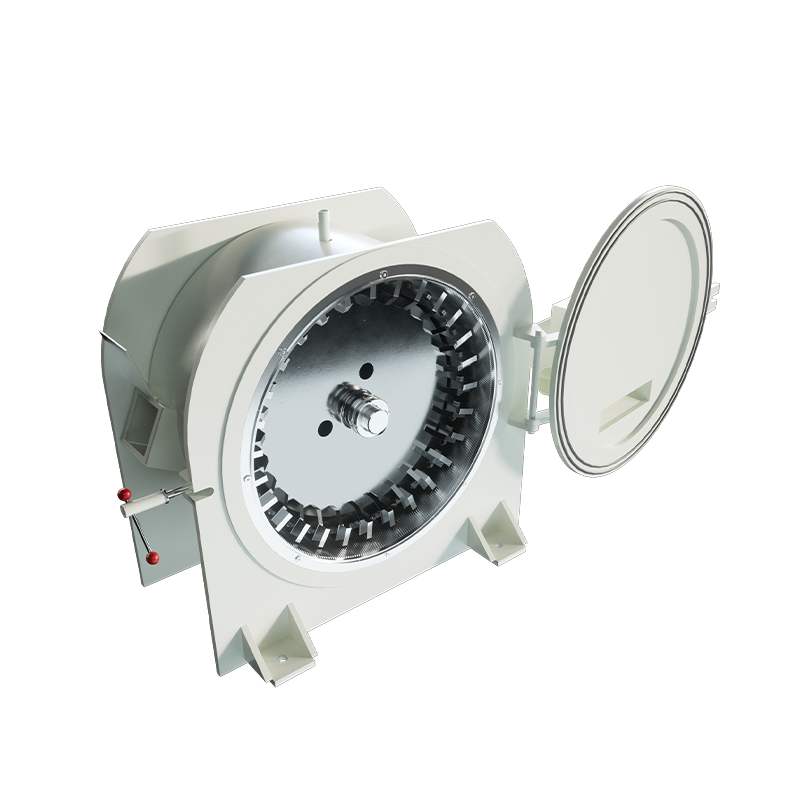
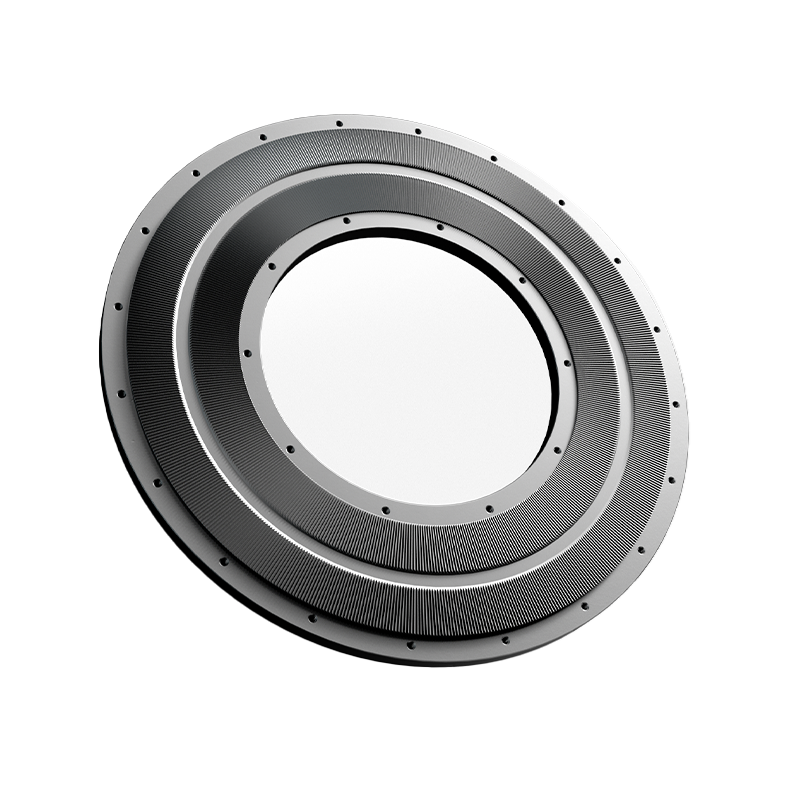
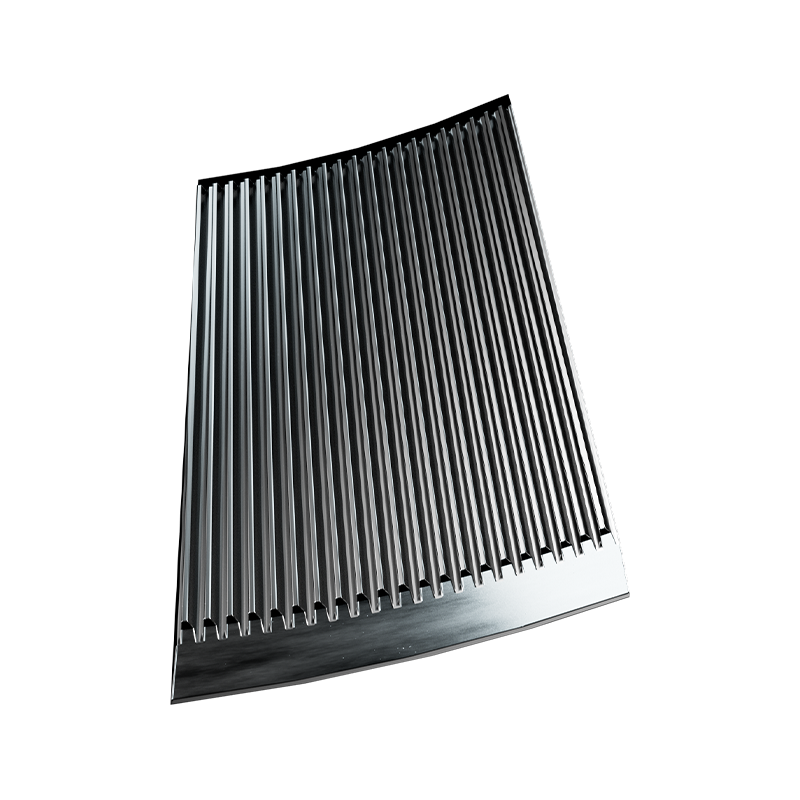
Ball mills work well for brittle minerals, but they are not a universal tool. Thermoplastics such as polyethylene, polypropylene, and PVC soften and melt under the heat generated by ball impact. A traditional ball mill with steel media will smear the polymer, degrade its molecular weight, and produce a low-quality powder. Plastic processors therefore use a different grinding principle: high-speed disc or rotor mills that rely on cutting, shearing, and controlled airflow rather than free-falling balls.
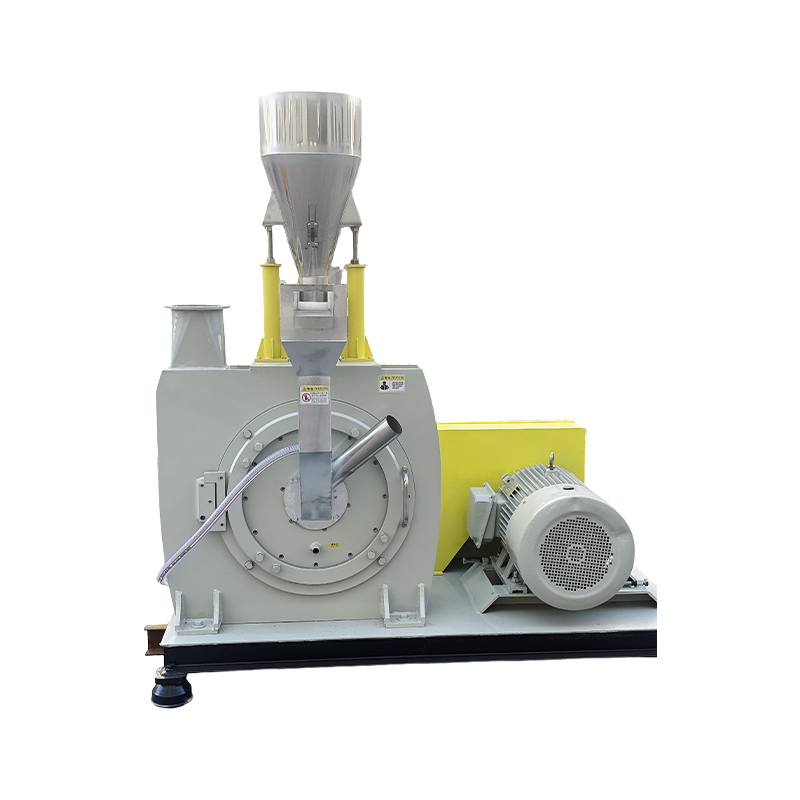
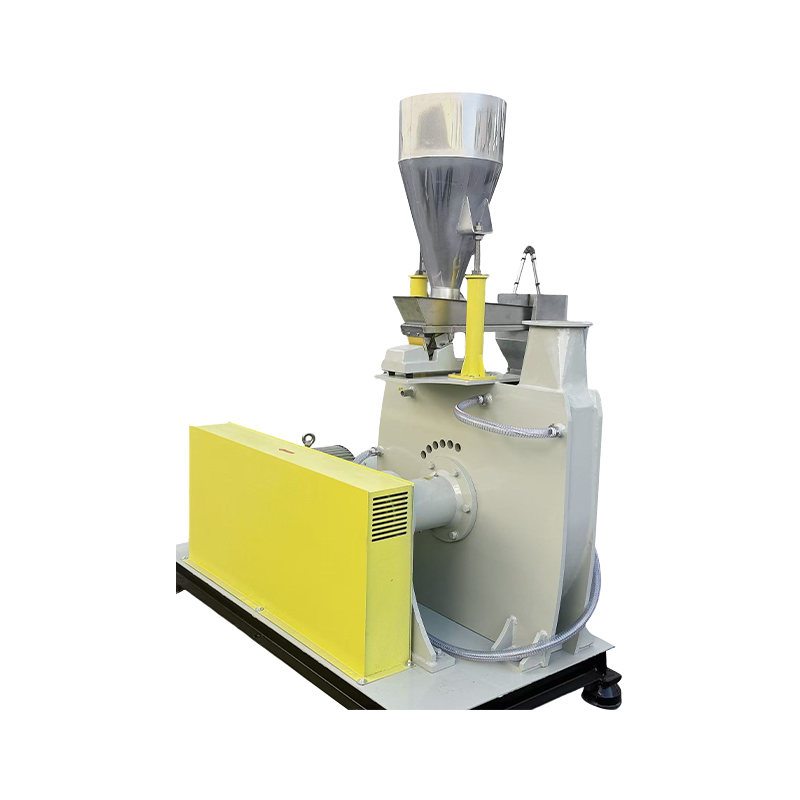
For example, PA and PP can be ground at ambient temperature in a disc pulverizer with no liquid nitrogen, which keeps operating costs far below those of cryogenic ball milling.
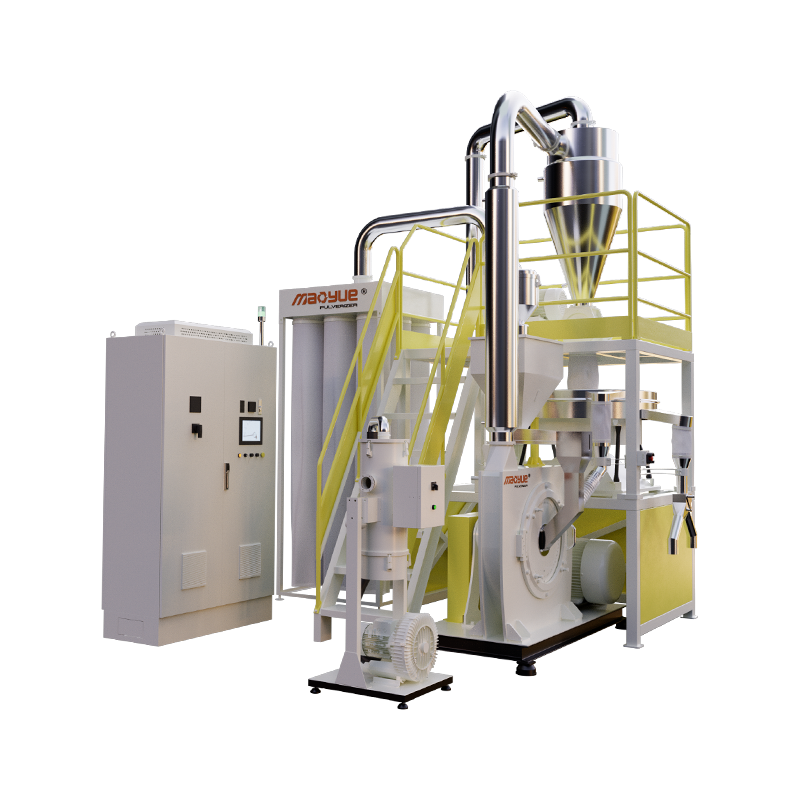 600PA/PP Wear-Resistant Room-Temperature PulverizerThe Mao Yue PA/PP-600 Pulverizer features a disc diameter of 600mm, main motor power of 45-55kW, and capacity of 350-600kg/h (approximately 400-550kg/h for PA and 500-...View Product →
PVC copes with size reduction best when the equipment has heavy-duty components and fine powder design; a dedicated PVC fine powder pulverizer can hold narrow particle distributions without thermal degradation.
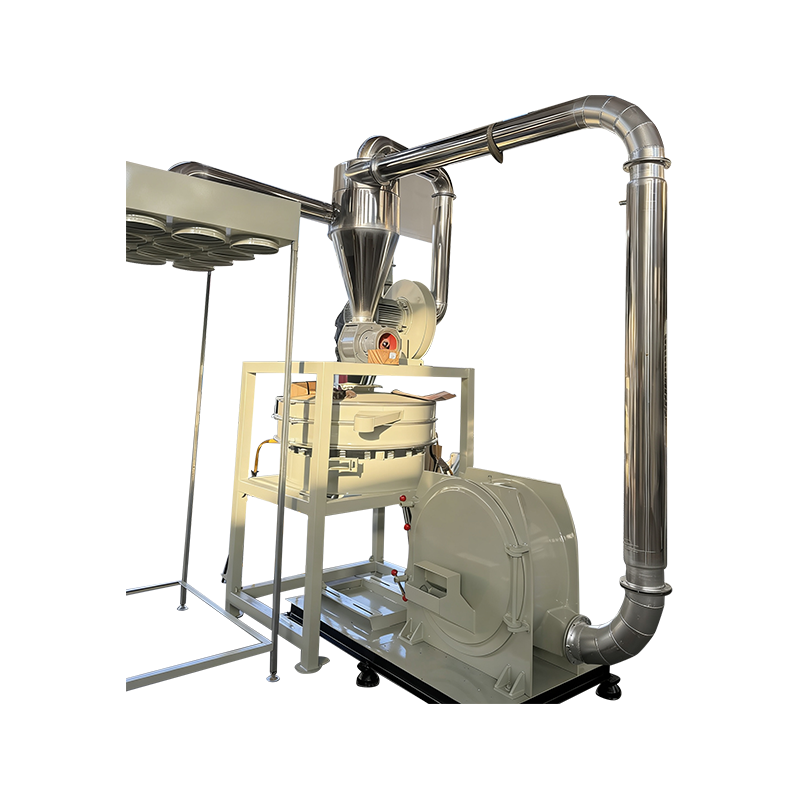 Model 900 PVC Fine Powder PulverizerThis model features a disc diameter of approximately 900mm, a main motor power of 110-132kW, and a peak capacity of 900-1300kg/h+, making it the series' production cha...View Product →
Similarly, rotomolding PE grades demand a powder with consistent particle size so the molded part has uniform wall thickness. A high-uniformity PE pulverizer replaces the ball mill approach entirely for this molding process.
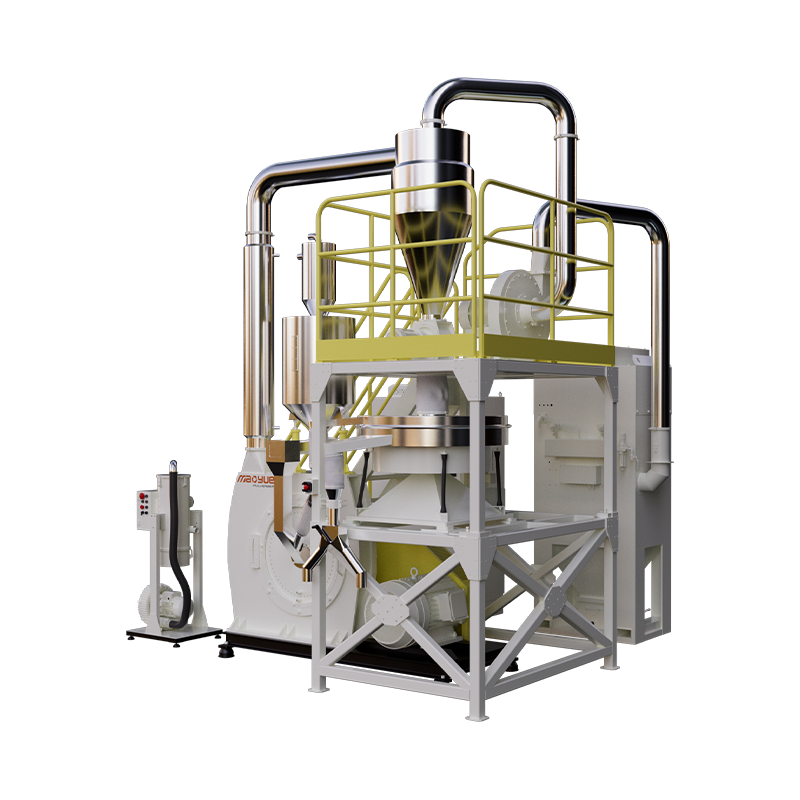 PE Rotomolding Powder High Uniformity 800 Model PulverizerThe Mao Yue 800-type PE rotomolding pulverizer is the heavy-duty, ultra-high-capacity flagship model engineered specifically for large-scale rotomolding product manufa...View Product →
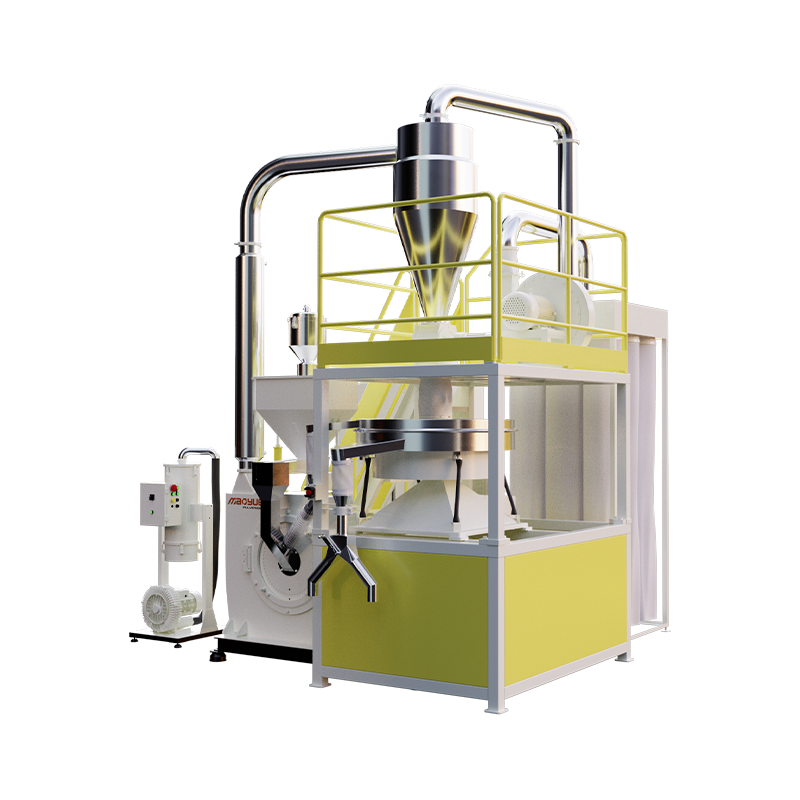
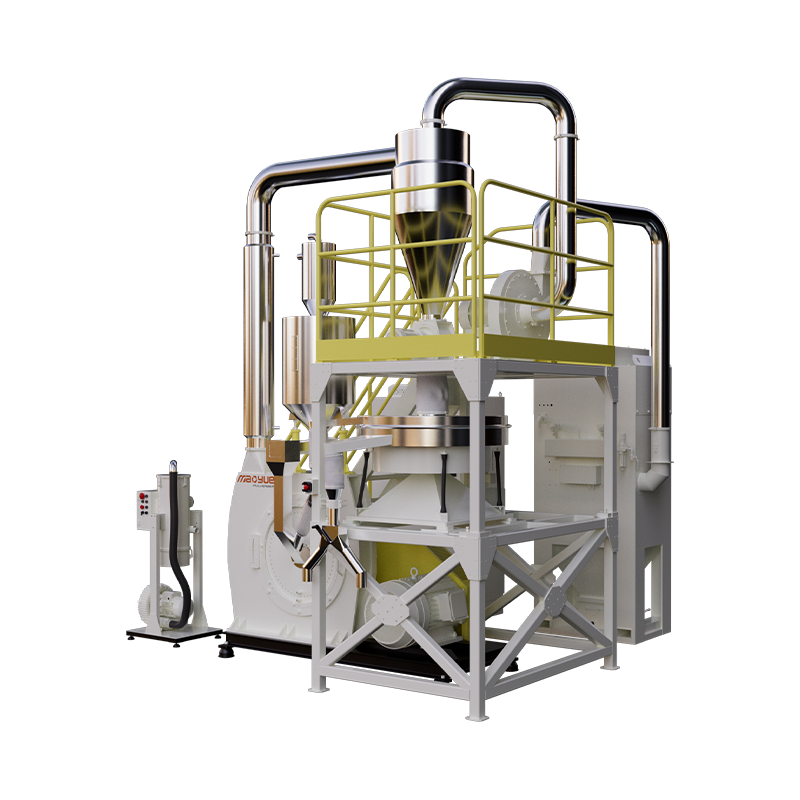
If you are comparing milling options, the practical distinction is simple: mineral processors specify mill balls; plastics processors specify a pulverizer that keeps the polymer cold, dry, and uniform. For a broader view of the equipment available, see the plastic pulverizer product range.