Pigment Dispersion Begins with Powder Morphology Rather Than Particle Size Alone
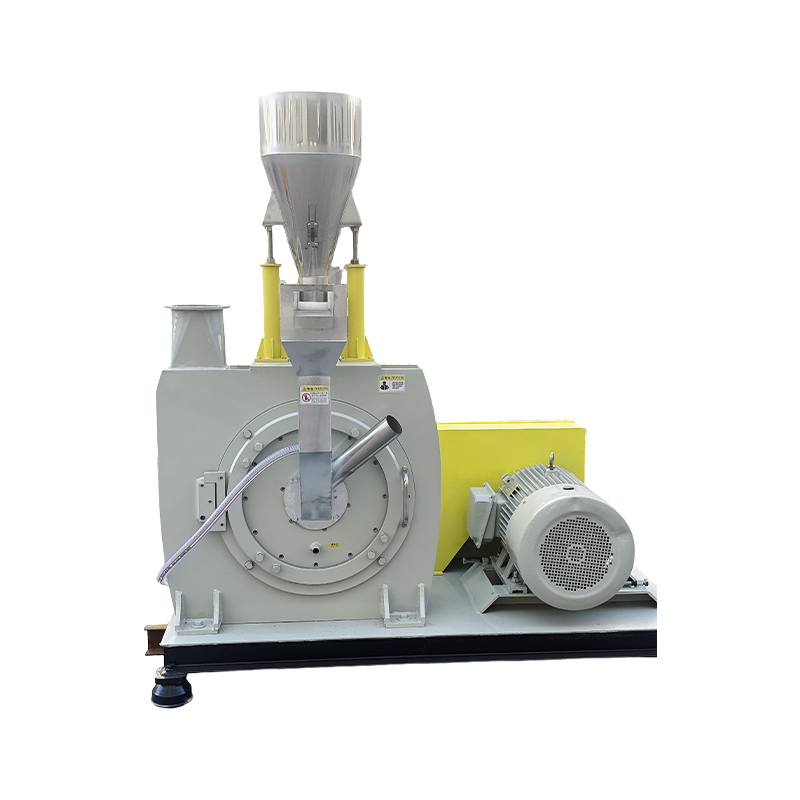
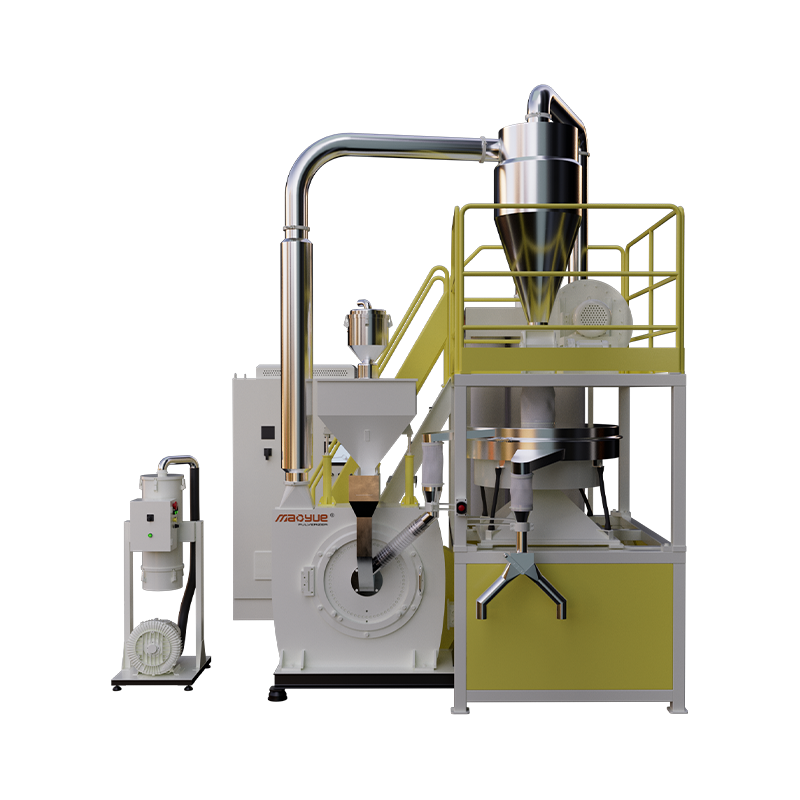
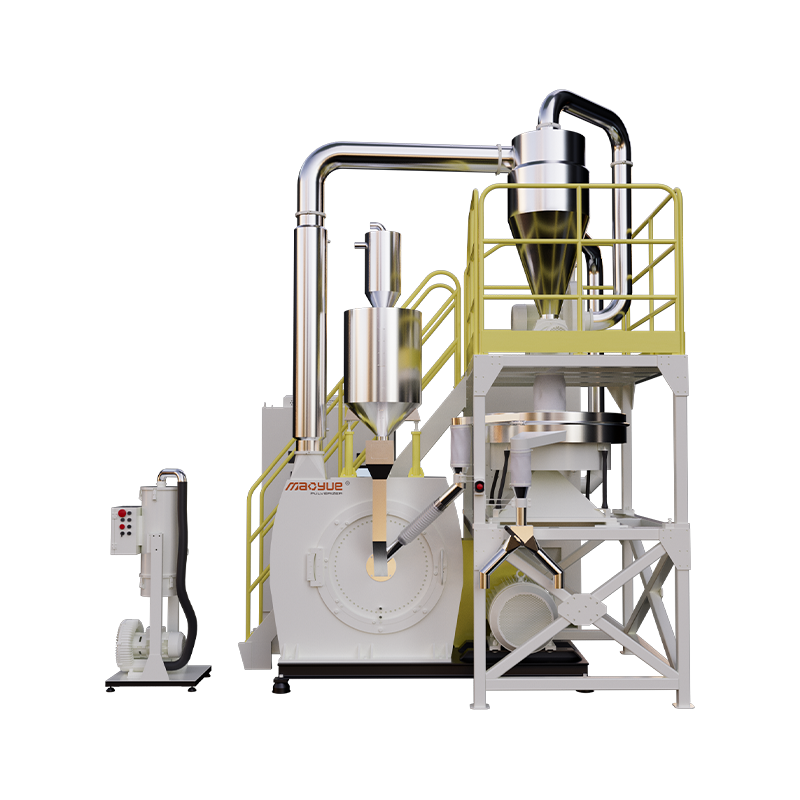
In masterbatch manufacturing, achieving a target particle size is only one part of the pulverizing process. The morphology of each powder particle—including its surface roughness, aspect ratio, and edge integrity—directly influences pigment wetting and resin dispersion during extrusion. A high-performance Masterbatch Polymer Compound Pulverizer is therefore engineered to generate particles with controlled geometry rather than relying solely on aggressive size reduction.
Uniform powder morphology improves the contact area between polymer carriers and additives, resulting in more efficient melting, shorter mixing times, and reduced pigment agglomeration. This contributes to improved color consistency, mechanical properties, and production repeatability throughout the compounding process.
| Powder Property |
Influence on Masterbatch Production |
| Uniform morphology |
Improves pigment dispersion |
| Controlled particle size distribution |
Ensures stable extrusion feeding |
| Excellent flowability |
Enhances automatic conveying efficiency |
Cross-Contamination Control Is Essential for Color Change Efficiency
For manufacturers producing multiple color formulations every day, minimizing residual powder inside the grinding chamber is critical. Even trace amounts of leftover pigments can alter the appearance of subsequent production batches, leading to material waste and extended cleaning times. A well-designed Color Masterbatch Pulverizer incorporates optimized airflow paths, accessible internal structures, and smooth material-contact surfaces to facilitate rapid product changeovers.
Reducing powder retention not only improves color accuracy but also shortens production interruptions, making flexible manufacturing economically viable for facilities handling frequent product transitions.
- Minimized dead zones reduce residual powder accumulation.
- Optimized airflow assists chamber self-cleaning.
- Fast cleaning procedures shorten color change downtime.
- Lower contamination rates improve product consistency.
Energy Efficiency Should Be Evaluated by Specific Energy Consumption
Instead of comparing installed motor power alone, many manufacturers now evaluate a Masterbatch Pulverizer Machine based on specific energy consumption—the amount of electricity required to produce one ton of qualified powder. This indicator reflects the combined efficiency of grinding mechanics, airflow management, cooling performance, and particle classification.
An optimized pulverizing process reduces unnecessary recirculation, maintains stable residence time inside the grinding chamber, and limits excessive fine powder generation. These improvements translate into lower operating costs while maintaining the stringent particle quality required for modern polymer compounding.
Component Engineering Supports Long-Term Process Repeatability
Stable masterbatch production depends on maintaining consistent grinding performance over thousands of operating hours. Dimensional tolerance control, rotor concentricity, wear resistance, and thermal stability all influence whether a pulverizing system can repeatedly produce powders with identical characteristics from batch to batch. Process repeatability has therefore become a key engineering objective in advanced powder preparation systems.
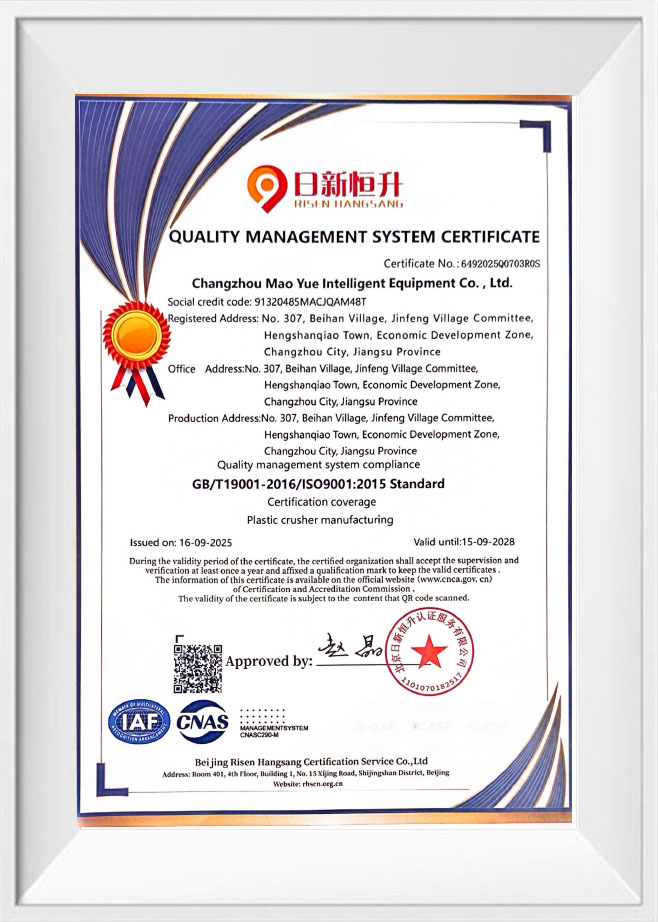
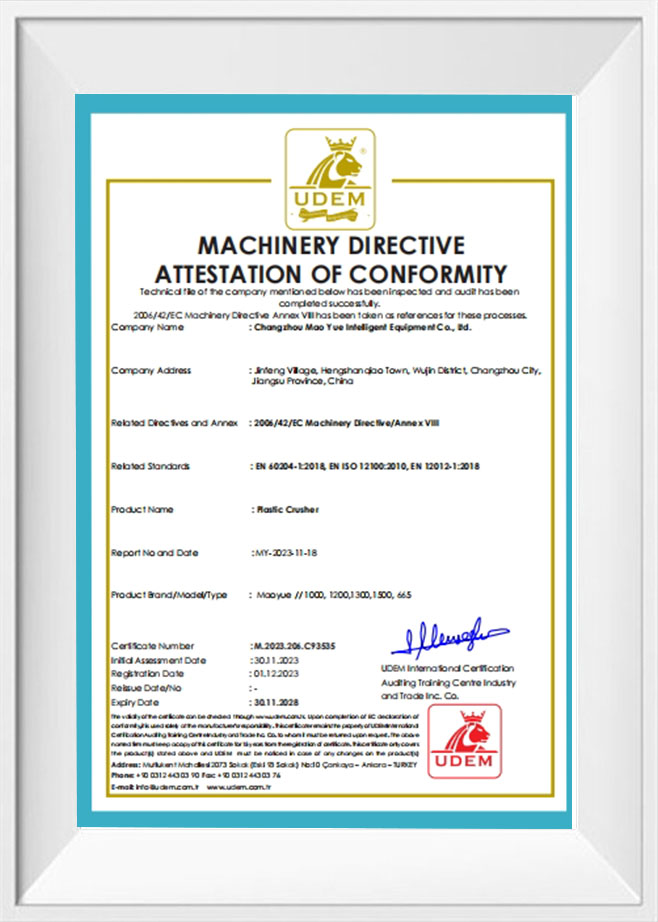
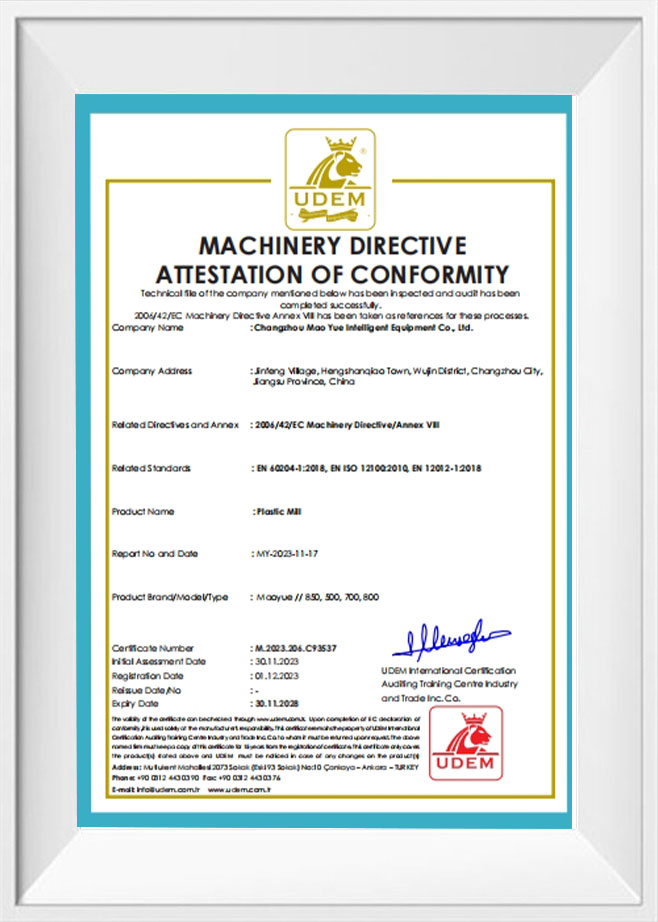
Changzhou Mao Yue Intelligent Equipment Co., Ltd. has accumulated 30 years of expertise while pioneering the plastic pulverizer market. By manufacturing every critical component according to European quality standards, the company has developed disc pulverizers recognized for producing powders with narrow particle size distribution and excellent fluidity. These technical advantages enable its Masterbatch Polymer Compound Pulverizer, Color Masterbatch Pulverizer, and Masterbatch Pulverizer Machine solutions to meet the demanding process requirements of rotational molding, masterbatch production, and high-performance polymer compounding, where consistency is measured not only by output but also by long-term process stability.



 English
 русский
 Español
 عربى
عربى 中文简体
中文简体
 中文简体
中文简体