Bulk Density Control Is a Critical Indicator for PE Rotomolding Powder Quality
When evaluating a PE Rotomolding Pulverizer, many manufacturers focus primarily on particle size. However, bulk density is equally important because it directly affects mold filling efficiency and heat transfer during rotational molding. Powder with excessively low bulk density occupies more storage volume and may trap air during charging, while overly dense powder can reduce flowability and lead to uneven distribution inside complex molds.
A well-optimized pulverizing process controls not only particle size distribution but also particle morphology and packing characteristics. Stable bulk density improves dosing accuracy, shortens mold loading time, and contributes to more uniform wall thickness throughout the finished product.
| Powder Property |
Impact on Rotational Molding |
| Stable bulk density |
Consistent mold filling |
| Uniform particle morphology |
Even wall thickness formation |
| Excellent flowability |
Improved powder distribution inside molds |
Thermal History During Pulverizing Affects Rotational Molding Performance
Polyethylene is sensitive to excessive thermal exposure during grinding. If the grinding chamber temperature rises beyond an appropriate range, localized softening and oxidative degradation may occur before the material even reaches the molding stage. An advanced PE Rotational Molding Pulverizer therefore emphasizes efficient heat dissipation and controlled residence time instead of simply increasing grinding speed.
Maintaining a stable thermal profile preserves the resin's molecular structure, allowing the powder to melt uniformly inside the mold. This helps reduce pinholes, improves surface finish, and supports the production of large rotationally molded products with demanding appearance requirements.
- Controlled grinding temperature protects polymer properties.
- Efficient cooling reduces powder agglomeration.
- Stable residence time minimizes unnecessary thermal exposure.
- Optimized heat management improves downstream molding consistency.
Powder Flow Behavior Determines Automated Production Efficiency
As rotational molding plants become increasingly automated, powder flow characteristics have become an important design consideration for every PE Rotomolding Pulverizer Machine. Poor-flowing powder can bridge inside hoppers, interrupt pneumatic conveying systems, and reduce dosing precision, ultimately limiting production efficiency despite having acceptable particle size.
Improving flow behavior requires a combination of narrow particle size distribution, smooth particle surfaces, and controlled fine-particle content. These factors allow powder to move consistently through storage, conveying, and metering equipment while maintaining reliable batch-to-batch repeatability.
Engineering for Repeatable Powder Quality Rather Than Maximum Capacity
In industrial rotational molding, long-term competitiveness depends on producing powder with identical characteristics every production cycle rather than achieving the highest hourly output. This requires precise control over disc geometry, rotor balance, airflow distribution, and classification efficiency, all of which influence particle morphology and process repeatability.
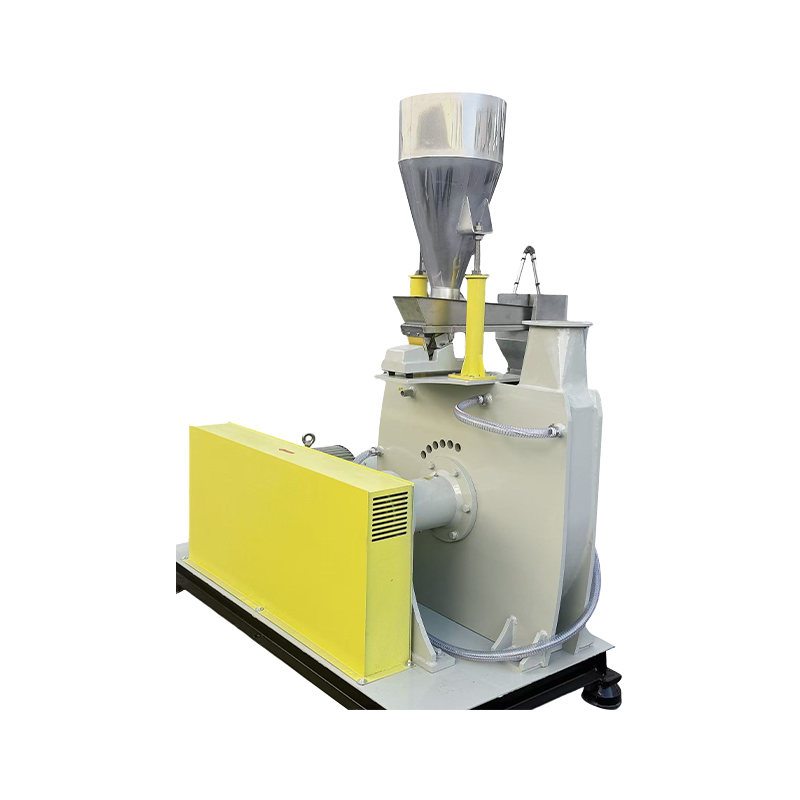
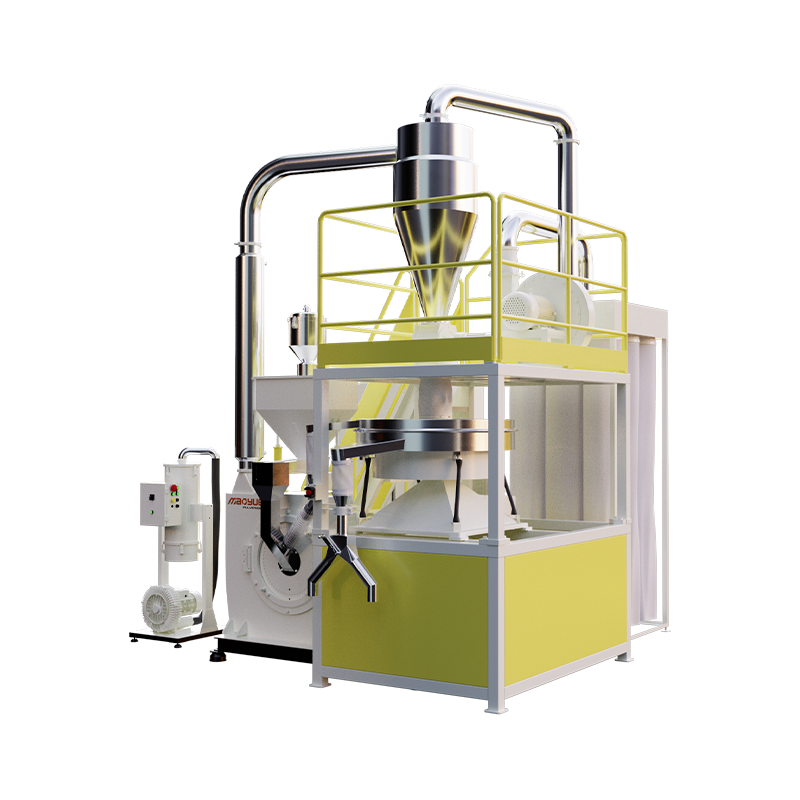
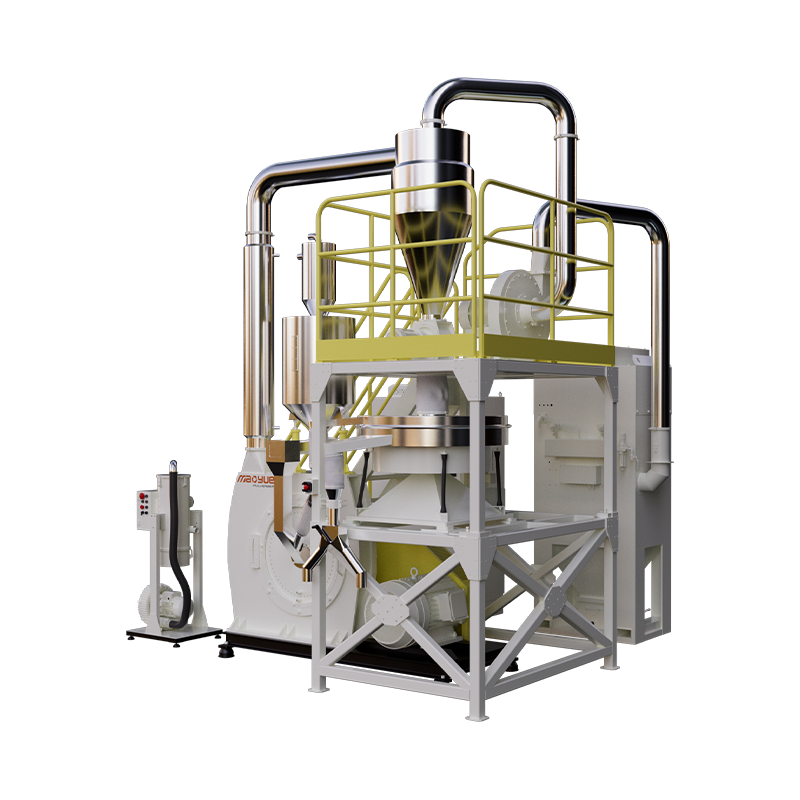
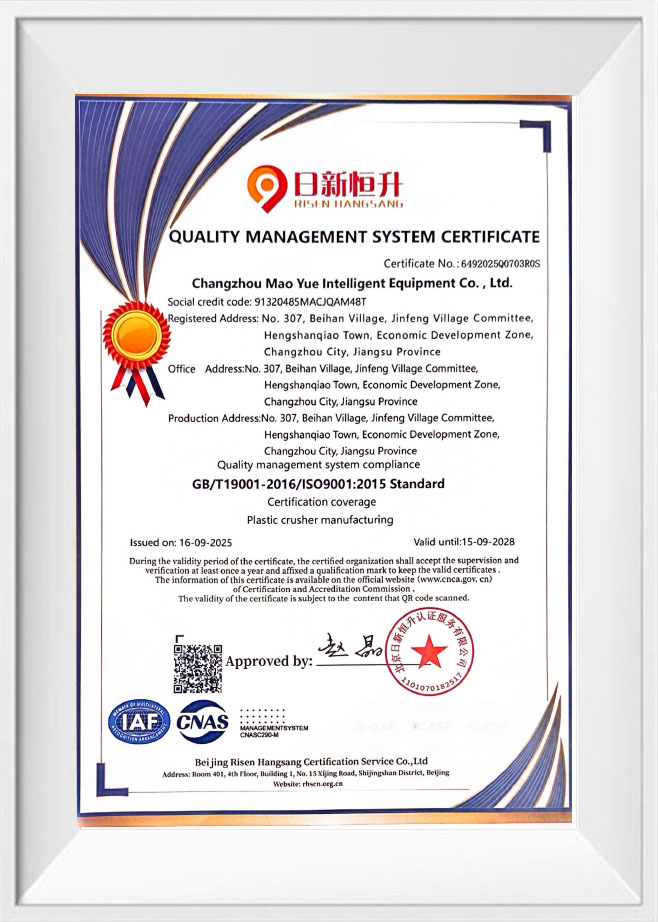
Following this engineering philosophy, Changzhou Mao Yue Intelligent Equipment Co., Ltd. has spent 30 years advancing plastic pulverizing technology and was among the pioneers of the plastic pulverizer market. Every component is manufactured according to European quality standards, and its disc pulverizers are recognized for delivering powders with narrow particle size distribution and excellent fluidity. These capabilities make its PE Rotomolding Pulverizer, PE Rotational Molding Pulverizer, and PE Rotomolding Pulverizer Machine particularly well suited for rotational molding, masterbatch, and polymer applications where consistent powder characteristics directly determine downstream processing performance and finished product quality.



 English
 русский
 Español
 عربى
عربى 中文简体
中文简体
 中文简体
中文简体