Grinding Disc Geometry Determines More Than Particle Size
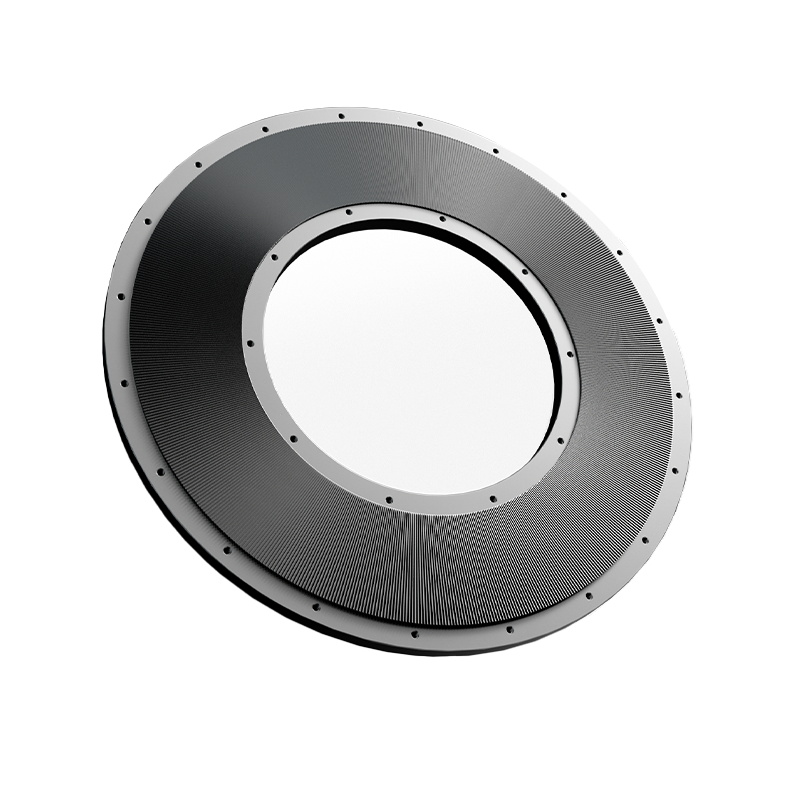
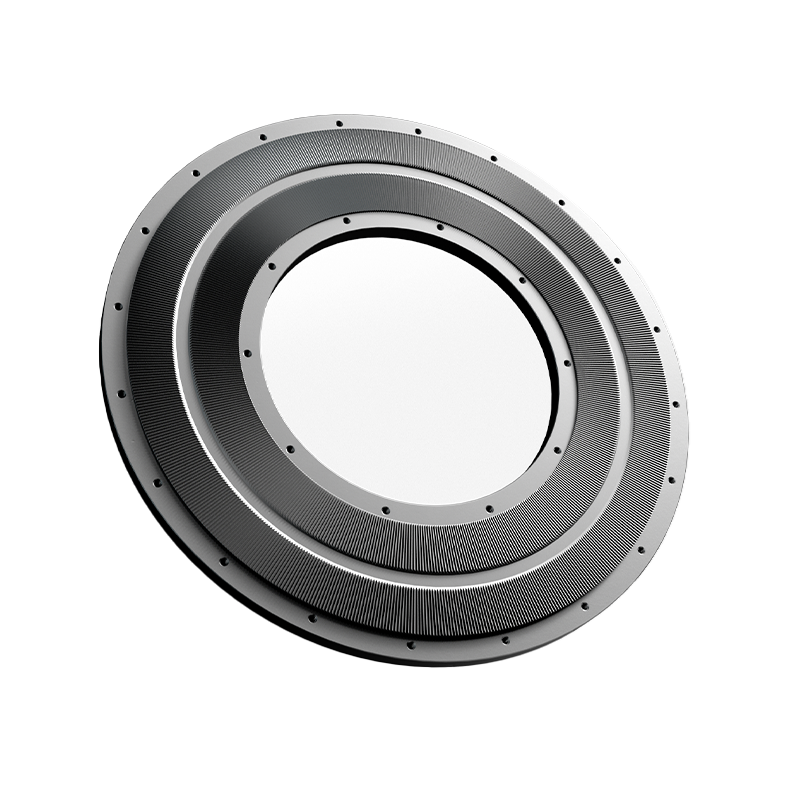
When evaluating a PE Pulverizer Grinding Disc, many users focus on wear resistance or hardness. However, the geometry of the grinding disc has an even greater influence on pulverizing efficiency. Tooth profile, groove depth, grinding angle, radial distribution, and the number of cutting paths collectively determine how polyethylene particles enter, travel through, and exit the grinding chamber. These geometric parameters affect the balance between shearing, compression, and friction, ultimately influencing particle morphology rather than simply reducing material size.
Modern disc design is increasingly based on flow mechanics instead of empirical experience alone. Engineers use computational analysis to optimize the movement of particles between rotating and stationary discs, reducing dead zones while improving material utilization. The result is a more stable grinding process with reduced power fluctuation and improved production repeatability.
Important Geometric Parameters
| Design Feature |
Engineering Function |
| Grinding tooth angle |
Controls shearing intensity |
| Groove depth |
Regulates particle residence time |
| Radial channel distribution |
Improves powder transport efficiency |
| Grinding clearance |
Determines particle size consistency |
Surface Wear Patterns Reveal the Health of a Pulverizer Disc
A Pulverizer Disc does not wear uniformly throughout its service life. Different wear patterns often indicate specific operational conditions. Uniform polishing generally reflects balanced material flow, while localized grooves may suggest uneven feeding or improper disc alignment. Micro-chipping around the grinding teeth often results from excessive impact loads or contaminated feedstock containing hard foreign particles.
Regular inspection of wear profiles allows maintenance personnel to identify process abnormalities before product quality begins to decline. Instead of replacing discs based solely on operating hours, condition-based maintenance improves component utilization while reducing unexpected shutdowns.
Common Wear Indicators
- Uniform polishing usually indicates stable grinding conditions.
- Asymmetrical wear may indicate rotor misalignment.
- Localized edge damage often suggests foreign material contamination.
- Rapid tooth wear may result from excessive grinding clearance or abrasive fillers.
Heat Treatment Balances Hardness and Fracture Toughness
The performance of a PE Pulverizer Grinding Disc depends not only on material selection but also on the metallurgical structure produced during heat treatment. Excessive hardness improves abrasion resistance but may increase brittleness, while insufficient hardness shortens service life due to accelerated wear. Manufacturers therefore optimize quenching, tempering, and stress-relief processes to achieve an appropriate balance between hardness, toughness, and dimensional stability.
Advanced heat treatment also minimizes residual stress inside the disc, reducing the likelihood of deformation during prolonged high-speed operation. Stable geometry helps maintain consistent grinding clearance, ensuring repeatable powder quality over thousands of production hours.
Comparison of Heat Treatment Objectives
| Heat Treatment Objective |
Benefit to Grinding Disc |
| Controlled hardness |
Improves wear resistance |
| Stress relief |
Maintains dimensional stability |
| Microstructure refinement |
Enhances fatigue resistance |
Disc Clearance Adjustment Has a Greater Impact Than Increasing Rotational Speed
Increasing rotational speed is often viewed as the fastest way to improve production capacity, yet excessive speed can raise grinding temperature, accelerate wear, and increase specific energy consumption. In many cases, optimizing the clearance between the rotating and stationary Pulverizer Disc produces greater improvements in particle size distribution without increasing mechanical load.
A properly adjusted grinding gap allows particles to experience multiple controlled shearing actions before leaving the grinding chamber. This improves powder uniformity while reducing unnecessary over-grinding and minimizing fine dust generation. Clearance optimization should therefore be considered a routine process adjustment rather than a one-time installation procedure.
Precision Manufacturing Creates Long-Term Value Beyond Individual Components
In modern polymer processing, grinding discs are no longer regarded as simple wear parts. They have become precision-engineered process components that directly influence energy efficiency, particle morphology, equipment reliability, and maintenance planning. As production quality standards continue to increase across rotational molding and polymer modification industries, manufacturers are placing greater emphasis on dimensional repeatability, component interchangeability, and lifecycle performance rather than focusing solely on initial purchase cost.
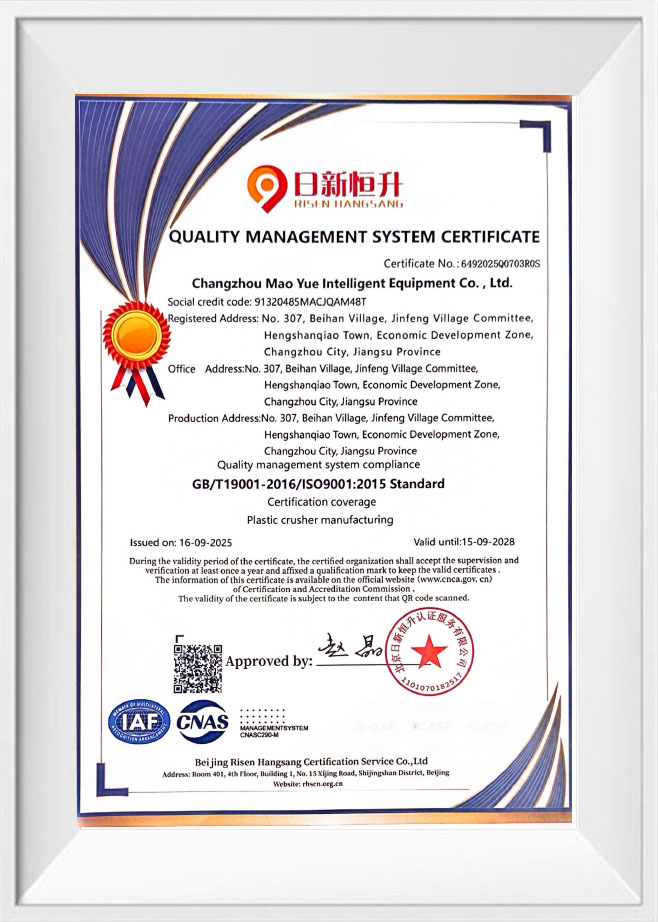
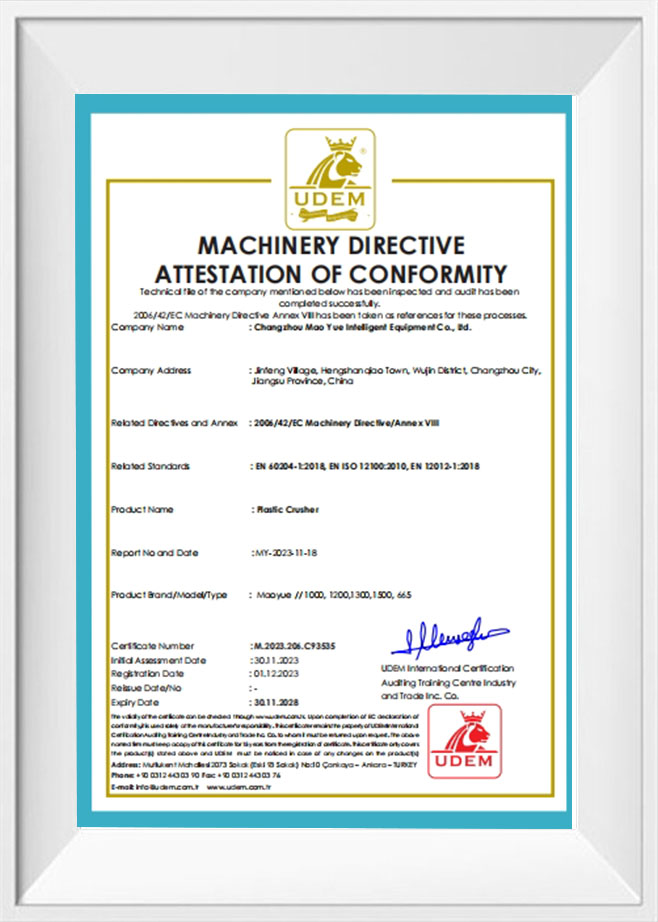
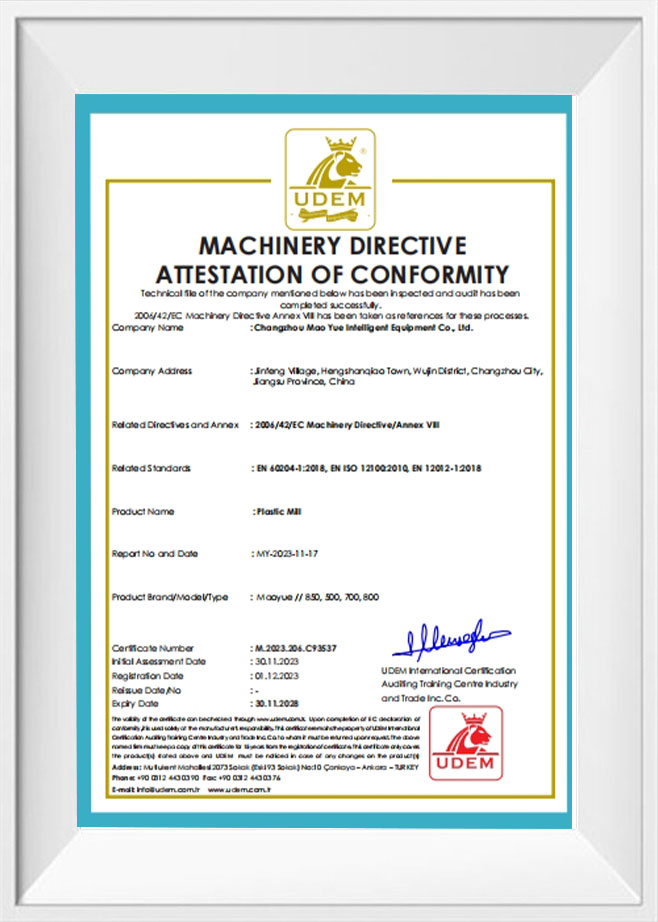
This philosophy is reflected in the manufacturing practices of Changzhou Mao Yue Intelligent Equipment Co., Ltd., which has specialized in plastic pulverizing technology for more than 30 years. As one of the pioneers of the plastic pulverizer market, the company manufactures every component according to European quality standards. Its disc pulverizers are widely recognized for producing powders with narrow particle size distribution and excellent fluidity for rotational molding, masterbatch, and polymer processing. The same engineering principles applied to every PE Pulverizer Grinding Disc and Pulverizer Disc enable customers to achieve higher process capability, lower total cost of ownership, and consistently reliable powder preparation across demanding industrial applications.



 English
 русский
 Español
 عربى
عربى 中文简体
中文简体
 中文简体
中文简体