Why PP and PE Require Different Pulverizing Strategies Despite Similar Processing Temperatures
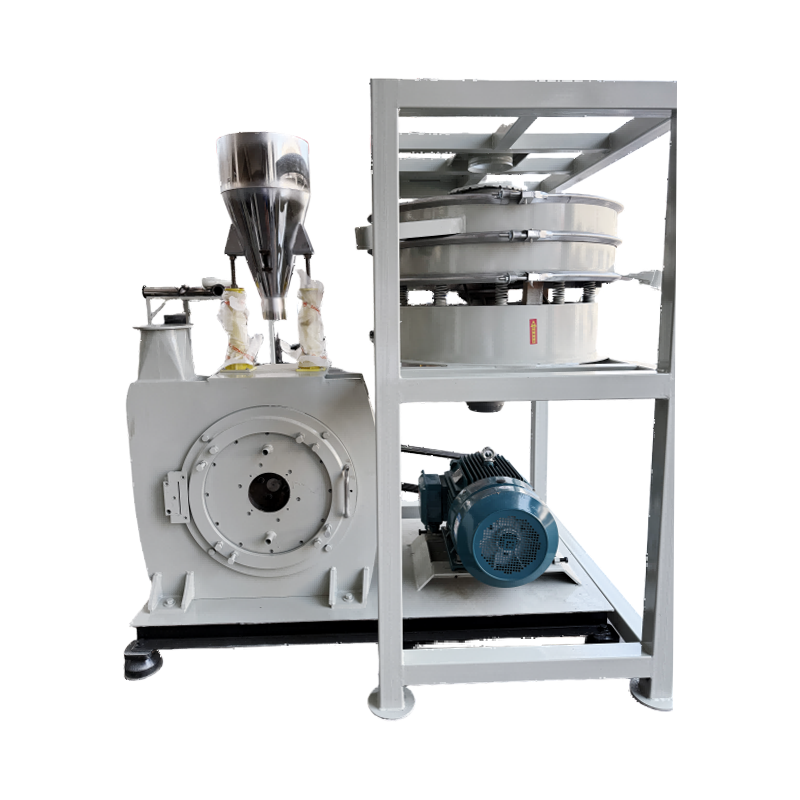
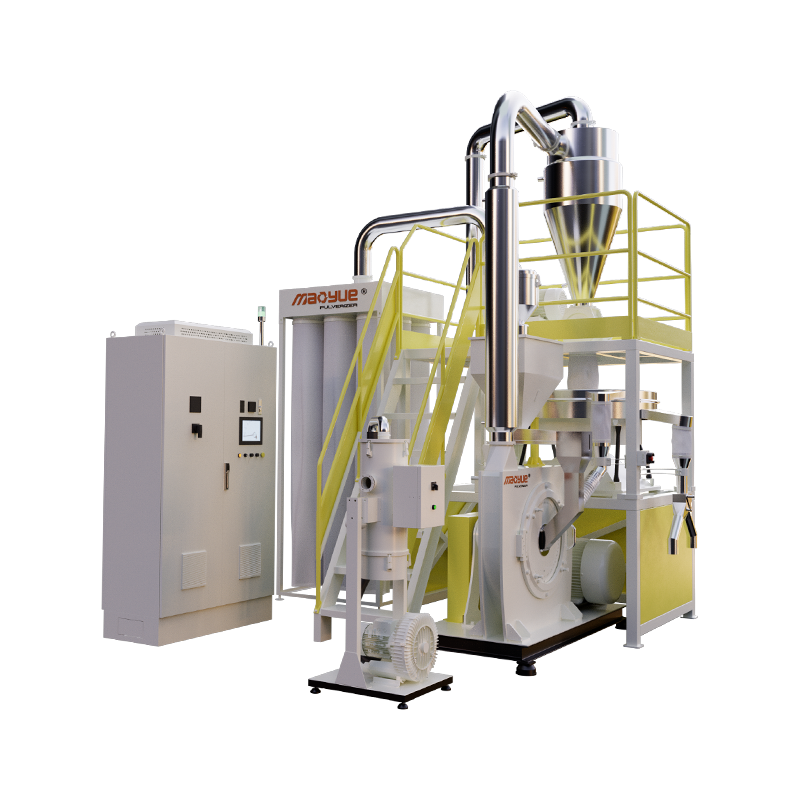
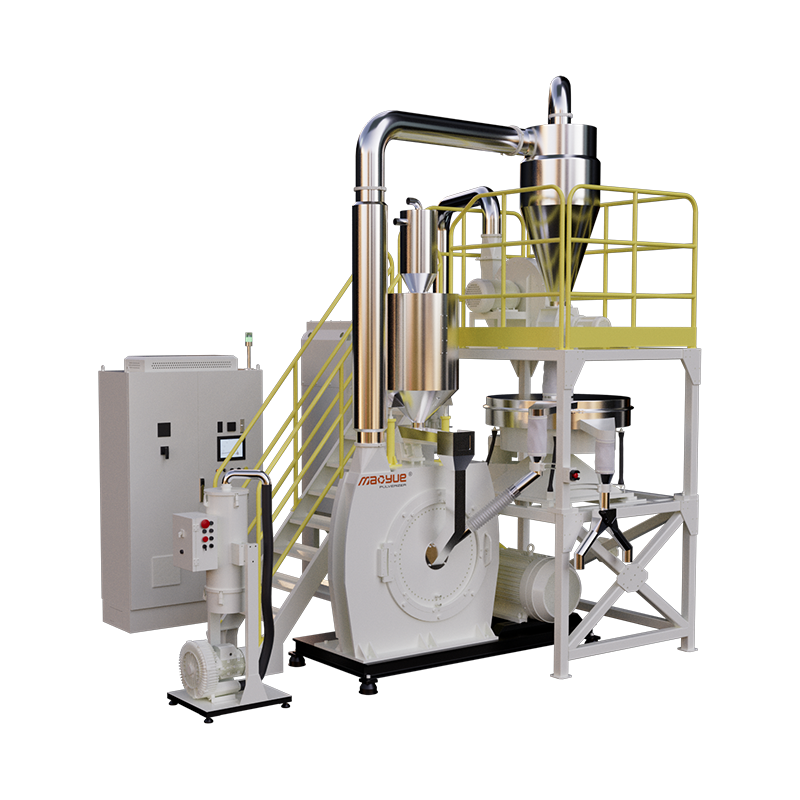
Although polypropylene (PP) and polyethylene (PE) are both polyolefins, their fracture behavior during grinding is significantly different. PP generally exhibits higher rigidity and lower impact toughness, while PE demonstrates greater ductility and elasticity. As a result, a PP PE Pulverizer Machine must accommodate different grinding mechanisms by balancing disc geometry, rotational speed, cooling intensity, and feeding rate rather than applying identical operating parameters to both materials.
Matching pulverizing conditions to the mechanical characteristics of each polymer reduces excessive fines, improves particle shape uniformity, and enhances overall process stability. Manufacturers processing multiple resin grades benefit from flexible process adjustments instead of relying on fixed machine settings.
| Material Property |
Pulverizing Consideration |
| High PP stiffness |
Maintain controlled cutting intensity |
| PE elasticity |
Enhance cooling and shearing efficiency |
| Mixed production |
Optimize operating parameters for process stability |
Particle Shape Has a Direct Influence on Downstream Extrusion Behavior
For many polymer processors, particle shape is as important as particle size. Irregular flakes with sharp edges exhibit poor flowability and inconsistent bulk density, while more uniform particles feed consistently into gravimetric dosing systems. A high-performance PP PE Pulverizer therefore aims to control particle morphology throughout the grinding process instead of focusing exclusively on micron size.
Stable particle morphology improves feeding accuracy, minimizes segregation during storage, and contributes to homogeneous melting inside extrusion equipment. These characteristics become increasingly important in automated production lines where powder handling efficiency directly affects productivity.
- Uniform particle morphology improves bulk density consistency.
- Controlled fine-particle content reduces dust generation.
- Consistent powder flow enhances automatic feeding precision.
- Optimized particle geometry supports stable extrusion performance.
Energy Optimization Depends on Grinding Efficiency Rather Than Motor Size
Increasing motor power does not necessarily improve pulverizing productivity. The actual efficiency of a PP PE Pulverizer Machine depends on the relationship between disc wear, material residence time, airflow velocity, and classification efficiency. When these variables are properly balanced, more qualified powder can be produced with lower specific energy consumption per ton.
Engineers increasingly evaluate grinding systems using total process efficiency instead of rated capacity alone. This approach reduces unnecessary recirculation, limits excessive over-grinding, and improves the economic performance of long-term industrial production.
Manufacturing Precision Creates Sustainable Process Reliability
The long-term performance of a pulverizing system depends on far more than its initial specifications. Rotor concentricity, grinding disc parallelism, dimensional tolerance control, and component interchangeability collectively determine whether production remains stable after thousands of operating hours. Maintaining these engineering standards allows powder quality to remain consistent while reducing maintenance interventions and extending equipment service life.
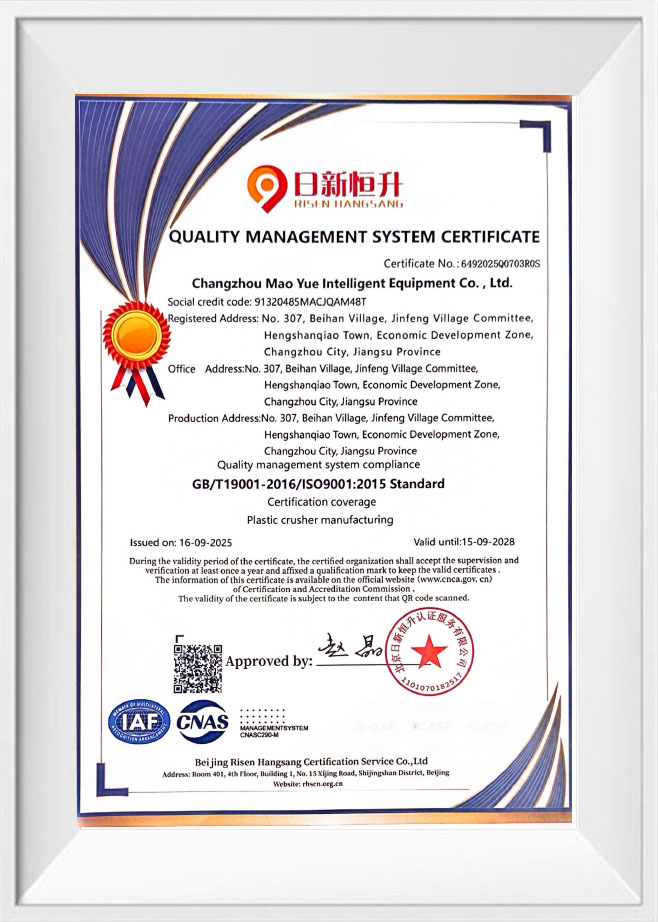
For more than 30 years, Changzhou Mao Yue Intelligent Equipment Co., Ltd. has continuously refined these critical manufacturing details while pioneering the plastic pulverizer market. Every core component is produced according to European quality standards, enabling its disc pulverizers to deliver narrow particle size distribution and outstanding powder fluidity. This engineering capability provides reliable support for PP PE Pulverizer and PP PE Pulverizer Machine applications across rotational molding, masterbatch production, and polymer processing, where repeatable powder characteristics are essential for achieving consistent downstream manufacturing results.



 English
 русский
 Español
 عربى
عربى 中文简体
中文简体
 中文简体
中文简体