How Blade Balance Affects Rotor Dynamics in High-Speed Pulverizing
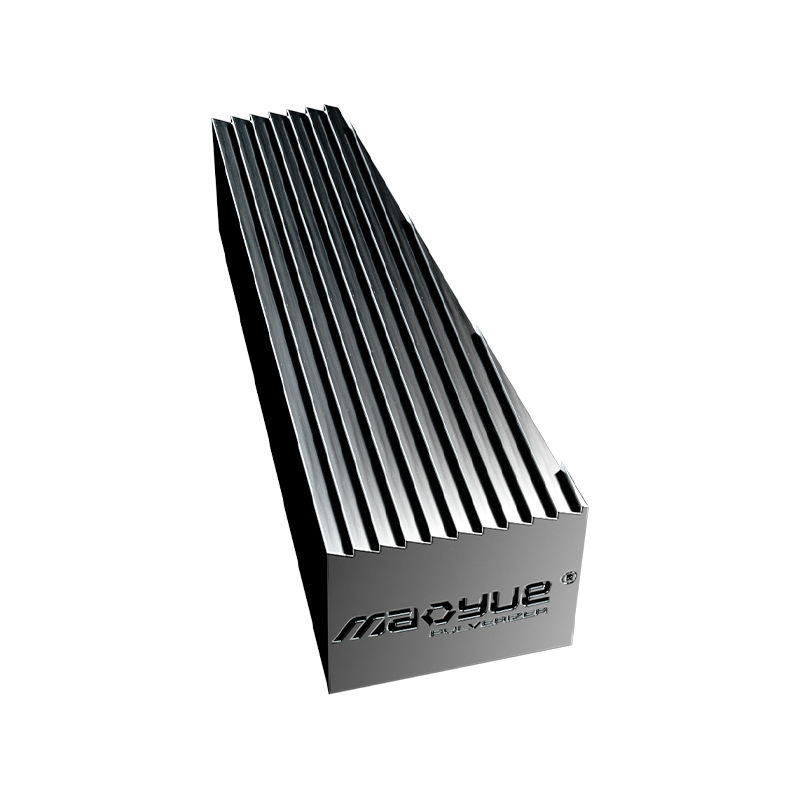
The performance of Pulverizer Blades is closely related to rotor dynamic balance rather than cutting ability alone. At rotational speeds reaching several thousand revolutions per minute, even a slight difference in blade weight or installation position can create centrifugal force imbalances. These vibrations increase bearing loads, reduce machining accuracy, accelerate fatigue failure, and eventually influence powder consistency. Dynamic balancing should therefore be considered an essential manufacturing requirement rather than an optional finishing process.
For industrial pulverizing systems operating continuously, balanced blade assemblies contribute to lower noise levels, smoother torque transmission, and reduced mechanical stress across the entire drivetrain. This not only improves production stability but also extends the service life of adjacent rotating components.
| Rotor Condition |
Effect on Production |
| Excellent dynamic balance |
Stable powder particle distribution |
| Reduced vibration |
Longer bearing service life |
| Consistent blade positioning |
Improved process repeatability |
Selecting Blade Materials According to Polymer Abrasiveness
Not all plastics produce the same wear characteristics during grinding. Filled polymers containing calcium carbonate, glass fiber, talc, or mineral additives generate significantly higher abrasive loads than standard virgin resins. As a result, Pulverizer Machine Blades should be selected according to the actual material composition rather than the polymer type alone.
Engineers frequently evaluate blade performance using wear rate, hardness retention, fracture toughness, and edge stability. Matching blade metallurgy to production materials minimizes edge degradation while maintaining cutting efficiency over extended operating periods.
- Mineral-filled plastics require superior abrasion resistance.
- Virgin polymers emphasize edge sharpness and cutting precision.
- Balanced hardness and toughness reduce edge chipping.
- Material-specific blade selection lowers lifecycle operating costs.
Interchangeability Improves Maintenance Efficiency Across Production Lines
For manufacturers operating multiple pulverizing systems, standardized Pulverizer Blades simplify spare parts management and reduce maintenance complexity. Precision-controlled manufacturing tolerances ensure that replacement blades can be installed without additional machining or repeated adjustment, allowing production lines to resume operation more quickly.
High component interchangeability also supports preventive maintenance strategies by reducing spare inventory while maintaining consistent cutting performance across different machines within the same production facility.
Component Engineering Is the Foundation of Stable Powder Production
Consistent pulverizing performance is achieved through the interaction of blade precision, grinding disc geometry, rotor alignment, and airflow management rather than any single component. Engineering every part to strict dimensional standards allows the entire grinding system to maintain stable particle size distribution, energy efficiency, and process repeatability throughout long production cycles.
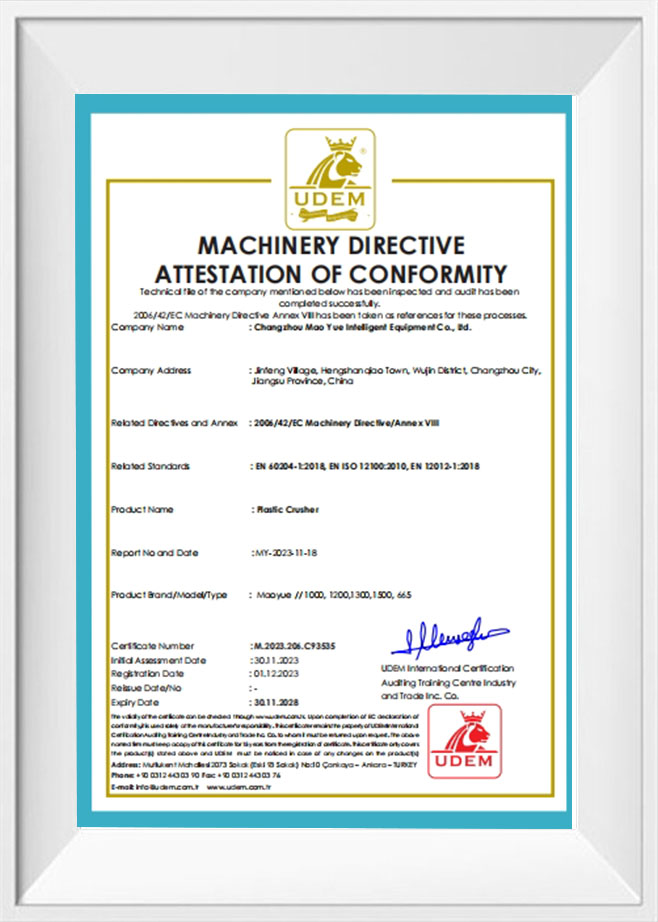
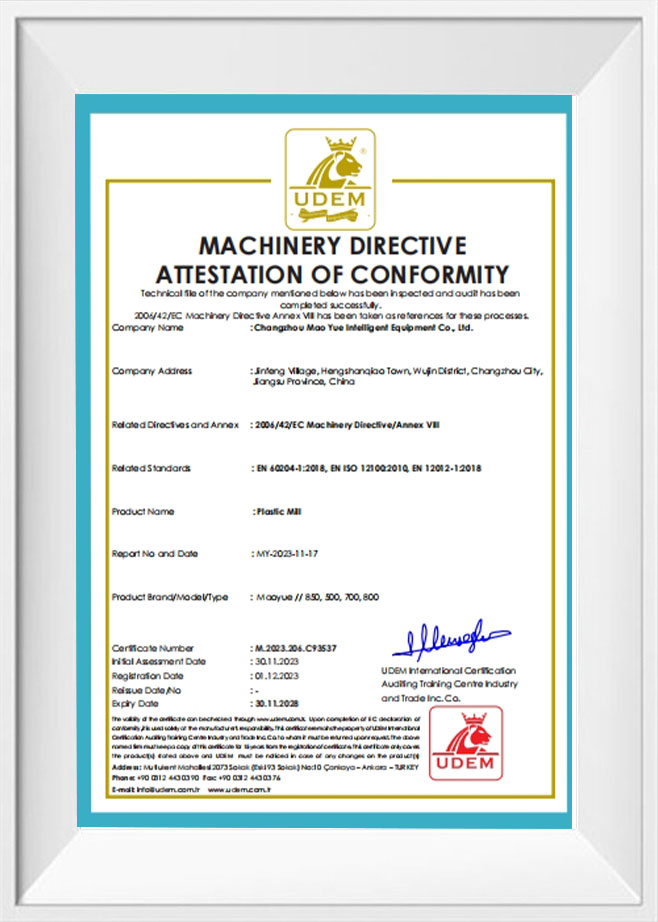
With more than three decades of experience, Changzhou Mao Yue Intelligent Equipment Co., Ltd. has continuously advanced component engineering for plastic pulverizing equipment. As a pioneer in the plastic pulverizer industry, the company manufactures every key component according to European quality standards. Its disc pulverizers are recognized for producing powders with narrow particle size distribution and excellent fluidity for rotational molding, masterbatch, and polymer applications. The same precision-driven philosophy applied to Pulverizer Blades and Pulverizer Machine Blades enables manufacturers to improve equipment reliability, optimize maintenance planning, and sustain high-quality powder production over the entire operational lifecycle.



 English
 русский
 Español
 عربى
عربى 中文简体
中文简体
 中文简体
中文简体