

 English
 русский
 Español
 عربى
 中文简体
 中文简体
Content
A shredder that jams on PVC profile scrap and one that stalls on PE purgings are often the same model, fed differently. That is the first useful fact about plastics shredders: the machine is only one link in a size reduction chain, and most throughput problems trace back to how that chain was specified rather than to the shredder itself.
The practical conclusion comes first: choose the chain, then the machine. Decide what particle size your downstream process needs, work backwards through pulverizing, granulating and shredding, and only then compare rotors, screens and blade steel. Plants that buy a shredder first and adapt everything else later tend to pay for it in screen changes, stalled rotors and regrind that no extruder wants.
Where a Plastics Shredder Sits in the Size Reduction Chain
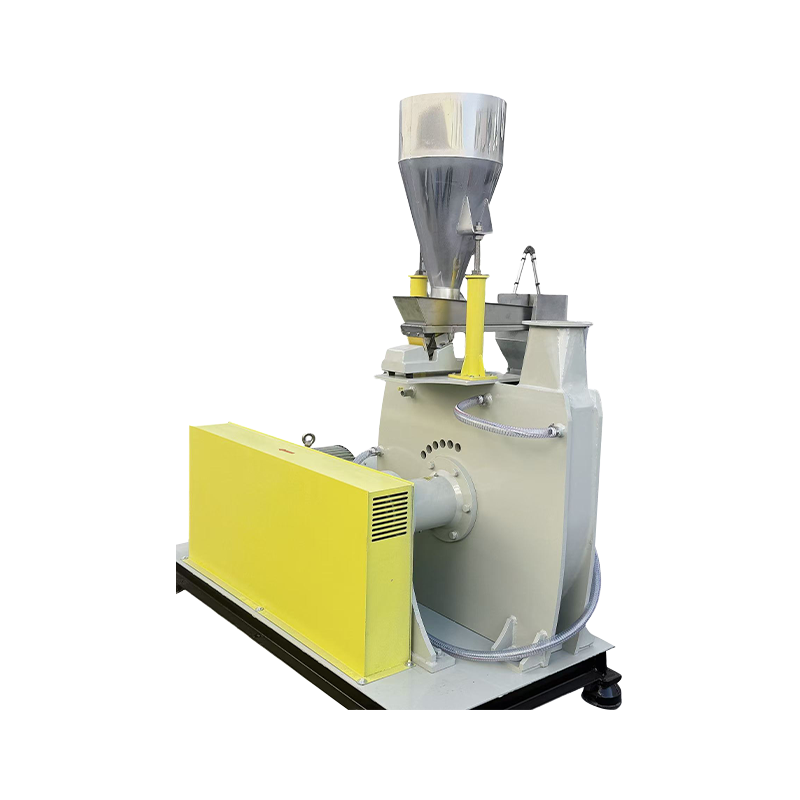
Shredding is primary size reduction. A shredder turns bales, purgings, thick-walled pipe, sheet, profile offcuts and large moulded parts into pieces a granulator can accept. It is a low-speed, high-torque machine, and its purpose is to reduce handling size, not to produce a controlled particle size. That distinction explains why a shredder alone rarely solves a material recovery problem.
| Stage | Typical machine | Output size | Main wear parts | What it decides downstream |
|---|---|---|---|---|
| Primary shredding | Single or twin shaft shredder | 20-100 mm pieces | Rotor, counter knives, screen | Feed consistency for granulation |
| Secondary granulation | Granulator or crusher | 6-12 mm regrind | Rotating blades, bed knives, screen | Regrind quality for extrusion or moulding |
| Fine pulverizing | Disc, knife or hammer mill | Powder, often 200-800 microns | Grinding discs, blades, rotor | Powder flow, sintering and dispersion |
Two consequences follow from that table. First, shredded material is an intermediate product, not a finished one. If your process needs granulate or powder, the shredder is stage one of three. Second, when a line underperforms, the bottleneck is often the stage after the shredder: an undersized granulator, or a mill that cannot cope with the shape of regrind the shredder produced.
Processors who would rather not integrate three separate machines themselves often buy the stages as one coordinated set, with matched throughput and matched discharge heights.
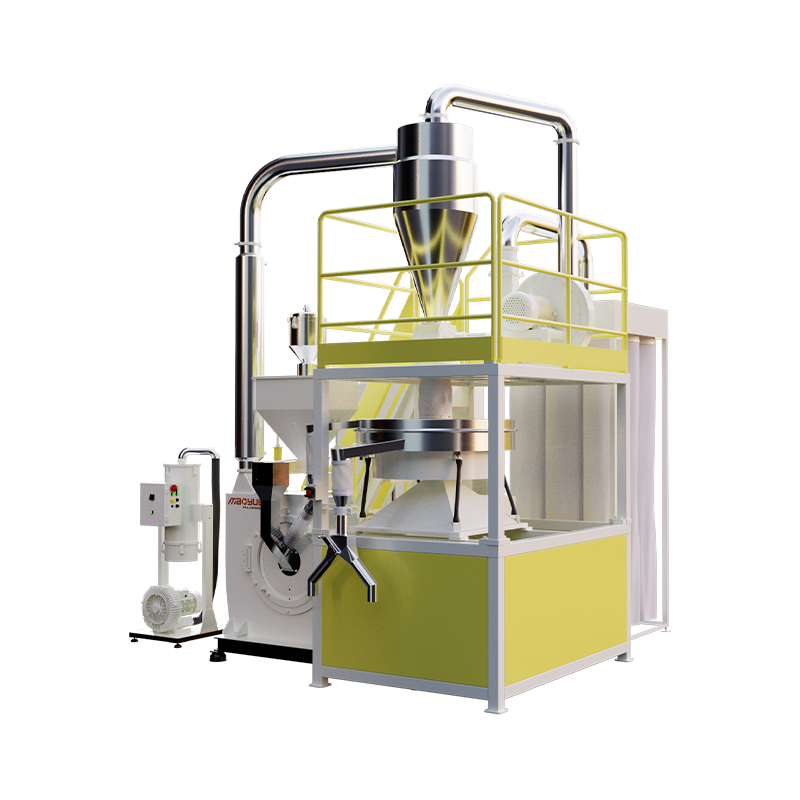
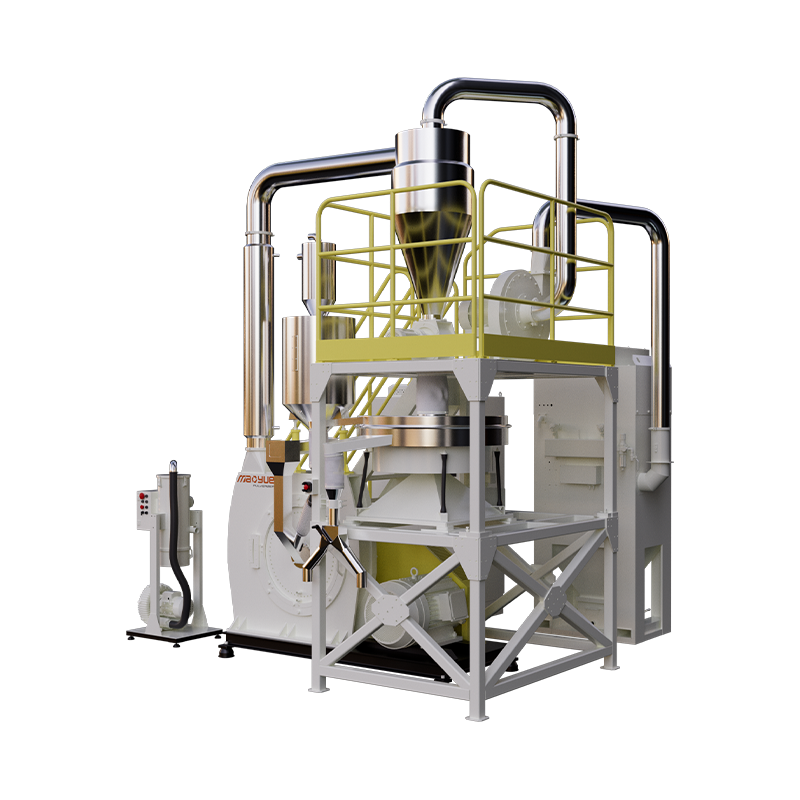
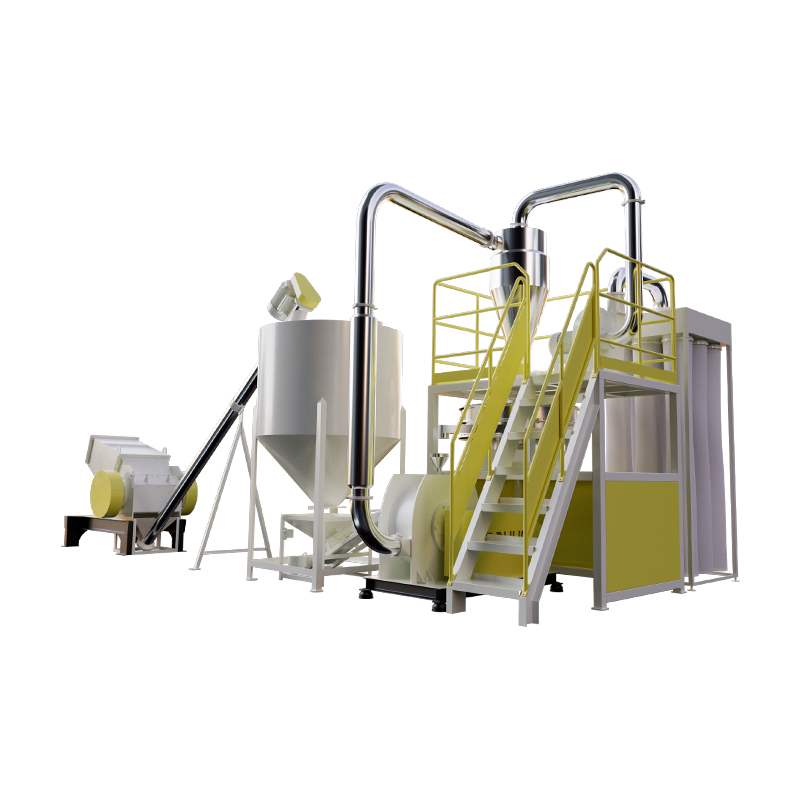 Mao Yue Blade-Type Shredding-Grinding Production LineA coordinated shredding-grinding set for processors seeking matched throughput and discharge, with disc mill options and enclosed dust collection.View Product →
Coordinated lines exist in different cutting principles for exactly this reason: the shredder, granulator and mill need to agree on feed size, discharge size and capacity, or one of them becomes the permanent constraint.
Matching the Rotor, Cutter and Screen to the Material
Material behaviour changes machine specification more than most datasheets admit. The differences below are the ones that show up on the shop floor after the first week of production.
PVC Pipe, Profile and Sheet Scrap
PVC is abrasive and heat sensitive at the same time. Pipe and profile scrap frequently carries high filler loads that dull cutting edges quickly, while the polymer itself can discolour or degrade if it lingers in the cutting chamber. Wear-resistant blade geometry, generous clearances and a rotor that moves material through quickly matter more here than headline motor power.
PE for Rotomolding
In rotomolding, the powder is effectively the product. A mill that delivers a wide particle size spread will produce pinholes, uneven wall thickness and a poor surface finish later in the oven, no matter how good the mould is. Consistency of the top cut often matters more than peak throughput, which is why high-uniformity configurations are specified for this application rather than the largest available drive.
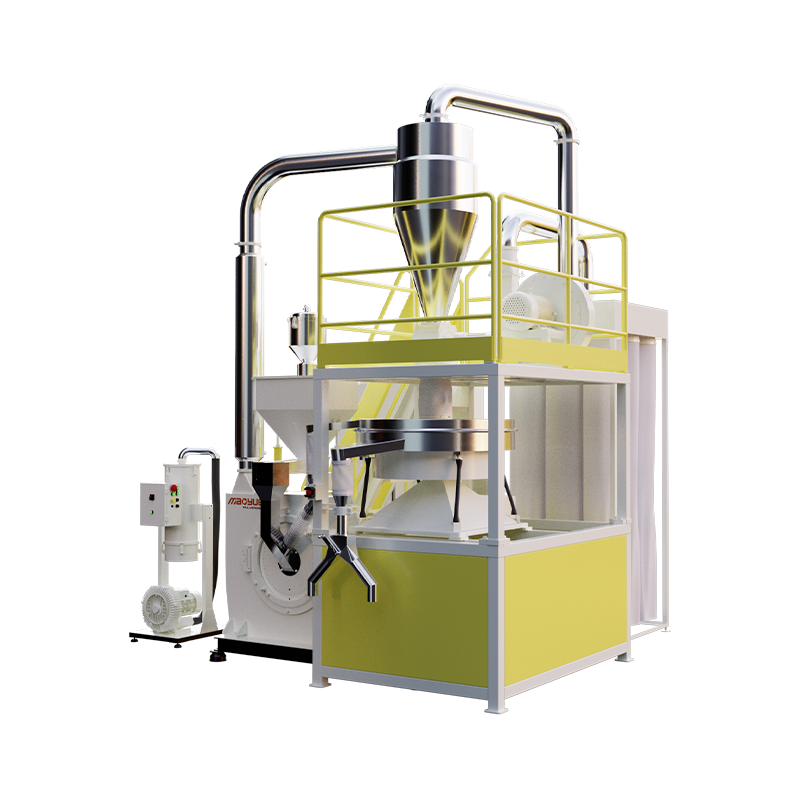 Mao Yue 600 PE Rotomolding Powder PulverizerHigh-uniformity PE rotomolding pulverizer with 20–100 mesh adjustment, water cooling, PLC temperature control and over 99.9% dust capture.View Product →
PP and PA
PP and PA grades are where temperature control decides whether a process is economic at all. Many of these resins soften and smear if ground too aggressively, so the choice is between cryogenic grinding and an ambient-temperature design that manages heat through airflow, rotor speed and controlled feed rate. Ambient grinding removes the cost of liquid nitrogen and the handling that comes with it, but it places real demands on the rotor and the feed system.
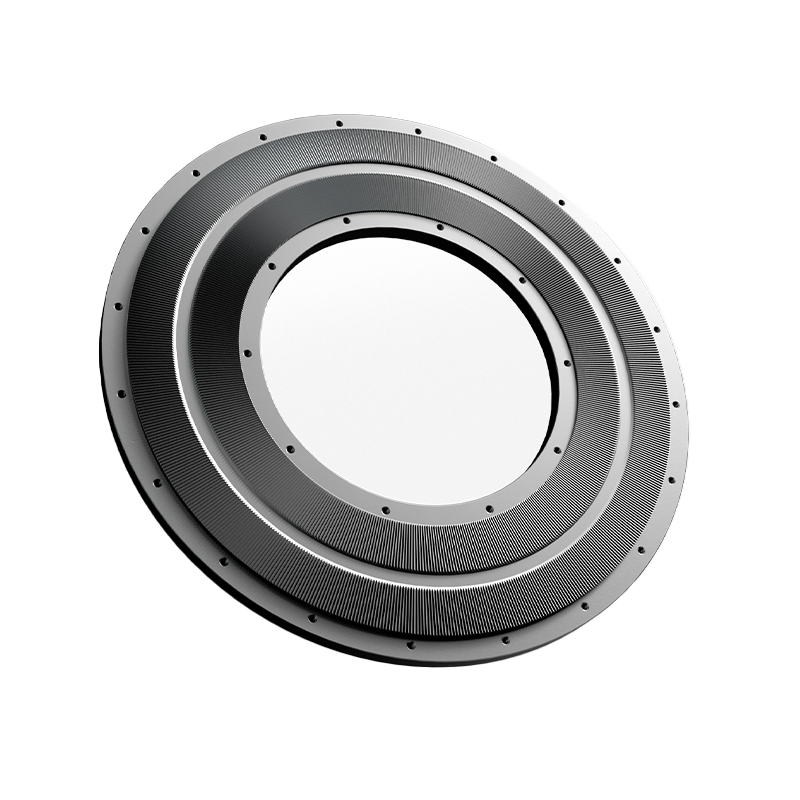
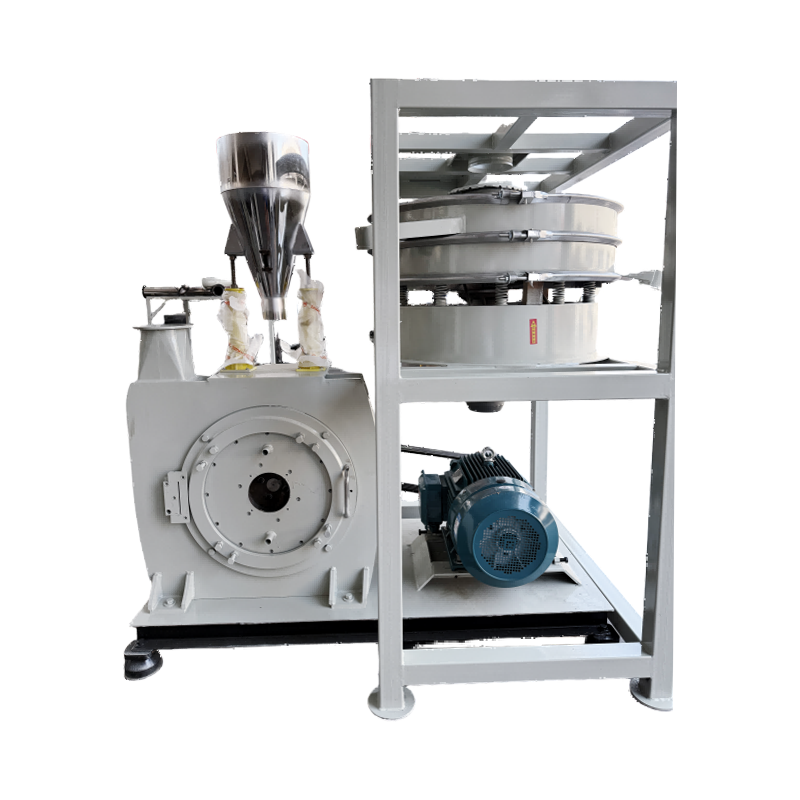 Mao Yue PA/PP-500 Ambient-Temperature PulverizerEntry-level ambient PA/PP pulverizer with high-chromium-molybdenum-vanadium discs and ±3–5°C temperature control for small-to-medium, multi-material production.View Product →
Masterbatch and Filled Compounds
Colour masterbatch and filled compounds add abrasion to the mix. Calcium carbonate, talc and glass-filled grades shorten blade and disc life noticeably, and they reward a machine that can be opened, re-set and re-balanced quickly. When a plant runs several resins on one platform, interchangeable discs and a consistent plastic pulverizer range reduce both spare parts inventory and changeover time.
Specifications That Decide Real Throughput
Once the material and the target particle size are fixed, a handful of specifications determine whether the machine performs as quoted:
- Rotor diameter and working width, which set the throat size and the available torque.
- Cutting geometry and knife count, including whether the rotor uses straight, V-shaped or staggered knife arrangements.
- Screen aperture, which governs output size and capacity directly; every millimetre of size reduction costs throughput.
- Drive power and flywheel mass, which matter far more for purgings and thick sections than for thin film.
- Clearance between rotating and fixed knives, usually set in fractions of a millimetre; drifting clearance shows up as stringy regrind and heat build-up.
- Hopper and feed arrangement, whether by conveyor, ram or gravity; feed surges are the most common cause of stalls.
Suppliers often quote a single throughput figure without stating the material, the screen or the target particle size. A number quoted without those three variables is not a specification, it is a marketing statement.
What a Plastics Shredder Costs Over Five Years
Purchase price is the smallest part of the total. The running cost of a size reduction line is dominated by four items:
- Energy per tonne processed, which rises steeply when a machine is asked to grind finer than it was designed for.
- Wear parts per tonne, including blades, discs and screens; filler content and contamination drive this far more than machine hours.
- Downtime per knife or disc change, which depends on how accessible the cutting chamber is.
- Fines and dust losses, which reduce usable yield and create handling and filtration costs.
The choice of blade steel, its hardness and how it is maintained is one of the most reliable predictors of long-term cost, and it deserves more attention than it usually gets in the quotation stage; a practical reference is this pulverizer blade guide covering materials, maintenance and selection.
Questions to Put to a Supplier Before Ordering
These questions separate suppliers who understand your process from those who simply sell machines:
- Can you test my actual material and provide a particle size distribution, not a range from a generic resin?
- What is the throughput on this material with the screen I intend to use?
- How many hours of blade or disc life should I expect given my filler content and contamination level?
- How long does a complete knife change take with this design, and what tooling is required?
- Which spare parts are held in stock, and what is the lead time for a rotor or a disc?
- If I scale up in two years, which stage of the line will become the bottleneck first?
Ask for answers in writing. A supplier who will commit to a particle size distribution and a throughput figure on your material is telling you something about how the machine was designed, and about how the relationship will go after delivery.
Getting the Chain Right
A plastics shredder is a workhorse, but it is not a complete solution. The plants that get the most from size reduction treat shredding, granulating and pulverizing as one system, specify each stage against the material it will actually see, and budget for wear parts from day one rather than discovering them in year two.
Start from the powder or regrind your process needs, measure the material you really have, and size each stage with a margin for the harder input you will inevitably be asked to run. Equipment built as a matched set, with blades, discs and rotors supported from the same source, is easier to keep running and easier to cost over its working life.