Why Material Flow Balance Determines the Efficiency of a Plastic Crushing and Grinding Production Line
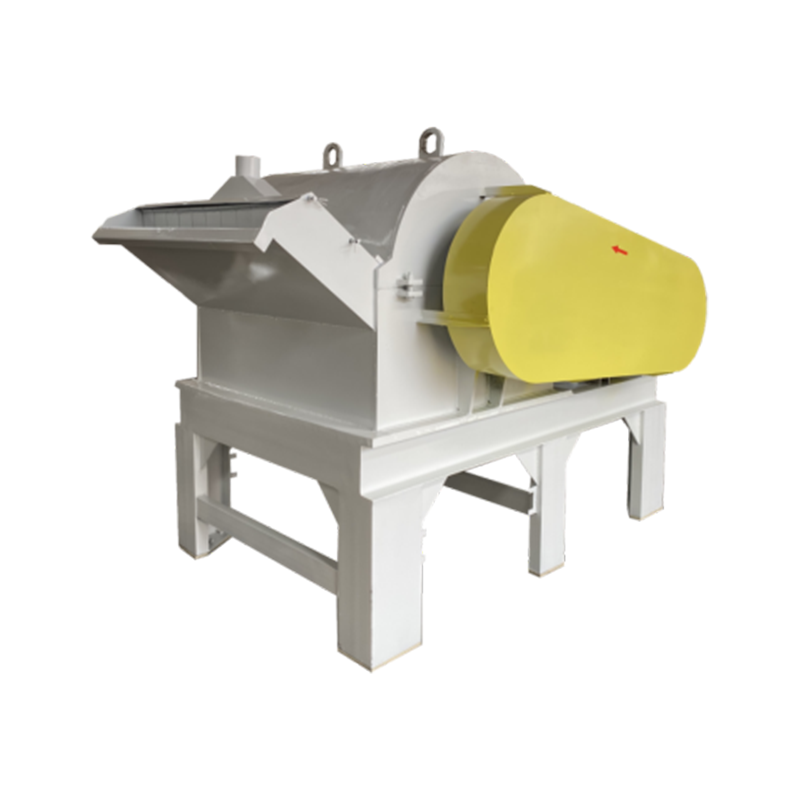
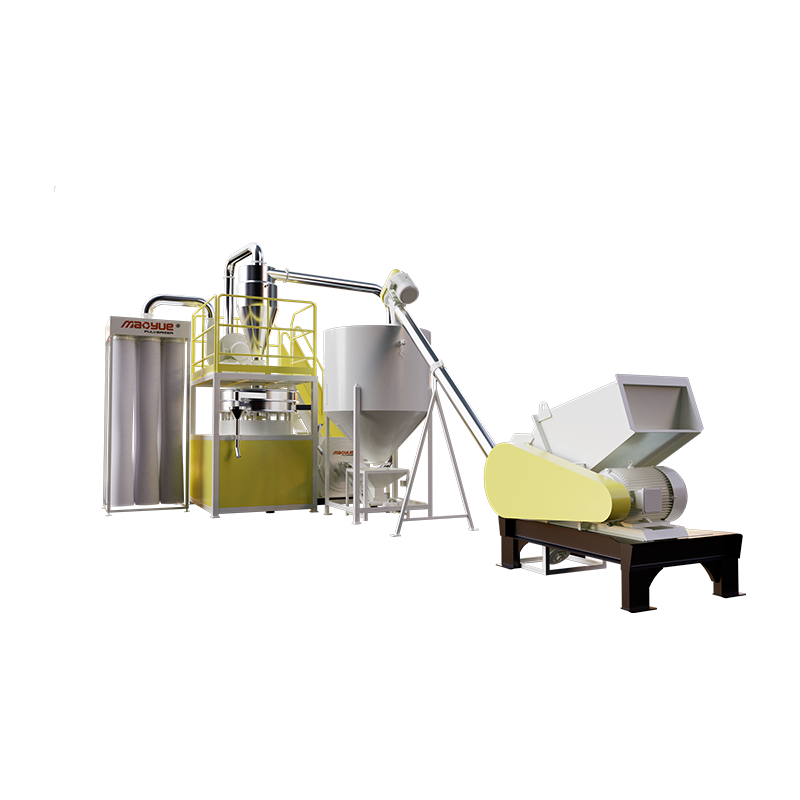
The performance of a Plastic Crushing and Grinding Production Line is not determined solely by the crushing or pulverizing equipment. Instead, production stability depends on the balance of material flow throughout the entire process. If the crusher feeds material faster than the pulverizer can process it, excess inventory accumulates between stages, increasing energy consumption and causing inconsistent production. Conversely, insufficient feeding leaves downstream equipment underutilized, reducing overall throughput.
Modern production lines therefore focus on matching crushing capacity, conveying speed, intermediate storage volume, and pulverizing efficiency. By optimizing these parameters as a complete system, manufacturers can achieve continuous operation while maintaining consistent powder quality and minimizing unnecessary equipment wear.
| Process Stage |
Optimization Objective |
| Primary Crushing |
Uniform particle feed size |
| Material Conveying |
Stable mass flow without blockage |
| Pulverizing |
Consistent particle morphology |
| Powder Collection |
Efficient recovery with minimal dust loss |
Air Classification Has a Greater Impact Than Grinding Speed
Many operators attempt to increase production by raising disc speed, but particle classification efficiency often has a greater influence on final powder quality. Within a Plastic Crushing and Pulverizing Line, the air classification system determines which particles are discharged and which are returned for additional grinding. Proper airflow distribution minimizes oversized particles while preventing excessive over-grinding that creates unnecessary fines.
Optimizing classification efficiency improves process repeatability, reduces energy consumption per ton of material, and produces powders with more uniform morphology. This is particularly valuable for applications requiring stable bulk density and predictable downstream processing behavior.
- Balanced airflow improves particle separation efficiency.
- Controlled residence time prevents excessive grinding.
- Stable classification reduces particle size variation between production batches.
- Efficient powder recovery lowers material loss and housekeeping costs.
Designing Production Lines Around Material Characteristics Instead of Equipment Capacity
A common engineering mistake is selecting equipment based only on rated capacity. In reality, different polymers exhibit unique fracture behavior, thermal sensitivity, and elasticity, requiring customized process configurations. PE, EVA, PVC, PP, and engineering plastics respond differently to crushing forces and disc grinding conditions, making process matching more important than simply increasing machine size.
For this reason, an efficient Plastic Crushing and Grinding Production Line should be configured according to feedstock characteristics, target particle size distribution, cooling strategy, and conveying method. Designing the entire production flow around the material significantly improves throughput stability while reducing total cost of ownership over the equipment lifecycle.
Engineering Consistency Begins with Every Process Component
Behind a reliable Plastic Crushing and Pulverizing Line is not only advanced equipment, but also the precision manufacturing of every rotating component, grinding disc, conveying module, and airflow control system. Even small improvements in dimensional tolerance, dynamic balancing, and assembly accuracy can significantly enhance process repeatability and reduce long-term maintenance requirements.
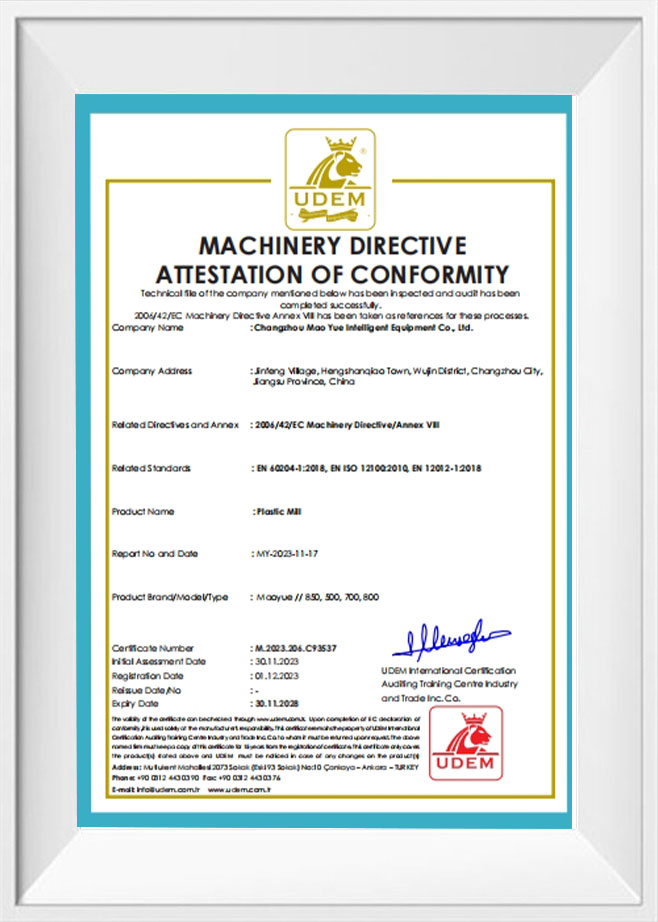
This engineering philosophy has guided Changzhou Mao Yue Intelligent Equipment Co., Ltd. throughout its 30 years of industry development. As a pioneer in the plastic pulverizer market, the company manufactures each component according to European quality standards. Its disc pulverizers are recognized for producing powders with narrow particle size distribution and excellent fluidity, supporting demanding applications in rotational molding, masterbatch, and polymer processing where powder consistency directly influences downstream product performance rather than simply meeting production volume targets.



 English
 русский
 Español
 عربى
عربى 中文简体
中文简体
 中文简体
中文简体