Why Blade Edge Retention Is More Important Than Initial Sharpness for PVC Processing
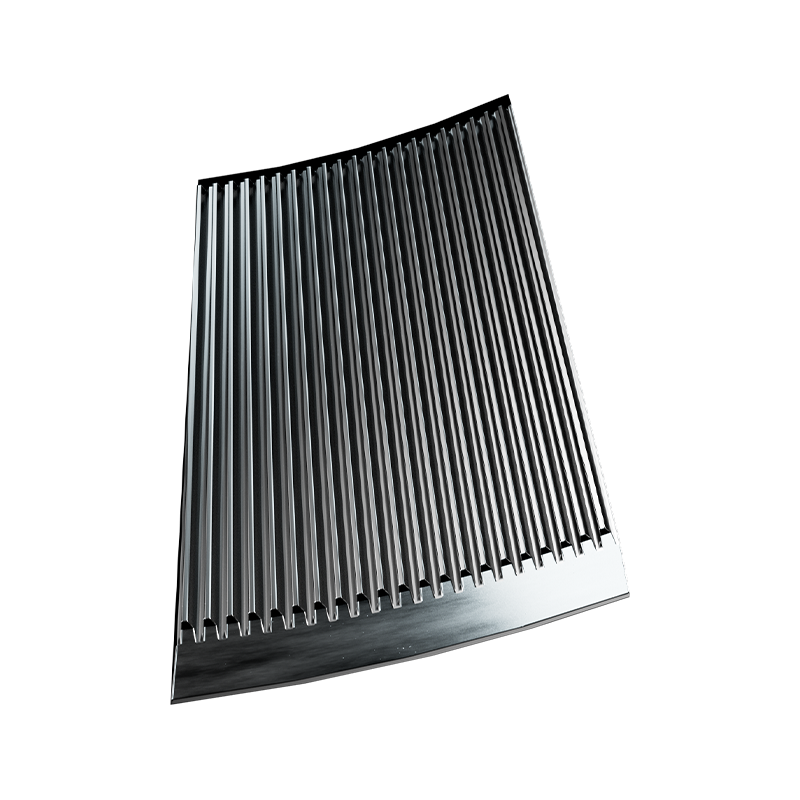
Many buyers evaluate PVC Pulverizer Blades and Knives by how sharp they are when first installed. In industrial production, however, the more meaningful performance indicator is edge retention. A blade that maintains a stable cutting edge throughout hundreds of operating hours provides significantly greater process consistency than one that begins extremely sharp but wears rapidly. As the cutting edge deteriorates, the grinding mechanism gradually shifts from efficient shearing to friction-dominated abrasion, increasing heat generation and reducing particle size uniformity.
Because PVC is relatively sensitive to thermal degradation, maintaining an effective cutting edge is essential for controlling material temperature inside the grinding chamber. Stable edge retention helps preserve resin properties while reducing power consumption and minimizing unnecessary recirculation within the pulverizing system.
Performance Comparison Throughout Blade Life
| Blade Condition |
Effect on Pulverizing Process |
| Stable cutting edge |
Efficient shearing with low heat generation |
| Moderate edge wear |
Gradual increase in energy demand |
| Severe edge rounding |
Higher friction and inconsistent powder quality |
Matching Blade Materials to Different PVC Formulations
Rigid PVC compounds, flexible PVC materials, recycled PVC, and heavily filled formulations all create different mechanical loads on PVC Pulverizer Blades and Knives. Calcium carbonate, glass fibers, flame retardants, and mineral fillers significantly increase abrasive wear, while plasticized PVC may generate higher frictional heating due to its greater ductility. Selecting blade materials solely according to hardness is therefore insufficient for demanding production environments.
Blade material selection should balance wear resistance, fracture toughness, thermal stability, and machinability. Premium alloy steels combined with optimized heat treatment generally provide a better compromise between durability and resistance to edge chipping than extremely hard but brittle materials.
Factors Influencing Blade Material Selection
- Mineral-filled PVC requires enhanced abrasion resistance.
- Flexible PVC benefits from efficient heat dissipation.
- Recycled PVC demands higher resistance to impact and contaminants.
- Balanced hardness and toughness improve overall blade lifespan.
The Relationship Between Blade Clearance and Powder Classification Efficiency
Blade clearance directly affects how material enters the grinding zone and interacts with the classification system. Excessive clearance reduces cutting efficiency and produces oversized particles, while insufficient clearance increases mechanical contact, accelerates wear, and elevates operating temperature. Proper adjustment allows particles to experience controlled shearing before reaching the classifier, resulting in more consistent powder morphology.
Engineers increasingly evaluate blade clearance together with airflow distribution and classifier performance rather than treating these parameters independently. Optimizing the interaction between these systems improves process capability, reduces over-grinding, and lowers the specific energy consumption of the pulverizing line.
Process Parameters That Work Together
| Parameter |
Primary Influence |
| Blade clearance |
Cutting efficiency and temperature control |
| Airflow velocity |
Particle transport and cooling |
| Classifier accuracy |
Final particle size consistency |
Precision Manufacturing Reduces Lifecycle Cost Rather Than Simply Extending Blade Life
From a total cost of ownership perspective, the value of high-quality PVC Pulverizer Blades and Knives extends far beyond longer replacement intervals. Precision machining improves blade interchangeability, reducing installation time and eliminating repeated alignment adjustments. Accurate dimensional tolerances also help maintain rotor balance, lower vibration levels, and reduce bearing fatigue, which collectively decrease maintenance costs throughout the entire pulverizing system.
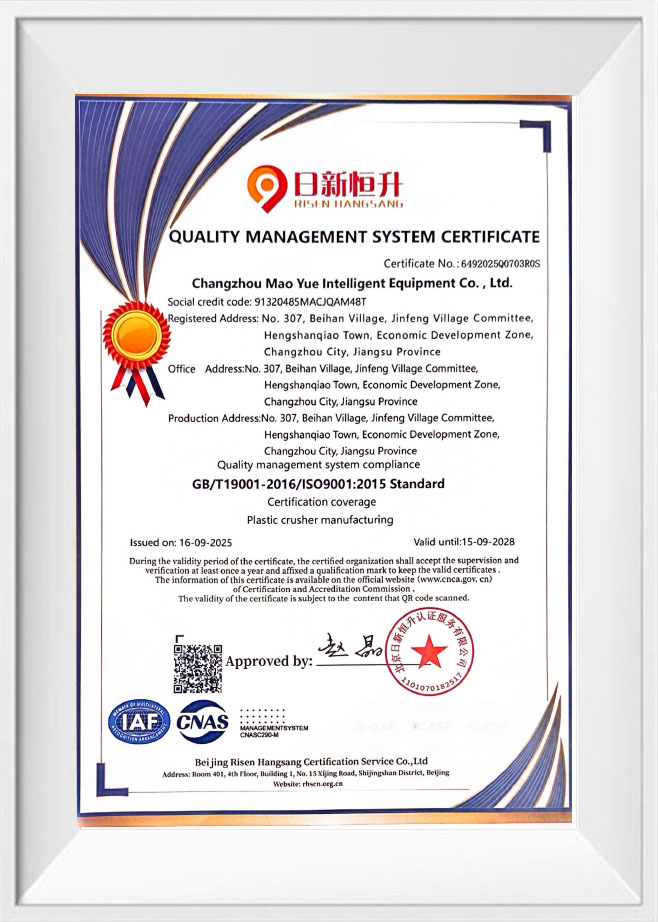
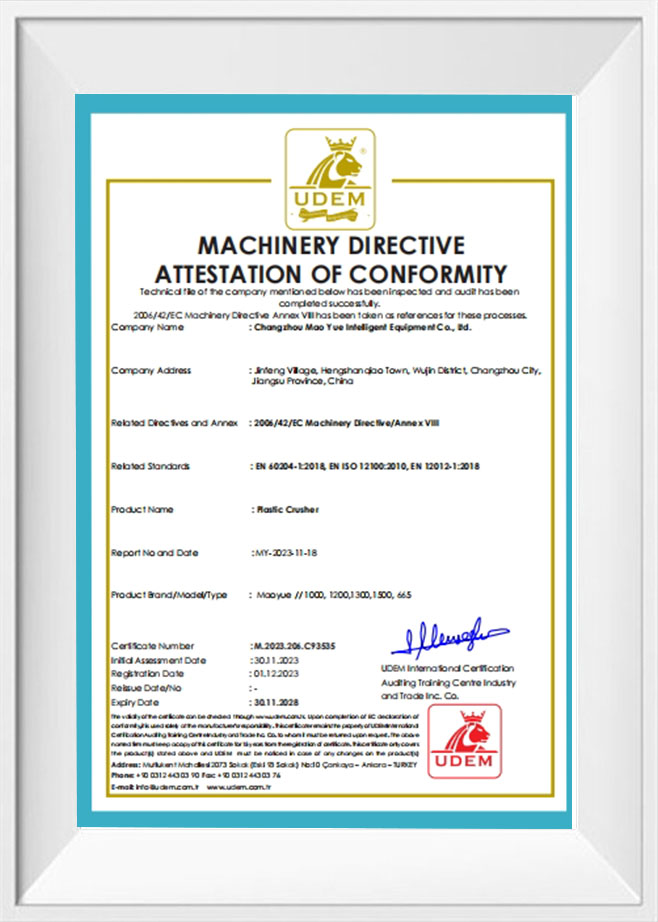
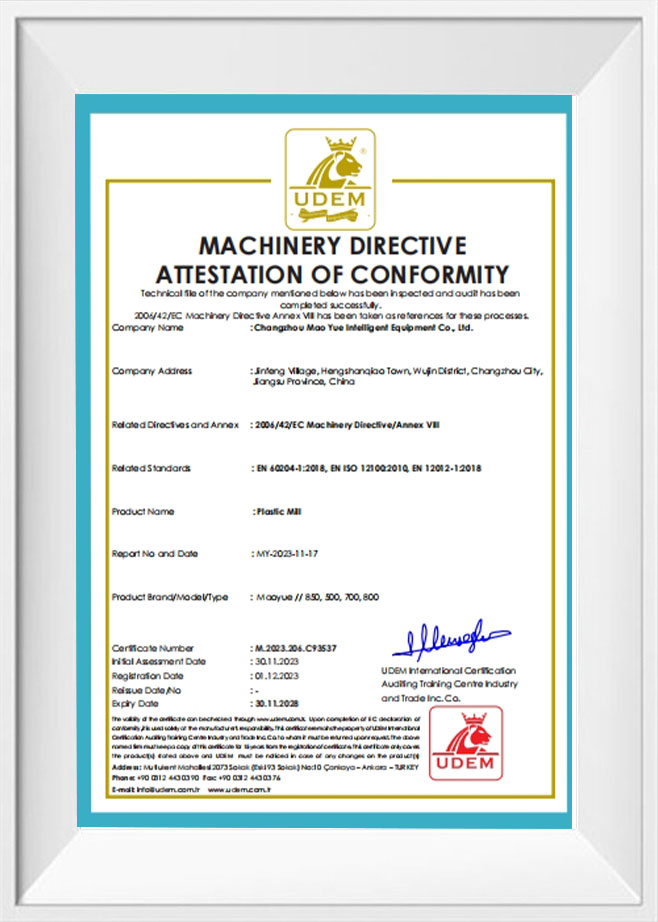
This component-focused engineering philosophy has been central to Changzhou Mao Yue Intelligent Equipment Co., Ltd. for more than three decades. As one of the pioneers of the plastic pulverizer market, the company manufactures every key component according to European quality standards rather than treating wear parts as interchangeable commodities. Its renowned disc pulverizers consistently produce powders with narrow particle size distribution and excellent fluidity for rotational molding, masterbatch, and polymer processing. By applying the same precision manufacturing principles to PVC Pulverizer Blades and Knives, the company helps customers improve process repeatability, reduce maintenance-related downtime, and build more stable powder production systems capable of meeting increasingly demanding industrial quality standards.



 English
 русский
 Español
 عربى
عربى 中文简体
中文简体
 中文简体
中文简体