

 English
 русский
 Español
 عربى
 中文简体
 中文简体
Content
- 1 What Are the Common Signs of Color Masterbatch Powder Collection Problems?
- 2 Six Main Causes of Color Masterbatch Powder Collection Problems
- 2.1 Excessive Fines Affect Powder Separation
- 2.2 Unstable or Improperly Configured Conveying Airflow
- 2.3 Cyclone Separator Does Not Match Actual Powder Characteristics
- 2.4 Static Electricity Causes Powder Adhesion
- 2.5 Excessive Temperature Causes Powder Agglomeration and Adhesion
- 2.6 Filter Clogging and Poor Powder Discharge
- 3 How Can You Identify Where Color Masterbatch Powder Is Being Lost?
- 4 How to Measure Powder Recovery Efficiency
- 5 How to Improve Color Masterbatch Powder Collection Efficiency
- 6 How Should Buyers Evaluate a Color Masterbatch Pulverizing System?
- 7 How Does Mao Yue Help Customers Improve Color Masterbatch Powder Collection?
- 8 Frequently Asked Questions About Color Masterbatch Powder Collection
- 9 Conclusion: Powder Recovery Depends on the Compatibility of the Complete Pulverizing System
- 10 Having Trouble Collecting Color Masterbatch Powder? Contact Mao Yue for a Pulverizing and Collection System Evaluation
During color masterbatch pulverizing, some manufacturers may find that their pulverizers are operating normally, yet the amount of powder collected is lower than expected. Some powder may accumulate inside conveying pipelines, adhere to equipment surfaces, or be carried by airflow into the downstream dust collection system.
Insufficient powder collection does not necessarily indicate a decline in pulverizer capacity. The problem may be related to particle size distribution, conveying airflow, cyclone separation, static electricity, processing temperature, or filtration and discharge conditions.
For color masterbatch manufacturers, what matters more is how much recovered powder meets the target particle size and downstream processing requirements, and whether the output of qualified powder can remain stable.
This article explains six common causes of color masterbatch powder collection problems, diagnostic methods, and the powder recovery indicators that buyers should consider when purchasing equipment.
https://youtube.com/shorts/Xar9KV6QA28
What Are the Common Signs of Color Masterbatch Powder Collection Problems?
Powder collection problems occurring at different stages of the system often show different symptoms.
These symptoms can help identify where an abnormality occurs, but they cannot directly confirm its cause.
In addition, powder that does not enter the main collection container is not necessarily lost. Some fine powder may be captured by the dust collector. Whether it can be counted as qualified powder depends on whether it meets the required quality specifications.
Six Main Causes of Color Masterbatch Powder Collection Problems
Excessive Fines Affect Powder Separation
The particle size distribution of color masterbatch powder affects how particles move and separate within an airflow.
When the proportion of fine particles is too high, some powder may not be effectively separated by the cyclone separator and may instead travel with the airflow into the downstream dust collection system, increasing the filtration load.
Grinding disc clearance, disc wear, feeding conditions, and material formulation can all influence the proportion of fines.
Therefore, powder collection difficulties may sometimes result from a mismatch between the particle size distribution produced during pulverizing and the operating conditions of the downstream separation system.
Unstable or Improperly Configured Conveying Airflow
The pneumatic conveying system transports powder to the cyclone separator and downstream collection equipment.
When conveying velocity is insufficient, powder may settle inside horizontal pipelines and elbows. Excessive airflow, on the other hand, may increase fine-particle carryover and affect cyclone separation performance.
Pipeline layout, air leakage, and changes in filter resistance can also influence airflow stability.
Improving powder conveying requires balancing conveying performance with downstream separation efficiency, rather than simply increasing fan speed.
Cyclone Separator Does Not Match Actual Powder Characteristics
A cyclone separator uses centrifugal forces generated by rotating airflow to separate particles from the air stream.
Its separation performance depends on particle size, particle density, inlet airflow conditions, equipment geometry, and powder discharge conditions.
For relatively fine or low-density powders, unsuitable operating conditions may allow more particles to pass into the downstream filtration system.
In addition, air leakage through the rotary airlock valve, blocked discharge outlets, or powder accumulation inside the hopper may reduce effective powder collection performance.
Static Electricity Causes Powder Adhesion
During color masterbatch pulverizing and pneumatic conveying, friction between particles and between particles and equipment surfaces may generate static electricity.
Electrostatic forces may cause powder to adhere to pipelines, cyclone separators, and collection equipment surfaces, increasing material residues and cleaning requirements.
This behavior may be influenced by the polymer carrier, particle size, ambient humidity, and materials in contact with the powder.
However, powder accumulation is not necessarily caused by static electricity. Temperature-related adhesion and airflow abnormalities should also be investigated. For systems where combustible dust atmospheres may occur, dust fire and explosion risks should be assessed according to applicable safety standards.
Excessive Temperature Causes Powder Agglomeration and Adhesion
Frictional heat generated during pulverizing may cause certain color masterbatch formulations to approach their softening or tackiness range.
Once powder begins to adhere or agglomerate, its flowability may decrease, making it more likely to accumulate at pipeline elbows, cyclone discharge outlets, and collection hoppers.
For heat-sensitive formulations, temperature buildup during continuous operation may gradually worsen powder collection problems. Therefore, both processing temperature and powder condition should be monitored.
Filter Clogging and Poor Powder Discharge
When excessive powder accumulates on filter surfaces, pulse-jet cleaning is insufficient, or the filter media are unsuitable, filtration resistance may increase and affect system airflow stability.
Meanwhile, powder that has already been separated may fail to discharge properly because of hopper bridging, rotary airlock blockage, or other discharge abnormalities.
In these situations, the problem occurs in the filtration or discharge stage. Simply adjusting grinding disc clearance or increasing pulverizer throughput will not resolve it.
How Can You Identify Where Color Masterbatch Powder Is Being Lost?
Before adjusting the pulverizer or powder collection system, it is important to establish comparable testing conditions and determine where the material goes throughout the system.
Two situations should be distinguished:
-
Reduced pulverizing throughput: The amount of material actually processed per unit of time decreases.
-
Insufficient powder recovery: Material has entered the processing system, but some powder cannot be properly recovered from the designated collection points.
These problems may occur simultaneously, but they require different measurements to identify.
Step 1: Establish a Material Balance to Track Powder Flow
After defining the testing boundaries, record the total feed mass, powder collected at each collection point, rejected material from screening, and measurable material residues inside the equipment.
A complete material balance should account for changes in material inventory within the system:
Material Input = Recovered Powder + Other Measured Material Outputs + Actual Material Losses + Net Increase in System Material Inventory
Actual losses may include uncaptured dust, leaked material, and other material that cannot be directly recovered.
If not all losses can be measured directly, they may be estimated through a material balance, while accounting for weighing errors and unmeasured material.
For continuous production tests, particular attention should be paid to whether the amount of material retained inside the equipment is consistent at the beginning and end of the test. Otherwise, normal changes in system inventory may be incorrectly interpreted as powder losses.
Step 2: Verify Potential Causes Based on On-Site Symptoms
The purpose of diagnosis is not to adjust every component simultaneously, but to identify the likely source of the collection problem based on available evidence.
Step 3: Adjust Key Variables and Compare Results
After identifying the priority inspection area, keep the raw material, feed rate, and other operating conditions as consistent as possible, and adjust one major variable at a time.
For example, after adjusting conveying airflow, compare the following:
-
Whether powder accumulation inside pipelines has decreased.
-
Whether powder quantities collected by the cyclone separator and dust collector have changed.
-
Whether filter differential pressure remains stable.
-
Whether the final recovery of qualified powder has improved.
An adjustment can be considered effective with greater confidence only when changes in system residues, powder recovery, and qualified powder output collectively support the improvement.
Otherwise, the adjustment may simply transfer powder from one collection point to another.
How to Measure Powder Recovery Efficiency
Total collected powder does not fully represent the actual production value of a color masterbatch pulverizing system.
For equipment evaluation, manufacturers should consider the apparent powder recovery rate, qualified powder recovery rate, and qualified powder output per unit of time.
Apparent Powder Recovery Rate
Apparent Powder Recovery Rate (%) = Total Mass of Recovered Powder During the Test ÷ Total Mass of Material Fed During the Test × 100 per cent
For example, if 100 kg of color masterbatch is fed into the system and 94 kg of powder is recovered from the designated collection points, the apparent recovery rate is 94%.
However, the remaining 6 kg is not necessarily entirely lost. Some material may remain inside the equipment, while some may be rejected during screening.
Therefore, this indicator should be interpreted together with the material balance.
Qualified Powder Recovery Rate
Qualified Powder Recovery Rate (%) = Mass of Recovered Powder Meeting Target Specifications ÷ Total Mass of Material Fed During the Test × 100 per cent
This indicator shows how much of the input material ultimately becomes usable powder that meets the required specifications.
For example, under identical testing conditions, two systems each process 100 kg of color masterbatch:
The figures above are hypothetical examples used to explain the difference between these indicators. They are not actual Maoyue test results.
Although System A collects more powder overall, System B produces a greater quantity of powder that meets the target specifications.
Therefore, a higher total powder recovery rate does not necessarily indicate better actual production performance.
Buyers should also verify whether the recovered powder meets the required particle size distribution, flowability, and downstream processing requirements.
Qualified Powder Output
Qualified Powder Output (kg/h) = Mass of Powder Meeting Target Specifications During the Test ÷ Effective Testing Time (h)
Qualified powder output reflects the actual production capacity of equipment under specific material, powder specification, and operating conditions.
For customers planning continuous production, it is also important to determine whether qualified powder output remains stable over different operating periods.
For example, a system may achieve high qualified powder output during a short test, but its output may decline significantly during continuous operation because of temperature buildup, increased filtration resistance, or discharge problems.
In such cases, short-term test results cannot directly represent long-term production capacity.
When comparing different equipment solutions, buyers should use consistent raw materials, testing conditions, and qualified powder acceptance criteria whenever possible, rather than evaluating performance solely based on rated capacity or the amount of powder collected during a single test.
How to Improve Color Masterbatch Powder Collection Efficiency
Improvements should be based on actual diagnostic results, with the goal of reducing unnecessary material retention while maintaining powder quality and stable qualified powder output.
It is important to recognize that these stages influence one another.
For example, increasing airflow may reduce powder accumulation inside pipelines but also increase the proportion of fine particles entering the dust collector.
Therefore, overall system recovery performance should still be verified after any adjustment.
How Should Buyers Evaluate a Color Masterbatch Pulverizing System?
For manufacturers planning to install or upgrade a color masterbatch pulverizing line, motor power and rated capacity should only serve as preliminary equipment selection references.
More importantly, buyers should verify whether the system can achieve the required qualified powder output and recovery performance under specified material conditions, target powder specifications, and continuous operating conditions.
Before testing, buyers should define the raw material, target particle size, qualified powder acceptance criteria, testing duration, and performance requirements.
If a complete pulverizing and powder collection line is being purchased, buyers should also confirm whether the testing equipment has conveying, separation, and collection configurations comparable to those of the proposed production line.
Results from a standalone pulverizer test cannot directly represent the recovery performance of a complete production line.
How Does Mao Yue Help Customers Improve Color Masterbatch Powder Collection?
Color masterbatch powder collection performance depends not only on cyclone separators or dust collectors, but also on the particle size distribution, powder temperature, and flow characteristics generated during pulverizing.
Therefore, when evaluating color masterbatch pulverizing projects, Mao Yue considers core grinding components, actual powder characteristics, and downstream collection configurations together to help customers identify the key conditions affecting qualified powder output and powder recovery.
In-House Grinding Disc Manufacturing Supports Powder Quality and Collection System Compatibility
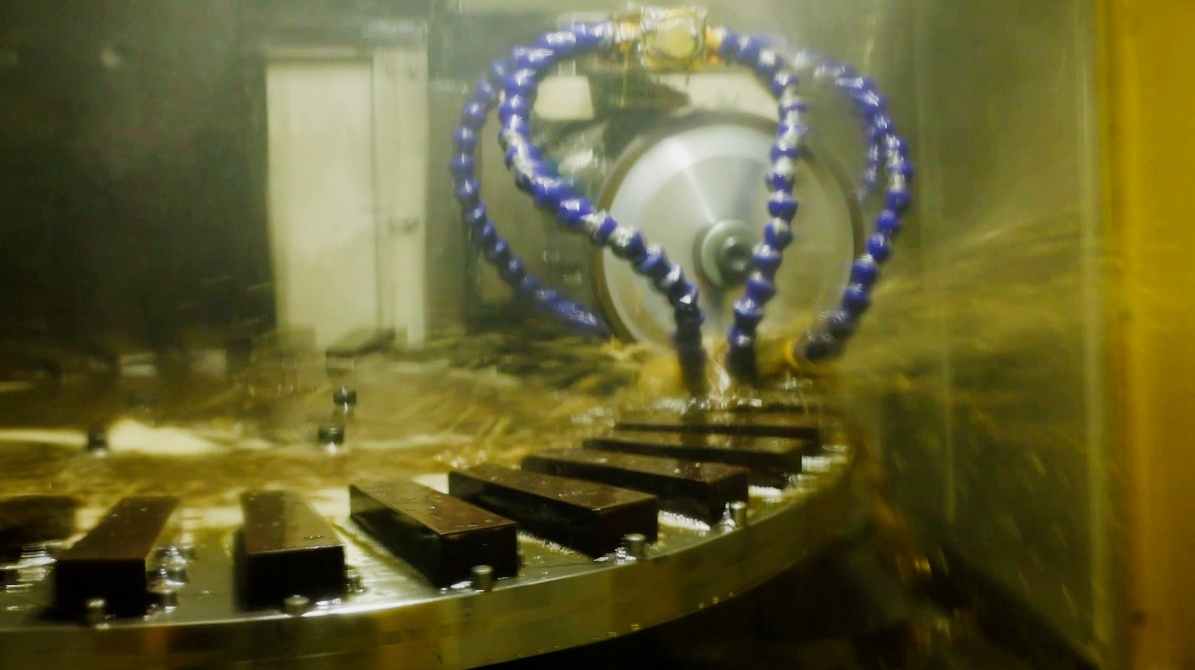
Mao Yue manufactures core pulverizing components, including grinding discs and blades, in-house and has precision machining and inspection capabilities.
Grinding disc tooth geometry, machining accuracy, installation fit, and wear condition can all influence actual pulverizing performance.
For projects involving excessive fines or unstable particle size distribution, Mao Yue can evaluate whether grinding disc clearance, wear condition, and structural compatibility contribute to the problem, based on material properties, disc design, and operating conditions.
The advantage of in-house component manufacturing is the ability to connect grinding disc production, spare parts compatibility, and actual pulverizing requirements, providing customers with more direct technical support and long-term maintenance assistance.
Integrated Production Line Evaluation Reduces Mismatches Between Pulverizing and Powder Collection
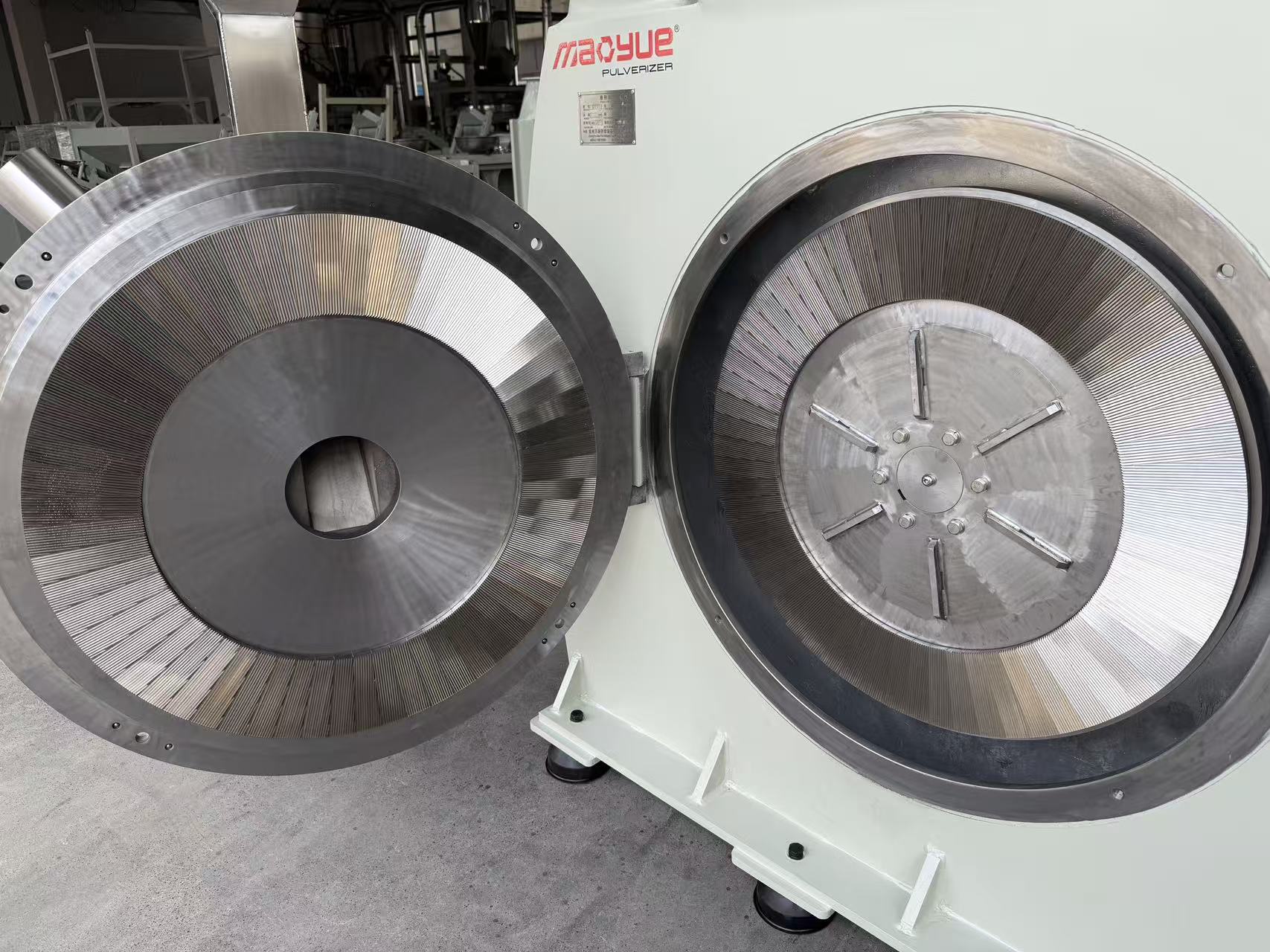
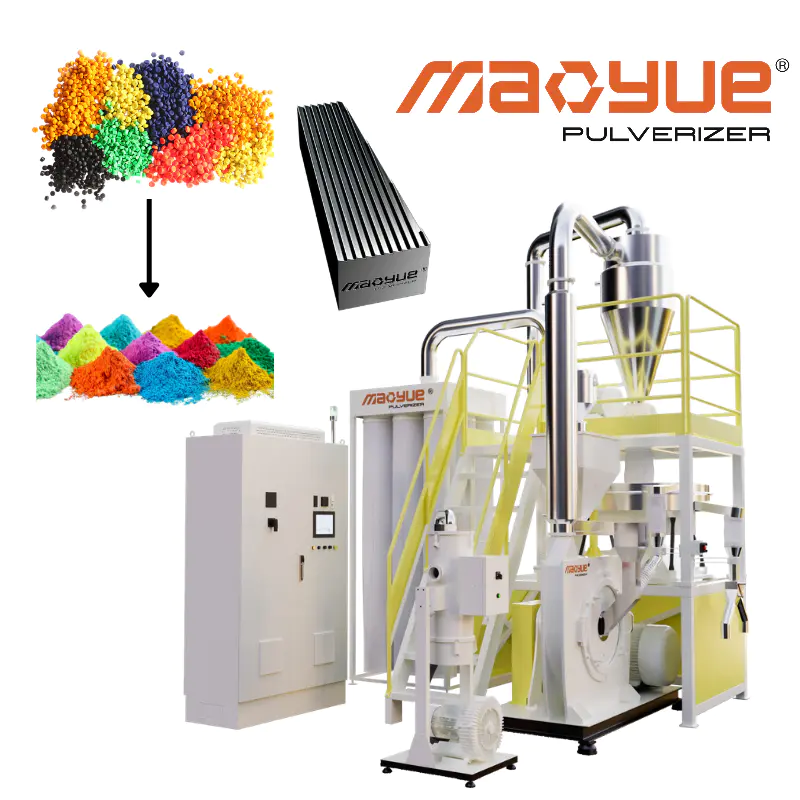
Depending on customer requirements, Mao Yue can provide equipment configurations covering feeding, pulverizing, cooling, pneumatic conveying, cyclone separation, pulse-jet dust collection, screening, and powder discharge.
For projects experiencing powder collection difficulties, the purpose of integrated system evaluation is not simply to add more collection equipment.
Instead, it is to determine whether the powder produced during pulverizing can be consistently conveyed, separated, and discharged by the downstream system.
By evaluating the pulverizer and downstream collection equipment as an integrated system, customers can better determine whether improvements are needed in the pulverizing process, conveying and separation configuration, or filtration and discharge conditions.
For new production lines, this system-matching approach helps identify potential problems during the purchasing stage.
For existing production line upgrades, it helps determine more targeted improvement measures.
Actual Material Testing Verifies Qualified Powder Output and Recovery Performance
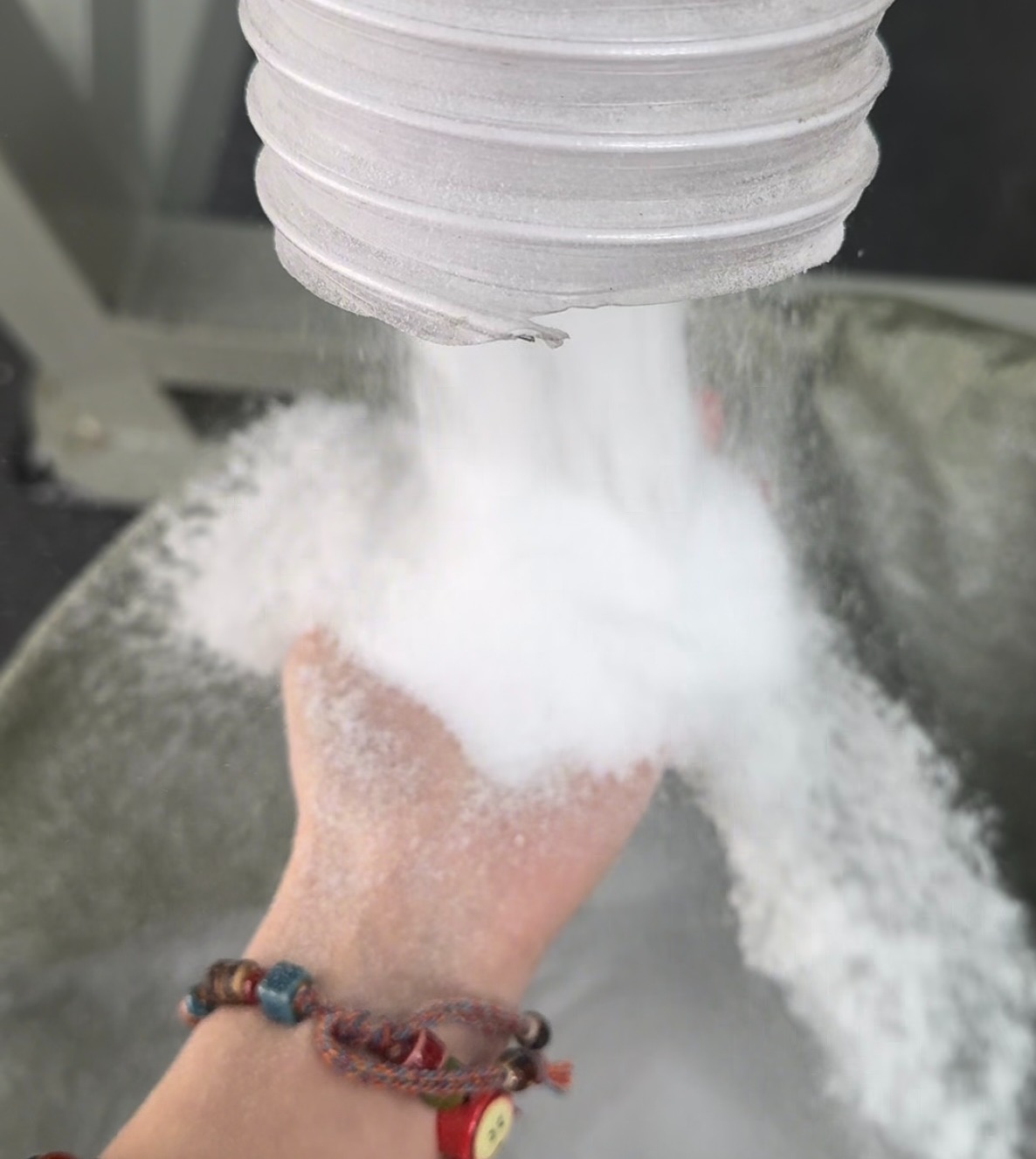
Different color masterbatch formulations may vary in hardness, thermal properties, flowability, and adhesion tendency.
Even when the target mesh size is identical, their pulverizing and collection performance cannot be assumed to be the same.
Mao Yue supports pulverizing trials using customers' actual materials and can evaluate particle size distribution, processing temperature, actual throughput, and continuous operating performance according to the available testing equipment and measurement conditions.
For purchasing projects where powder recovery is a major concern, testing should go beyond determining whether the material can be pulverized.
The more important question is how much qualified powder can be produced and recovered consistently.
Measurements such as powder collected at individual collection points, system residues, and filtration conditions should depend on the capabilities of the actual testing setup.
For complete production line performance indicators that cannot be directly verified through standalone pulverizer testing, further evaluation based on the proposed production line configuration is necessary.
By defining testing conditions, measurable performance indicators, and acceptance requirements, Maoyue helps customers make more informed equipment purchasing decisions rather than relying solely on rated capacity or equipment model specifications.
Frequently Asked Questions About Color Masterbatch Powder Collection
Can Increasing Fan Speed Improve Powder Collection?
Not necessarily.
Increasing airflow may reduce powder deposits inside conveying pipelines, but it may also increase fine-particle carryover or cause the cyclone separator to operate outside its suitable conditions.
Airflow adjustments should be based on actual measurements.
Can Replacing Grinding Discs Solve Color Masterbatch Powder Collection Problems?
Replacing or adjusting grinding discs may improve powder collection only when disc condition or pulverizing parameters are confirmed to be contributing factors.
If the main cause is an unsuitable cyclone separator, abnormal airflow, or filter clogging, replacing grinding discs alone may not improve collection performance.
Why Can Qualified Powder Output Remain Low Even When the Total Powder Recovery Rate Is High?
Because not all recovered powder necessarily meets the target particle size and downstream application requirements.
Some powder may be too fine, too coarse, or agglomerated.
Therefore, total recovered powder, the proportion of qualified powder, and qualified powder output should be measured separately.
Conclusion: Powder Recovery Depends on the Compatibility of the Complete Pulverizing System
Color masterbatch powder collection problems may involve multiple stages, including pulverizing, conveying, separation, filtration, and discharge.
Identifying the source of the problem through material balance analysis and on-site operating data helps manufacturers implement more targeted improvements.
For equipment buyers, qualified powder output, qualified powder recovery rate, and continuous operating stability provide a more meaningful assessment of system suitability than rated capacity alone.
Having Trouble Collecting Color Masterbatch Powder? Contact Mao Yue for a Pulverizing and Collection System Evaluation
If your color masterbatch pulverizing line is experiencing powder accumulation inside pipelines, difficulties collecting fine powder, or insufficient qualified powder output, please share your raw material type, target particle size, required capacity, and existing equipment information with Mao Yue.
Mao Yue's engineering team can help evaluate suitable pulverizer configurations, powder collection systems, and actual material testing plans based on your production requirements.