

 English
 русский
 Español
 عربى
 中文简体
 中文简体
Content
- 1 What Is PVC Cable Scrap?
- 2 Can PVC Cable Scrap Be Recycled?
- 3 What Steps Are Required to Recycle PVC Cable Scrap?
- 4 Why Is Flexible PVC Cable Scrap More Difficult to Grind?
- 5 How to Choose the Right PVC Pulverizer for Cable Scrap Recycling?
- 6 How Does Mao Yue Help Customers Process PVC Cable Scrap?
- 7 Frequently Asked Questions
- 8 Conclusion: Choose the Right PVC Pulverizing Solution to Improve Cable Scrap Recycling Value
- 9 Need a PVC Cable Scrap Grinding Solution?
PVC cable manufacturing generates various types of production waste, including insulation offcuts, cable sheath scraps, extrusion waste and defective products. If these materials have a known source, relatively low contamination levels and undergo proper sorting and pretreatment, some of them can be recycled through crushing and pulverizing processes.
However, different types of PVC cable scrap vary in hardness, flexibility and formulation. Flexible PVC, in particular, often contains plasticizers and may experience temperature increases, softening and material adhesion during mechanical grinding.
Therefore, the recycling process needs to be configured according to the actual material properties, feeding size and target powder specifications.
What steps are required to recycle PVC cable scrap into powder? Why is flexible PVC more difficult to grind than rigid PVC? And how should manufacturers select a suitable PVC pulverizer?
This article explains the different types of PVC cable scrap, the recycling process, the grinding challenges of flexible PVC and the key factors in equipment selection. It also explores how Mao Yue helps customers evaluate PVC cable scrap recycling solutions through in-house manufacturing of core components and actual material testing.
What Is PVC Cable Scrap?
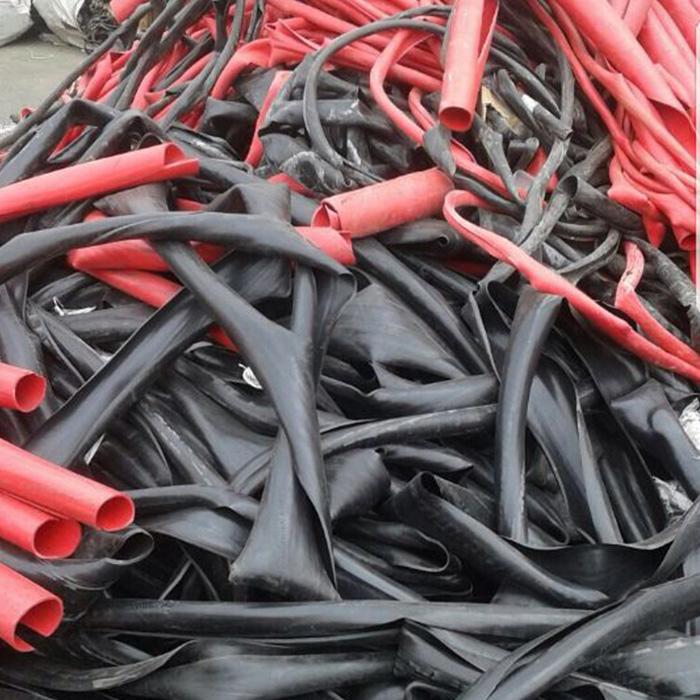
PVC cable scrap mainly comes from the production of electrical wire and cable insulation and outer sheaths. It also includes certain types of post-consumer PVC cable waste.
PVC cable compounds are generally based on polyvinyl chloride (PVC) resin, combined with plasticizers, heat stabilizers, fillers, lubricants, pigments and other functional additives to meet the performance requirements of different cable applications.
Depending on the formulation and application, PVC cable scrap can be divided into several categories.
PVC Cable Insulation Scrap
PVC insulation is used to cover electrical conductors and provide electrical insulation protection.
Flexible PVC insulation compounds typically contain a certain proportion of plasticizers to achieve the flexibility and processing properties required for cable manufacturing.
Common production waste includes:
-
Extrusion start-up and shutdown waste
-
Insulation offcuts
-
Defective insulation products
-
PVC scrap generated during production adjustments
PVC Cable Sheath Scrap
The PVC sheath is the outer protective layer of a cable, designed to protect the internal conductors and insulation structure.
The hardness, plasticizer content and mechanical properties of sheath materials vary depending on the cable application.
Common waste includes sheath extrusion offcuts, cutting scraps and defective sheath products.
Other Types of PVC Cable Scrap
In addition to clean production offcuts, some recycling companies also process PVC materials recovered from used cables.
These materials may contain copper wires, aluminum wires, rubber, other polymers and external contaminants. Therefore, more thorough sorting and pretreatment are required before pulverizing.
For cable manufacturers, production scrap with a known source, relatively consistent formulation and low contamination levels is generally easier to process through a stable recycling system.
Can PVC Cable Scrap Be Recycled?
Yes, but not all PVC cable scrap is suitable for direct recycling.
Its recyclability mainly depends on material composition, contamination levels, previous thermal processing history and the quality requirements of the final product.
Suitable production offcuts can undergo sorting, necessary metal separation, crushing and pulverizing to produce PVC powder for further evaluation and processing.
However, whether recycled powder can be reused in cable insulation or sheath manufacturing also depends on several factors:
-
Whether the original material formulation is known
-
Whether other polymers or contaminants are present
-
Whether the material has undergone significant thermal degradation
-
Whether the recycled powder meets the target particle size requirements
-
Whether the recycled material meets the performance standards of the final product
It is important to understand that mechanical pulverizing only reduces particle size. It cannot reverse existing chemical degradation or automatically remove all contaminants.
Therefore, recycled powder must undergo appropriate quality testing and formulation compatibility assessments. Its suitability for reuse cannot be determined by appearance alone.
What Steps Are Required to Recycle PVC Cable Scrap?
For clean PVC cable production offcuts, a typical processing route includes:
PVC Scrap Sorting → Necessary Metal Separation → Primary Crushing → PVC Pulverizing → Screening and Collection → Powder Quality Testing
The specific equipment configuration depends on the scrap condition, contamination level and final powder requirements.
Step 1: Material Sorting and Inspection
First, sort the scrap according to its source, color, hardness and material composition.
The following factors should be checked:
-
Whether PVC insulation and sheath materials are mixed
-
Whether materials with different colors and formulations are mixed
-
Whether rubber or other polymers are present
-
Whether copper wires, aluminum wires or metal fragments are present
-
Whether oil, dust or other contaminants are present
Separating PVC scrap with different formulations and material properties helps reduce material variations during subsequent processing.
Step 2: Metal Separation
If the PVC scrap contains copper conductors or other metals, cable stripping, sorting or appropriate metal separation processes should be carried out first.
Complete cables containing copper conductors should not be fed directly into a PVC pulverizer as ordinary PVC scrap.
Metal separation not only affects the purity of the recycled powder but also helps prevent metal contaminants from damaging the grinding components.
Step 3: Primary Crushing
After the necessary sorting and separation processes, large PVC scrap pieces are fed into a crushing machine.
The main purpose of crushing is to reduce the material size so that it meets the feeding requirements of the downstream pulverizer.
Different PVC scrap materials vary in thickness, shape and hardness. Therefore, the crusher blade structure, feeding method and discharge size should be selected according to the actual material.
For strip-shaped, sheet-like or relatively thick cable sheath scraps, particular attention should be paid to whether the preprocessed material size is suitable for continuous feeding.
Step 4: PVC Pulverizing
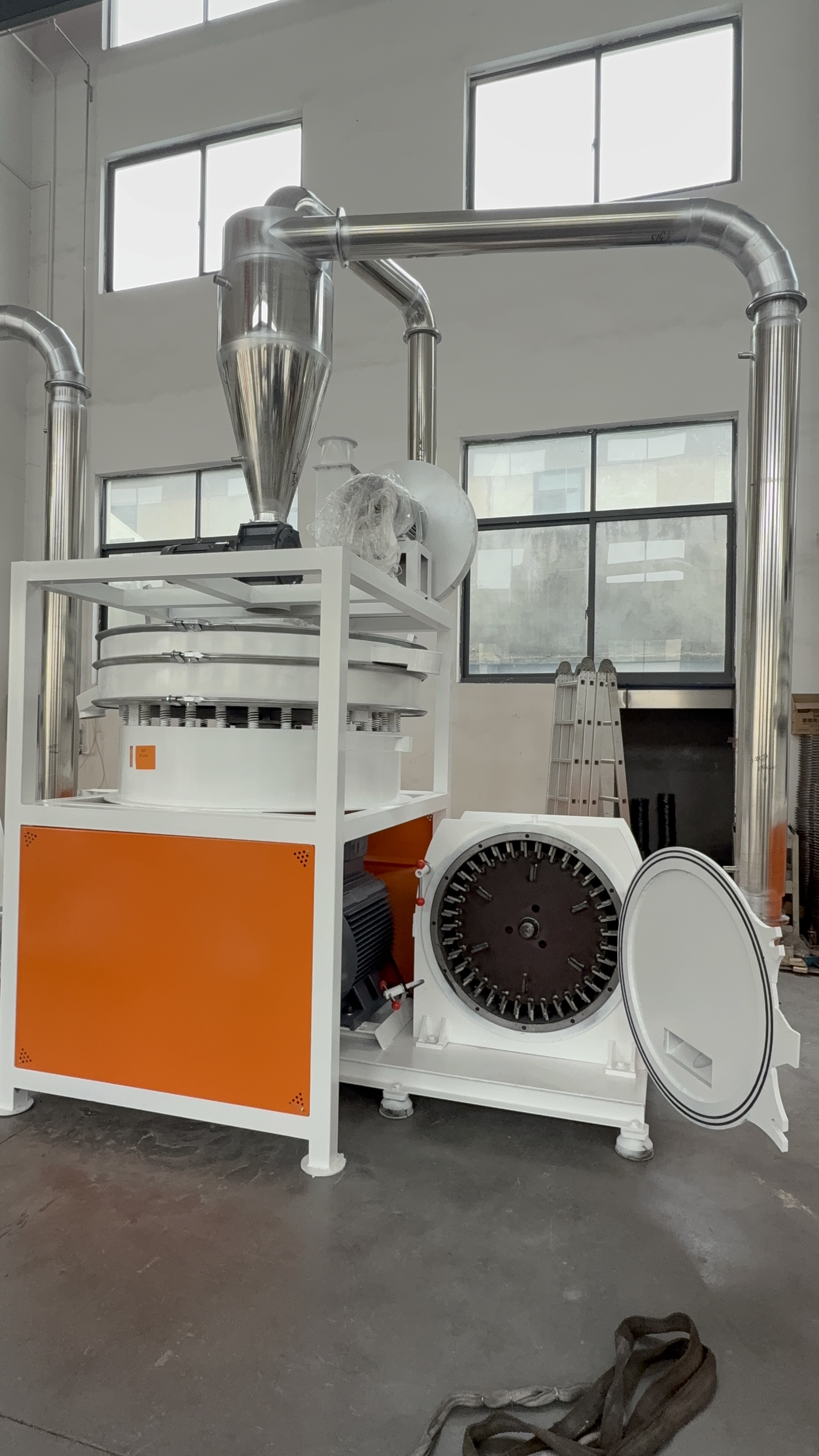
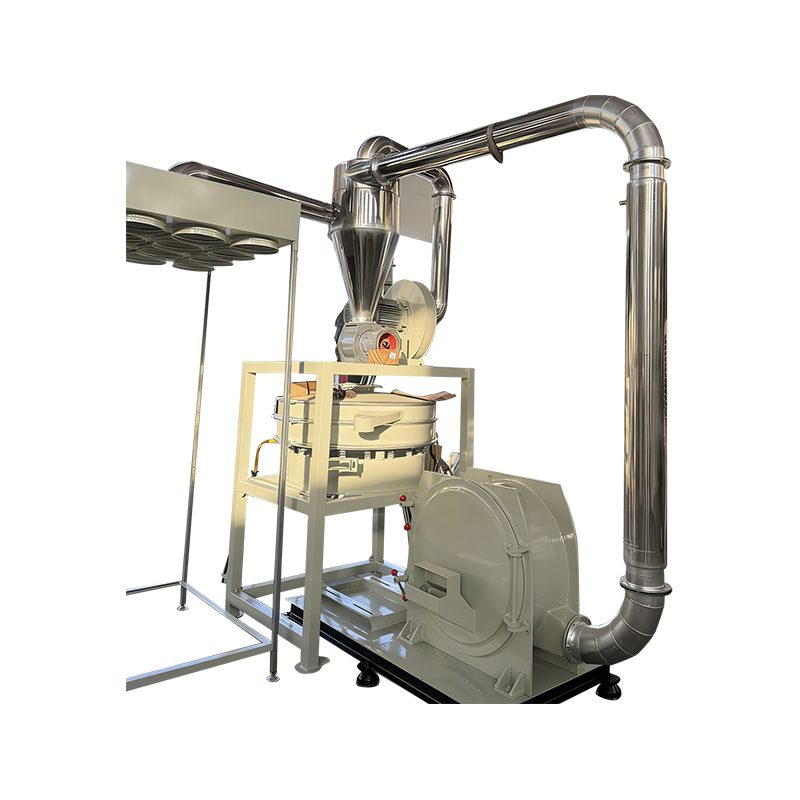
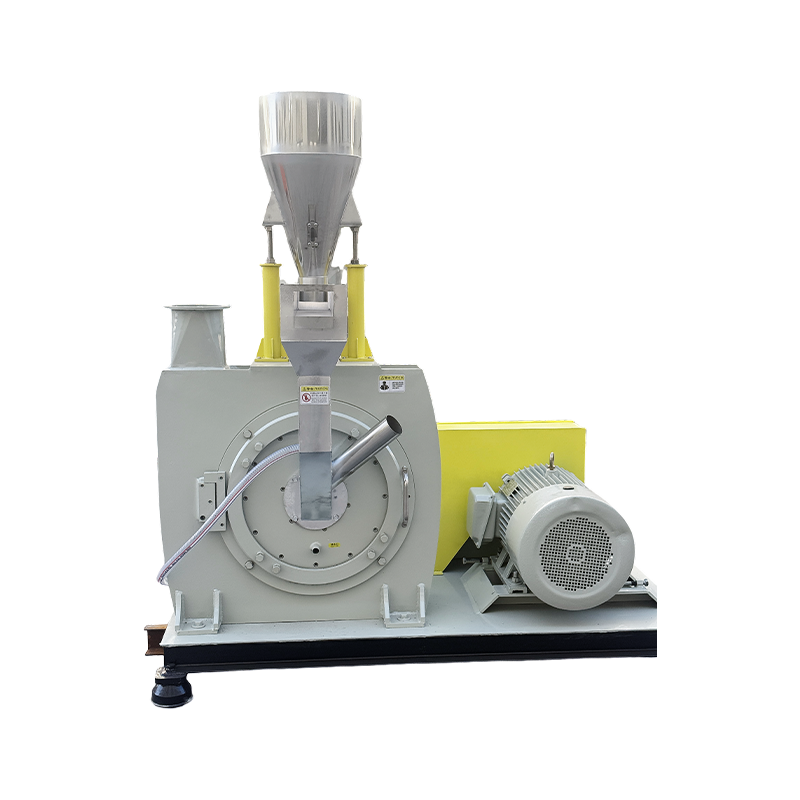
After pretreatment, the PVC material enters the pulverizer, where mechanical grinding further reduces its particle size.
The grinding structure, working gap, feeding rate and cooling configuration should be selected according to the PVC material properties and target particle size.
For flexible PVC, temperature increases during grinding need to be controlled to prevent material softening and adhesion from affecting processing efficiency.
Step 5: Powder Screening and Collection
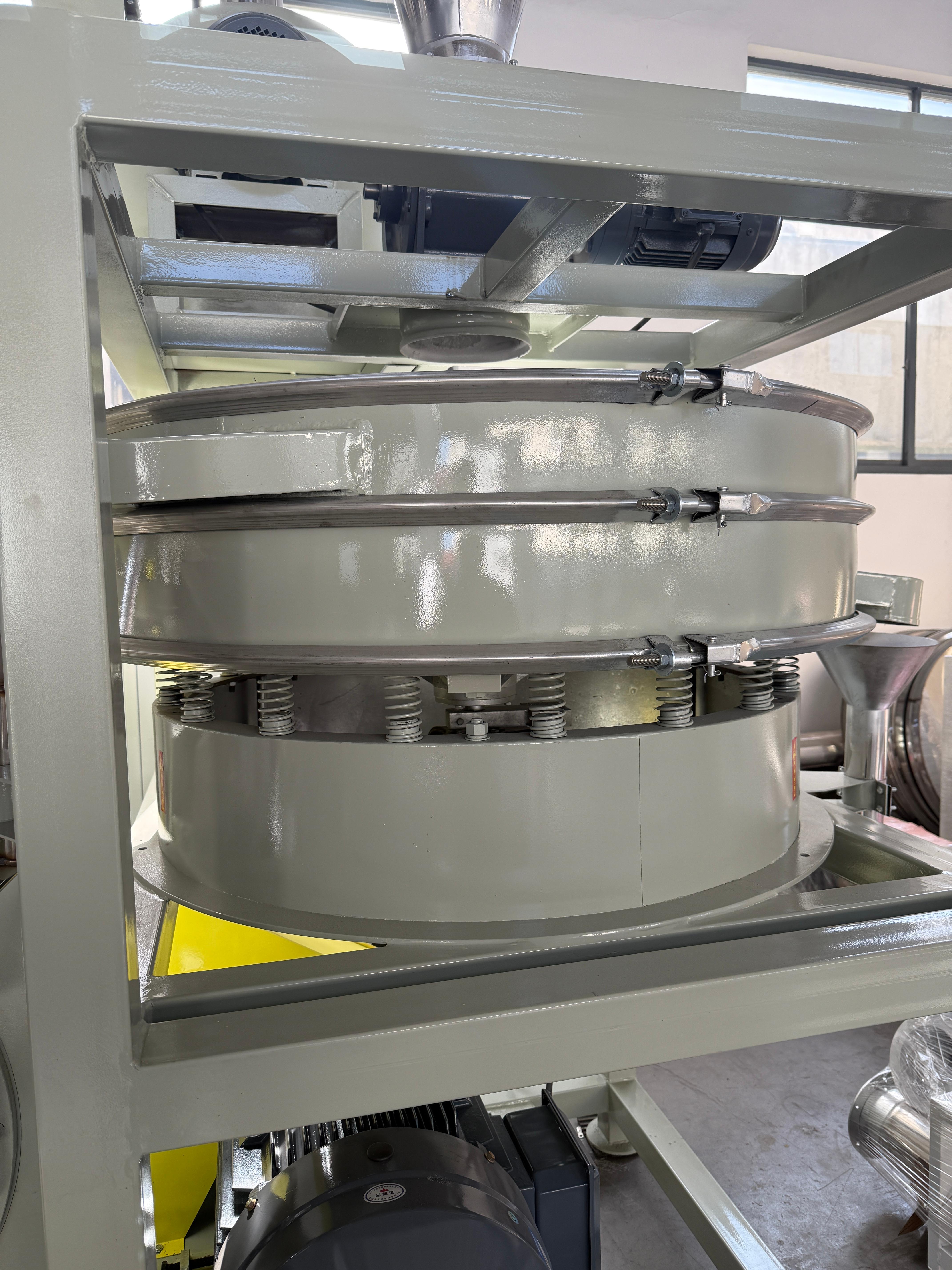
After pulverizing, the material enters the screening and collection system according to production requirements.
Screening separates powder into different particle size ranges. Material that does not meet the required specifications can be further processed according to the production process.
At the same time, the conveying pipelines, cyclone separator and dust collection system should be evaluated according to the powder characteristics to ensure effective powder collection.
Step 6: Powder Testing and Reprocessing Evaluation
After recycling, the powder should be tested for particle size distribution, impurity content and material condition.
If the recycled powder is intended for reuse in cable manufacturing, formulation compatibility assessments and small-scale production trials are also necessary to confirm whether it meets the final product requirements.
Why Is Flexible PVC Cable Scrap More Difficult to Grind?
Compared with rigid PVC, flexible PVC cable insulation and sheath materials generally have greater flexibility. Their processing behavior is influenced by plasticizer content, formulation and material hardness.
Under suitable grinding conditions, rigid PVC is relatively more likely to undergo brittle fracture. Flexible PVC, however, may deform under mechanical forces rather than breaking directly into fine particles.
As frictional heat accumulates, some materials may soften further, affecting grinding efficiency and powder collection.
The following four issues deserve particular attention when grinding flexible PVC.
Frictional Heat Accumulation and Material Softening
Mechanical grinding generates frictional heat. The formulation and plasticizer system of flexible PVC influence its thermomechanical behavior.
When the processing temperature rises beyond the suitable range for a particular material, PVC may soften and interfere with normal grinding.
If the cooling capacity is insufficient, material may adhere to the grinding components, reducing processing efficiency or causing unstable operation.
Material Adhesion and Powder Agglomeration
When flexible PVC partially softens, fine particles may adhere to grinding surfaces or other equipment components.
This can affect material flow and may also cause powder agglomeration, material buildup inside the equipment and more frequent cleaning, making continuous production more difficult.
Unstable Powder Particle Size Distribution
Different PVC cable scrap materials may vary in hardness, plasticizer content and previous processing history.
If the grinding structure, working gap and feeding conditions are not properly matched, the process may produce a higher proportion of coarse particles or an inconsistent final particle size distribution.
Therefore, the ability of a machine to continuously produce powder that meets the required specifications is more important than simply demonstrating that it can produce powder during a short test.
Unstable Feeding
PVC cable insulation and sheath scrap may come in strips, sheets or irregular shapes.
Flexible scrap that has not been adequately preprocessed may cause uneven feeding, material entanglement or fluctuations in the feeding rate.
Therefore, the crushing method, feeding size and conveying configuration should be determined according to the actual scrap characteristics.
How to Choose the Right PVC Pulverizer for Cable Scrap Recycling?
When selecting a PVC pulverizer, buyers should not compare only motor power, grinding disc diameter or the rated capacity provided by suppliers.
For flexible PVC cable scrap, material compatibility, cooling performance, grinding components and actual qualified powder output are particularly important.
Is the Grinding Structure Suitable for the Actual PVC Material?
Rigid PVC and flexible PVC have different processing characteristics. The same grinding parameters cannot simply be applied to all PVC materials.
When selecting equipment, buyers should evaluate whether the rotor, tooth plate and other grinding components are suitable for the actual material hardness, flexibility, feeding size and target particle size.
Can the Cooling System Control Processing Temperature?
For flexible PVC containing plasticizers, the cooling system is an important factor in equipment selection.
An appropriate cooling configuration helps control temperature increases during grinding and reduces the risk of material softening and adhesion.
Buyers should pay particular attention to the cooling method, temperature monitoring conditions and actual temperature performance during continuous operation.
For certain special flexible PVC materials, additional cooling or low-temperature pretreatment may be required. However, whether these measures are necessary should be determined through actual material testing.
Core Grinding Component Materials and Maintenance Plans
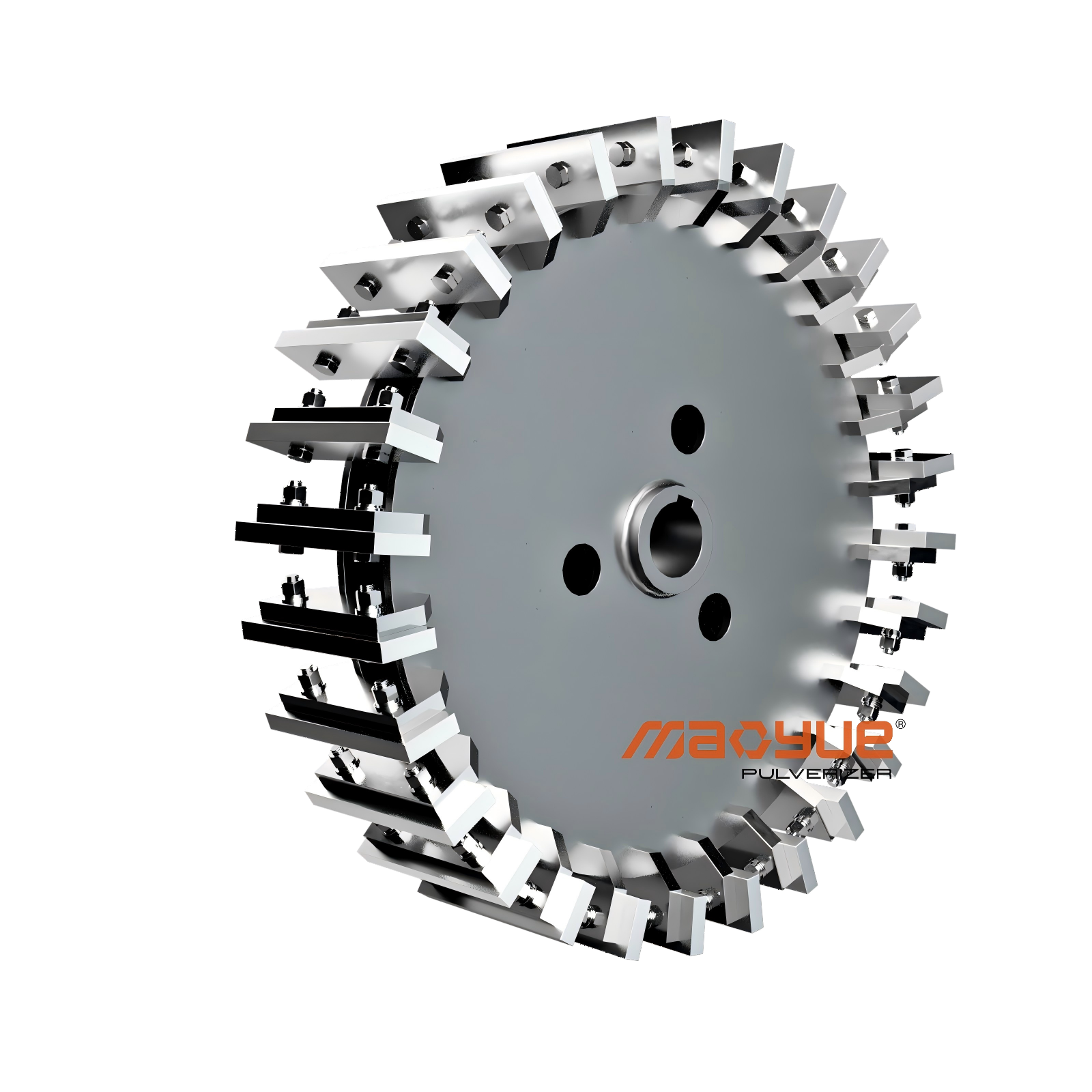
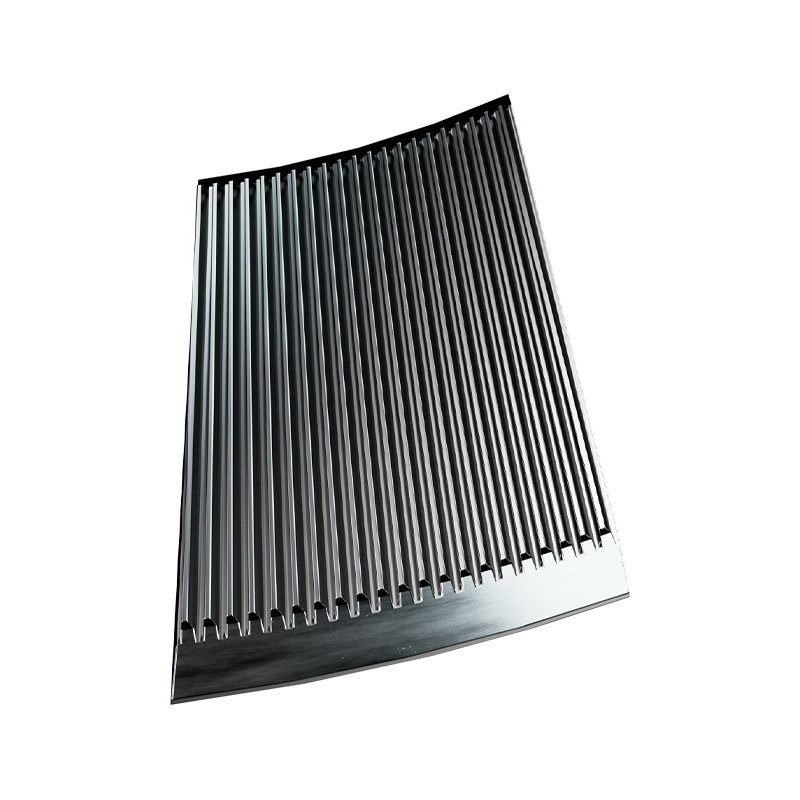
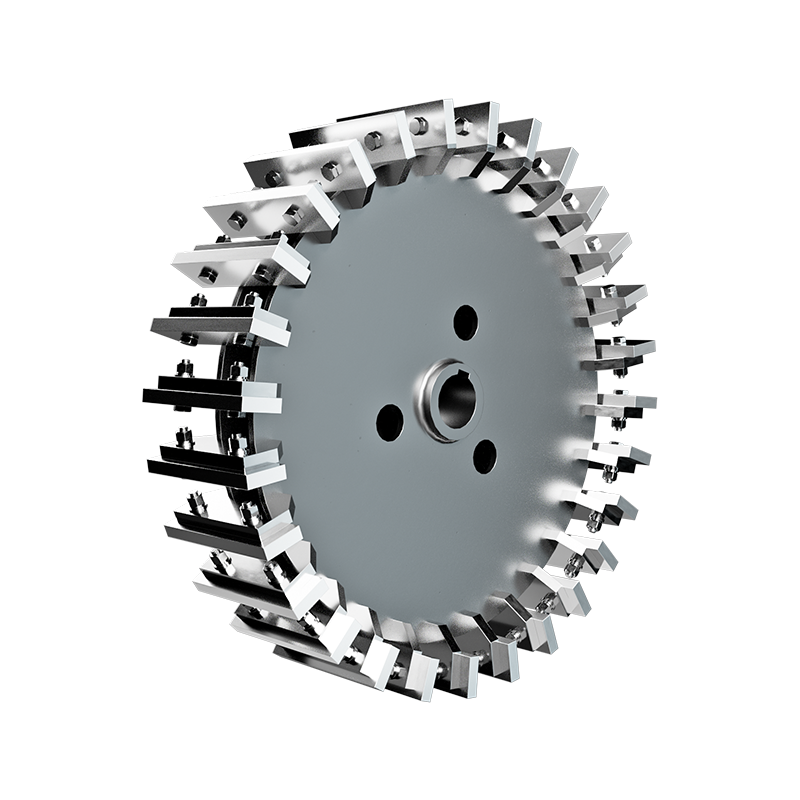
The rotor and tooth plate are important grinding components of a PVC pulverizer.
Their materials, hardness, tooth geometry and machining accuracy can affect grinding performance and service life.
Before purchasing equipment, buyers should confirm:
-
The specific materials used for the rotor and tooth plate
-
Heat treatment processes and hardness requirements
-
The structure and machining accuracy of the grinding components
-
Repair or replacement options after wear
-
Spare parts availability and maintenance costs
These details help buyers evaluate long-term operating costs rather than focusing only on the initial purchase price.
What Is the Actual Qualified Powder Output?
Equipment processing capacity is not the same as final qualified powder output.
For example, a machine may process a large amount of PVC scrap per hour. However, if the resulting powder contains a high proportion of oversized particles or some of the powder cannot be effectively collected, the actual usable output will be affected.
Buyers should distinguish between the following three indicators:
Testing these indicators under actual operating conditions provides a more accurate evaluation of the equipment's processing performance.
The qualified powder yield can be calculated using the following formula:
Qualified Powder Yield = Qualified Powder Weight ÷ Pretreated PVC Feed Weight × 100 per cent
The denominator should be the actual weight of PVC scrap fed into the pulverizer after necessary sorting and pretreatment, rather than the original scrap weight containing copper wires, aluminum wires or other non-PVC materials.
If the efficiency of the powder collection system also needs to be evaluated, the measurement boundary should be clearly defined. The actual amount of powder entering the collection system should be used as the reference weight to avoid confusing processing capacity, collected powder and qualified powder output.
Conduct Actual Material Testing Before Purchasing
Different types of PVC cable scrap may exhibit significantly different grinding behaviors.
Therefore, buyers are advised to test their own PVC insulation or sheath scrap instead of selecting equipment based solely on suppliers' standard material test results.
The following parameters should be recorded during testing:
These results help buyers determine whether the material is suitable for mechanical pulverizing, whether additional cooling is required and whether the equipment configuration can meet actual production requirements.
How Does Mao Yue Help Customers Process PVC Cable Scrap?
For PVC cable manufacturers and recycling companies, purchasing pulverizing equipment involves more than processing performance. Core component quality, equipment configuration and long-term maintenance costs are also important considerations.
Mao Yue specializes in plastic pulverizers and the in-house manufacturing of core grinding components, offering PE and PVC pulverizing equipment.
For PVC cable scrap recycling projects, Mao Yue helps customers reduce equipment purchasing and operating risks in three main ways.
Evaluating Grinding Solutions Based on Actual Material Properties
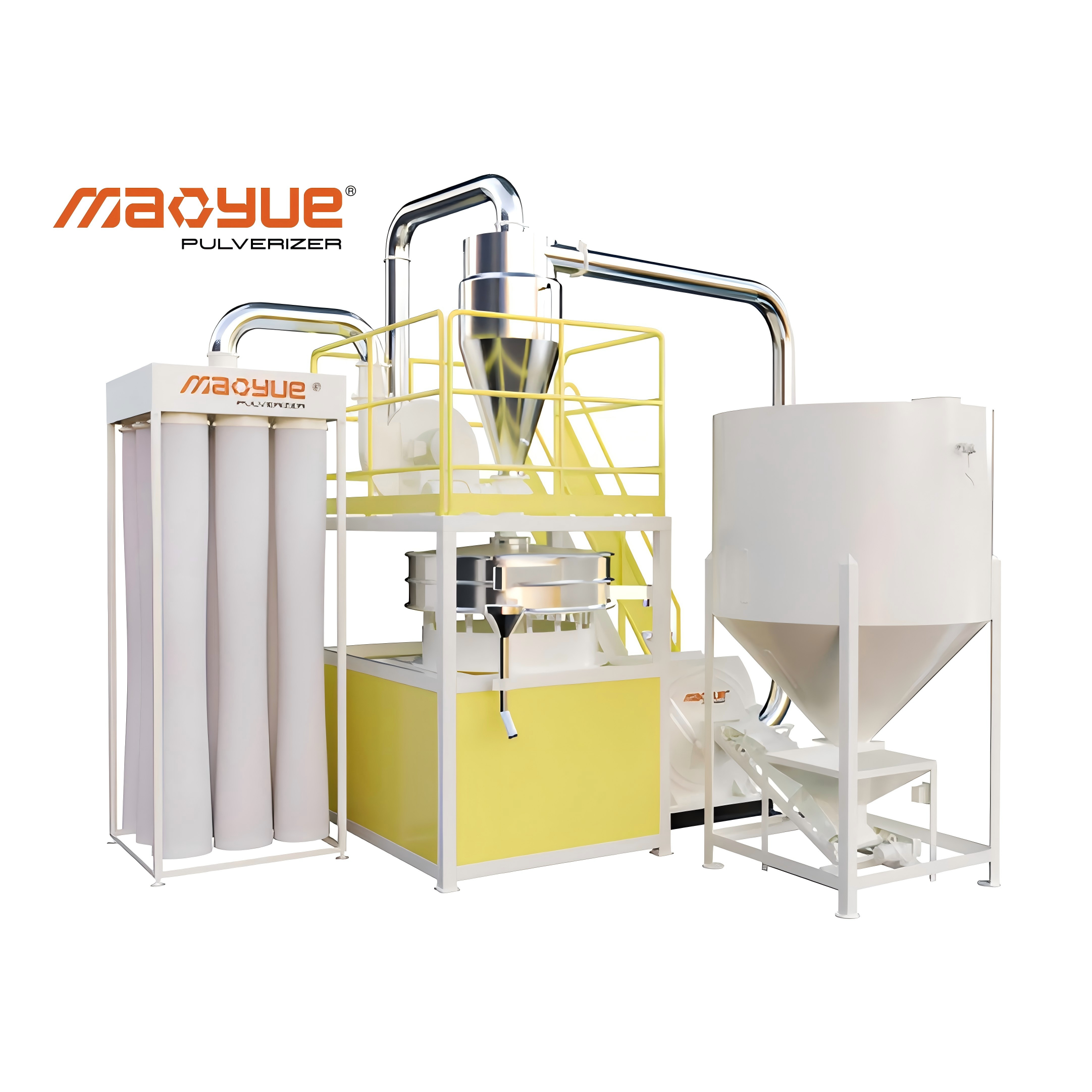
PVC cable insulation and sheath materials have different characteristics. Flexible PVC, in particular, is sensitive to formulation, plasticizer content and processing temperature during grinding. Therefore, pulverizer configurations should not be determined solely by general equipment specifications.
Mao Yue evaluates grinding solutions based on the actual material type, feeding size, target particle size and required capacity. For flexible PVC, particular attention is given to grinding temperature, material adhesion and continuous feeding stability.
Where necessary, actual material trials can be conducted to verify the suitability of the grinding structure, cooling configuration and auxiliary equipment before the final machine configuration is determined.
This approach helps reduce the risk of selecting equipment that does not match the customer's actual production requirements.
In-House Manufacturing of Core Grinding Components to Reduce Maintenance Uncertainty
Mao Yue manufactures key grinding components for PVC pulverizers in-house, including rotors and tooth plates.
Depending on the specific component specifications and processing requirements, PVC tooth plates can be manufactured to a hardness range of HRC 58–62 to meet the corresponding wear resistance requirements.
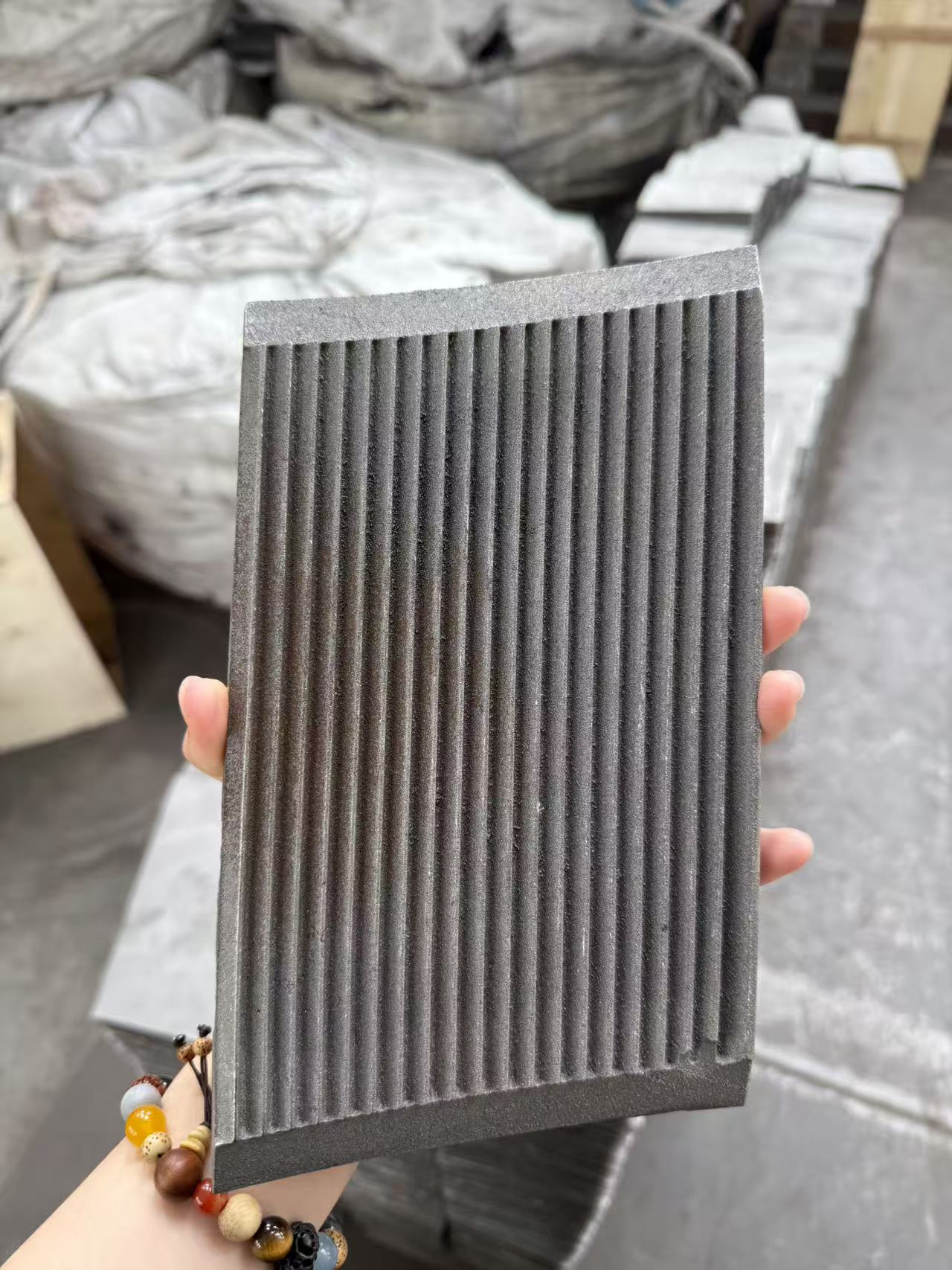
Compared with suppliers that only provide complete machines, in-house manufacturing of core components gives customers greater transparency regarding the materials, structures and specifications of critical parts.
For equipment buyers, this means:
-
Material Transparency: Clear information about the materials and hardness of core grinding components.
-
Specification Control: Confirmed dimensions and structural specifications of rotors and tooth plates.
-
Maintenance Planning: Repair or replacement plans based on actual wear conditions.
-
Spare Parts Support: Support for future spare parts procurement and equipment maintenance.
Through in-house manufacturing and transparent component specifications, customers can better understand future maintenance requirements and plan spare parts procurement and long-term operating costs, rather than comparing equipment based only on its initial purchase price.
Actual Material Testing to Verify Grinding Performance
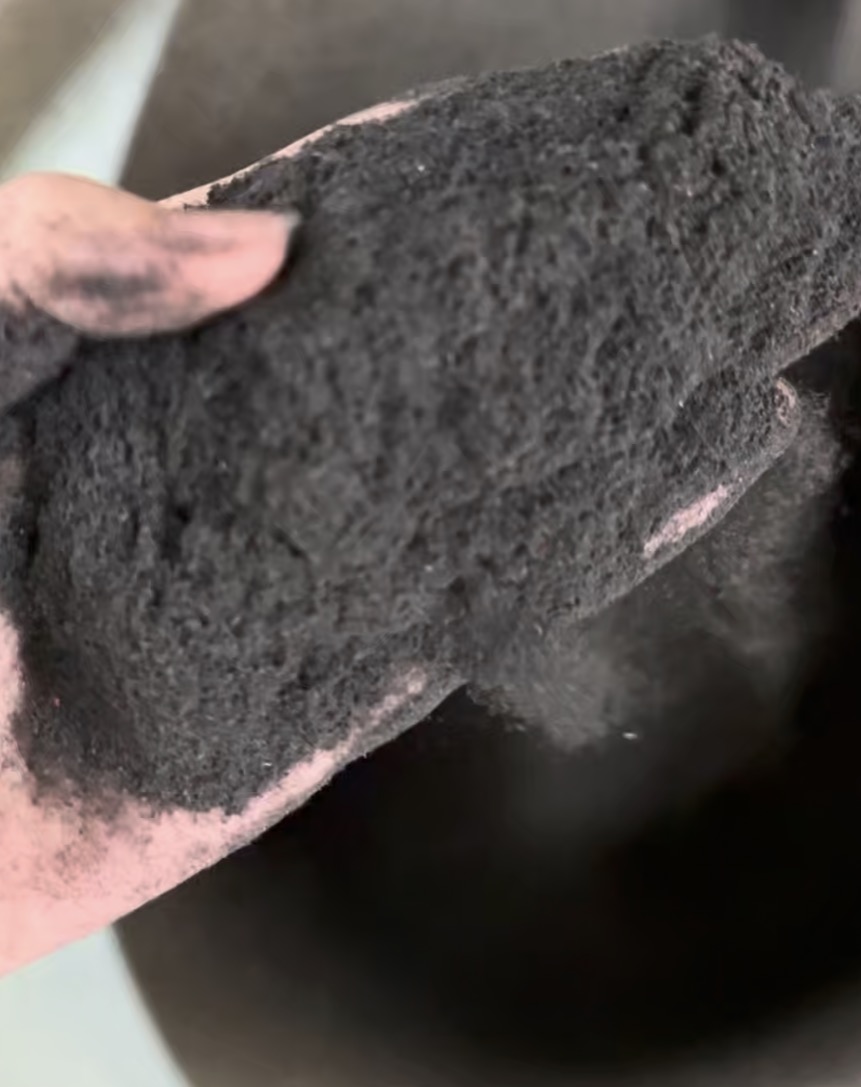
For PVC cable scrap recycling projects, Mao Yue places great importance on verifying equipment performance with actual materials.
Customers can provide PVC insulation or sheath scrap for trial grinding to evaluate how the equipment performs under their specific material conditions.
Key testing parameters include target particle size, operating temperature during continuous operation, powder collection performance and qualified powder output.
These results help customers determine whether the proposed equipment configuration meets their production requirements and provide practical evidence for purchasing decisions.
Mao Yue focuses not only on whether a machine can grind PVC scrap into powder, but also on its actual processing performance, qualified powder output and the predictability of subsequent maintenance requirements.
Frequently Asked Questions
Can PVC Cable Scrap Be Fed Directly into a Pulverizer?
Not recommended. Large pieces of scrap should be sorted and crushed to meet the feeding requirements of the pulverizer. If copper wires or other metals are present, they must also be separated beforehand.
Can Flexible PVC Cable Scrap Be Ground into Powder?
Yes. The appropriate processing solution depends on the material formulation, flexibility and target particle size. Actual material testing is recommended to determine suitable grinding conditions.
Does PVC Cable Scrap Recycling Require Both a Crusher and a Pulverizer?
For large-sized cable scrap, primary crushing is generally required before further processing in a PVC pulverizer. The specific equipment configuration depends on the feeding size and target powder specifications.
Can Recycled PVC Cable Powder Be Reused in Cable Manufacturing?
Some recycled PVC powder can be reused if it meets the required quality standards. However, impurity testing, material compatibility assessments and necessary production trials should be conducted before reuse.
Conclusion: Choose the Right PVC Pulverizing Solution to Improve Cable Scrap Recycling Value
PVC insulation and sheath offcuts generated during cable manufacturing can offer opportunities for further recycling through sorting, pretreatment, crushing and pulverizing, provided that the material source is known, contamination is controlled and the scrap meets the processing requirements.
However, the processing characteristics of flexible PVC mean that equipment selection should not rely solely on rated capacity or motor power. Grinding structure, temperature control, feeding stability, powder particle size distribution and actual qualified powder output all need to be evaluated according to the specific material.
Through in-house manufacturing of core PVC grinding components, equipment configuration assessments based on actual materials and trial grinding services, Mao Yue helps customers evaluate the feasibility of PVC cable scrap pulverizing while reducing equipment purchasing and long-term maintenance risks.
Need a PVC Cable Scrap Grinding Solution?
If your production process generates PVC cable insulation or sheath scrap and you want to recycle it into powder for further use, contact Mao Yue.
Please provide the following information:
-
Photos of your PVC scrap and material type
-
Pretreated feeding size
-
Target powder particle size
-
Expected processing capacity
The Mao Yue team will evaluate grinding feasibility, cooling requirements and expected qualified powder output based on your actual materials and production needs, helping you identify a suitable PVC pulverizing solution.
Contact Mao Yue today. Send us your PVC cable scrap details to receive a grinding solution and trial evaluation tailored to your production requirements.