

 English
 русский
 Español
 عربى
 中文简体
 中文简体
Content
- 1 What a Single Shaft Plastic Shredder Actually Does
- 2 Where the Shredder Sits in a Powder Line
- 3 The Numbers That Decide Throughput
- 4 Matching the Machine to Your Material
- 5 A Procurement Checklist That Prevents Costly Surprises
- 6 Single Shaft, Twin Shaft or Granulator?
- 7 Getting the Specification Right the First Time
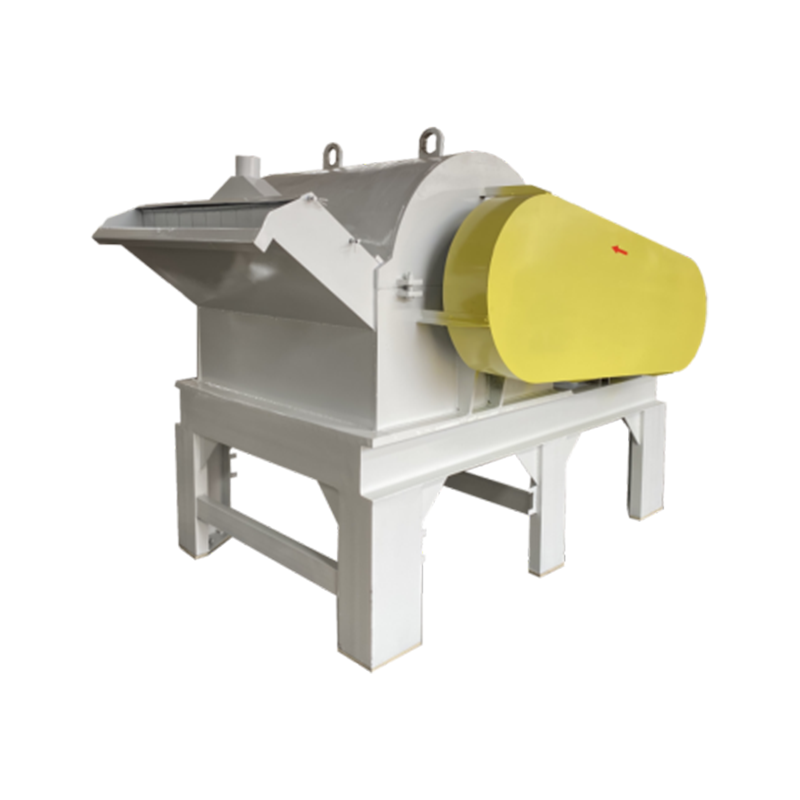
An extruder purge block the size of a car battery will stall a mid-size pulverizer within seconds, and that is usually the moment a processor starts shopping for a single shaft plastic shredder. The conclusion first: this machine is a pre-size reducer, not a powder maker. It uses a hooked rotor and a hydraulic pusher to bring awkward lumps, bales and thick-walled scrap down to roughly 20–50 mm, and everything about the powder you eventually sell is still decided downstream by the pulverizer, the classifier and the screen.
That distinction matters commercially. Buy a shredder sized for the wrong duty and you inherit either a bottleneck that starves the mill or a machine that spends its life idling. Get it right and the whole line runs at a steady, predictable rate.
What a Single Shaft Plastic Shredder Actually Does
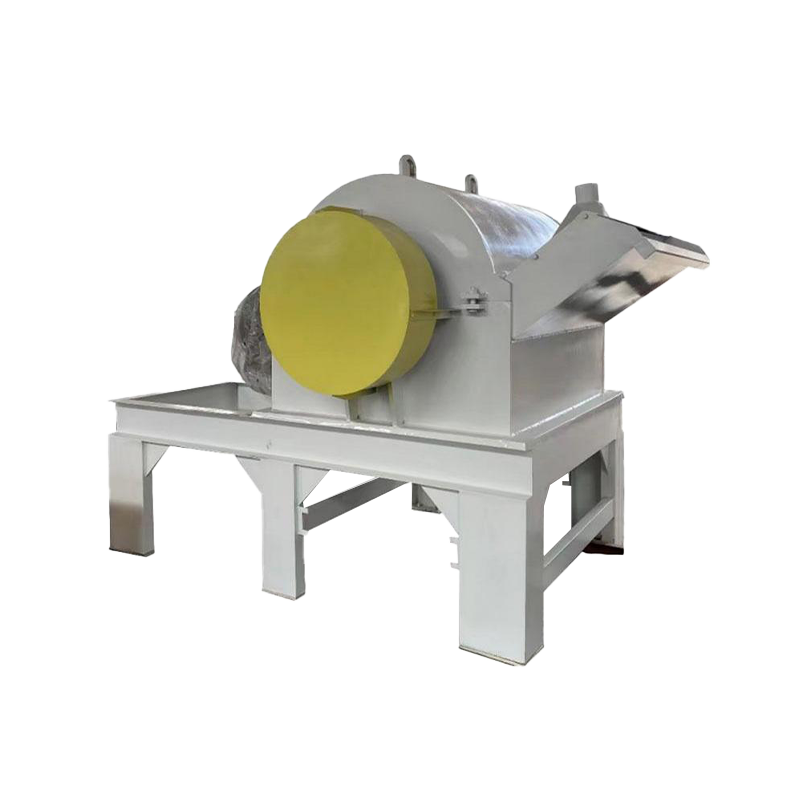
The working parts are simple. One horizontal rotor carries a row of bolt-on knives, and one to three fixed bed knives sit in the cutting chamber. A hydraulic ram pushes material against the rotor, and a perforated screen below the rotor holds the material in the cut until it passes through.
Because the size reduction happens through shearing rather than high-speed impact, the machine behaves very differently from a granulator:
- It tolerates thick sections, lumps and blocks that would bounce around inside a granulator for minutes.
- It generates far less dust and frictional heat, which is why heat-sensitive polymers survive it better.
- It produces a coarse, fairly uniform chip rather than a flake, which feeds more evenly into the next stage.
- It is far more forgiving of slight contamination, purging compound and mixed colours.
Screen aperture is the single most practical control you have. A 40 mm screen and a 20 mm screen on the same machine can differ by 30–50% in throughput, and smaller apertures also raise wear and power draw. Ask for the screen set, not just the machine.
Where the Shredder Sits in a Powder Line
Most plastic powder operations follow the same sequence. The shredder's only job is to make the feed consistent enough for the crusher and pulverizer to run at their rated rate rather than in stop-start mode.
| Stage | Typical input | Typical output | What it decides |
|---|---|---|---|
| Pre-sizing | Purge lumps, bales, pipe, thick scrap | 20–50 mm chips | Feed consistency and line uptime |
| Crushing | Shredder chips | 6–12 mm regrind | Flake shape and bulk density |
| Pulverizing | Regrind or virgin flake | 200–800 µm powder | Fineness, flowability and yield |
| Sieving | Ground powder | Classified cut | Share of powder you can actually sell |
The most common mismatch is a shredder that runs much faster than the mill behind it. If the mill takes 400 kg/h, a shredder rated at 1,200 kg/h simply runs in short bursts, which is hard on the hydraulic unit and produces an uneven chip. Aim for a shredder that sits 20–40% above the mill's consumption rate, then control it with a bin level sensor.
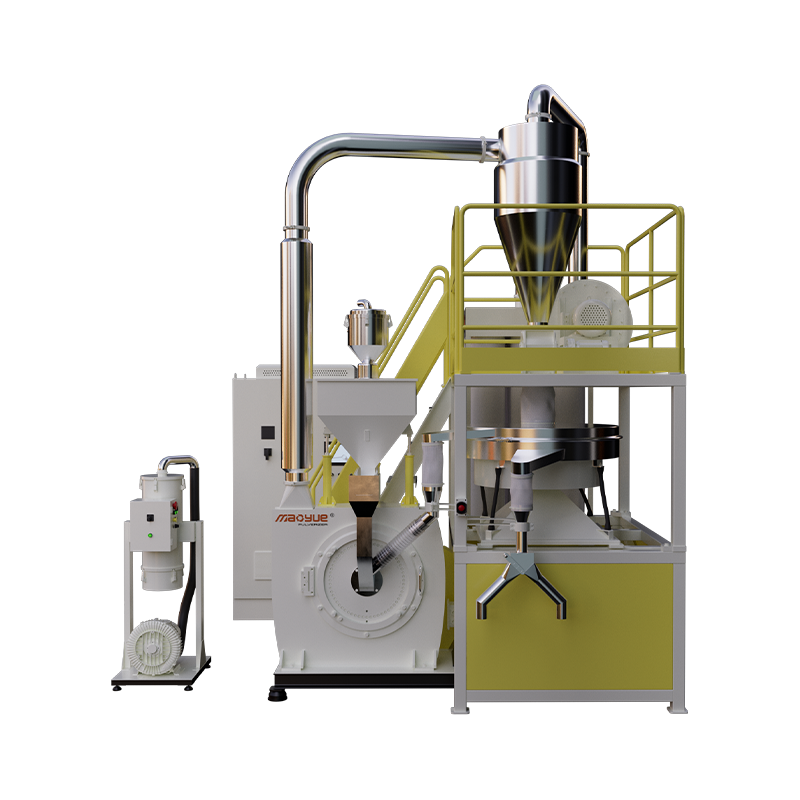
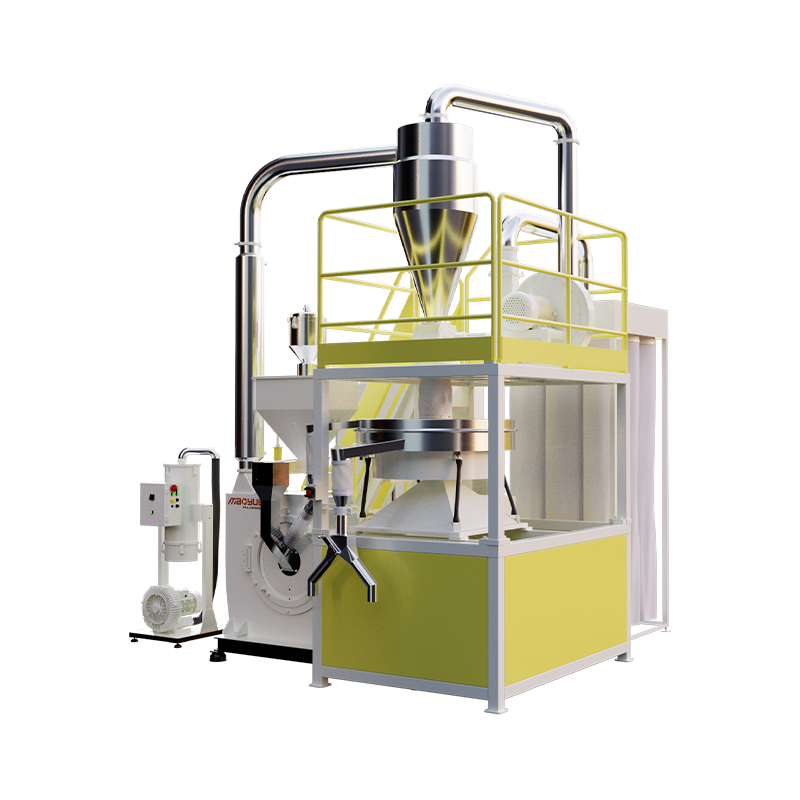
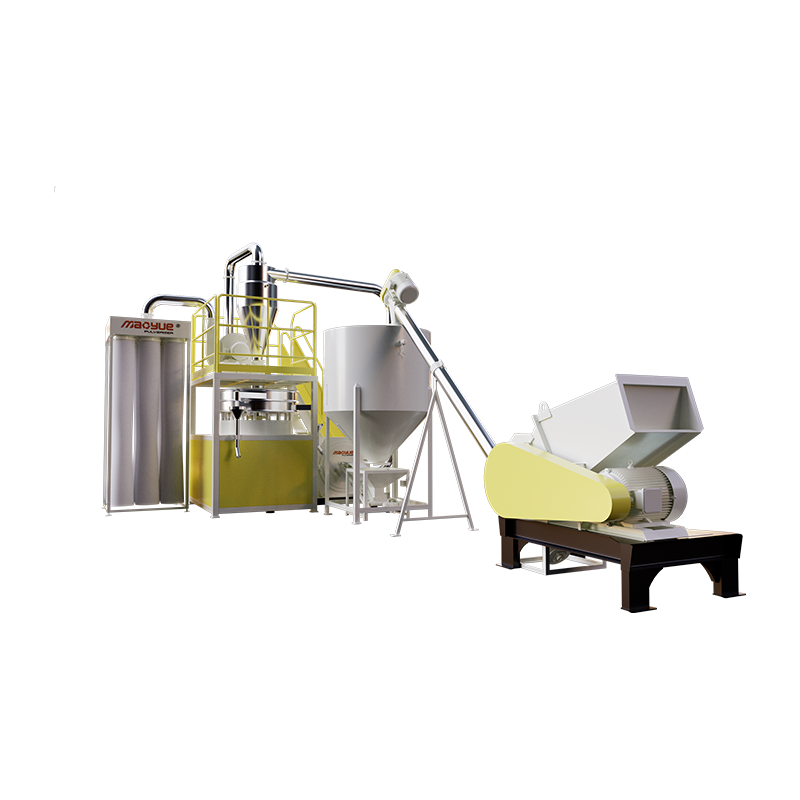
 Blade-Type Plastic Crushing and Pulverizing Production LineIntegrated blade crusher and precision disc mill for medium-hard plastics, useful when evaluating a shredder-to-mill line and consistent fine powder output.View Product →
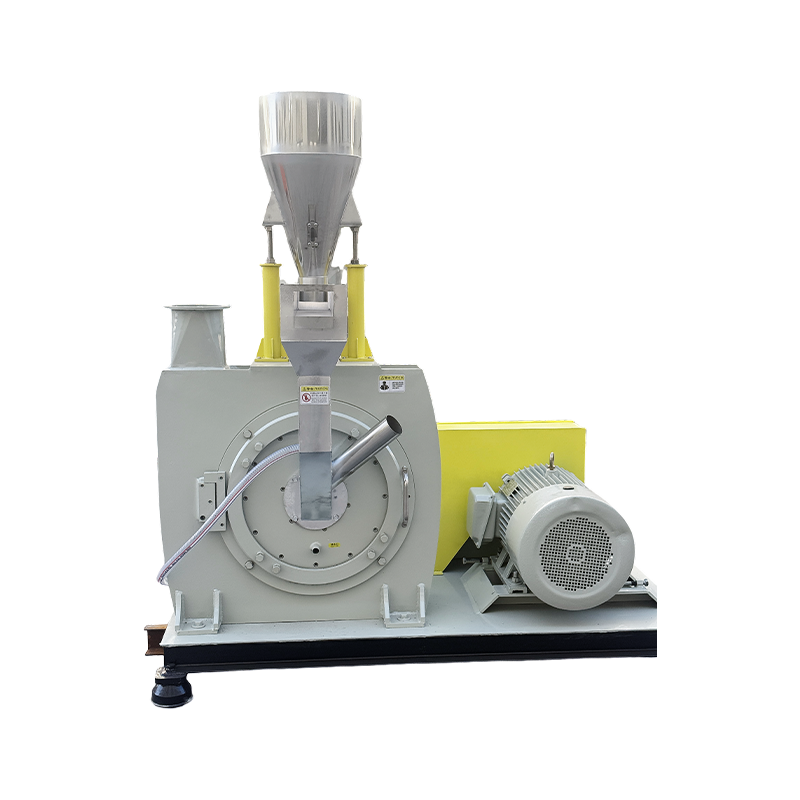
For a complete view of the downstream stage, the plastic pulverizer range shows how disc and mill configurations differ by polymer and target fineness.
The Numbers That Decide Throughput
Six specifications drive real capacity, and all six should appear on a quotation:
- Rotor diameter and working width, which set the bite the machine can take.
- Knife count and hook geometry, which determine how quickly material is drawn in rather than pushed away.
- Motor power, normally 22–90 kW across this class of machine.
- Ram force and stroke length, the true limit when feeding dense lumps rather than film.
- Screen open area, not just aperture, since a heavily blocked screen chokes capacity.
- Hopper volume, which decides how much buffer you have between loading cycles.
Capacity claims deserve scrutiny. A figure quoted in kg/h means nothing without the material and its bulk density attached. Ask specifically: how many kilograms per hour of HDPE purge lumps at roughly 0.5 t/m³, with a 40 mm screen, using a 55 kW drive? A supplier who cannot answer that in writing is quoting a brochure number.
Wear parts are the other half of the calculation. Knives in alloy steel are standard; hardness, hard-facing options and whether the knife can be re-ground or must be replaced both change your cost per tonne over five years. On a three-shift operation, knife cost often exceeds the price difference between two machine quotes.
Matching the Machine to Your Material
Material behaviour, not tonnage, usually determines which configuration works.
| Material | What matters most | What goes wrong |
|---|---|---|
| HDPE and PP purge lumps | Ram force and rotor torque | Machine stalls; knives take impact instead of cutting |
| PE rotomolding scrap | Clean cut, low fines | Dust contaminates the downstream powder blend |
| PVC pipe and profile | Dust extraction and wear protection | Brittle fracture creates excessive fines and heat |
| Baled film and bags | Serrated knives, aggressive ram, lower rotor speed | Material wraps the shaft and blocks the screen |
| PA and PP engineering scrap | Low heat generation | Overheating changes downstream grinding behaviour |
For brittle PVC and mixed rigid scrap, a hammer, impact or swing-knife configuration often delivers a more uniform chip with fewer long shards than a pure shear rotor. That choice is worth settling before you compare prices, because retrofitting a cutting chamber is not realistic.
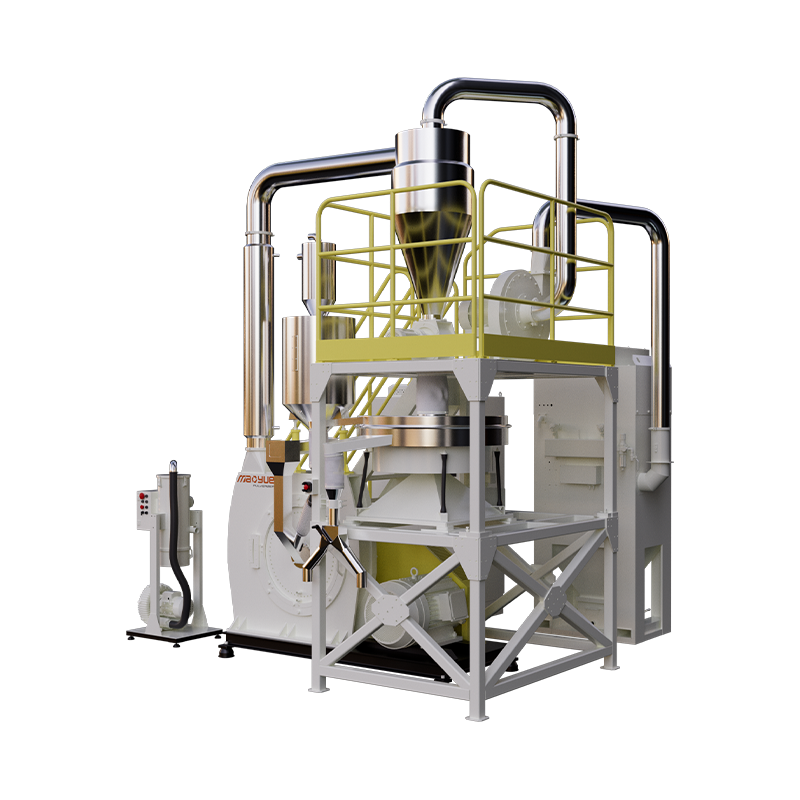
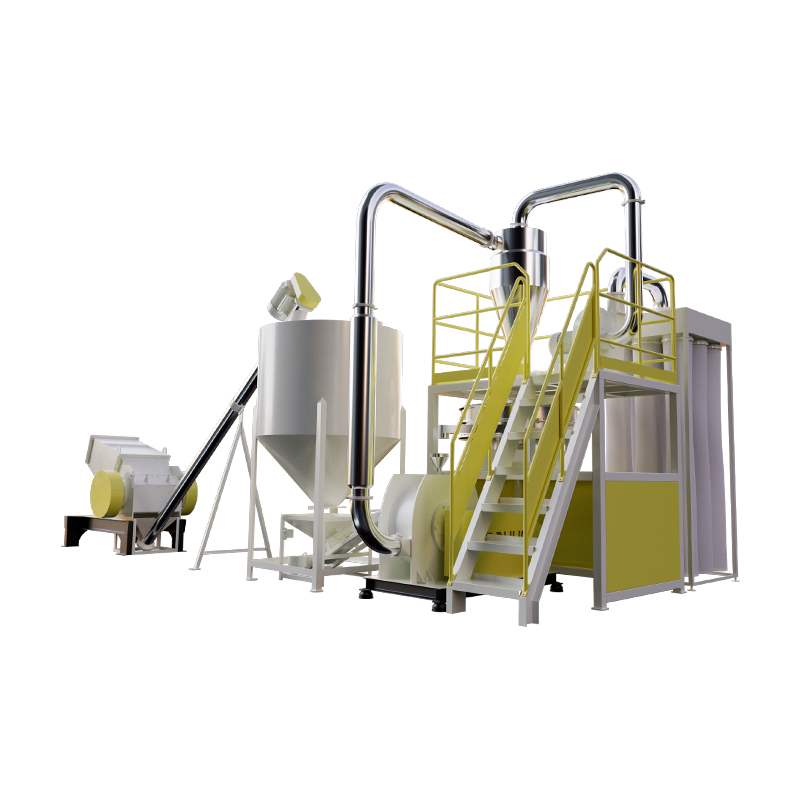
 Hammer-Impact Swing-Knife Crushing and Pulverizing LineIntegrated hammer-impact crusher and disc mill for brittle PVC and mixed rigid scrap, relevant when comparing rotor configurations before specifying a recycling line.View Product →
A Procurement Checklist That Prevents Costly Surprises
Before a purchase order, confirm each of these in writing:
- Test data on your own material, ideally from a trial run with your sample.
- Screen set supplied, including at least one spare aperture.
- Knife material, hardness and whether re-grinding is supported locally.
- Bed knife clearance and the adjustment procedure, typically a fraction of a millimetre.
- Safety interlocks on the hopper, chamber door and hydraulic unit, plus emergency stop positions.
- Electrical specification, voltage, control panel language and PLC documentation.
- Foundation plan, footprint and clearance needed for screen changes.
- Spare parts lead time for knives, screens, bearings and hydraulic seals.
The last item is where single-source suppliers differentiate themselves. A machine builder that also manufactures its own blades, discs and rotors can usually shorten the wait for consumables, which matters more than a small price advantage at the quotation stage.
Single Shaft, Twin Shaft or Granulator?
Single shaft machines give a defined, screen-controlled output and handle thick solid pieces well, but they dislike loose film unless the rotor is configured for it. Twin shaft machines rip and tear with two counter-rotating rotors and accept almost anything, including bales and mixed waste, yet their output size is less precise. Granulators sit further downstream and produce a fine regrind from material that is already small enough to feed.
In a plastic powder operation the usual arrangement is single shaft first, granulator or crusher second, pulverizer third. Choose the single shaft machine when output consistency and downstream stability matter more than raw aggression.
Getting the Specification Right the First Time
Place the shredder in the line, size it against the mill, and specify the screen and knife package for your actual polymer. That sequence avoids the two failures that show up most often in powder plants: a shredder too small to keep the mill fed, and a shredder so aggressive that it produces fines nobody can sell.
Established builders in this field, including Changzhou Mao Yue Intelligent Equipment, approach the problem from the whole line rather than one machine. The company operates six workshops of roughly 1,400 m² each, manufactures blades, discs and rotors in-house, and supplies ambient-temperature pulverizers for PA and PP that avoid liquid nitrogen entirely. That combination is useful when you want the shredder, the crushing stage and the powder stage specified against each other instead of assembled piecemeal.
If you are still weighing downstream options, this guide to pulverizer types and buying decisions sets out the trade-offs between disc and mill designs. Whichever route you take, write the material, the screen and the target output into the contract. Those three lines prevent most of the arguments that follow a delivery.