

 English
 русский
 Español
 عربى
عربى 中文简体
中文简体
 中文简体
中文简体
Content
- 1 Why Is Grinding Disc Tooth Design Important?
- 2 What Is Grinding Disc Tooth Design?
- 3 Common Grinding Disc Tooth Designs
- 4 How Does Material Type Affect Tooth Design Selection?
- 5 How Does Tooth Design Affect Powder Fineness?
- 6 How Does Tooth Design Affect Production Capacity?
- 7 How Does Tooth Design Affect Grinding Temperature?
- 8 How to Choose the Right Grinding Disc Tooth Design?
- 9 Why Is Machining Precision Important?
- 10 Grinding Disc Materials and Grinding Tooth Wear
- 11 Common Mistakes When Choosing Grinding Disc Tooth Designs
- 12 How Does Mao Yue Design Grinding Disc Tooth Patterns?
- 13 Summary: How to Choose the Right Grinding Disc Tooth Design
When choosing a plastic pulverizer, many users focus primarily on motor power, grinding disc diameter, machine capacity, and material compatibility. However, there is another core component that deserves equal attention—the grinding disc tooth design.
The tooth structure affects how plastic moves between the rotating and stationary discs, how grinding forces are distributed, and how efficiently the material is converted into powder. Choosing the right tooth design is somewhat like selecting the right tread pattern for a car tire. The engine is important, but the way the tires make contact with the road also determines how effectively power is transferred.
The same principle applies to plastic pulverizers.
https://youtube.com/shorts/NIn02blC2Lo
Why Is Grinding Disc Tooth Design Important?
The grinding disc is one of the key working components directly involved in the grinding process of a disc-type plastic pulverizer, while the grinding disc tooth design is one of the critical factors affecting grinding performance. When the rotating disc spins at high speed, plastic particles enter the grinding zone and pass through the tooth structures on the rotating and stationary grinding discs. During this process, the grinding teeth guide, cut, compress, and create friction against the material.
A properly designed tooth pattern can create a relatively stable grinding path and allow different areas of the grinding disc to perform their respective grinding functions efficiently. If the tooth design does not match the material being processed, it may cause unnecessary friction and higher energy consumption. It can also make temperature control and powder particle size consistency more difficult, ultimately affecting the quality and stability of the final powder.
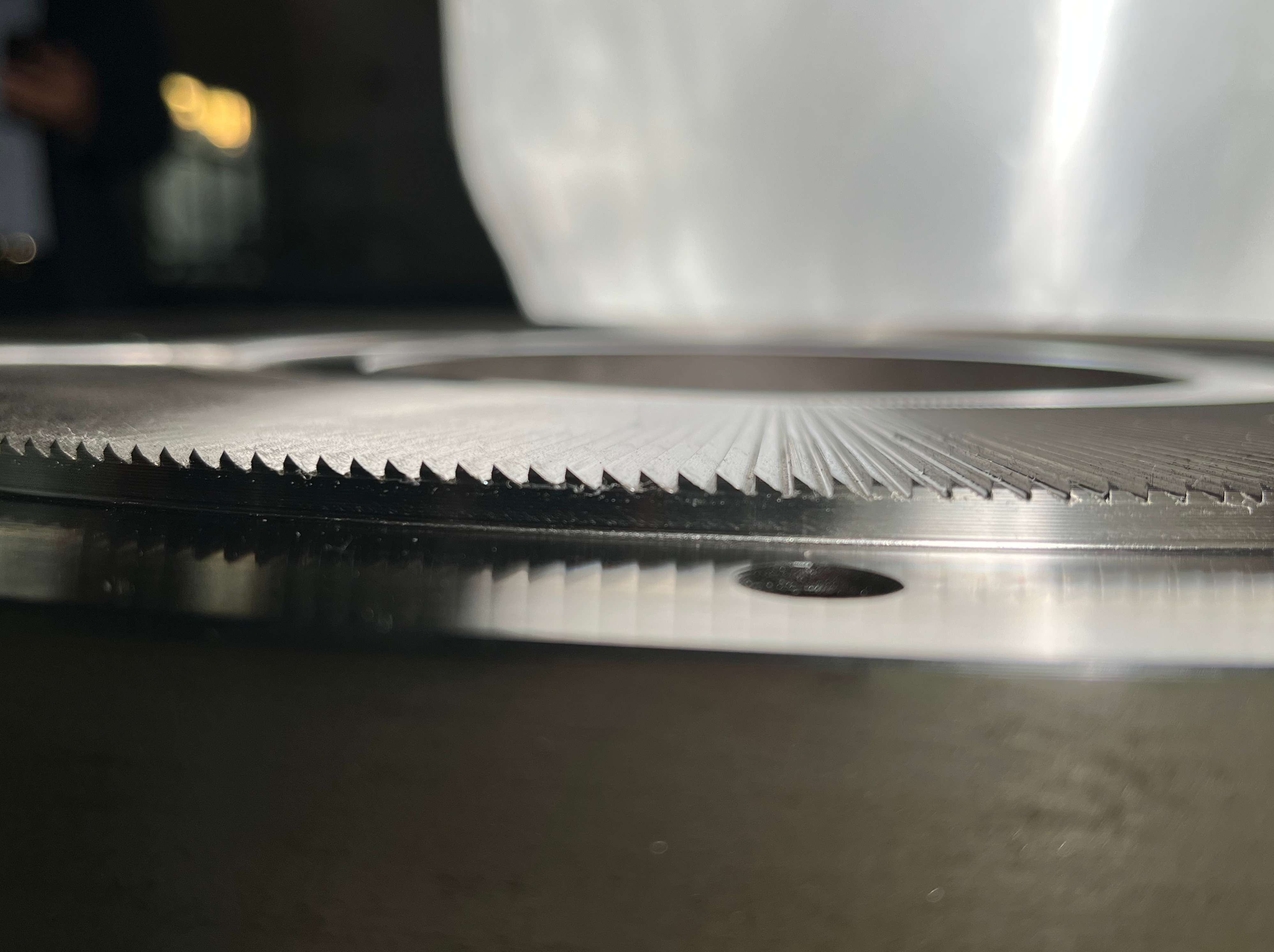
The Role of Grinding Teeth
Grinding teeth are not simply raised structures on a metal grinding disc. Their angle, height, spacing, quantity, and arrangement all affect the movement path and stress conditions of plastic particles between the grinding discs, which in turn influence grinding efficiency and powder particle size.
The grinding disc can be compared to a road, while the grinding teeth act like a traffic guidance system. When the layout is properly designed, materials can pass through the grinding zone in a more orderly and controlled manner rather than accumulating excessively in one particular area.
What Is Grinding Disc Tooth Design?
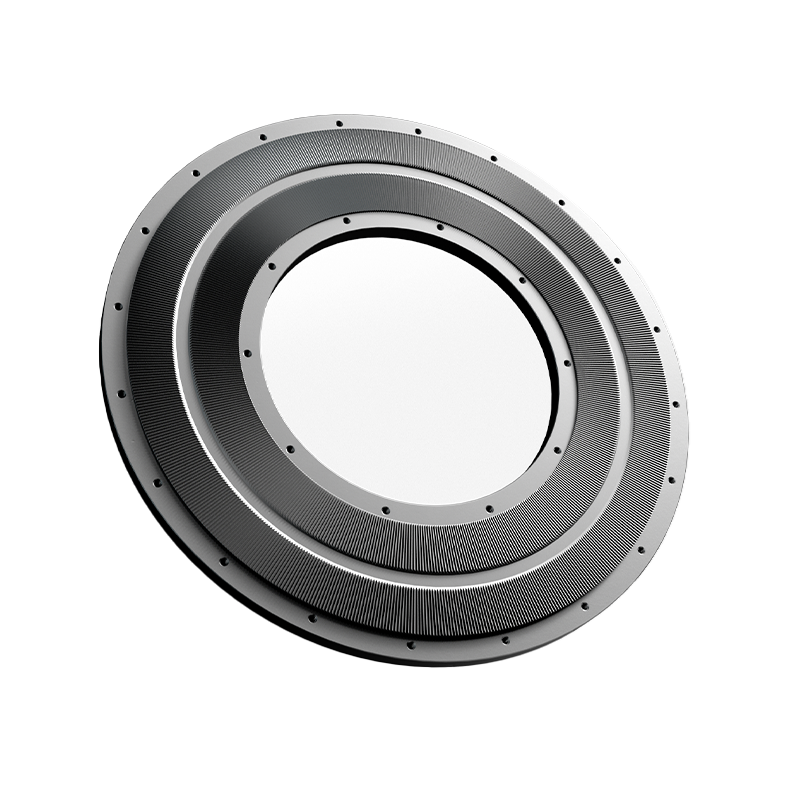
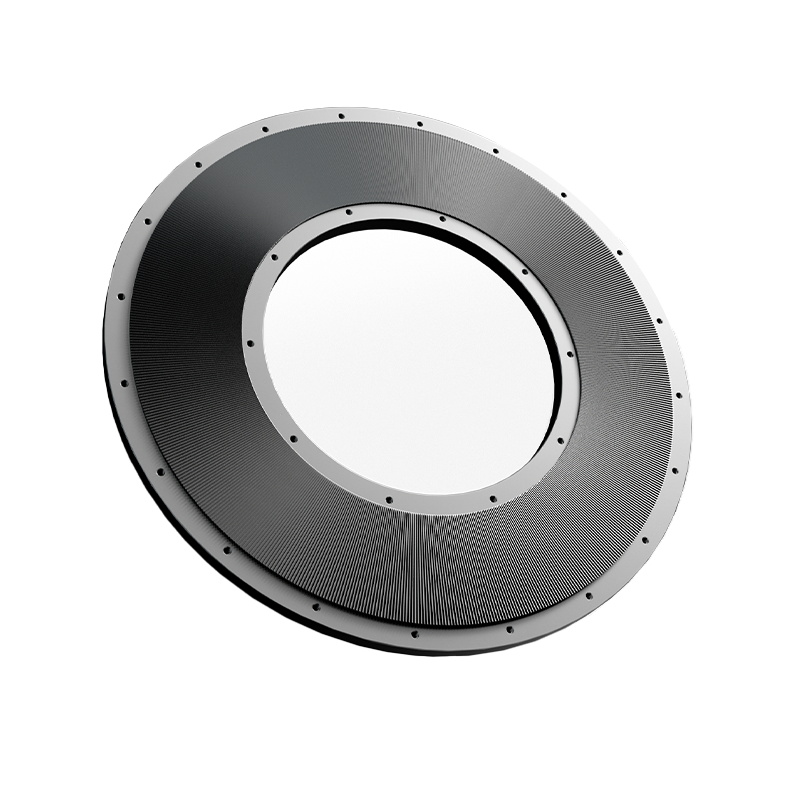
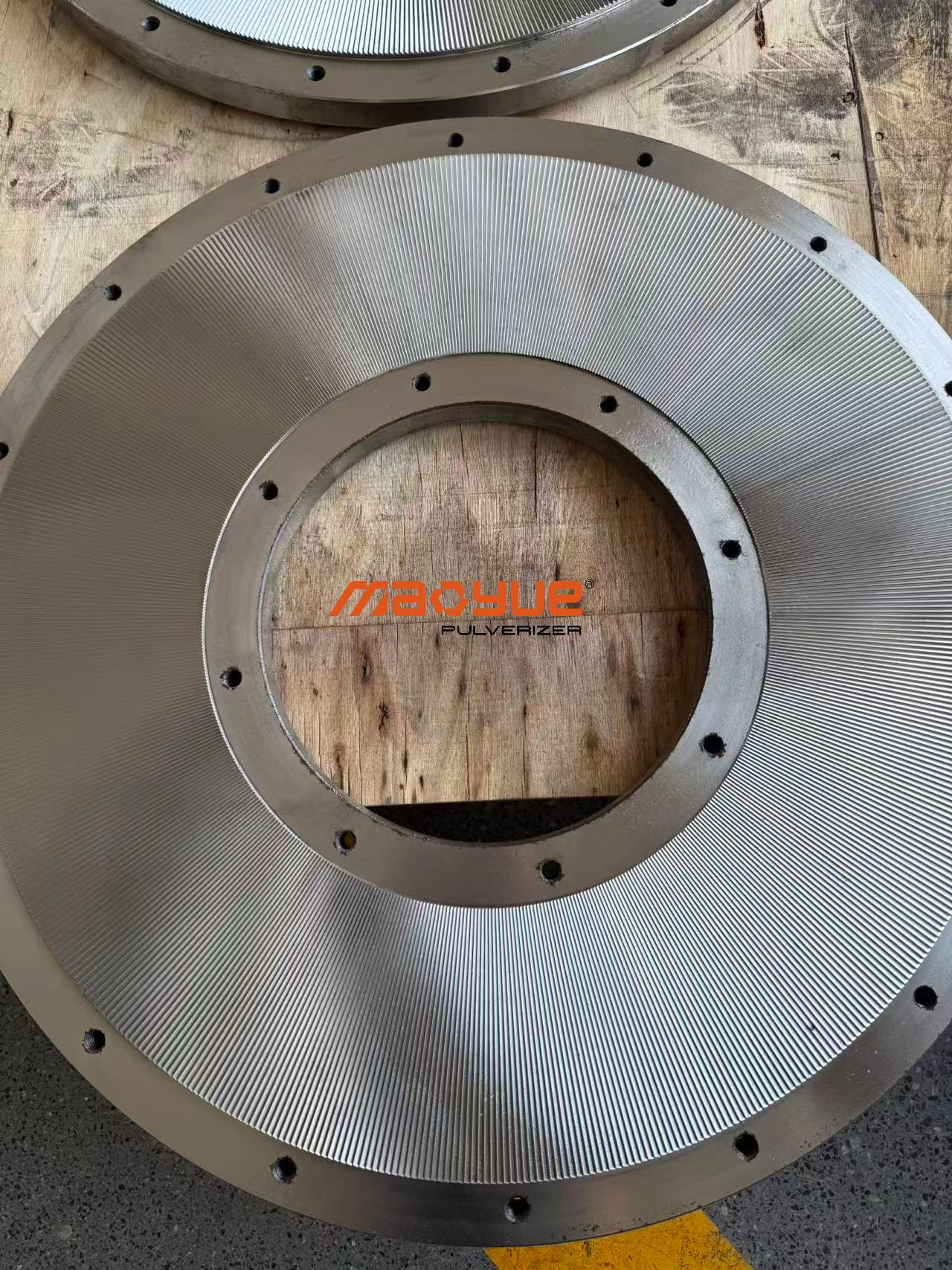
Grinding disc tooth design refers to the geometric structure and arrangement of the grinding teeth or grooves on the working surface of a pulverizer grinding disc. It determines how materials move, make contact, and undergo grinding after entering the space between the rotating and stationary discs.
Different tooth designs create different material flow paths and stress conditions, which can affect powder fineness, particle size uniformity, grinding efficiency, and temperature control.
Specific designs may include straight teeth, angled teeth, radial patterns, segmented tooth structures, double-row tooth designs, and customized combinations developed for specific materials.
There is no single tooth design that is suitable for every type of plastic. The grinding requirements for PVC, PE, PP, masterbatch, modified plastics, and other materials are not exactly the same. The suitable tooth design should be determined according to the material being processed and the required final powder specifications.
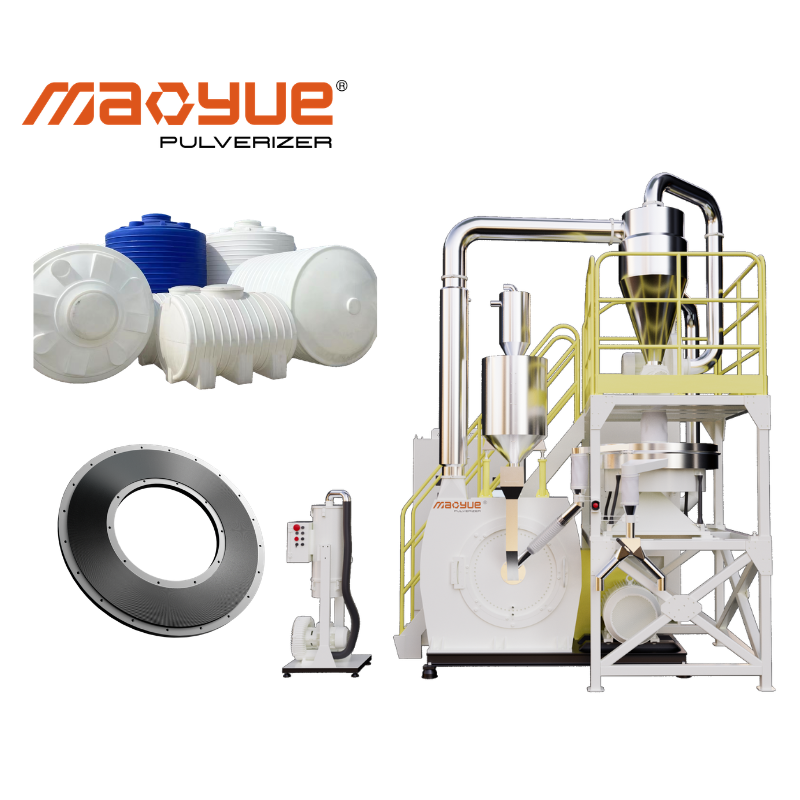
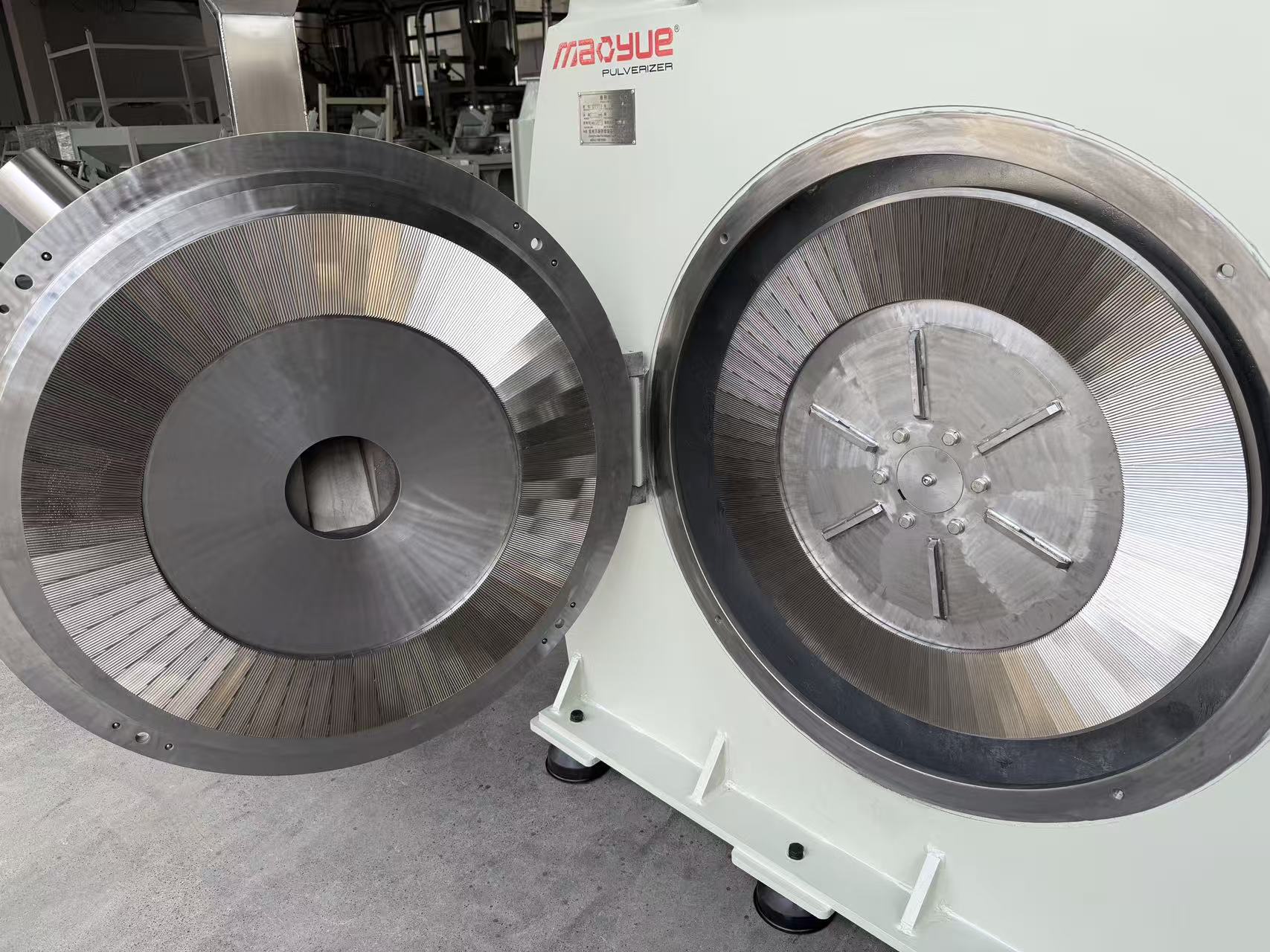
Stationary Disc and Rotating Disc
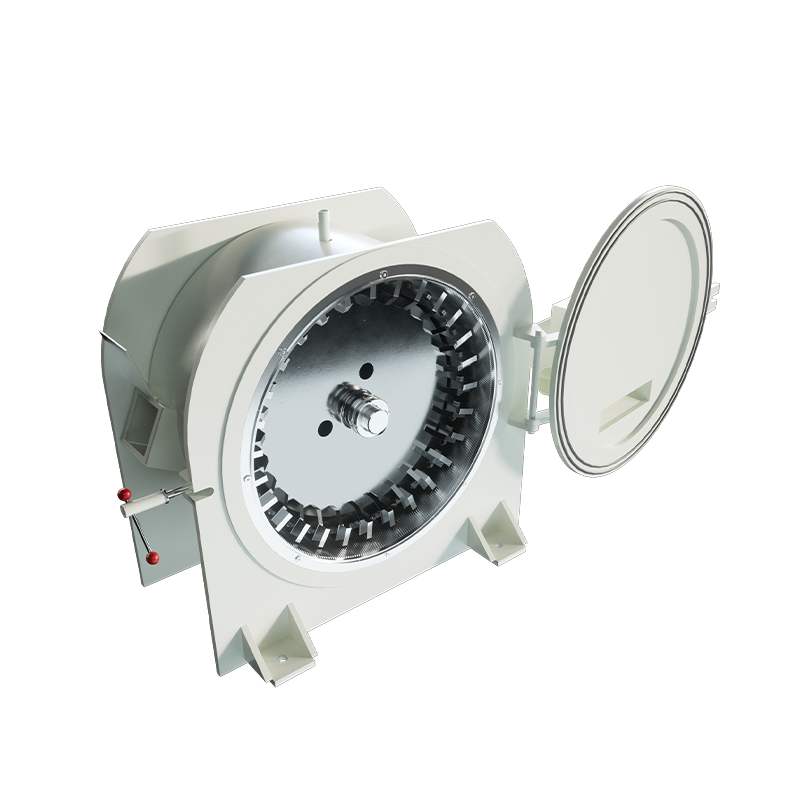
In a plastic pulverizer, the stationary disc remains fixed, while the rotating disc operates at high speed. The working gap between the two discs forms the primary grinding zone where the material is processed.
After plastic particles enter this area, they are continuously driven outward by the centrifugal force generated by the high-speed rotating disc and guided by the grinding tooth structure. At the same time, the particles are subjected to shearing, compression, and friction, gradually reaching the required powder particle size.
Therefore, grinding tooth design should not be evaluated independently of other operating parameters such as disc speed, grinding disc gap, feed rate, and cooling system. In practice, these factors work together as an integrated grinding system.
Tooth Design and Grinding Path
For relatively tough plastics such as PE and PP, the material flow path between the grinding discs is particularly important. Their behavior during grinding differs from that of harder materials such as PVC.
A properly arranged tooth pattern can help the material move smoothly through the grinding zone while reducing unnecessary residence time. In other words, an effective tooth design is not simply about creating more friction. Instead, it uses an appropriate structural arrangement to achieve a better balance between material flow, grinding intensity, and temperature control.
Common Grinding Disc Tooth Designs
Different grinding disc tooth designs create different material flow paths and grinding mechanisms. In practical applications, grinding disc tooth design should not be judged simply by whether there are “more teeth” or “fewer teeth.” Instead, the selection should take into account the type of plastic, target powder fineness, required production capacity, and operating conditions of the machine.
The following are several common tooth structures used in plastic pulverizers.
Single-Row Tooth Design
A single-row tooth design features one primary set of grinding teeth within the working area of the grinding disc. It creates a relatively direct grinding path and is suitable for applications where the material characteristics and target powder fineness are clearly defined and a more complex grinding structure is not required.
Its main advantages include a relatively straightforward structure and convenient maintenance.
Double-Row Tooth Design
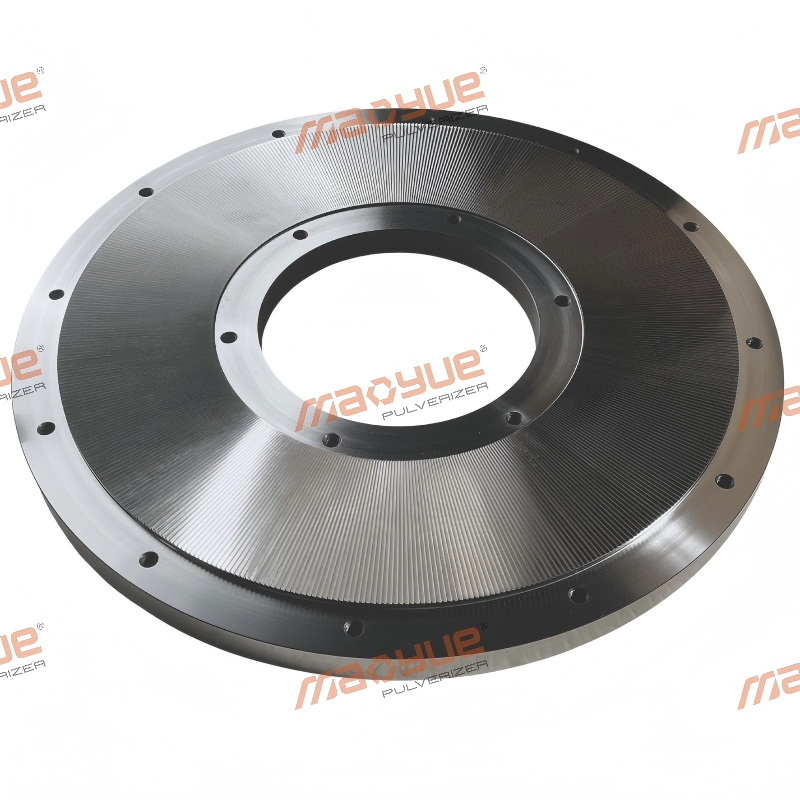
A double-row tooth design divides the grinding area into multiple working sections. The section can focus on material entry and initial grinding, while the subsequent section continues the grinding process to further refine the material.
This structure is suitable for applications that require a balance between production capacity and powder uniformity. The key is not simply adding another row of teeth, but properly designing the tooth spacing and geometric structure of each section, allowing each area to perform a specific grinding function.
Multi-Stage Tooth Design
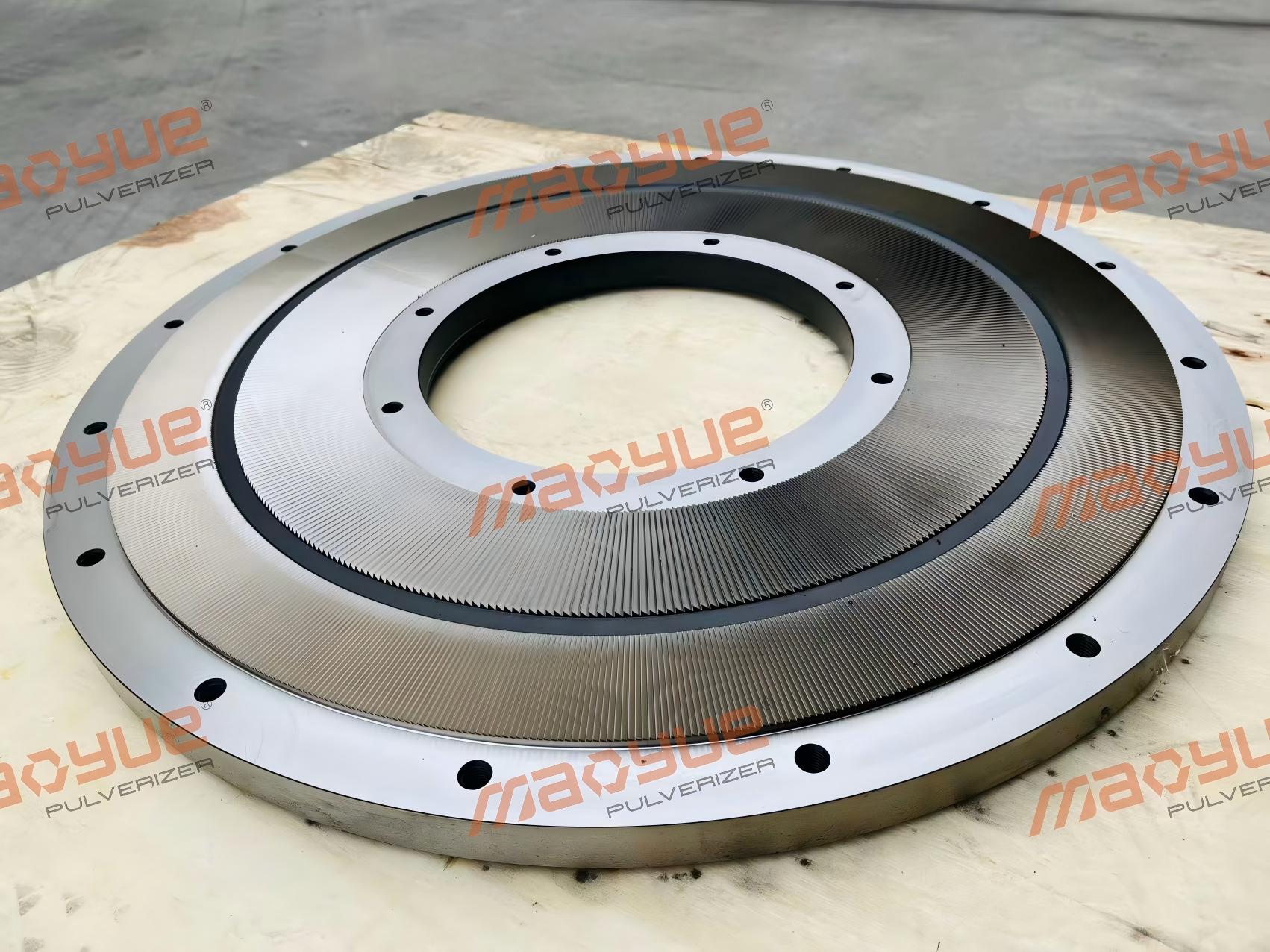
A multi-stage grinding disc divides the grinding process into several stages. Instead of relying on a single tooth pattern to complete the entire grinding process, the grinding method can be gradually adjusted from the feeding area to the discharge area.
This type of design can be particularly valuable for applications that require more consistent control of powder particle size and grinding performance.
How Does Material Type Affect Tooth Design Selection?
When selecting a grinding disc tooth design, the question should always be: What material are you going to grind?
Different plastics vary in hardness, toughness, flowability, and thermal sensitivity, so their movement and grinding behavior inside a plastic pulverizer can also be different.
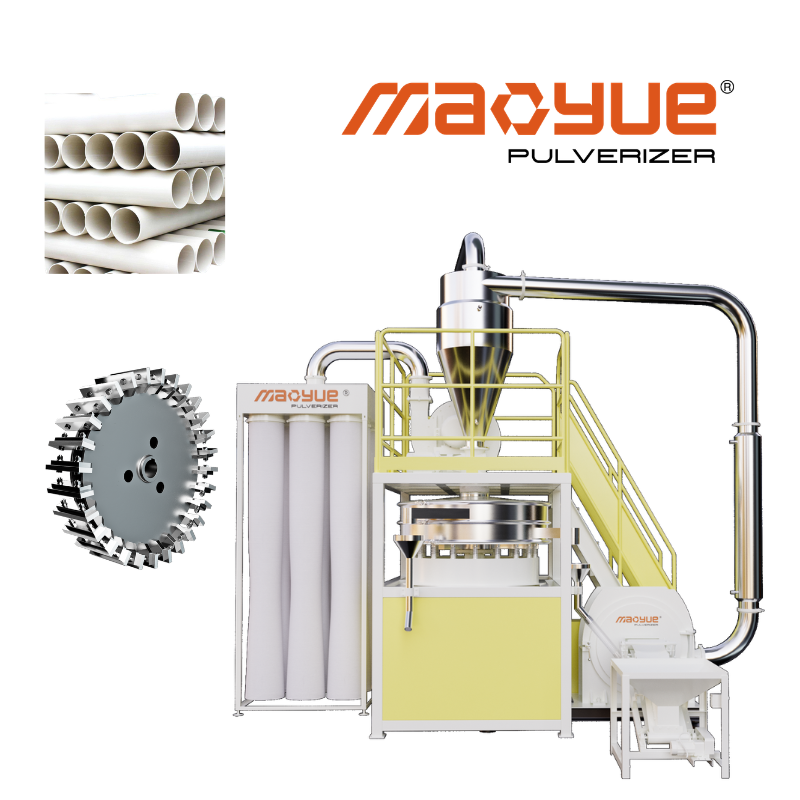
Grinding Disc Tooth Design for PVC Pulverizers
PVC is one of the common materials processed by plastic pulverizers. PVC pipes, profiles, sheets, production scrap, and recycled PVC materials can all be processed into reusable powder using a pulverizing system.
For rigid PVC, the tooth design needs to provide effective mechanical grinding while maintaining relatively stable powder particle size. Therefore, the grinding disc structure, grinding gap adjustment, and cooling method should be considered together rather than evaluating the tooth design independently.
Grinding Tooth Design for PE and PP
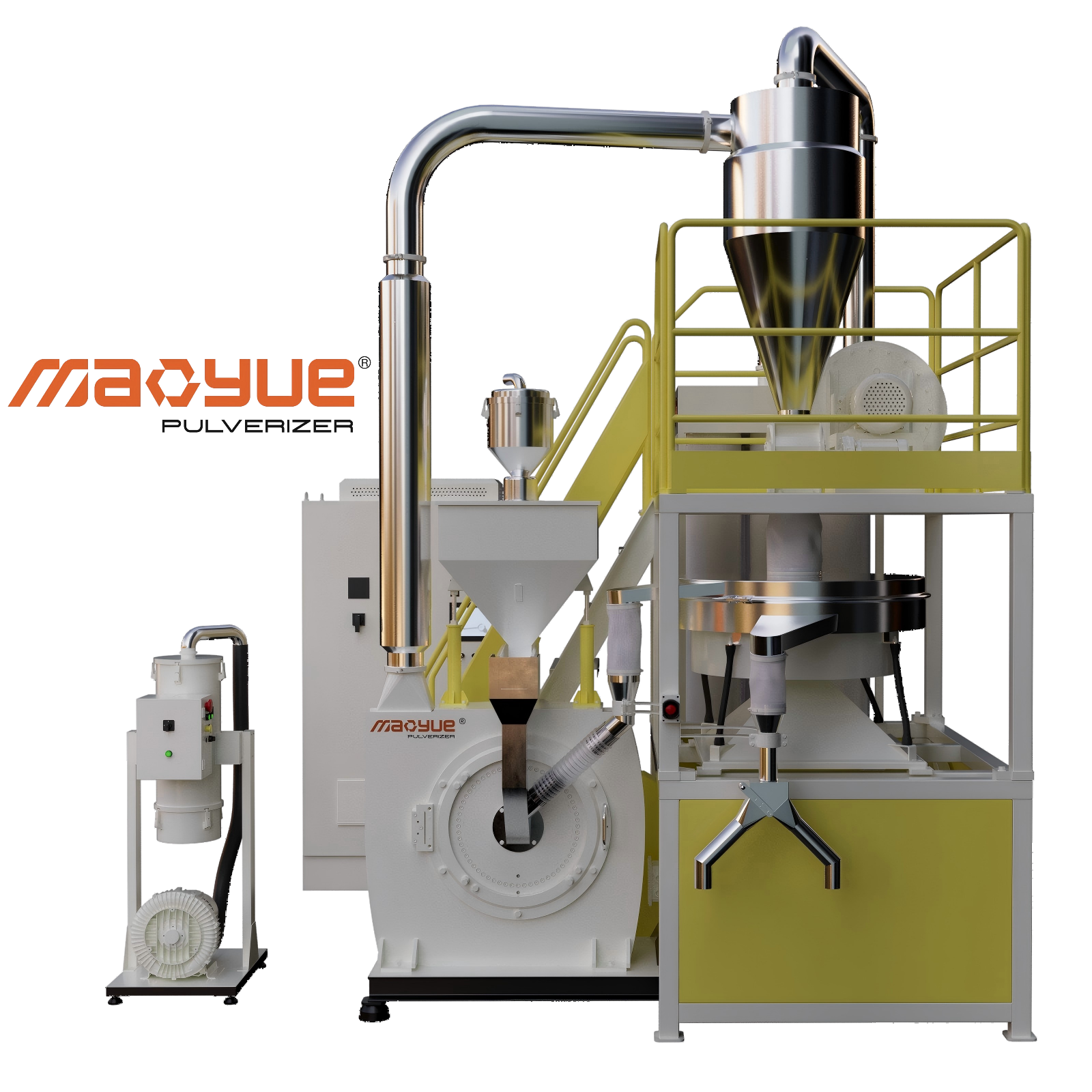
Compared with many rigid plastics, PE and PP have greater toughness and may require greater attention to heat accumulation during continuous grinding.
Therefore, the tooth design should help the material move efficiently through the grinding zone while avoiding unnecessary friction. Cooling capacity and feed control are also important parts of the overall grinding system.
Masterbatch and Modified Plastics
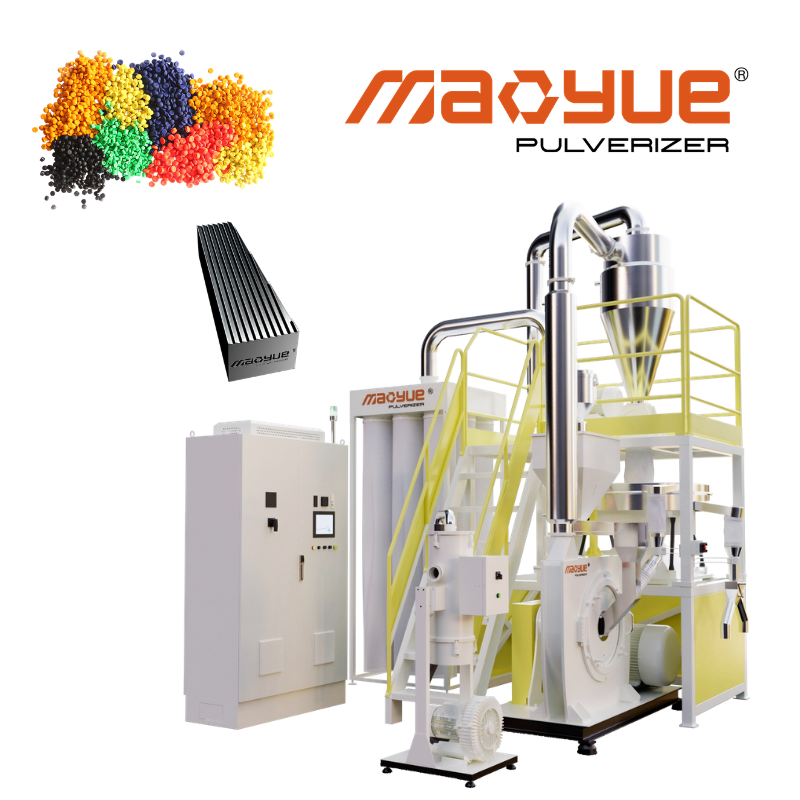
Masterbatch and modified plastics may contain pigments, fillers, fibers, or other additives. These components can change the grinding resistance and wear characteristics of the material.
Therefore, tooth design should be selected based on the actual material formulation and processing requirements, rather than simply according to the name of the base plastic.
How Does Tooth Design Affect Powder Fineness?
For plastic pulverizers, powder fineness is one of the important indicators of grinding performance. The grinding disc tooth design directly affects the material's movement path, contact conditions, and the degree of grinding it experiences within the grinding zone.
However, the final powder particle size is not determined by tooth design alone. Grinding disc gap, rotational speed, feed rate, material temperature, and classification equipment also play important roles.
If finer powder is required, the answer is not always to use “sharper teeth.” What really needs to be adjusted is the entire grinding system.
Grinding Disc Gap and Tooth Geometry
The grinding disc gap is the working distance between the rotating and stationary discs. A smaller gap generally increases the grinding intensity, while a larger gap allows the material to pass through the grinding zone more easily.
The specific setting depends on the material being processed and the target powder fineness. The height and geometric structure of the grinding teeth should also be properly matched to the adjustable grinding gap range.
How Does Tooth Design Affect Production Capacity?
Machine output is not determined by motor power alone. If the tooth design allows material to pass efficiently through the grinding chamber, the mechanical power supplied by the motor can be utilized more effectively.
In contrast, if the tooth design does not match the material characteristics, the material may remain in certain areas for too long, increasing unnecessary friction and heat generation. This can affect continuous feeding and overall production efficiency.
Therefore, when comparing different plastic pulverizers, it is better to evaluate grinding disc design, motor power, and actual material test results together.
How Does Tooth Design Affect Grinding Temperature?
During the grinding process, mechanical energy is converted into material deformation, friction, and heat. The tooth structure affects how these forces are distributed within the grinding zone.
If too much energy is consumed by unnecessary friction, the grinding temperature may increase and affect the processing behavior of certain heat-sensitive plastics.
Therefore, air cooling, water cooling, feed rate, and grinding disc design should be considered as an integrated system to achieve better temperature control and stable grinding performance.

How to Choose the Right Grinding Disc Tooth Design?
Choosing the right grinding disc tooth design is not simply a matter of comparing the number of grinding teeth or looking at the appearance of the grinding disc. The selection should be based on actual production requirements.What material are you processing? How fine does the powder need to be? What production capacity do you expect?
These three questions largely determine the direction of the grinding disc design.
Consider Material Characteristics
First, it is important to understand the material's hardness, toughness, moisture content, additives, and thermal sensitivity.
You also need to consider how the material will behave after entering the grinding chamber. Is it easy to break, or is it more likely to deform? Will it soften easily as the temperature rises?
These factors are more important than simply selecting a grinding disc based on its appearance.
Consider the Target Particle Size
Customers producing relatively coarse powder do not necessarily need the same tooth design as those producing fine powder.
The required mesh size or particle size range should be determined first. The grinding disc structure, grinding gap, airflow, and classification system can then be matched to the target specification.
Consider Production Capacity Requirements
The requirements of laboratory applications, small-scale recycling lines, and continuous industrial production lines are different.
If the target capacity reaches several hundred kilograms per hour or more, the grinding disc should be evaluated as part of the entire pulverizing system rather than as an individual component.
Match Grinding Disc Diameter and Motor Power
Grinding disc diameter, motor power, tooth design, and grinding gap need to be properly matched.
A larger grinding disc does not automatically mean better performance, and a larger motor cannot simply compensate for an unsuitable grinding structure.
In cases, a well-balanced grinding system is more meaningful than simply increasing any single parameter.
Why Is Machining Precision Important?
Even if the grinding disc tooth design is well engineered, insufficient machining precision can still affect actual performance.
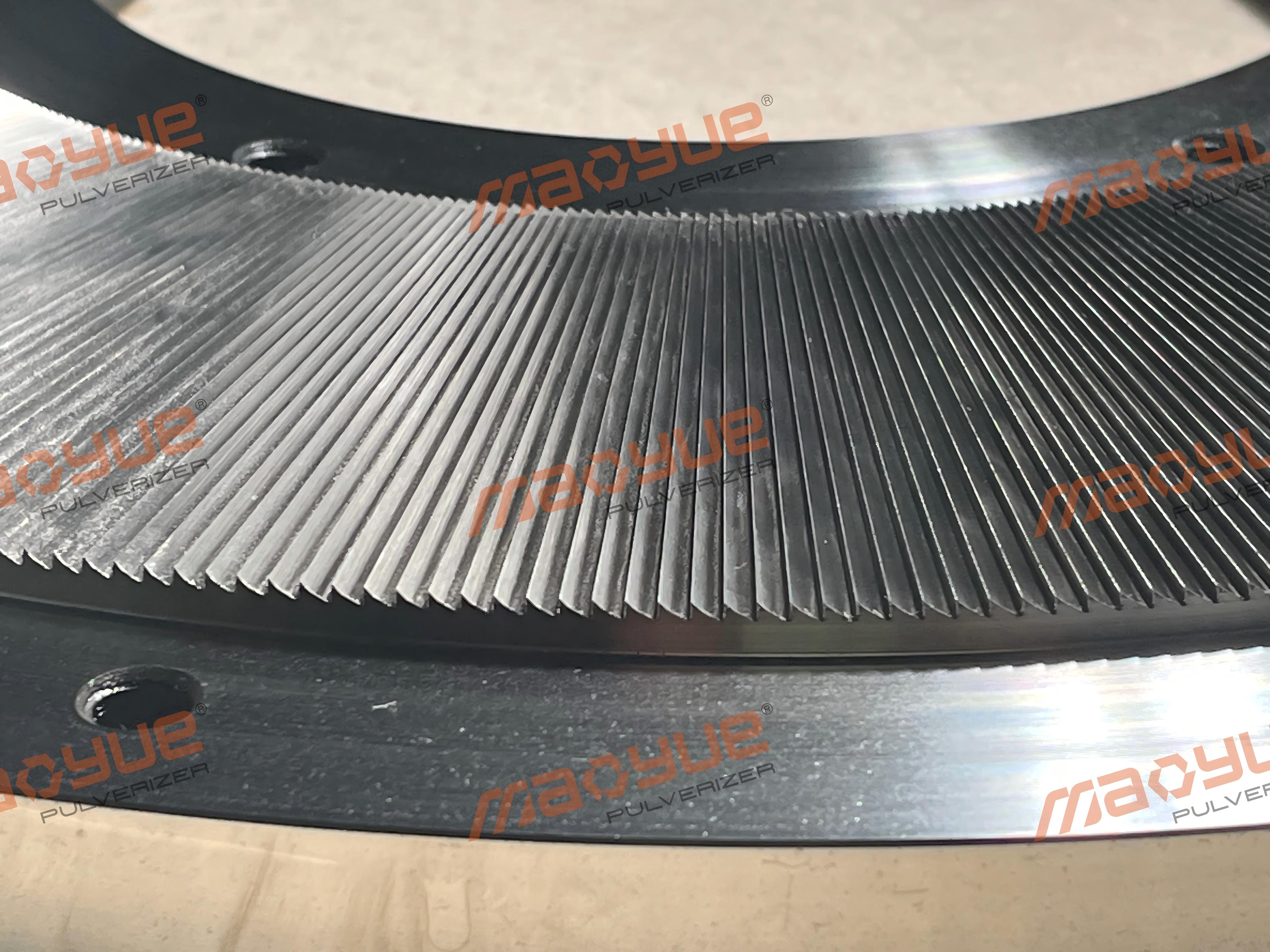
For high-speed plastic pulverizers, grinding tooth dimensions, disc surface flatness, concentricity, and dynamic balance can all influence the operating condition of the grinding disc.
Precision machining helps maintain structural consistency across the grinding disc, while proper dynamic balancing helps reduce vibration during high-speed rotation.
Grinding Disc Materials and Grinding Tooth Wear
Material selection for grinding teeth should also take wear resistance into consideration.
Modified plastics containing glass fiber, mineral fillers, or other abrasive additives may cause more significant wear than conventional PE or PVC.
Depending on the application, wear-resistant tool steels such as DC53 and D2 can be selected. Combined with appropriate heat treatment processes, these materials can help the grinding disc maintain a relatively stable tooth profile during long-term grinding operations.
Common Mistakes When Choosing Grinding Disc Tooth Designs
A common mistake is judging the quality of a grinding disc simply by the number of grinding teeth. More teeth do not automatically mean better grinding performance.
Another mistake is directly copying a grinding disc design used for a different material without considering the specific characteristics of the material being processed.
Some users also overlook the relationship between tooth design and the cooling system. Finally, focusing only on the initial purchase price while ignoring machining precision and long-term maintenance costs may to additional problems during subsequent operation.
How Does Mao Yue Design Grinding Disc Tooth Patterns?
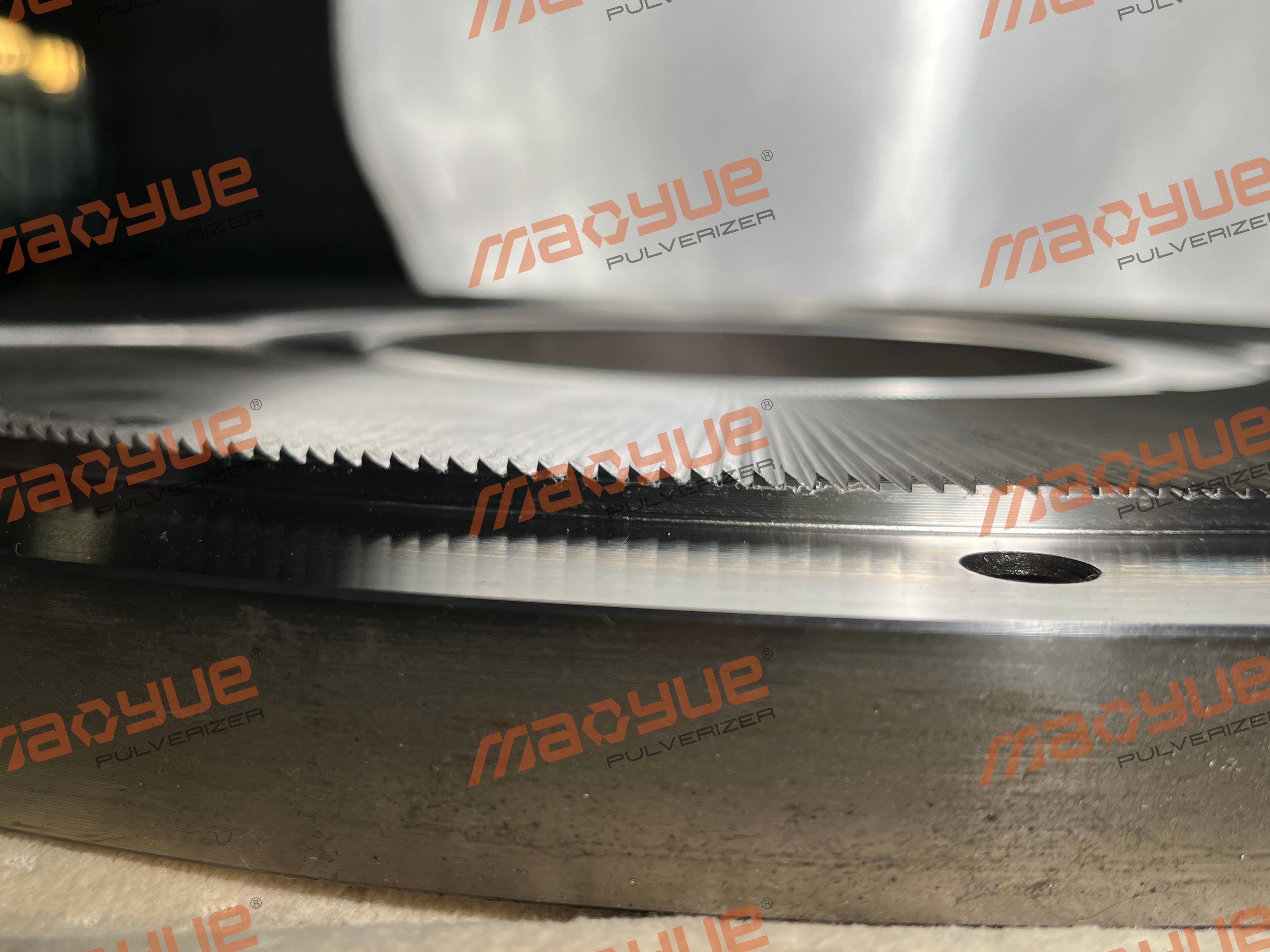
At Mao Yue, grinding disc design typically starts with the actual material characteristics and the customer's production requirements, rather than using a fixed tooth pattern for every application.
PVC, PE, PP, masterbatch, and modified plastics with different formulations can behave differently during the grinding process. Therefore, the grinding disc structure needs to be adjusted according to the specific application.
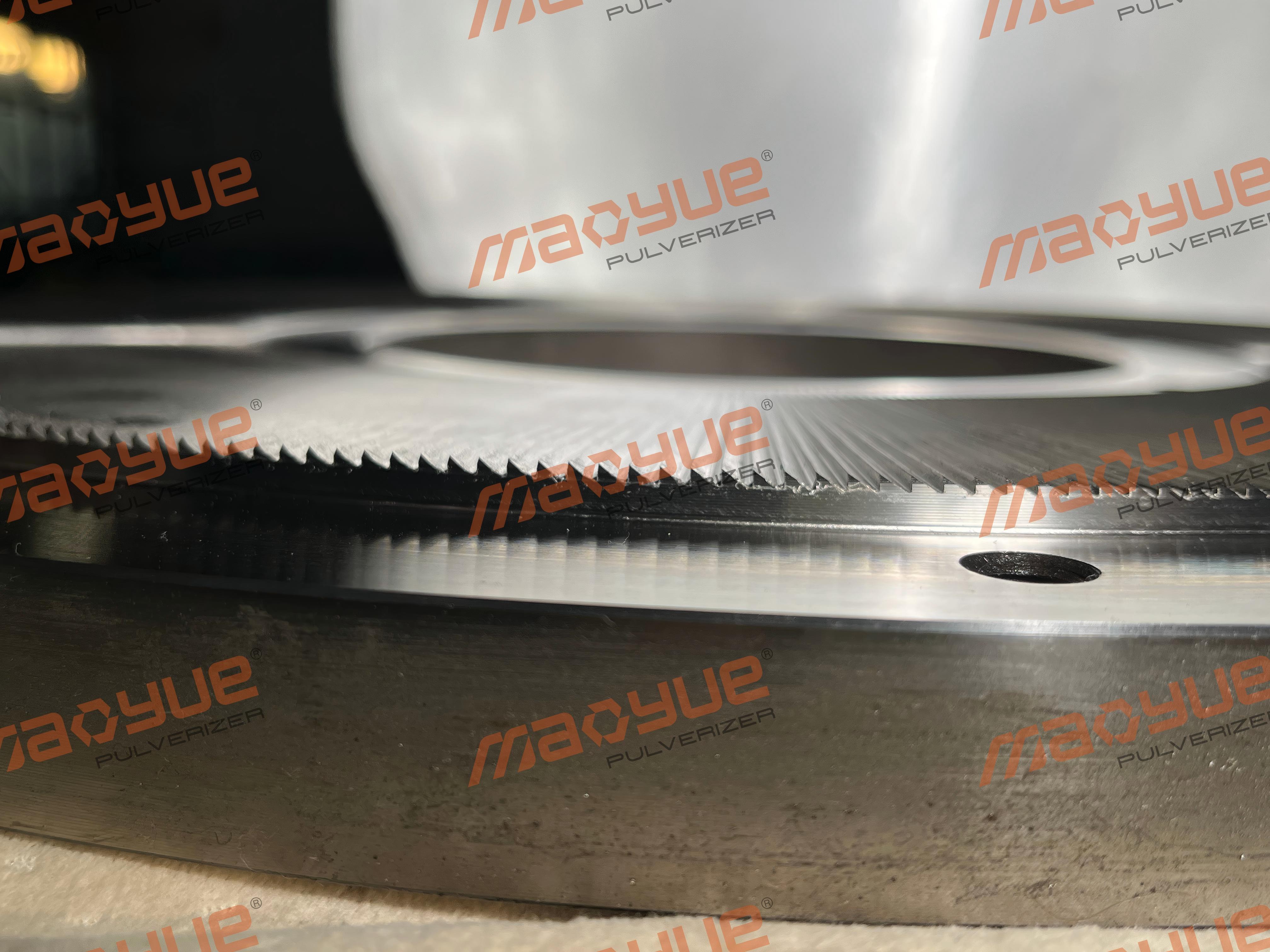
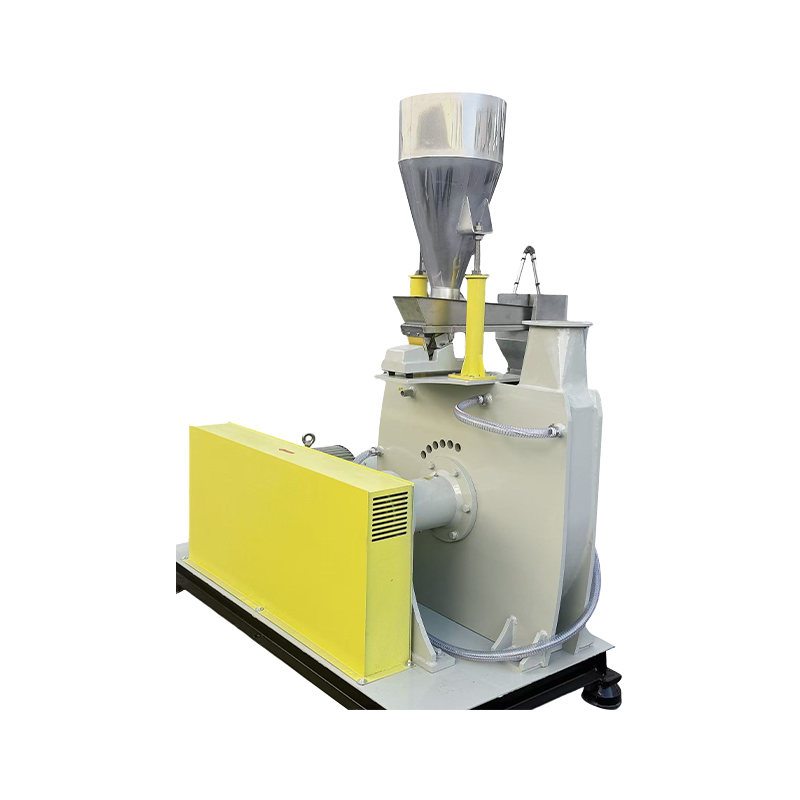
When designing a grinding disc tooth pattern, Mao Yue considers multiple factors, including tooth geometry, grinding disc diameter, disc material, grinding gap, rotational speed, cooling method, and target production capacity. The goal is to achieve a proper match between the grinding disc and the entire plastic pulverizer system.
At the same time, manufacturing precision is also an important consideration. Precision machining helps control grinding tooth dimensions and disc surface quality, while dynamic balancing helps the grinding disc maintain stable operation during high-speed rotation.
For customers who need to replace or upgrade their grinding discs, this comprehensive approach—from material and tooth design to complete machine parameters—is more practical than simply replacing the existing disc with one that “looks more complicated.”
Summary: How to Choose the Right Grinding Disc Tooth Design
So, how do you choose the right grinding disc tooth design?
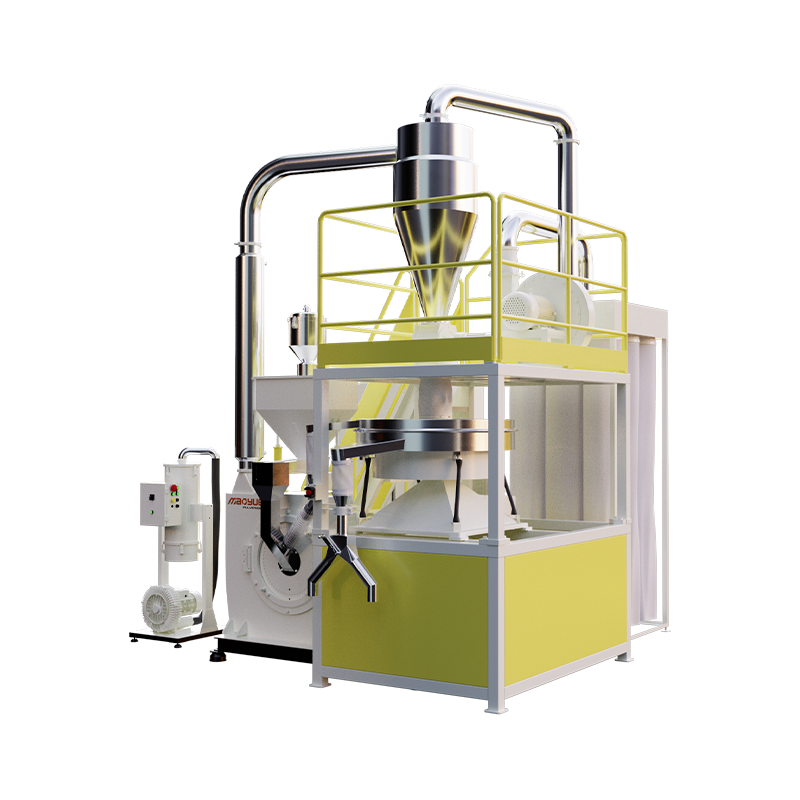
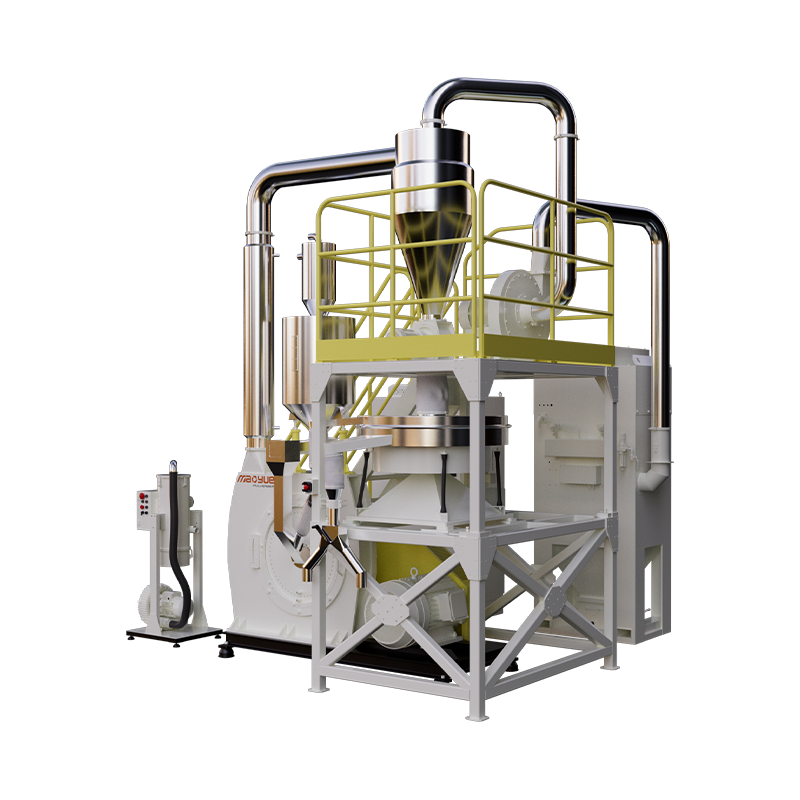
Start with the material being processed, then define the target powder particle size and production capacity. After that, evaluate the grinding tooth structure, grinding disc diameter, motor power, grinding gap, cooling method, disc material, and machining precision as a complete system.
The suitable grinding disc is not necessarily the one with the teeth or the complicated structure. Instead, it should be the one that matches the material characteristics and production requirements.
When the tooth design, grinding gap, cooling system, and machine power are properly coordinated, the plastic pulverizer can achieve more stable grinding performance and produce more consistent powder quality.