

 English
 русский
 Español
 عربى
عربى 中文简体
中文简体
 中文简体
中文简体
Content
- 1 Need to Pulverize PE Color Masterbatch?
- 2 What Is PE Masterbatch?
- 3 Why Does PE Masterbatch Need a Pulverizer Instead of a Conventional Crusher?
- 4 How Does a PE Masterbatch Pulverizer Work?
- 5 Typical Parameters of a PE Masterbatch Pulverizer
- 6 How to Control Temperature During PE Pulverizing?
- 7 How to Prevent PE Masterbatch Powder from Agglomerating?
- 8 What Particle Size Can a PE Pulverizer Produce?
- 9 How to Choose a PE Pulverizer?
- 10 Why Is Material Testing Necessary Before Production?
- 11 How to Choose Between 500, 600 and 800 mm PE Pulverizers?
- 12 Mao Yue PE Disc-Type Pulverizing Solution
- 12.1 Mao Yue Advantages
- 12.1.1 30+ Years of Plastic Pulverizer Manufacturing Experience
- 12.1.2 In-House Manufacturing of Grinding Discs and Blades
- 12.1.3 From Material Testing to Complete Line Configuration
- 12.1.4 Multiple 500 / 600 / 800 mm Disc Sizes
- 12.1.5 Air Cooling, Water Cooling, and Combined Cooling
- 12.1.6 Factory Direct Supply + On-Site Service
- 12.1 Mao Yue Advantages
- 13 What Applications Can PE Masterbatch Powder Be Used For?
- 14 Frequently Asked Questions About PE Color Masterbatch Pulverizing
- 14.1 Can PE color masterbatch be pulverized into powder?
- 14.2 What type of pulverizer is suitable for PE masterbatch?
- 14.3 What mesh size can a PE pulverizer produce?
- 14.4 How do you prevent PE masterbatch powder from agglomerating?
- 14.5 Does PE pulverizing require water cooling?
- 14.6 Can different PE masterbatch formulations be processed?
- 14.7 What is the difference between a PE pulverizer and a plastic crusher?
- 15 From Masterbatch Granules to Stable Powder Production
- 16 Ready to Test Your PE Masterbatch?The Right Pulverizing Parameters Start with Your Actual Material
PE masterbatch is typically fed into production in granular form. However, when it needs to be further processed into powder, pulverizing is not simply a matter of making the granules smaller. Particle size, particle size distribution, temperature, feeding stability, powder flowability, and output capacity can all affect the final result.
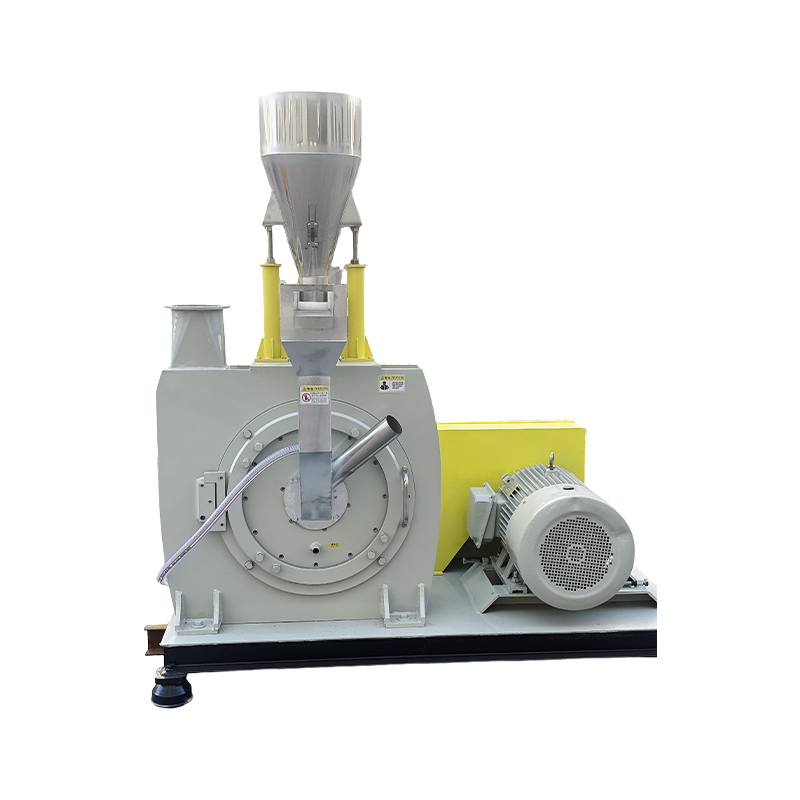
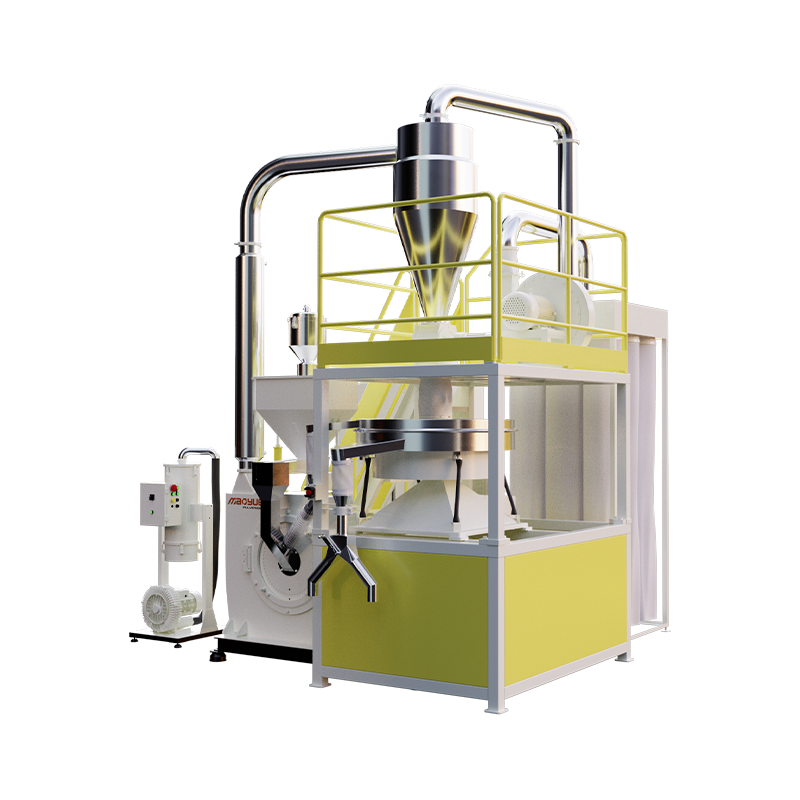
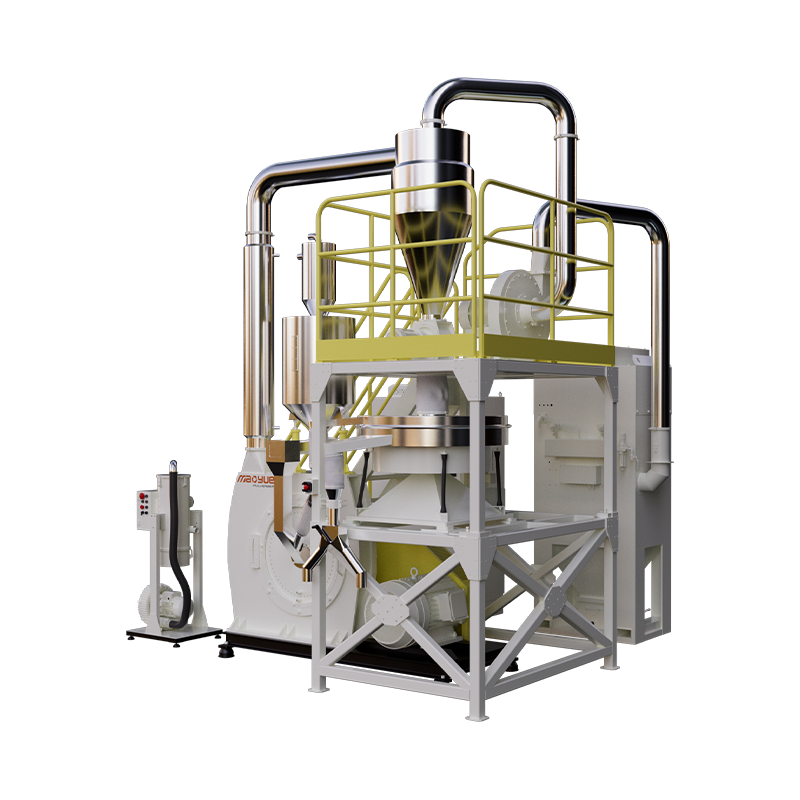
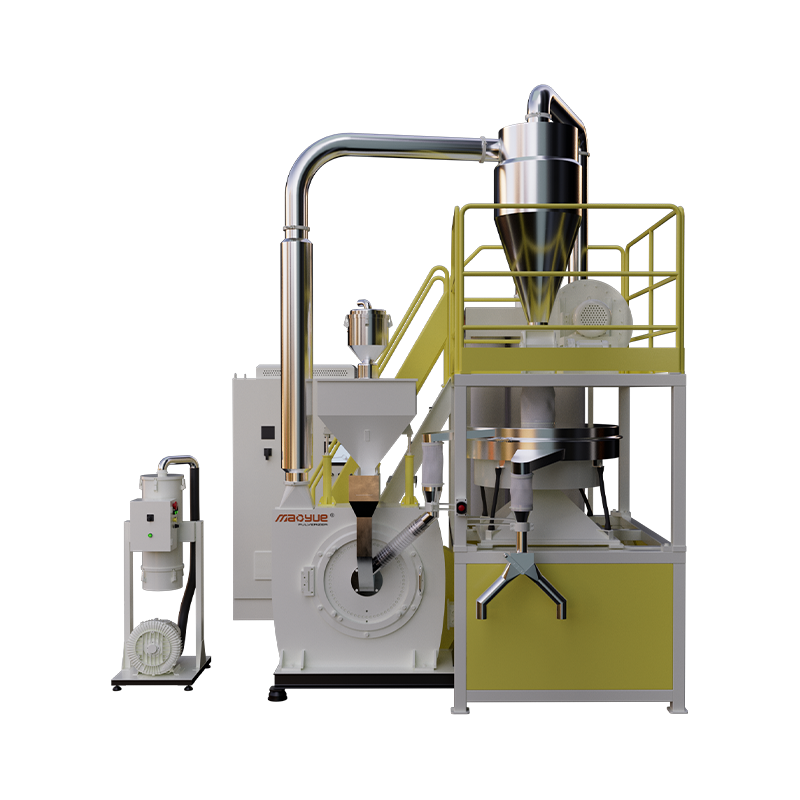
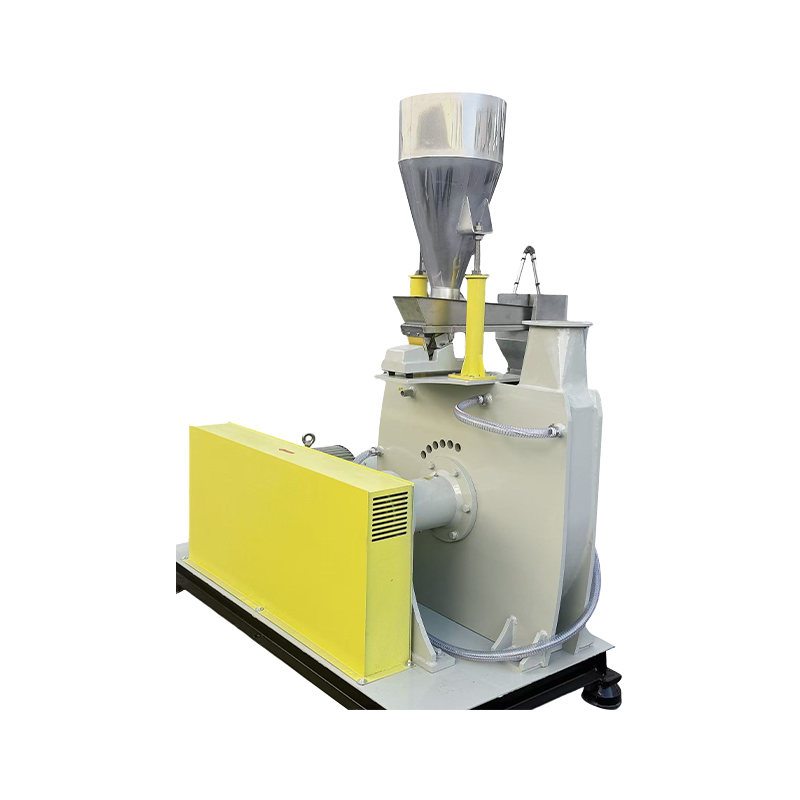
For PE masterbatch granule pulverizing, Mao Yue provides a disc-type PE plastic pulverizing solution. Based on material characteristics, target fineness, required output, and cooling requirements, Mao Yue matches the pulverizing disc, feeding, cooling, and powder collection systems to help process PE masterbatch granules into stable powder suitable for downstream applications.
Need to Pulverize PE Color Masterbatch?
If you are processing PE masterbatch and have specific requirements for powder particle size or output, you can provide Mao Yue with your material information and target parameters.
What Is PE Masterbatch?
PE masterbatch is a highly concentrated coloring material based on polyethylene carrier resin. It typically consists of pigments, a PE carrier, additives, fillers, and other components. It is usually produced in granular form for easy storage, transportation, and accurate dosing.
When some downstream processes require PE material in powder form, the masterbatch granules need to undergo further pulverizing, grinding, and particle size control to produce PE masterbatch powder suitable for subsequent processing.
Why Does PE Masterbatch Need a Pulverizer Instead of a Conventional Crusher?
Shredders, crushers, and pulverizers serve different stages of material processing. In simple terms, shredding and crushing mainly reduce the size of the material, while pulverizing further processes the material into the required fine powder.
PE masterbatch is usually already produced in granular or pellet form. If the downstream process requires uniform and stable fine powder, a conventional crusher cannot directly achieve the desired result.
Therefore, PE masterbatch is more suitable for the fine grinding stage of a disc-type plastic pulverizer. Through high-speed rotating discs, an adjustable disc gap, and appropriate temperature control, the pulverizing process can be adjusted according to the material characteristics and target particle size, gradually converting the granules into powder suitable for downstream compounding, reprocessing, or other applications.
How Does a PE Masterbatch Pulverizer Work?
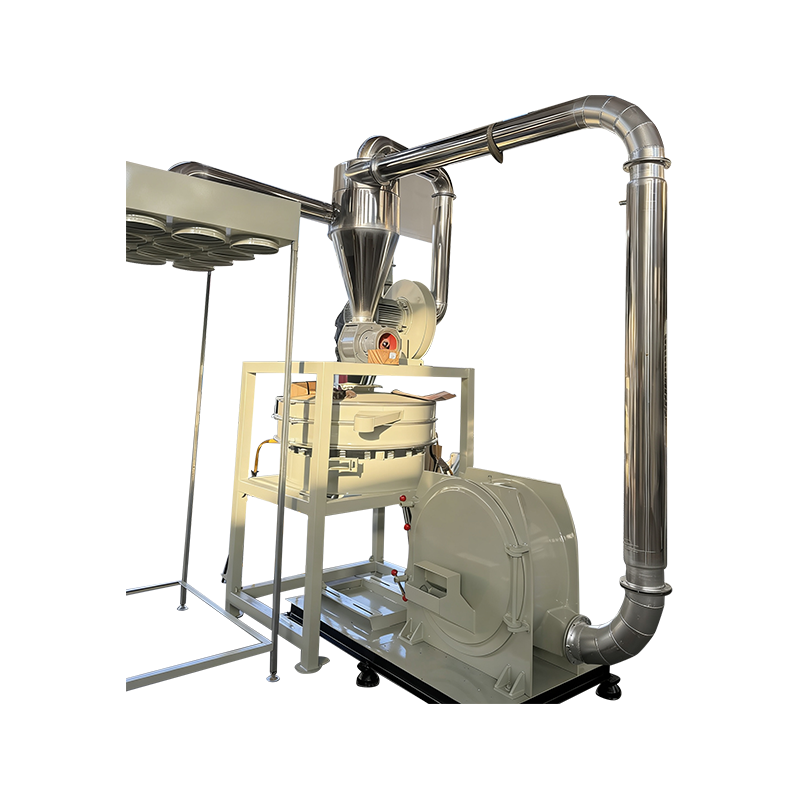
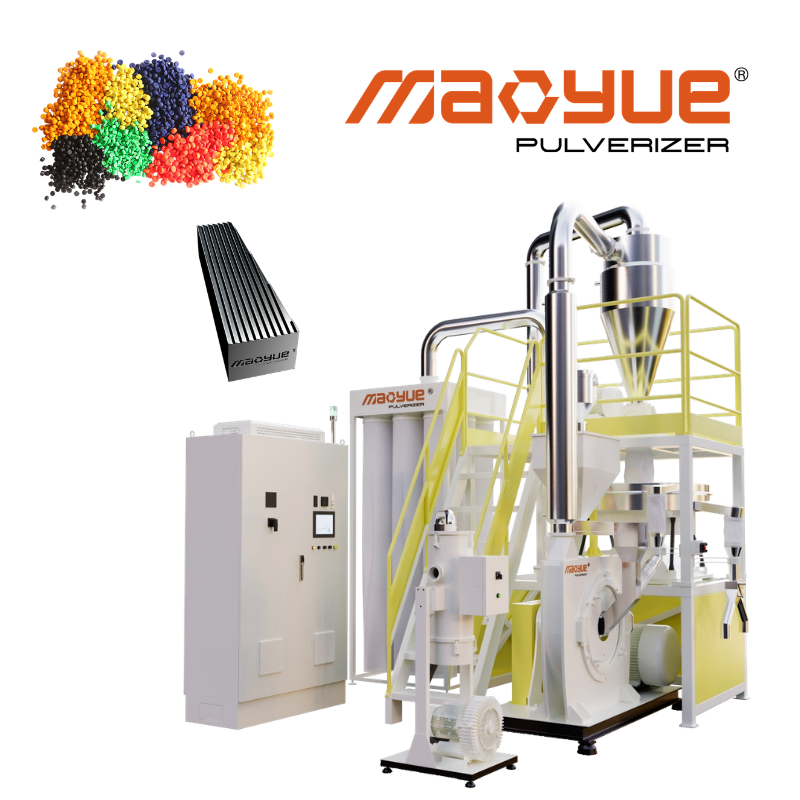
A complete PE masterbatch pulverizing system typically operates through the following process:
Feeding → Pulverizing → Cooling → Screening → Powder Collection
Stable Feeding
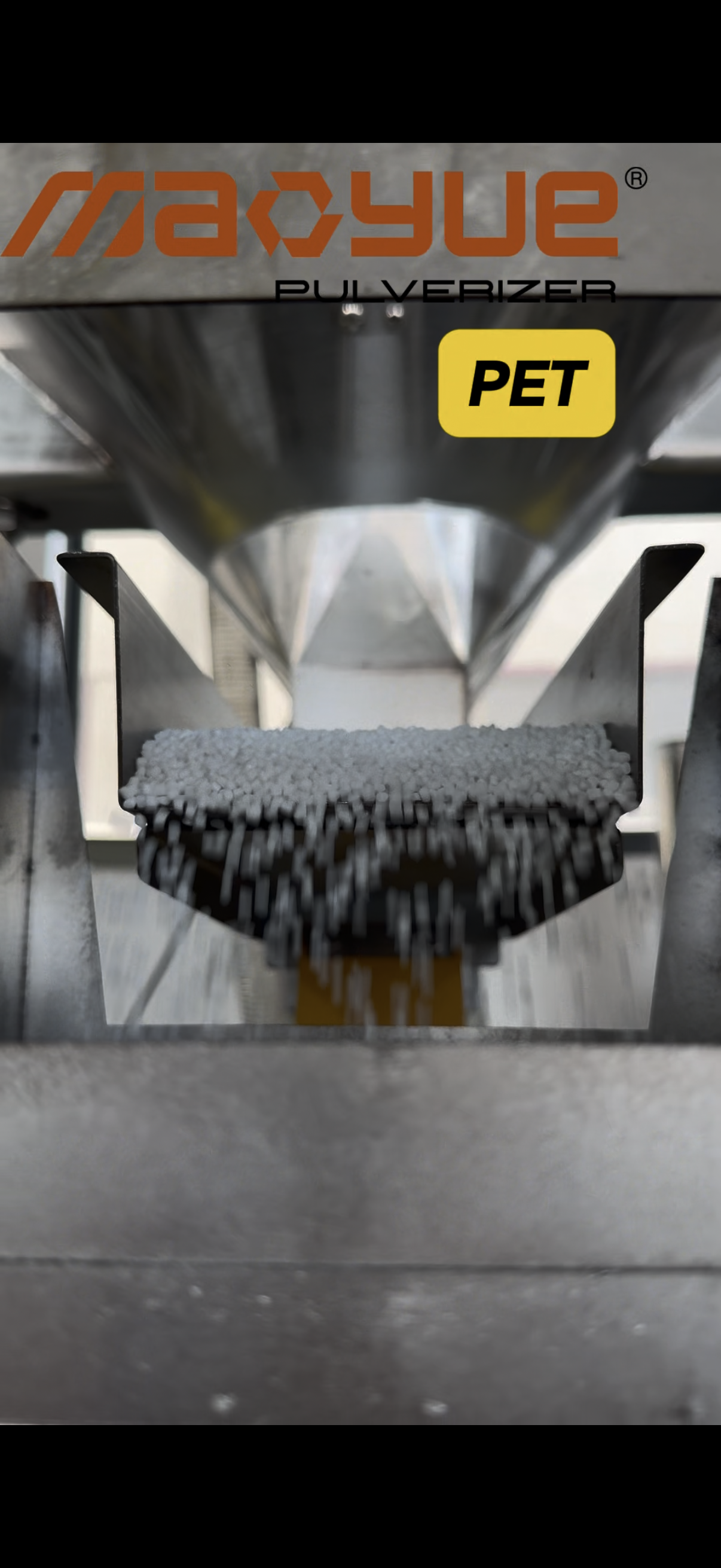
Stable feeding is the foundation for consistent PE masterbatch pulverizing performance. Feeding too quickly can increase the equipment load and may even cause overloading, while feeding too slowly can reduce equipment utilization and output.
By using a properly configured automatic feeding system to control the feeding rate, the material load can remain stable, making the pulverizing process more continuous and helping maintain consistent powder output and particle size.
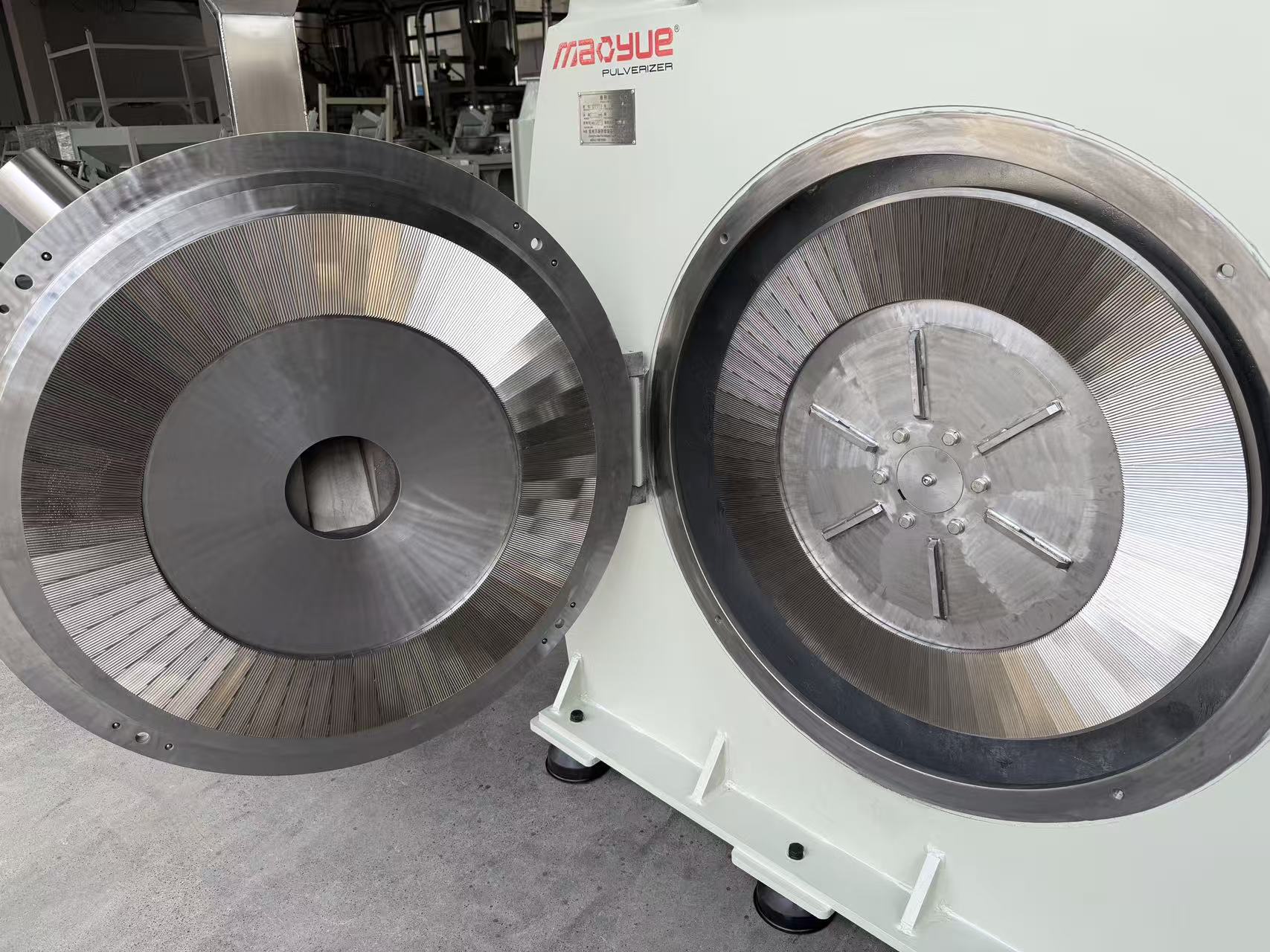
Disc Grinding
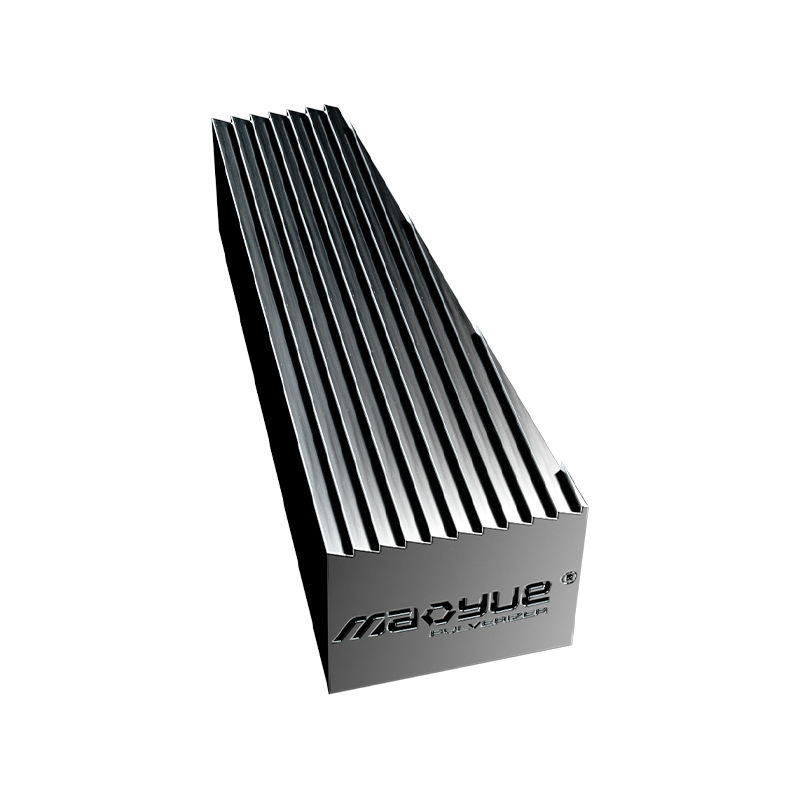
The grinding disc is the core component of a disc-type plastic pulverizer. Its structure, tooth profile, material, machining precision, rotational speed, and working gap can all affect the pulverizing performance.
For PE masterbatch, the grinding discs need to provide stable grinding intensity while achieving the target fineness and controlling frictional heat and material residence time. This helps reduce softening, adhesion, and agglomeration, maintaining consistent powder quality.
Adjustable Disc Gap
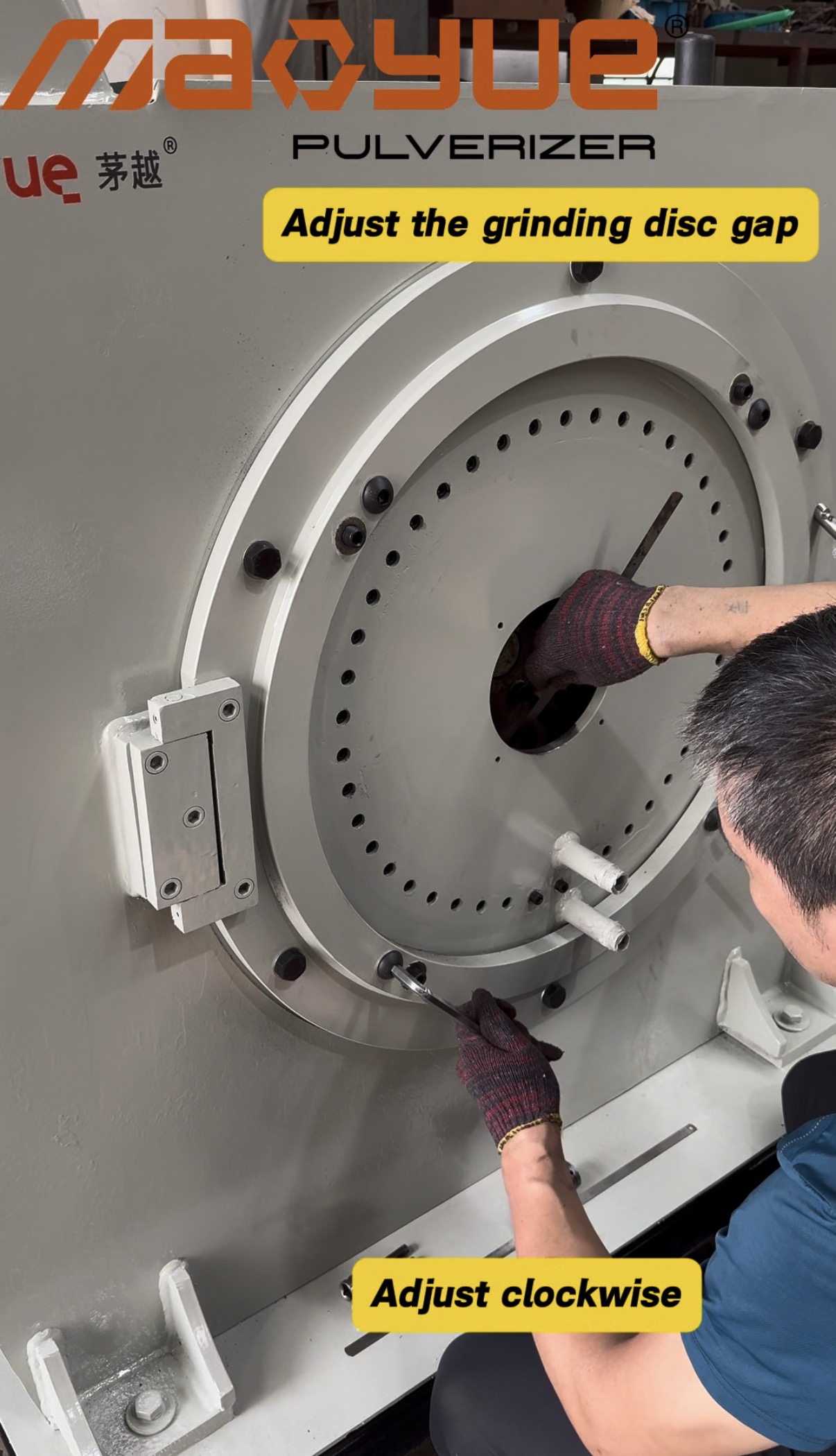
The working gap between the grinding discs directly affects grinding intensity and the fineness of the finished powder. A smaller gap generally helps produce finer powder, while a larger gap is suitable for relatively coarser particle sizes and can help increase processing capacity.
However, a smaller disc gap is not always better. The gap should be adjusted according to the PE masterbatch formulation, target particle size, feeding rate, and production conditions to achieve a balance between powder fineness, output, and temperature control.
Typical Parameters of a PE Masterbatch Pulverizer
How to Control Temperature During PE Pulverizing?
Temperature control directly affects the stability of the PE pulverizing process. Frictional heat generated during grinding may cause the PE material to soften, increasing the risk of adhesion, agglomeration, and unstable particle size.
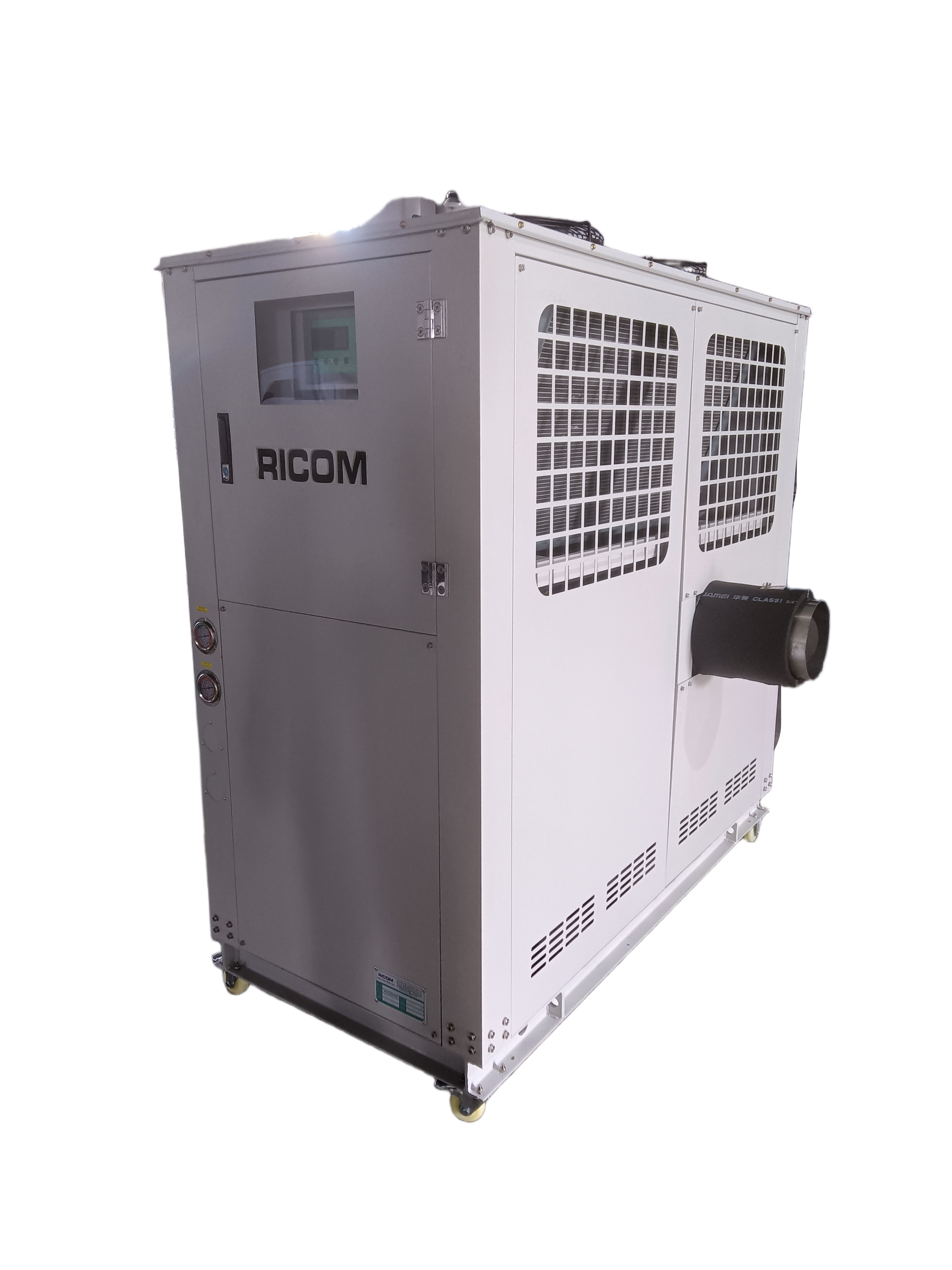
Therefore, the appropriate cooling method should be selected according to the material characteristics, target fineness, and required output. Mao Yue PE pulverizers can be configured with air cooling, water cooling, or combined air and water cooling to help control the pulverizing temperature and maintain stable continuous production.
Air Cooling
Airflow is used to remove the heat generated during pulverizing. This method has a simple structure and is suitable for PE materials with lower heat generation or moderate cooling requirements.
Water Cooling
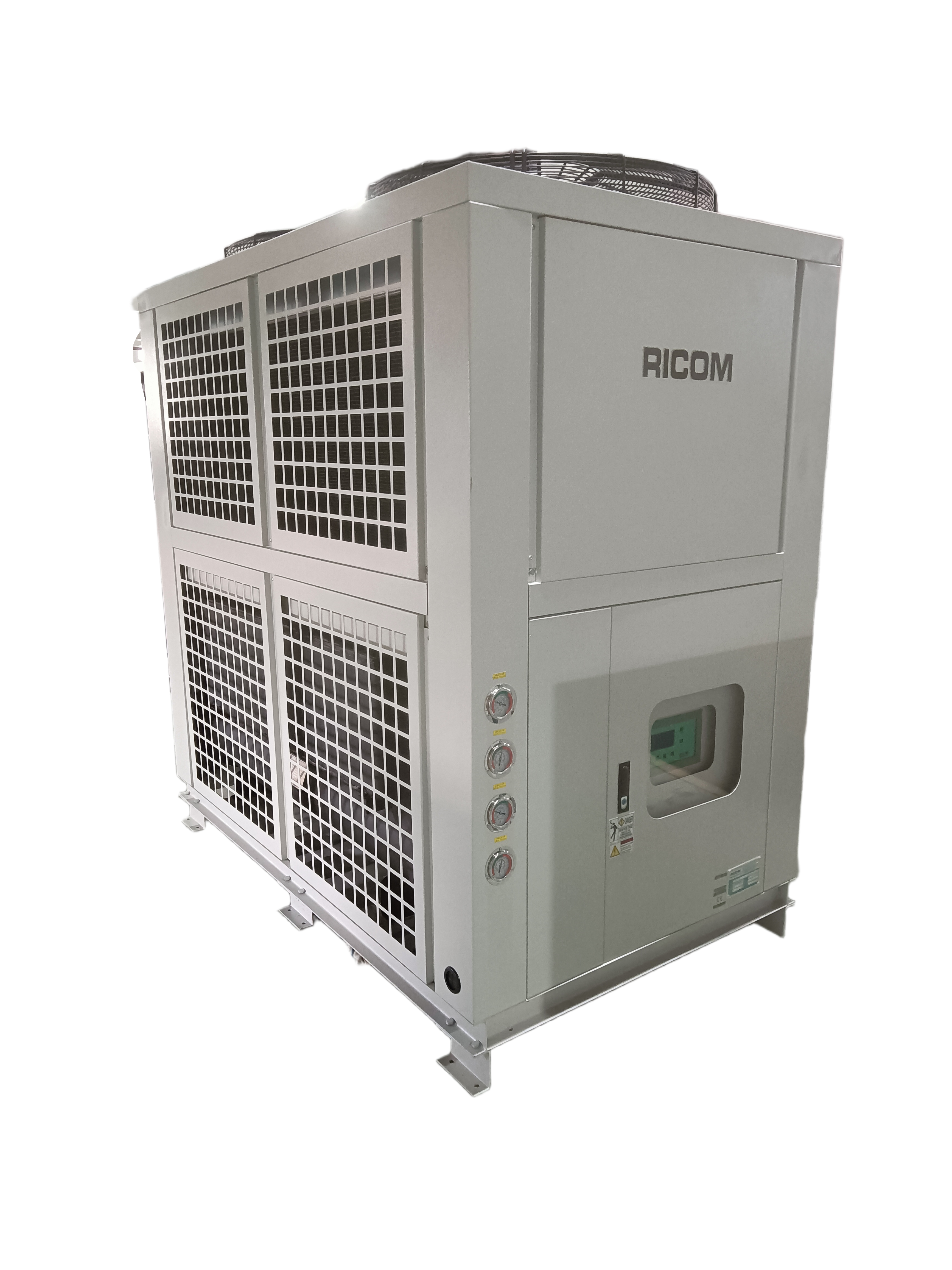
Water circulation is used to assist heat dissipation. It is suitable for production conditions where the pulverizing process generates more heat and stronger temperature control is required.
Combined Air and Water Cooling
This method combines the advantages of air cooling and water cooling. It is suitable for continuous production or PE pulverizing processes with higher temperature control requirements, helping maintain a more stable operating temperature.
How to Prevent PE Masterbatch Powder from Agglomerating?
During PE pulverizing, temperature, feeding rate, disc gap, and airflow should be controlled together. Proper cooling and stable feeding can reduce material softening, adhesion, and agglomeration, helping maintain more consistent powder quality.
What Particle Size Can a PE Pulverizer Produce?
There is no universal standard for the target particle size of PE masterbatch powder. The required particle size should be determined based on the downstream process, material formulation, and feeding requirements.
The finished powder fineness can be expressed in mesh size or particle size. Mao Yue can adjust the disc gap and processing parameters according to actual requirements and confirm the final particle size through material testing.
Particle Size Distribution
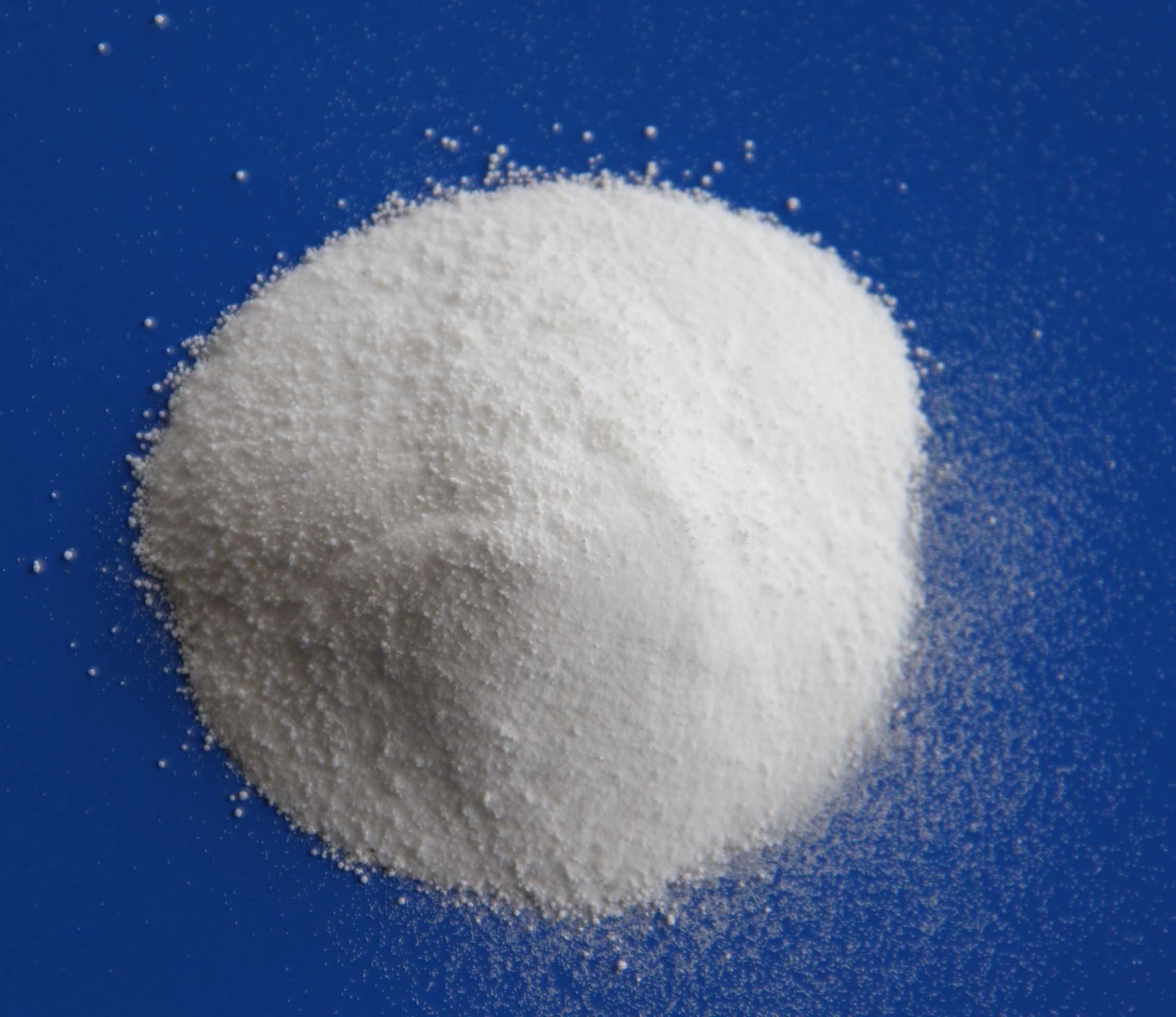
A suitable particle size distribution helps maintain stable conveying, feeding, and mixing performance. If there is a large variation in particle size, coarse particles and fine powder may exhibit different flow characteristics during conveying, settling, and mixing, which can affect the stability of downstream processing.
Therefore, PE masterbatch pulverizing should focus not only on the average particle size but also on controlling the overall particle size distribution according to the actual application.
Powder Flowability
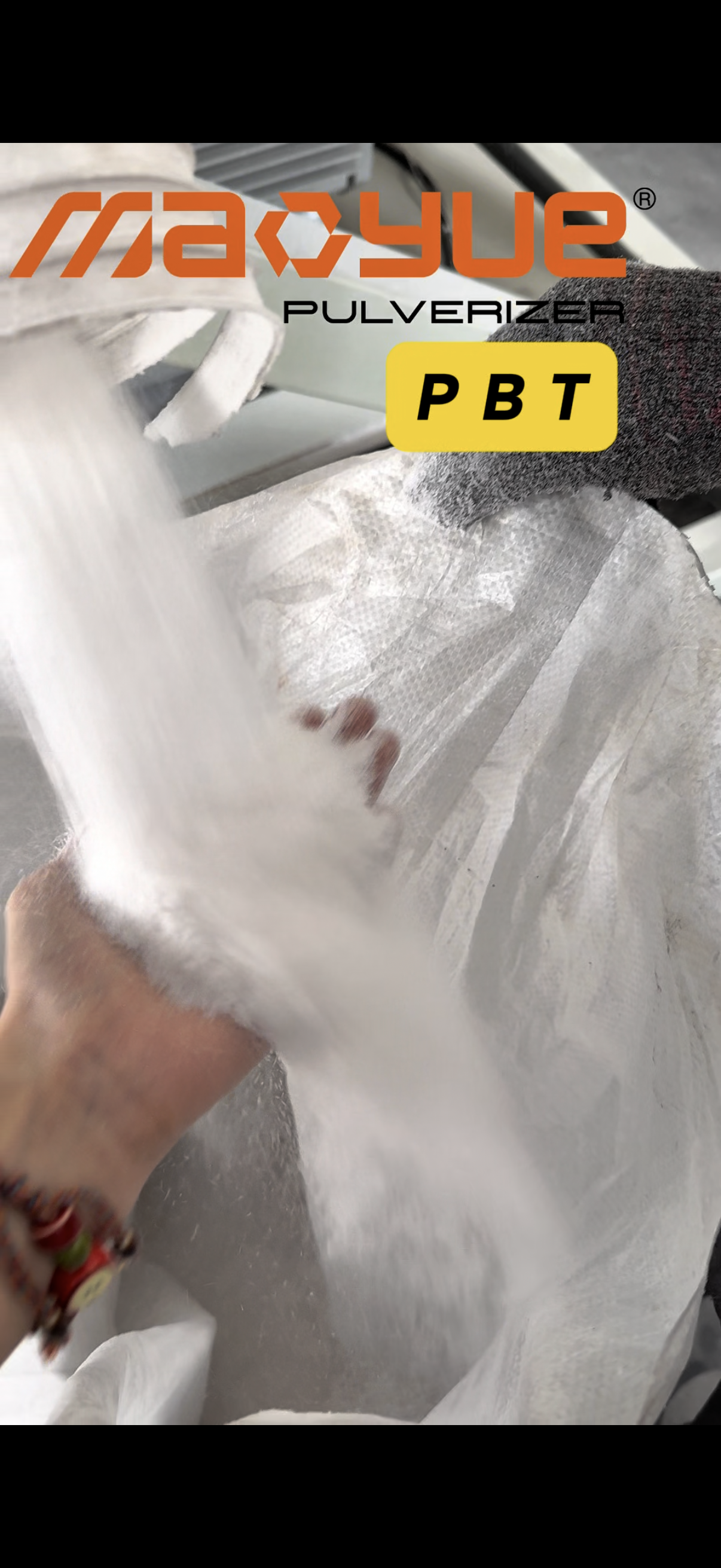
Finer powder is not always better; good flowability is equally important. It directly affects powder conveying, feeding, storage, and mixing. Particle shape, the proportion of fine powder, moisture content, and agglomeration can all affect the final flowability. Therefore, the powder fineness and particle size distribution should be properly matched to the downstream process.
How to Choose a PE Pulverizer?
Why Is Material Testing Necessary Before Production?
Different PE masterbatches may have different carrier resins, pigments, additives, and thermal properties. As a result, feeding, powder fineness, output, and temperature rise may vary during pulverizing.
Therefore, conducting actual material testing before equipment selection can help determine the appropriate grinding disc configuration, cooling method, and equipment model more accurately.
What Information Is Needed for Testing?
-
PE masterbatch samples
-
Raw material particle size
-
Target mesh size
-
Required output
-
Operating hours
-
Final application
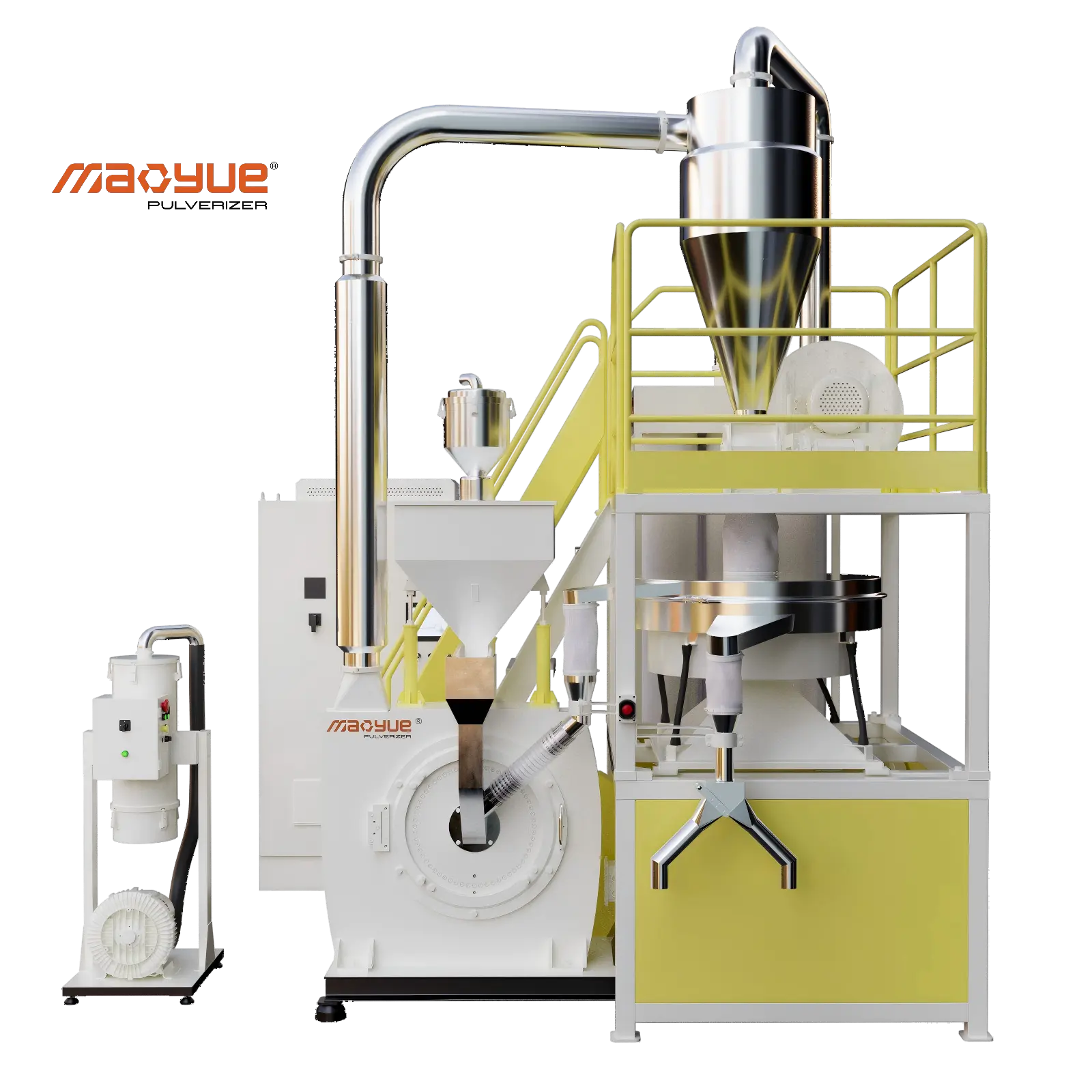
What Can Mao Yue Test?
Through actual testing, Mao Yue can evaluate powder fineness, output, temperature rise, feeding stability, and powder collection performance, and use the results to discuss the appropriate cooling method and equipment configuration.
Actual Material Testing → Parameter Verification → Equipment Selection → Stable Production
This process helps make the PE masterbatch pulverizing solution better suited to actual production requirements.
How to Choose Between 500, 600 and 800 mm PE Pulverizers?
Different grinding disc diameters of PE pulverizers correspond to different production scales. The appropriate model can generally be selected based on output requirements, target fineness, feeding rate, and continuous operating time.
It is important to note that disc diameter alone does not determine actual output. Material characteristics, target particle size, motor power, feeding rate, and cooling conditions can all affect the final production capacity.
For different PE masterbatch materials, actual material testing is recommended to determine the appropriate equipment specifications.
Mao Yue PE Disc-Type Pulverizing Solution
Mao Yue does not use one fixed set of pulverizing parameters for all PE materials. Instead, equipment configurations are selected according to the actual material characteristics and production targets. When designing a PE pulverizing solution, Mao Yue considers factors including material formulation, target fineness, output, cooling, feeding, and powder collection.
Mao Yue Advantages
30+ Years of Plastic Pulverizer Manufacturing Experience
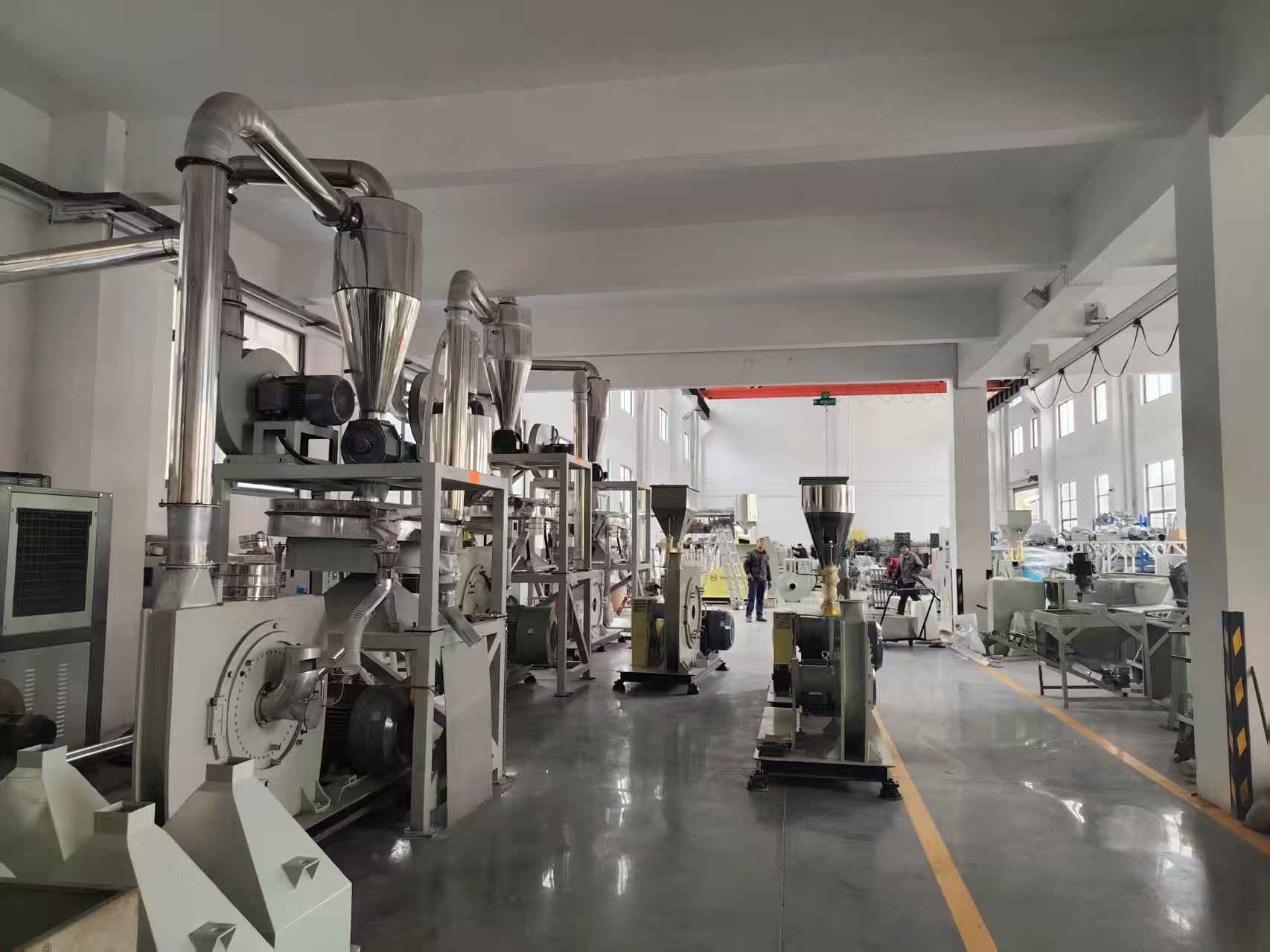
Mao Yue has specialized in the R&D and manufacturing of plastic pulverizing equipment for more than 30 years, with experience in processing various PE and other plastic materials.
In-House Manufacturing of Grinding Discs and Blades
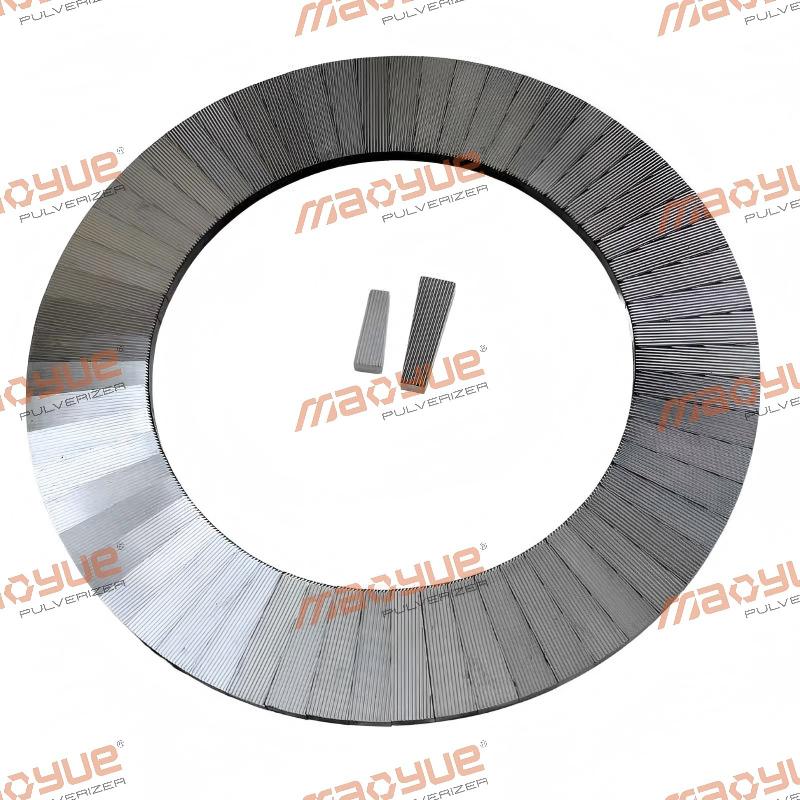
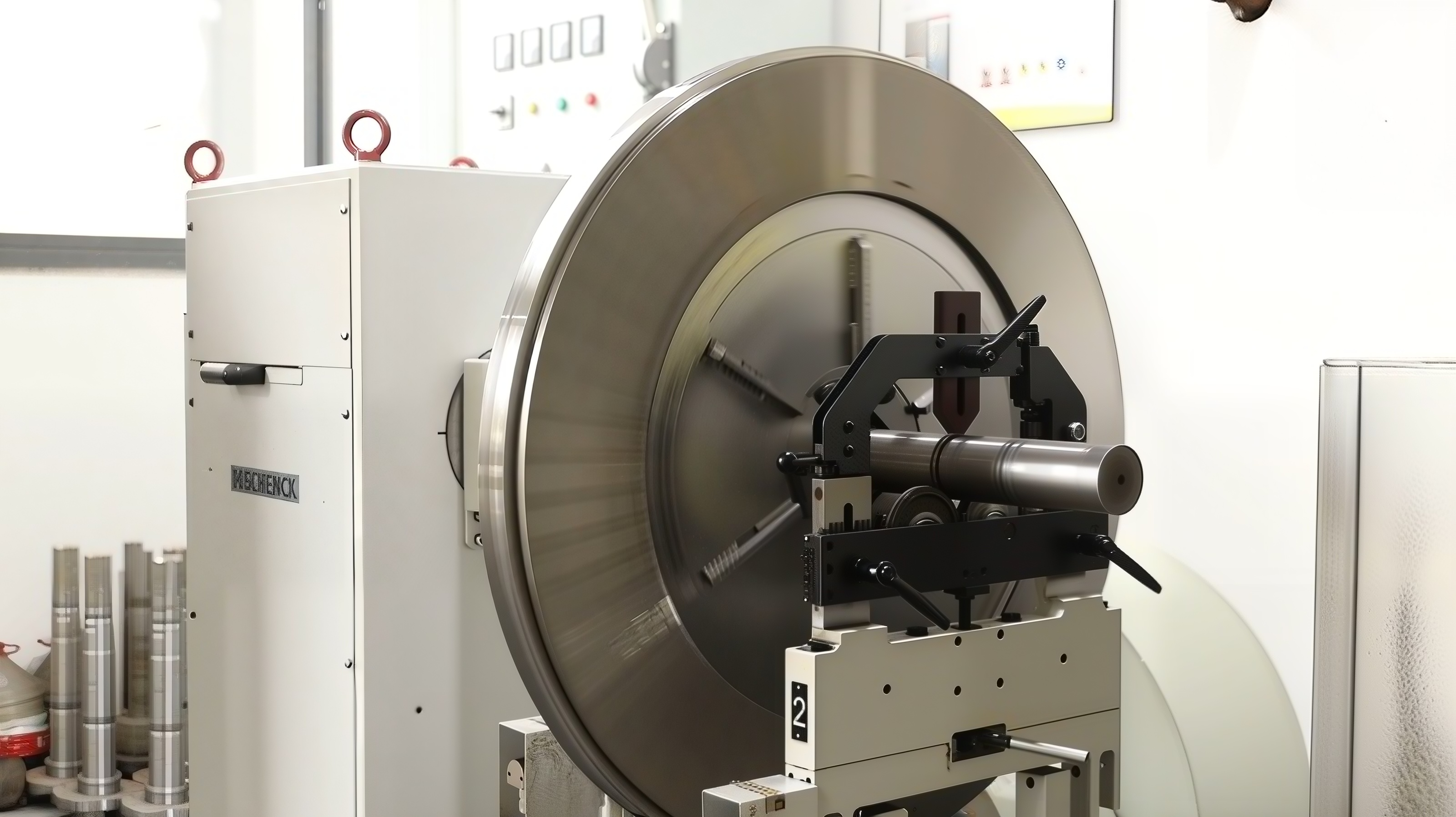
Key components such as grinding discs and blades are manufactured and controlled in-house by Mao Yue. Combined with precision machining and strict inspection, this helps maintain stable equipment performance.
From Material Testing to Complete Line Configuration
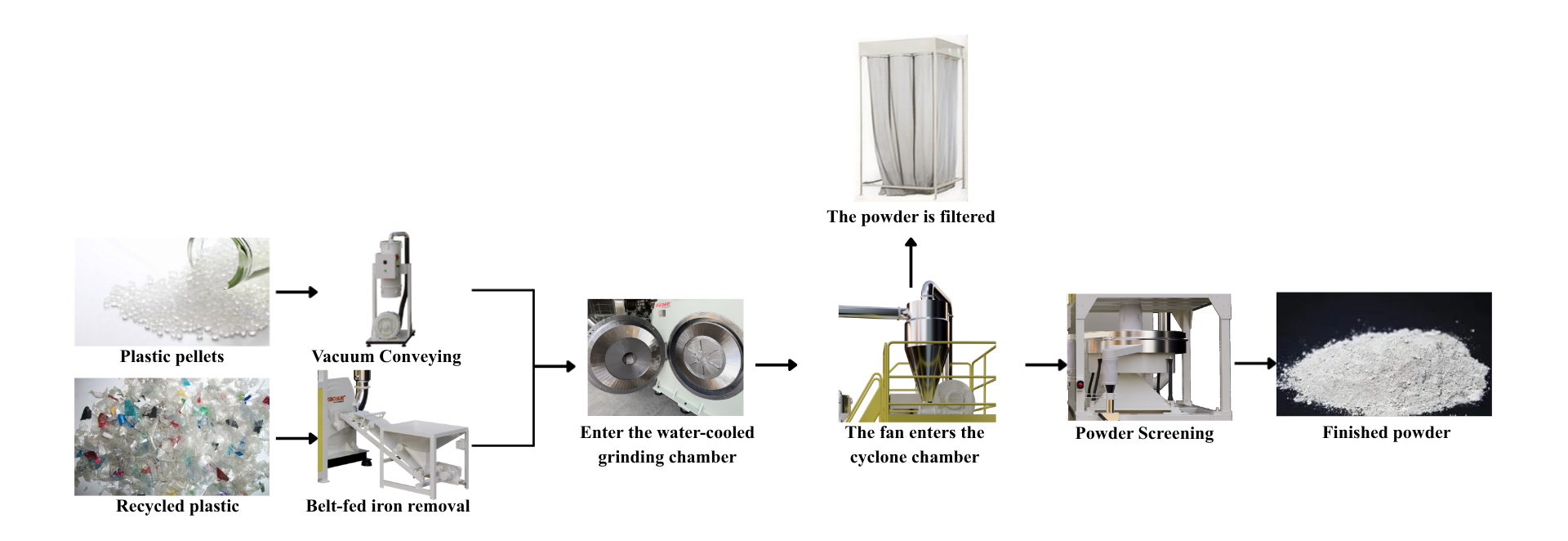
Mao Yue provides more than a standalone machine. Equipment components and systems—including grinding discs, feeding, cooling, powder collection, and control systems—are matched according to the actual material and production requirements, helping create a solution suited to the specific application.
Multiple 500 / 600 / 800 mm Disc Sizes
Different disc sizes cover different production scales. The appropriate configuration can be selected according to target particle size, output requirements, and operating hours.
Air Cooling, Water Cooling, and Combined Cooling
Cooling methods can be configured according to the heat generation characteristics of different PE materials, helping reduce the risk of softening, adhesion, and agglomeration.
Factory Direct Supply + On-Site Service
As a direct manufacturer, Mao Yue provides direct support from equipment manufacturing to solution configuration. On-site service is also available to help customers address equipment issues encountered during actual production.
What Applications Can PE Masterbatch Powder Be Used For?
Once PE masterbatch is processed into stable powder, it can be used in various downstream processes. The specific application depends on the formulation and target powder specifications. Common applications include plastic compounding, reprocessing, certain coating applications, and specific plastic recycling processes.
Plastic Compounding and Reprocessing
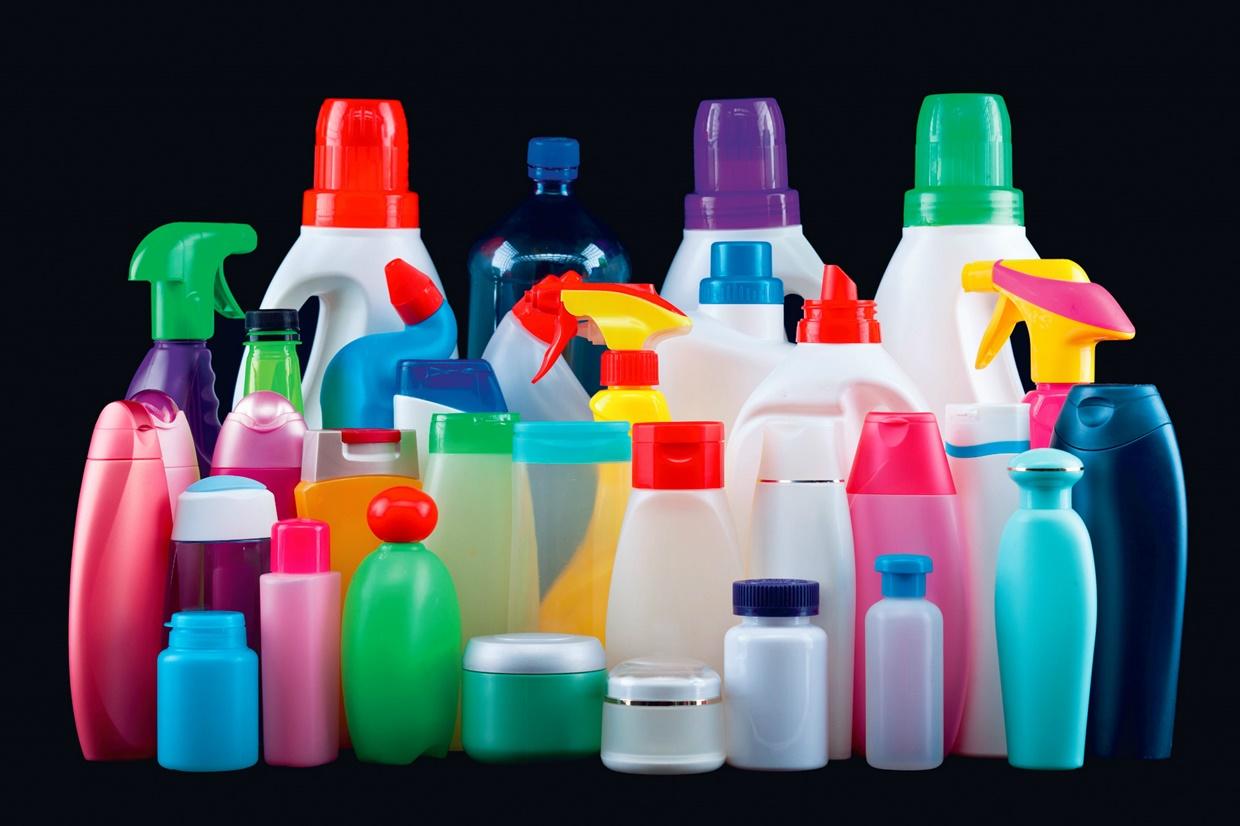
When the powder particle size and formulation meet process requirements, it can be used for certain plastic compounding, modification, and reprocessing applications. A stable particle size distribution and consistent batch quality can help maintain stable feeding and mixing.
Coating and Surface Applications
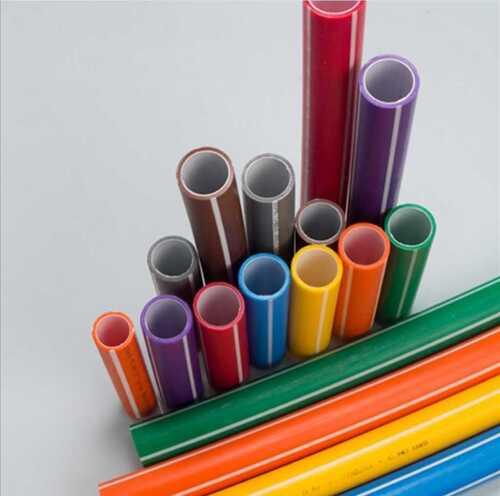
Some polymer powders can be used for coating and surface treatment. The actual application requires matching the powder particle size, thermal properties, and material formulation to the coating process.
Recycled Plastic Production
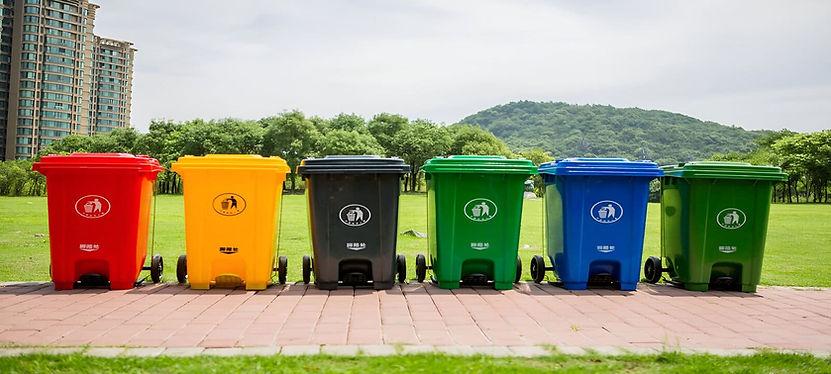
For qualified PE production waste or recycled materials, pulverizing can process the material into a powder form suitable for downstream processes, providing another route for reprocessing and material reuse.
Frequently Asked Questions About PE Color Masterbatch Pulverizing
Can PE color masterbatch be pulverized into powder?
Yes. PE color masterbatch in granular or pellet form can be processed using a suitable disc-type plastic pulverizer. The final powder fineness and output depend on the material formulation and equipment configuration.
What type of pulverizer is suitable for PE masterbatch?
When PE color masterbatch needs to be processed into fine powder, a disc-type PE pulverizer can be considered. The specific equipment should be selected according to the feed material condition, target fineness, required output, and cooling requirements.
What mesh size can a PE pulverizer produce?
The achievable mesh size depends on the material and equipment configuration. A typical working range can be approximately 20–100 mesh, but the final result should be confirmed through actual material testing.
How do you prevent PE masterbatch powder from agglomerating?
Temperature control is important. Stable feeding, an appropriate disc gap, airflow, and cooling should be considered together rather than simply increasing grinding intensity.
Does PE pulverizing require water cooling?
Not all PE materials require water cooling. The appropriate cooling method depends on the material characteristics, target fineness, output, and operating conditions. Air cooling, water cooling, or combined air and water cooling can be selected according to the actual application.
Can different PE masterbatch formulations be processed?
Yes, but different formulations may require different pulverizing conditions. Material testing can be used to evaluate suitable parameters before formal production.
What is the difference between a PE pulverizer and a plastic crusher?
A plastic crusher mainly processes plastic into smaller pieces or flakes, while a pulverizer is used for further fine grinding to produce powder.
From Masterbatch Granules to Stable Powder Production
PE masterbatch pulverizing is not simply about reducing granule size. It requires proper matching of feeding, disc gap, temperature, cooling, and powder collection. Equipment selection should not focus only on motor power or rotational speed. More importantly, the configuration should be based on the actual material, target particle size, and required output.
Through a stable disc-type pulverizing process, PE masterbatch can be converted from granules into powder with consistent particle size, making it easier to convey and use while better meeting the requirements of downstream compounding, reprocessing, and other processes.
Ready to Test Your PE Masterbatch?The Right Pulverizing Parameters Start with Your Actual Material
A suitable PE pulverizing solution should start with the actual material and production requirements.
Send Mao Yue your PE masterbatch samples, target particle size, required output, and final application. Based on actual testing results, we can evaluate powder fineness, output, temperature rise, and feeding performance, and further discuss the appropriate PE pulverizer configuration.
Material → Testing → Equipment Configuration → Powder Production
Don't select equipment based only on theoretical parameters. Let actual material testing be the starting point for your PE masterbatch pulverizing project.
Contact Mao Yue to get a PE masterbatch pulverizing solution suited to your material.