

 English
 русский
 Español
 عربى
عربى 中文简体
中文简体
 中文简体
中文简体
Content
Two batches of the same PE resin are ground on the same pulverizer. The first batch flows evenly through the hopper, settles into every corner of the mold, and produces a rotomolded part with uniform wall thickness. The second batch bridges at the hopper throat, stalls the feed, and leaves voids in the finished part. The sieve analysis looks nearly identical for both batches. The flowability index does not.
The flowability index is the practical number that tells you how a powder will behave in a real production line rather than how its particle sizes average out on paper. It is not a single fixed value but a family of measurements built from a few simple tests. This article explains what the flowability index is, how the most common versions are calculated, and why those numbers should influence the way you choose and operate plastic pulverizing equipment.
What Is a Flowability Index?
A flowability index is a numerical grade that describes how easily a powder moves under gravity, air pressure, or mechanical agitation. Because no single test captures every aspect of flow, the term covers several related measurements, each answering a different question. Does the powder pour freely? Does it pack down under vibration? Does it arch over a hopper opening? Does it discharge at a steady rate through an orifice?
The most widely referenced composite scale is the Carr flowability index, developed in the 1960s. It combines four sub-indices, each scored from 0 to 25:
- Angle of repose index
- Angle of spatula index
- Compressibility index, also called the Carr Index
- Uniformity index
The four values add up to a total score out of 100. A higher total means better flow. The interpretation bands are shown below.
| Total Score | Flow Classification |
|---|---|
| 90-100 | Excellent |
| 80-89 | Good |
| 70-79 | Fair |
| 60-69 | Passable |
| 40-59 | Poor |
| 20-39 | Very poor |
| 0-19 | Very, very poor |
Many fine plastic powders sit in the 60 to 75 range before any corrective action. Scores above 80 are achievable when the particle size distribution is narrow and the particle shape is regular, which is exactly what a well-designed plastic pulverizer is meant to deliver.
Carr Index and Hausner Ratio: The Two Simplest Numbers
Most quality control laboratories start with two values that require no expensive instrumentation: the Carr Index, also called the compressibility index, and the Hausner ratio. Both are derived from bulk density and tapped density.
Bulk density is measured by pouring a known mass of powder into a graduated cylinder and reading the unsettled volume. Tapped density is measured after mechanically tapping the cylinder until the volume stops changing. The formulas are:
Carr Index = [(Tapped density - Bulk density) / Tapped density] x 100
Hausner ratio = Tapped density / Bulk density
The logic behind both is simple. A powder that packs much more tightly after tapping has high interparticle friction and mechanical interlocking, both of which resist flow. A powder whose loose and tapped densities are nearly equal has low internal friction and will flow freely.
Here is a working example. A PE powder has a bulk density of 0.35 g/cm3 and a tapped density of 0.47 g/cm3. The Carr Index is [(0.47 - 0.35) / 0.47] x 100, which equals 25.5. The Hausner ratio is 0.47 / 0.35, which equals 1.34. Both numbers point to passable flow, meaning the powder will move but may need vibration or a flow aid in critical hopper geometries.
| Carr Index (%) | Hausner Ratio | Flow Classification |
|---|---|---|
| 10 or less | 1.00-1.11 | Excellent |
| 11-15 | 1.12-1.18 | Good |
| 16-20 | 1.19-1.25 | Fair |
| 21-25 | 1.26-1.34 | Passable |
| 26-31 | 1.35-1.45 | Poor |
| 32-37 | 1.46-1.59 | Very poor |
| 38 or more | 1.60 or more | Very, very poor |
These two indices are reliable enough that the United States Pharmacopeia lists them in its official powder flow chapter, USP <1174>, alongside several other methods. That makes the Carr Index and Hausner ratio a defensible, repeatable choice for process control in any powder plant.
Angle of Repose and Other Tests Worth Knowing
The angle of repose is the steepest angle between the slope of a powder pile and the horizontal base after the powder is poured through a funnel. It is the quickest flowability indicator available and it correlates directly with particle shape. Rounded particles roll over one another and form low-angle piles; irregular, blocky, or fibrous particles form steep piles.
Two additional methods complete the picture for plastic powders. Flow through an orifice measures the mass of powder discharged through a defined opening per unit time, which is directly relevant to hopper discharge and dosing. Shear cell testing measures internal friction and cohesion under load, which predicts arching and ratholing in storage silos. For routine production control, angle of repose combined with the Carr Index and Hausner ratio is usually enough.
Why the Flowability Index Matters in Plastic Powder Production
Flowability is not an abstract laboratory concern. It decides whether a production line runs at rated capacity or stops several times per shift, and it decides whether a finished part meets wall thickness specifications or becomes scrap.
Rotomolding
In rotational molding, PE powder must flow evenly across the inside of a mold rotating on two axes. Poor flowability produces uneven wall thickness, pinholes, and bridging in complex geometries. Rotomolding grades are therefore milled to a narrow particle size distribution with high uniformity, and the disc mill that produces them has to be stable enough to hold that distribution from batch to batch.
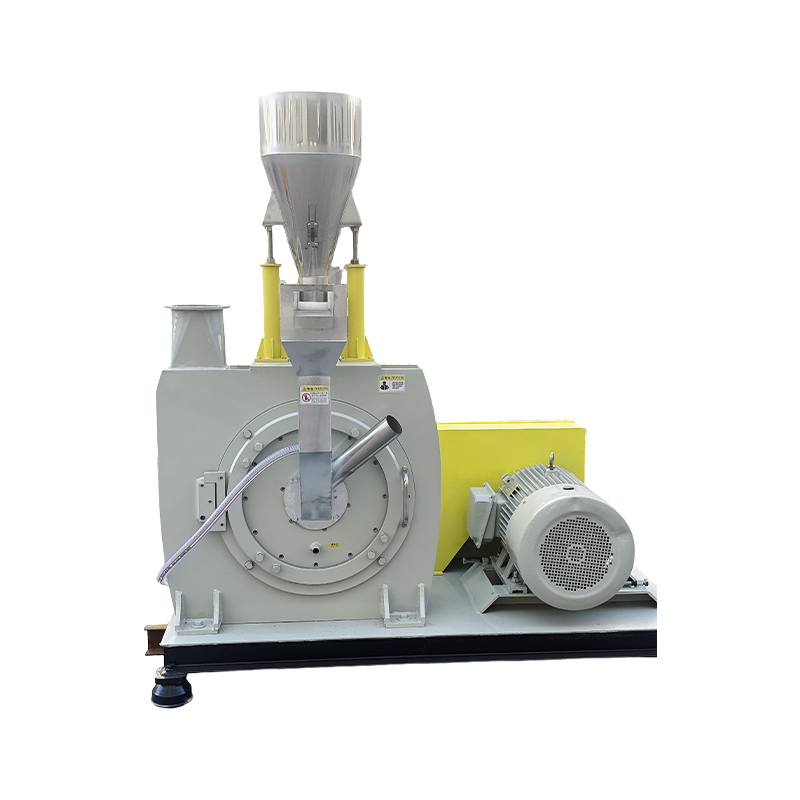
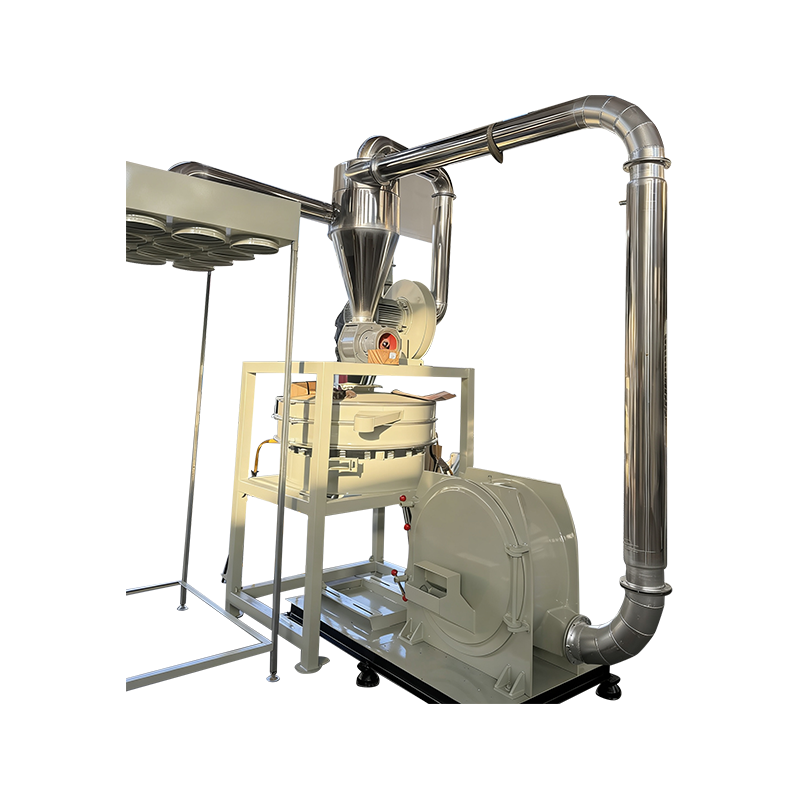
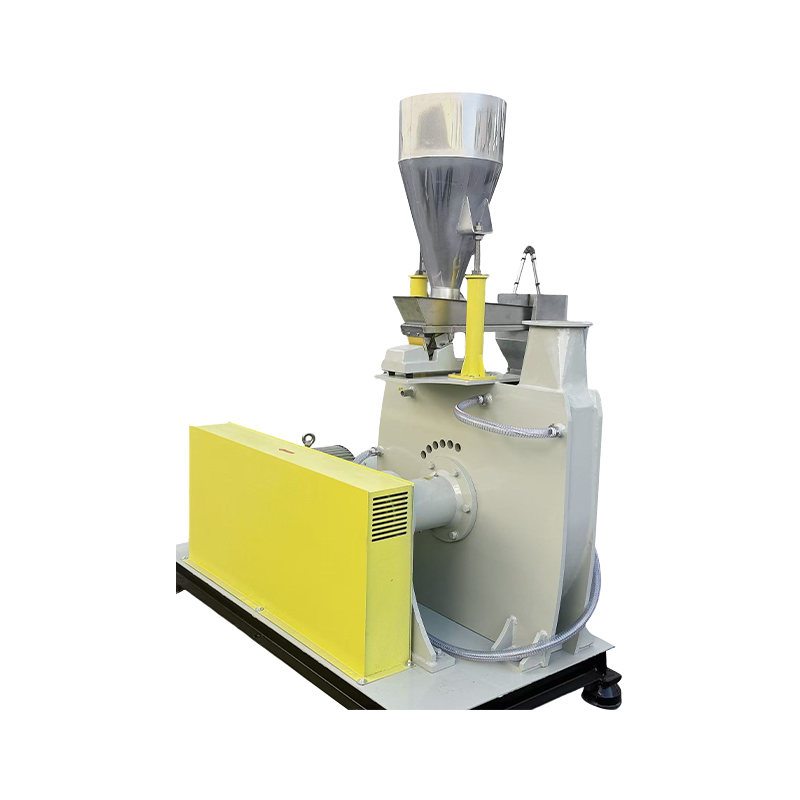 Mao Yue 500 PE Rotomolding Powder Pulverizer with DC53 Grinding DiscsThis compact pulverizer is built for small-to-medium rotomolding producers, delivering 150–450 kg/h with fineness from 20 to 100 mesh. Its DC53 discs and precision-ground blades help maintain narrow particle distribution for consistent flowability.View Product →
Masterbatch and polymer compounds
In masterbatch and compound production, powder is metered continuously into an extruder or a mixer. If the powder floods, arches, or changes bulk density between batches, the additive dosage shifts and the final color or mechanical properties drift. A stable flowability index is therefore part of lot-to-lot consistency, not just a nice-to-have quality metric.
PA and PP at ambient temperature
PA and PP are tough, ductile polymers that resist grinding below their glass transition temperature unless they are embrittled with liquid nitrogen. Ambient temperature grinding avoids that cost, but the particle shape and fines content then depend heavily on the disc design and rotor speed. A machine that produces blocky, regular particles will give a noticeably better flowability index than one that shreds the polymer into stringy fragments.
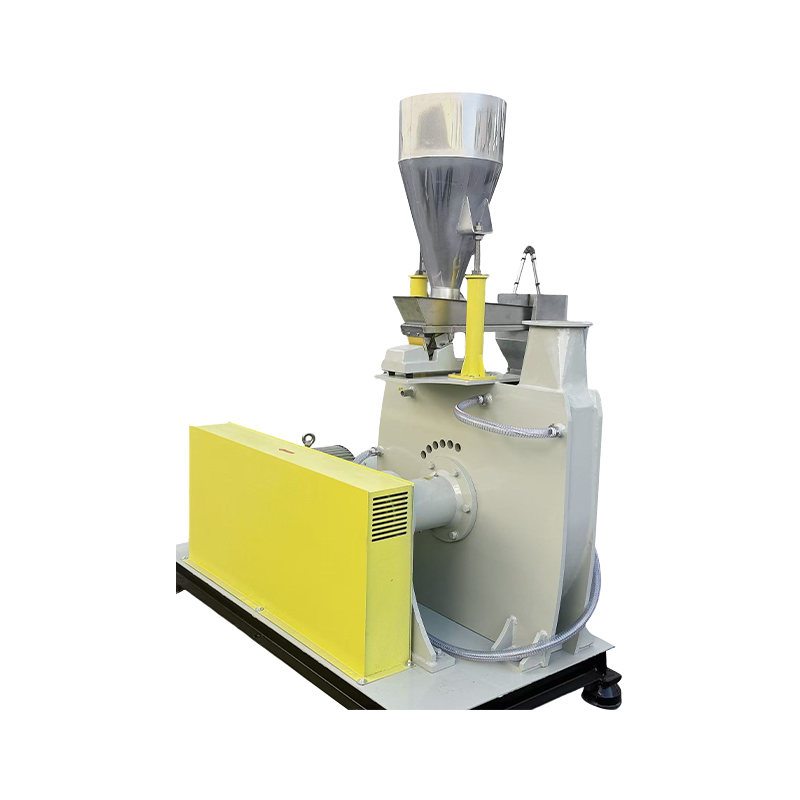
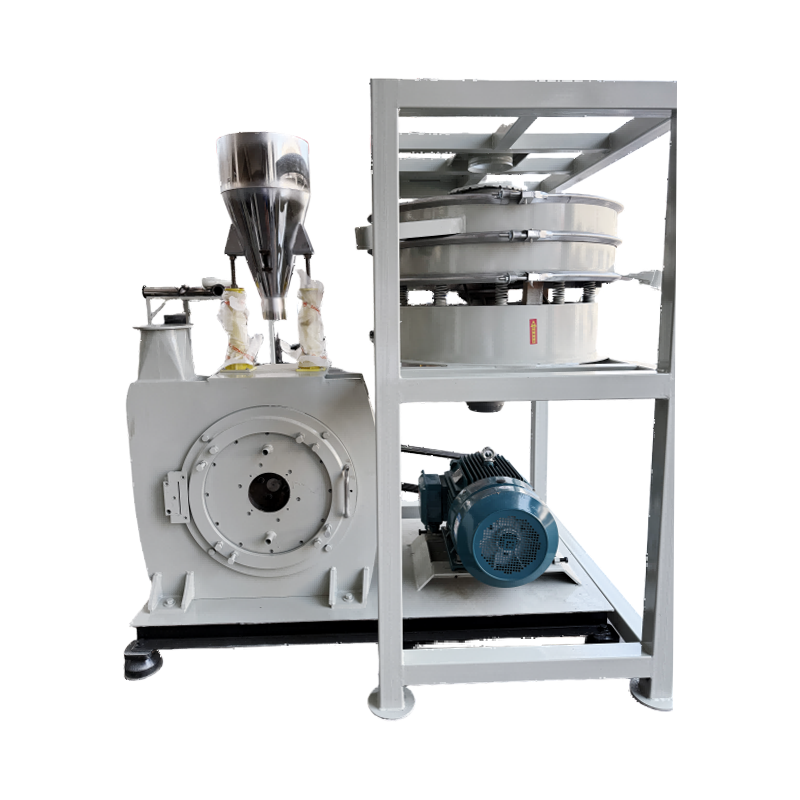
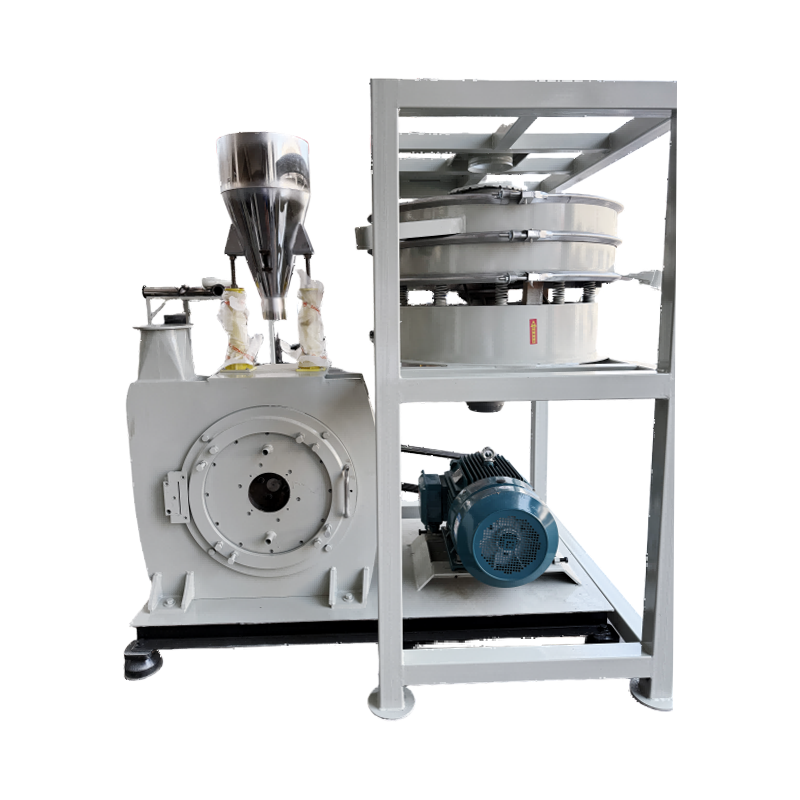 Mao Yue PA/PP-500 Ambient Temperature Pulverizer for Tough PolymersEngineered for PA and PP without liquid nitrogen, this unit features high-chromium alloy discs and intelligent temperature control to prevent melt adhesion. It produces uniform, free-flowing powder in the 20–100 mesh range, supporting consistent flow indexes.View Product →
PVC fine powder
PVC dry blends and fine powders are used in plastisols, rotomolding, and extrusion. Particles below 100 mesh increase surface area and improve fusion, but they also increase cohesion and raise the angle of repose. A pulverizer that can produce fine powder while keeping the size distribution tight will hold the flowability index in a workable range; a machine that generates a wide spread of fines will watch it fall off quickly.
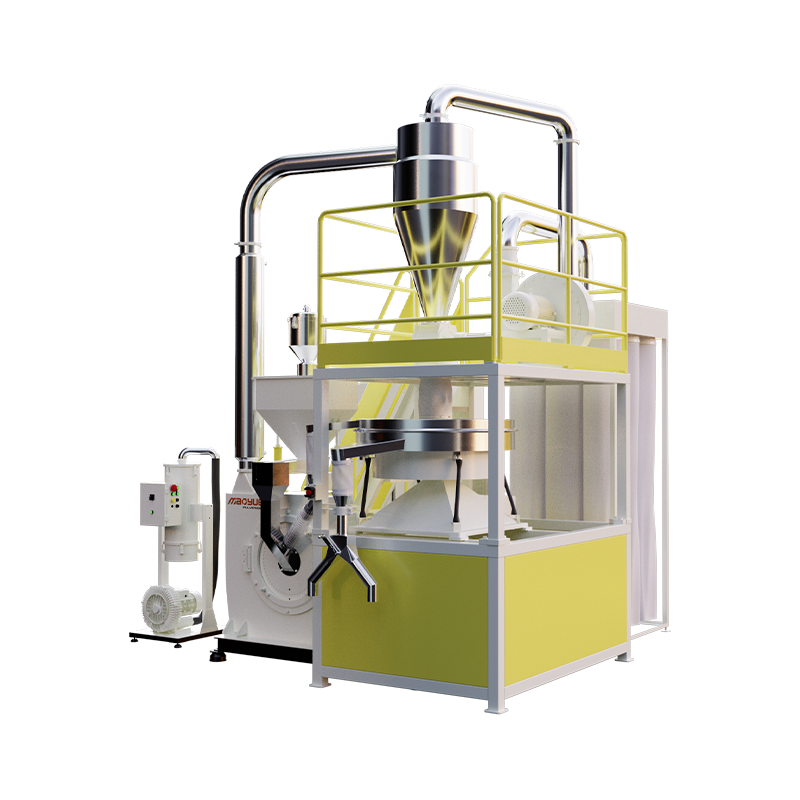
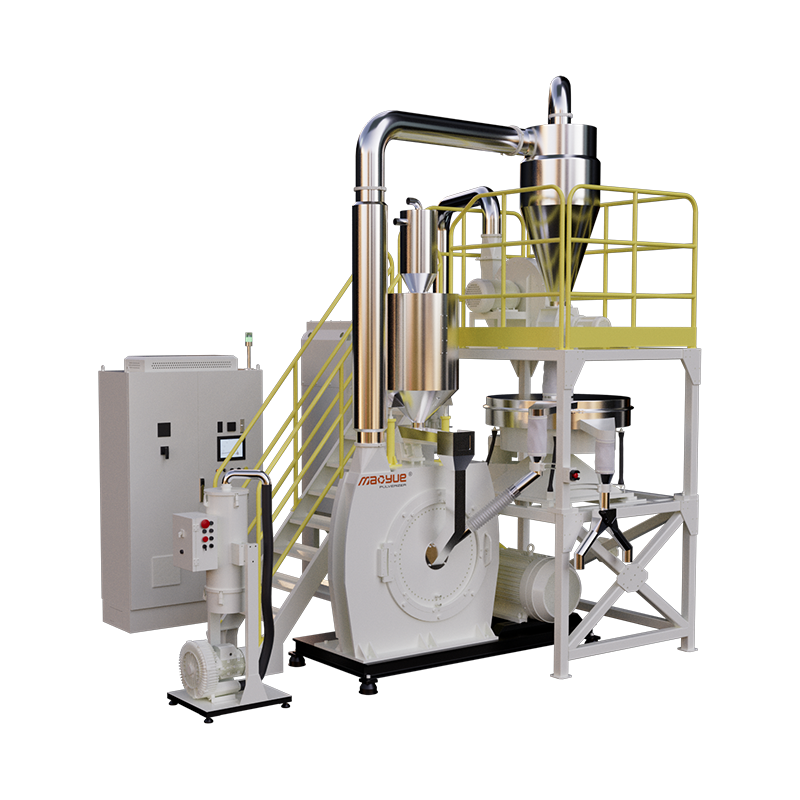
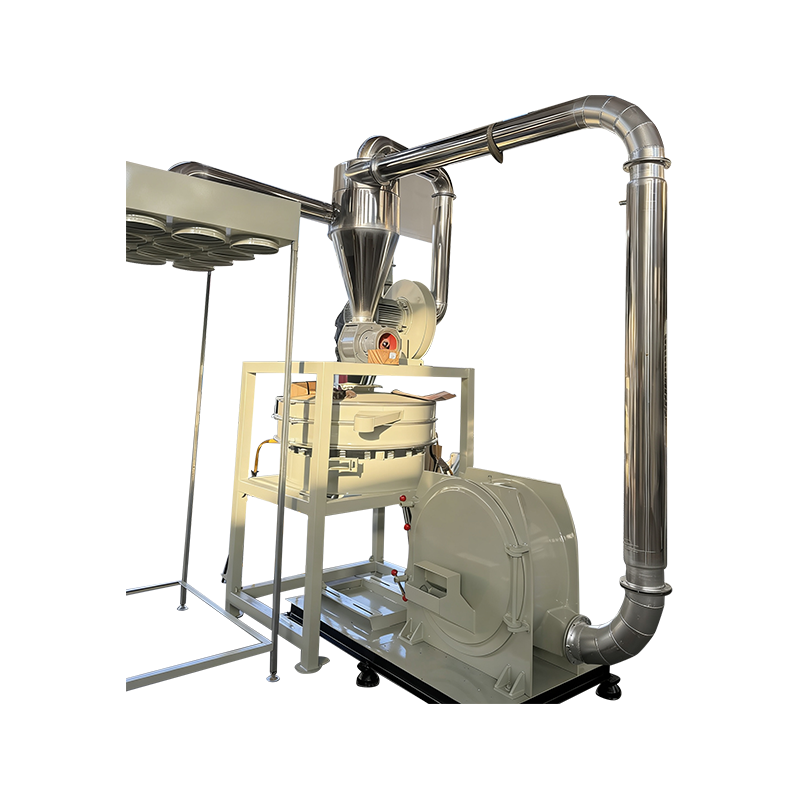 Mao Yue 900 PVC Fine Powder Pulverizer for High-Volume ProductionAs the series' flagship for large-scale PVC processing, this 900mm-disc machine reaches capacities up to 1300 kg/h with durable alloy discs and dual-circuit cooling. It keeps particle shape and size distribution tight, helping maintain stable flowability in demanding operations.View Product →
How Equipment Choices Change the Flowability Index
The point most equipment discussions miss is that the flowability index of a plastic powder is largely decided by the machine that grinds it. Sieve analysis tells you the average particle size, but flowability depends on the distribution around that average and the shape of each particle.
A wide particle size distribution is the first enemy of good flow. Fine particles pack into the spaces between larger ones, increase cohesion, and raise the tapped density. A narrow distribution keeps the powder mobile. At Changzhou Mao Yue Intelligent Equipment, a plastic pulverizer manufacturer with thirty years of experience in size reduction, every machine design targets the same result: a narrow particle size distribution and a stable flowability index at rated output.
Temperature management is the second factor. Resins such as PA and PP soften when the disc mill heats up, and softened polymer deforms instead of fracturing cleanly. The result is elongated particles and a degraded flowability index. An ambient temperature grinder with adequate cooling keeps the polymer brittle enough to fracture, producing the regular blocky particles that flow well.
Disc and blade condition is the third factor. As cutting edges wear, mechanical stress on the polymer rises, heat generation increases, and the proportion of irregular particles and fines grows. Regular inspection of pulverizer discs and blades is not only a maintenance task; it is a flowability control task. For a closer look at how pulverizer internals affect particle shape, read our explanation of what a plastic pulverizer actually does.
What to Ask Before You Buy a Pulverizer
When you evaluate pulverizing equipment, ask for powder flow data, not just a sieve analysis. Any supplier can state an average particle size; fewer can show you the Carr Index, Hausner ratio, and angle of repose of the powder their machine produces from your own resin. Because we are a source factory, we can run trials with your material and provide those numbers before you commit.
Use this checklist during your next equipment review:
- What is the Carr Index of the reference powder at the target particle size?
- What is the angle of repose at that size?
- What percentage of fines below the target mesh does the machine generate?
- Does the machine run at ambient temperature, or does it require liquid nitrogen or secondary cooling?
- How does the flowability index change as the disc and blades wear?
The answers will tell you more about long-term powder consistency than any brochure specification. If a supplier cannot provide flow data, treat that as a warning sign. Our pulverizer selection guide covers machine types, operating principles, and buying criteria in more depth.
The flowability index is not a marketing number or a laboratory curiosity. It is a direct prediction of how your powder will behave in a hopper, a mold, or an extruder feed throat. Measure it on your own material, compare it across machines, and make it part of your purchasing criteria. The consistency of your downstream process, and the quality of your finished parts, will follow.