

 English
 русский
 Español
 عربى
عربى 中文简体
中文简体
 中文简体
中文简体
Content
- 1 Why PVC Recycling Cannot Rely on Crushing Alone
- 2 From PVC Waste to Reusable Powder
- 3 What Characteristics Should High-Quality Recycled PVC Powder Have?
- 4 How Does a PVC Pulverizer Process Recycled Material?
- 5 Complete PVC Recycling and Pulverizing Process
- 6 Applications of Recycled PVC Powder
- 7 Why Choose Mao Yue PVC Pulverizers?
- 8 Turning PVC Waste Back into Production Value
- 9 Conclusion: A Better Path from PVC Waste to Reusable Powder
PVC recycling is not simply about crushing waste into smaller pieces. The real challenge is how to further process irregular PVC crushed material into high-quality PVC powder with stable particle size, consistent quality, and suitability for reuse in production.
This is where a PVC pulverizing system adds real value. Through stable feeding, precise cutting, and effective temperature control, the recycled material is further refined, transforming ordinary waste into recycled PVC powder with practical production value.
Why PVC Recycling Cannot Rely on Crushing Alone
Crushing can process PVC pipes, profiles, sheets, and other waste materials into smaller particles, but for production processes that require fine powder, these crushed materials are often still too large and inconsistent in particle size.
Just as cutting wood into small pieces does not make it sawdust, the same principle applies to PVC recycling. Crushing is a pre-processing step, while pulverizing is the key process for transforming recycled material into high-quality PVC powder.
Therefore, a stable PVC recycling process needs to properly integrate crushing, feeding, pulverizing, cooling, and screening. By controlling particle size while reducing temperature rise and production fluctuations, PVC waste can be transformed into recycled material with real production value.
From PVC Waste to Reusable Powder
PVC production generates a large amount of recyclable waste, including pipe cutting waste, profile edge trim, sheet and flooring waste, cable insulation, and rejected products.
After sorting, crushing, and PVC pulverizing, these waste materials can be further processed into PVC powder with stable particle size, making it suitable for reuse in appropriate production processes.
Effective PVC recycling is not simply about processing waste. It is about using a well-designed processing method to transform waste back into valuable production material.
Common Sources of Recycled PVC
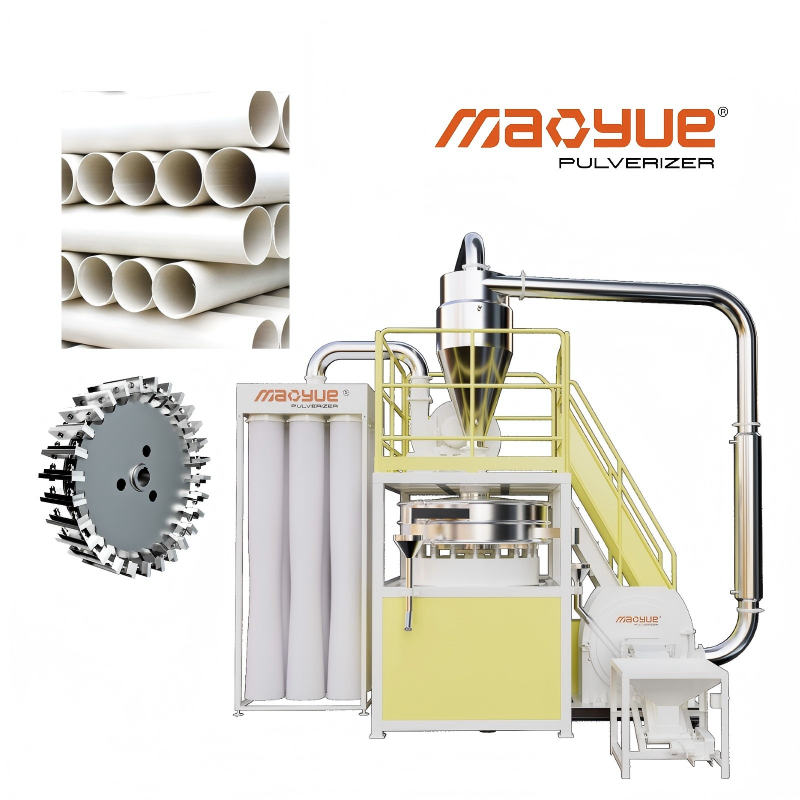
Recycled PVC comes from a wide range of sources, including pipe waste, profile edge trim, sheet and flooring waste, cable insulation, and rejected PVC products.
PVC materials from different sources may vary in size, shape, formulation, and impurity content, and these factors can all affect pulverizing performance. Therefore, when selecting a PVC pulverizer, it is important not to focus only on the theoretical capacity. The machine should be matched to the actual material, target particle size, and production requirements to achieve stable powder quality.
Problems Caused by Inconsistent Recycled Materials
PVC waste entering a pulverizer can vary significantly in form and size. One batch may consist mainly of thin-wall pipe cutting waste, while another may contain mostly thicker profile waste.
If the feeding process is unstable, the load inside the pulverizing chamber will also fluctuate continuously, affecting production capacity, powder particle size, and processing temperature.
Therefore, an effective PVC recycling and pulverizing solution requires proper material control both before and during the pulverizing process.
What Characteristics Should High-Quality Recycled PVC Powder Have?
High-quality recycled PVC powder is not simply about achieving the finest possible particle size. More importantly, it should have a stable particle size, a reasonable particle size distribution, consistent quality, and meet the requirements of downstream production.
Different PVC products have different requirements for powder particle size and performance, so there is no single specification suitable for every application. Before selecting a PVC pulverizer, the actual material, target particle size, and production requirements should be evaluated through material testing to determine the appropriate equipment and processing method.
Particle Size and Particle Size Distribution
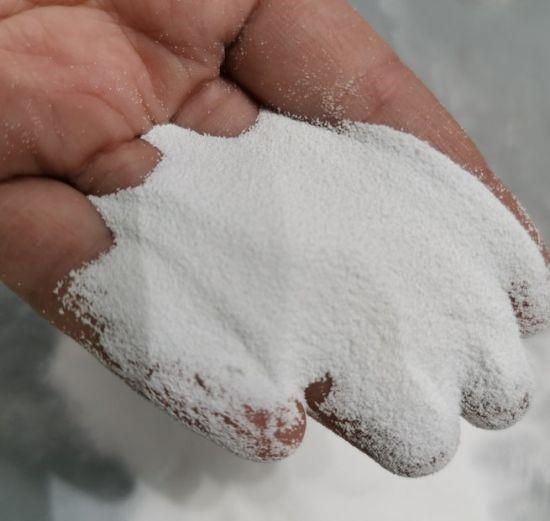
Particle size is an important indicator for evaluating recycled PVC powder. For some PVC applications, the finished powder can be controlled within a range of 20–80 mesh, but the specific specification should still be determined according to the final production process.
In addition to the target particle size, the stability of the particle size distribution is equally important. Uniform and consistent PVC powder is more suitable for subsequent conveying, mixing, and production, while also helping maintain consistent product quality.
Temperature Control During the Pulverizing Process
High-speed PVC pulverizing generates frictional heat. If the temperature becomes too high, it can affect the material condition and the final powder quality. Therefore, stable temperature control is an important part of continuous PVC pulverizing production.
Maoyue PVC pulverizers can use a combination of air cooling and water cooling to remove heat generated during processing, helping maintain a stable pulverizing temperature. This allows the equipment to operate continuously while maintaining consistent powder quality.
Flowability and Powder Consistency
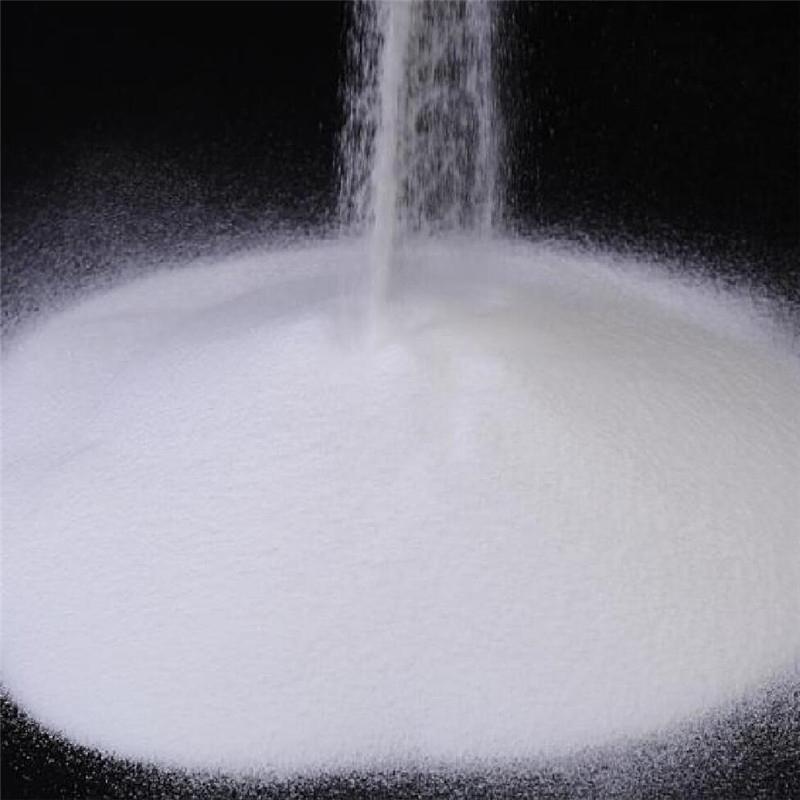
High-quality PVC powder should not only meet the target particle size but also have good flowability and consistent quality. If there is too much variation in particle size or the powder is too inconsistent, it may affect subsequent conveying, storage, mixing, and feeding processes.
Therefore, a stable particle size distribution and uniform powder quality are essential for ensuring that recycled PVC material can smoothly enter subsequent production processes.
How Does a PVC Pulverizer Process Recycled Material?
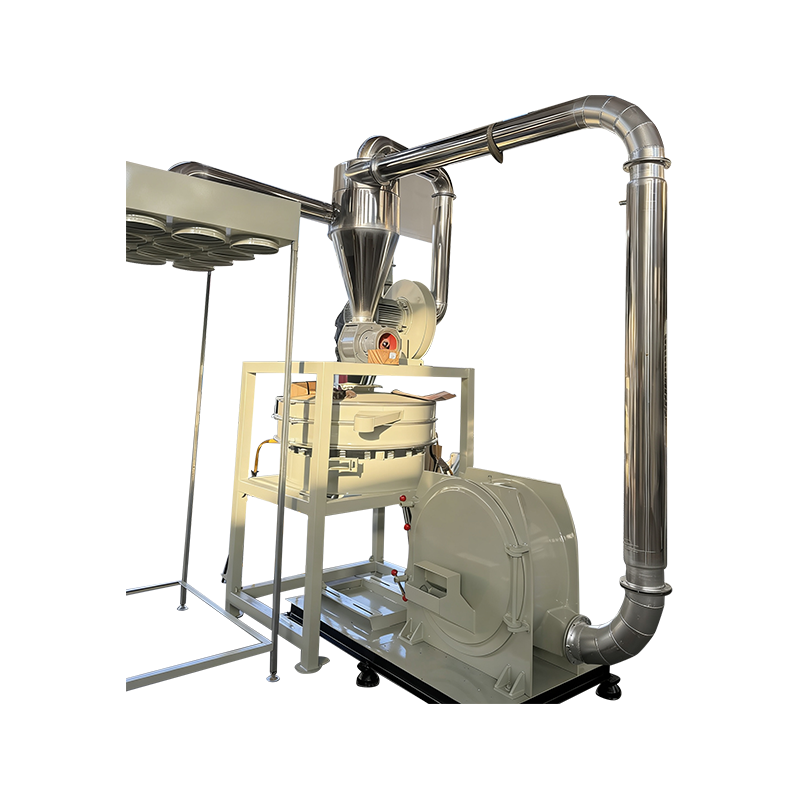
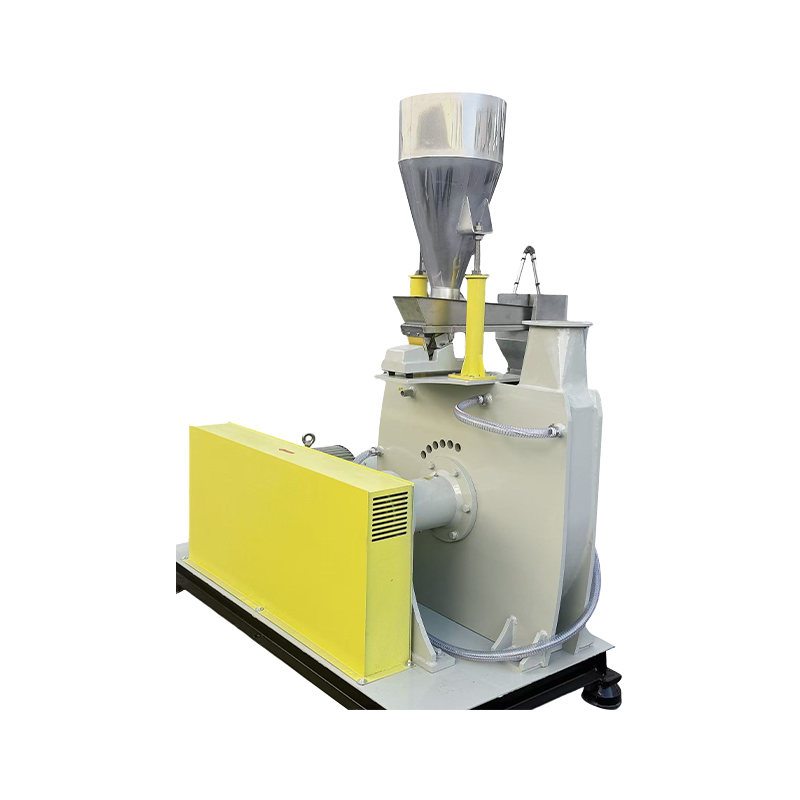
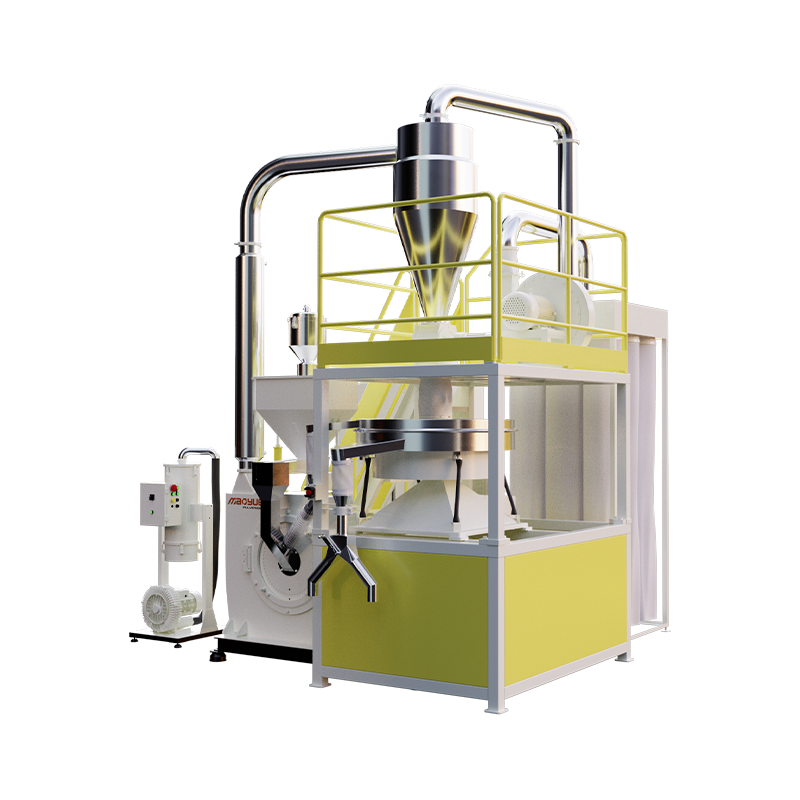
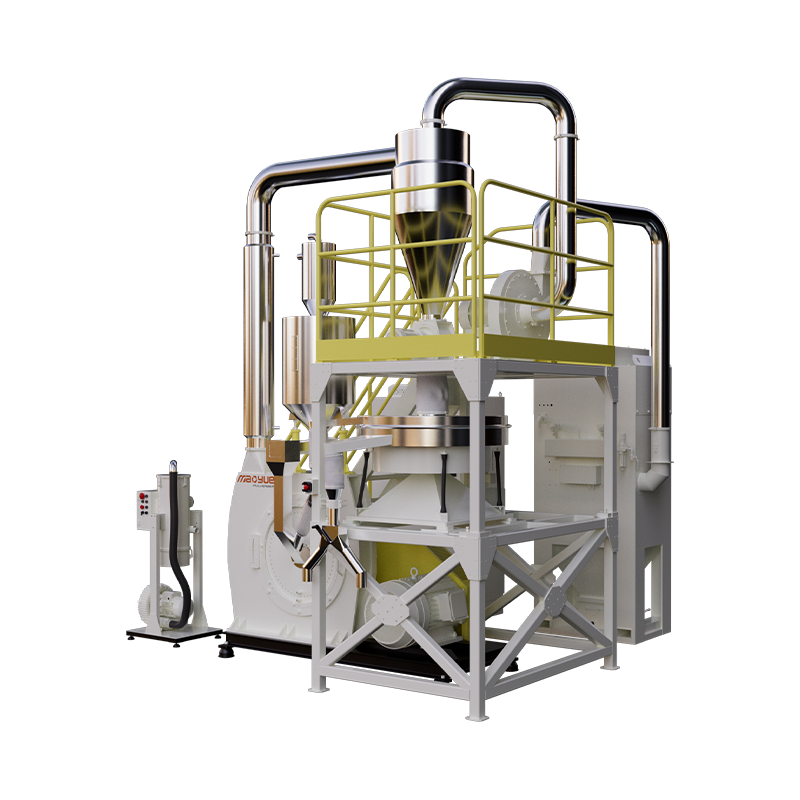
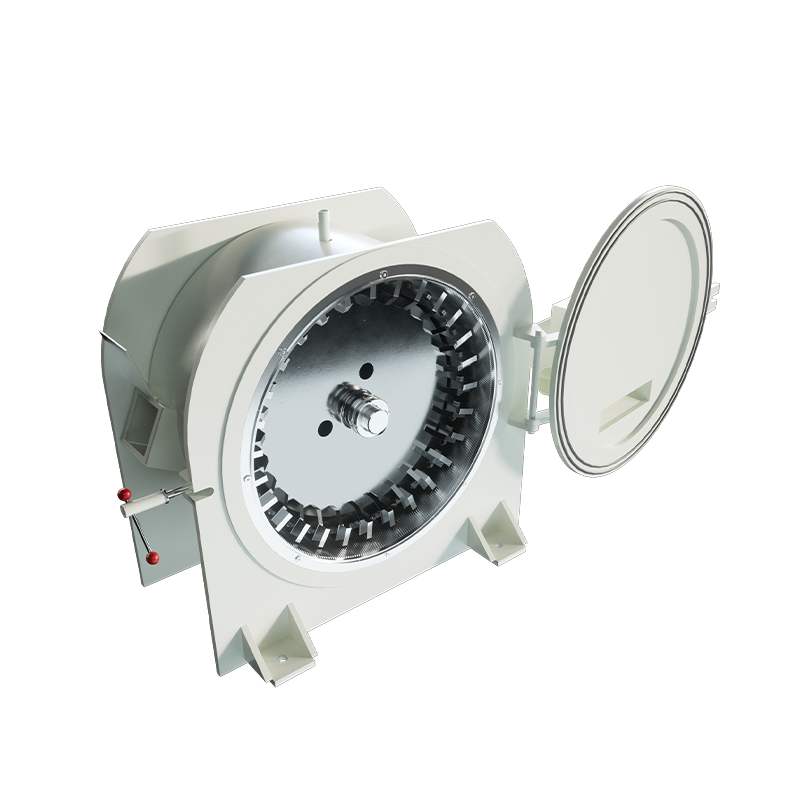
Maoyue PVC pulverizers use a high-speed rotor with rotating and fixed knives to process PVC material. After PVC crushed material enters the pulverizing chamber, it is gradually refined through continuous shearing between the rotating and fixed knives, ultimately producing PVC powder that meets the required specifications.
Unlike disc-type pulverizers, Maoyue PVC pulverizers achieve efficient pulverizing through precise knife configuration and proper knife-gap control, making them suitable for the continuous size reduction of recycled PVC materials.
Feeding PVC Crushed Material
Before entering the pulverizer, PVC waste should be crushed to a suitable size for feeding. Uniform and stable feeding can reduce load fluctuations and sudden overloads, providing stable processing conditions for the subsequent pulverizing process.
For recycled PVC materials with different shapes, sizes, and production requirements, the feeding system should also be properly matched to help the equipment maintain continuous and stable operation.
Rotor, Rotating Knives, and Fixed Knives
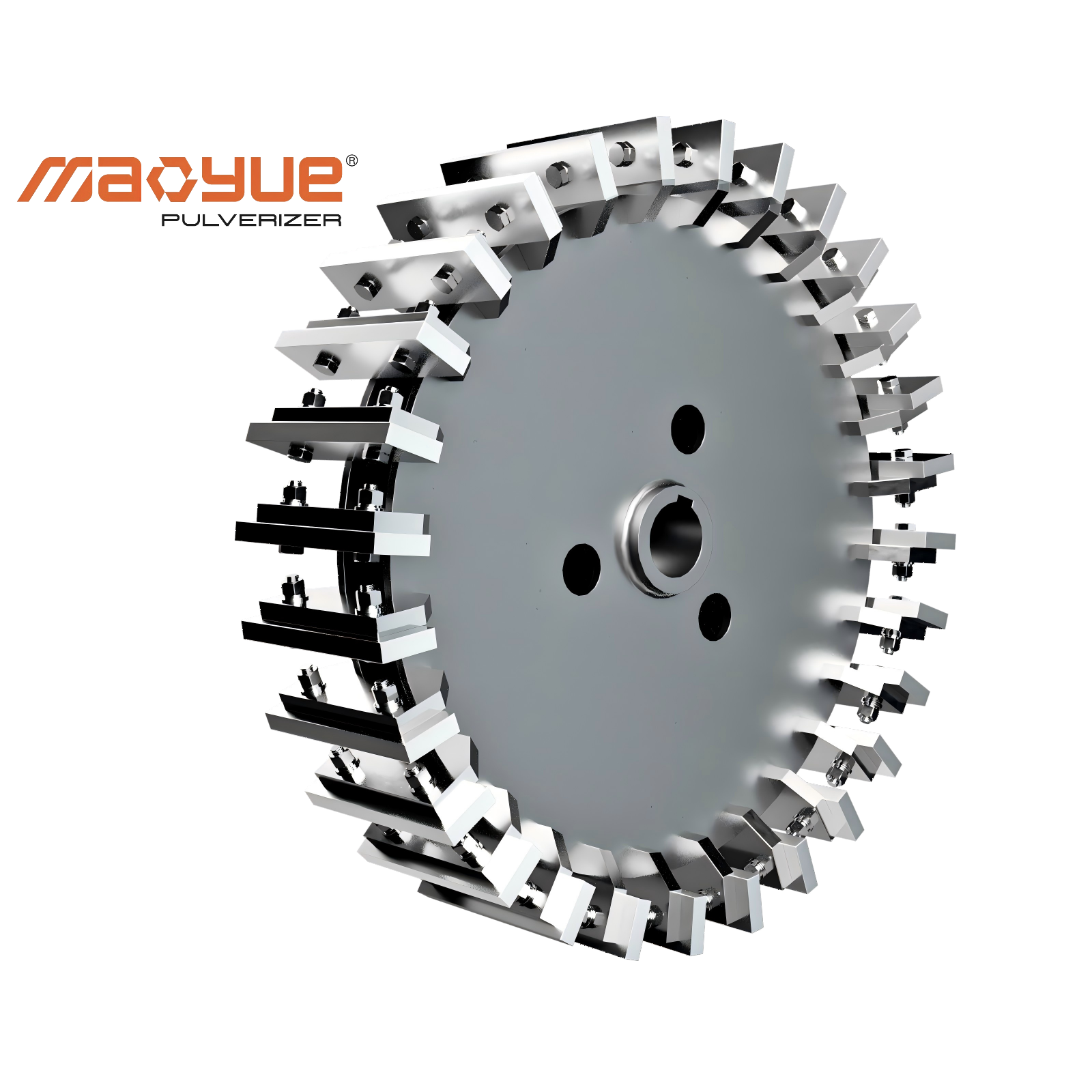
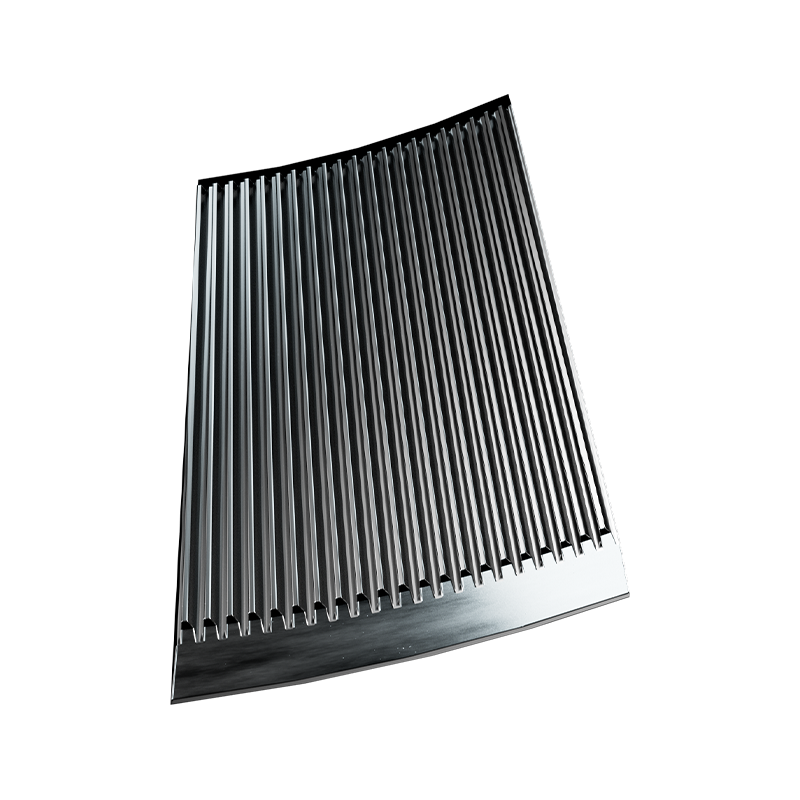
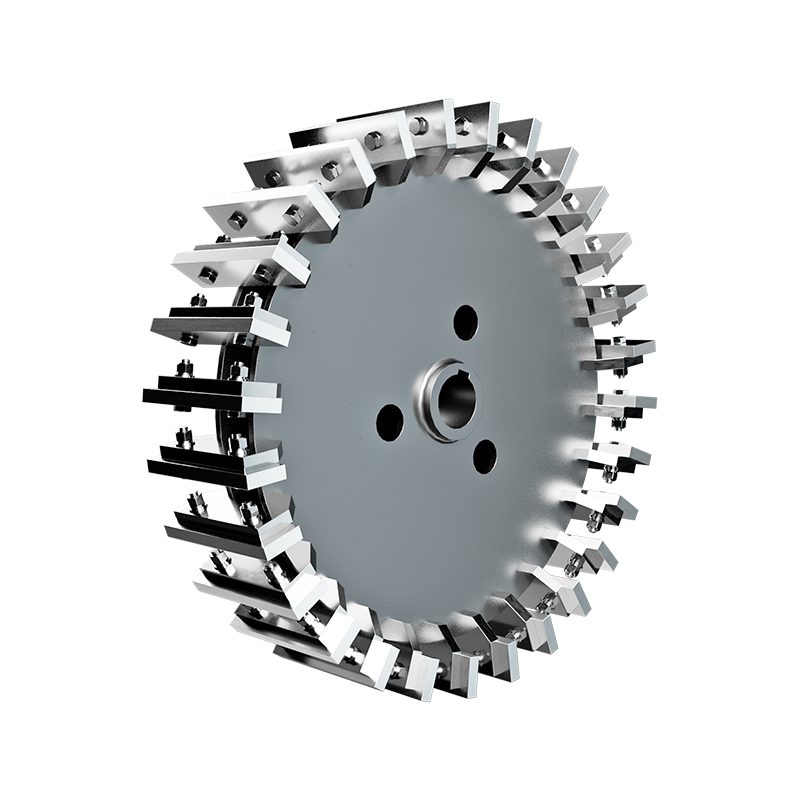
Maoyue PVC pulverizers use a high-speed rotor together with rotating and fixed knives to continuously cut and shear PVC crushed material. After entering the cutting area, the material is gradually refined through high-speed rotation and controlled knife clearance until the required powder particle size is achieved.
The configuration and clearance between the rotating and fixed knives can be matched according to the characteristics of the PVC material, target particle size, and production capacity requirements, helping balance pulverizing efficiency and powder consistency.
Adjusting the Clearance Between Rotating and Fixed Knives
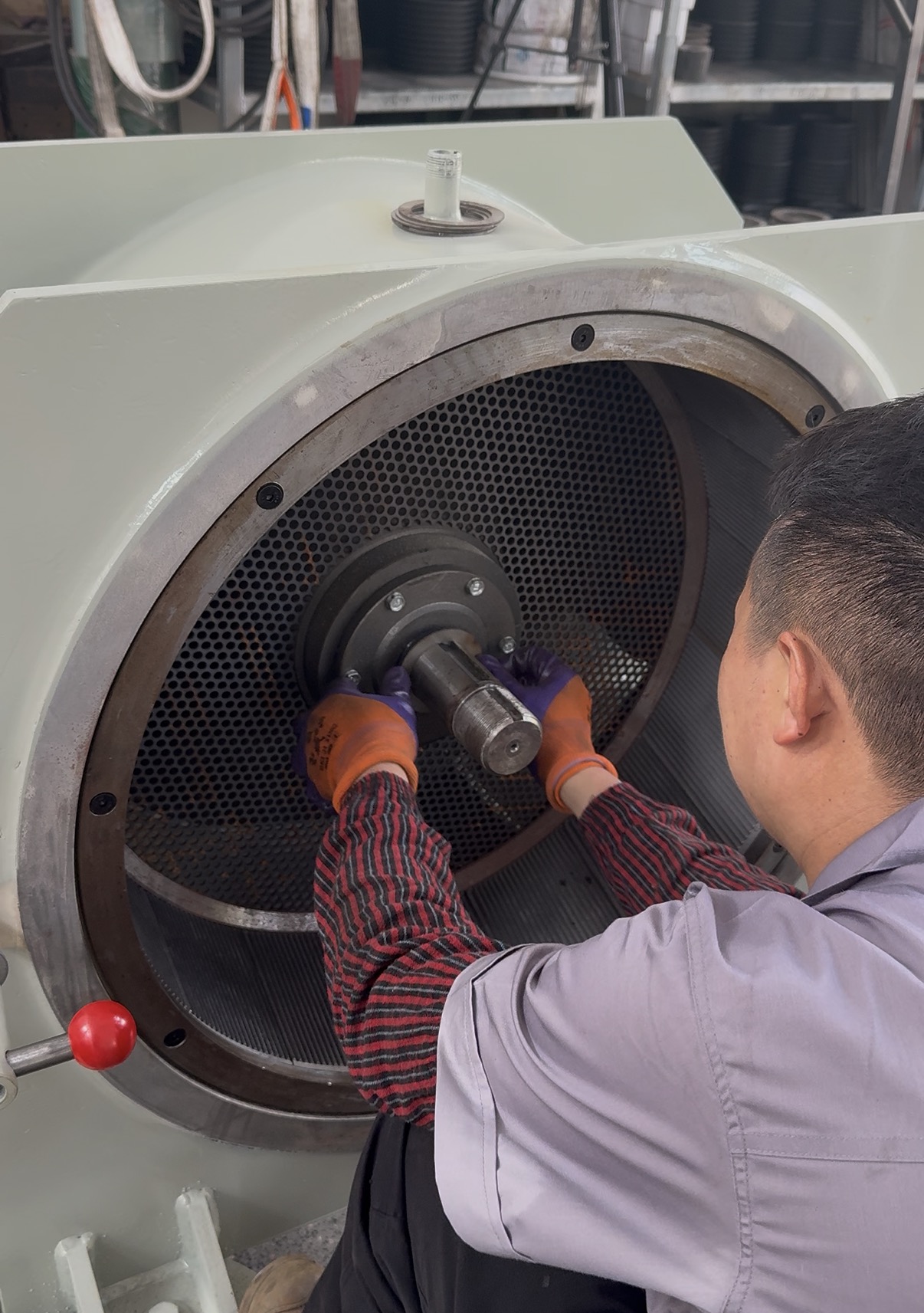
The clearance between the rotating and fixed knives directly affects cutting performance, powder particle size, and production efficiency. Proper knife clearance allows the material to be effectively cut while helping maintain consistent powder specifications.
Therefore, the clearance between the rotating and fixed knives should be precisely adjusted according to the material characteristics and target particle size. Regular inspection and adjustment are also required to ensure the long-term stable operation of the PVC pulverizer.
Air Cooling and Water Cooling
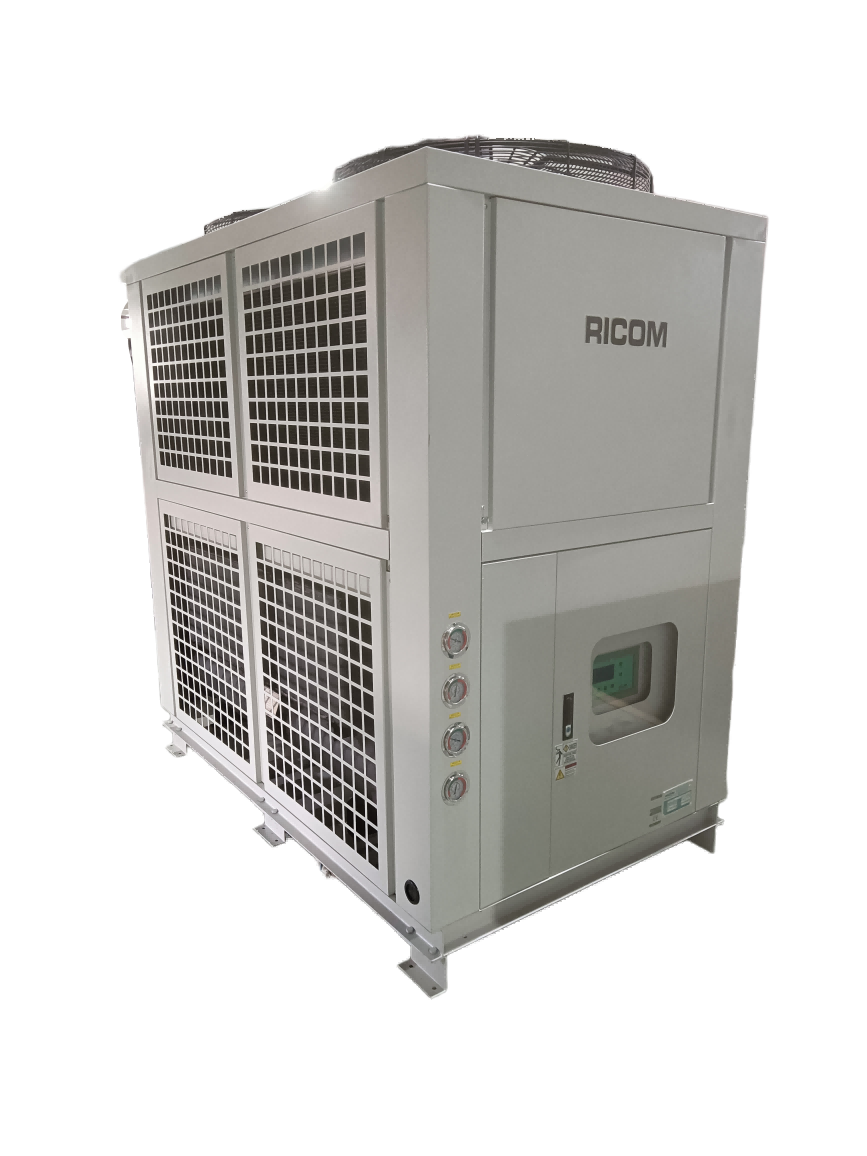
PVC generates heat during high-speed cutting, making temperature control particularly important during continuous, high-output production. Excessive temperatures may affect the material condition and powder quality, so heat needs to be removed promptly.
Mao Yue PVC pulverizers can use a combination of air cooling and water cooling to help remove the heat generated during the pulverizing process. This helps stabilize the processing temperature, allowing the equipment to operate continuously while maintaining consistent powder quality.
Screening and Powder Collection
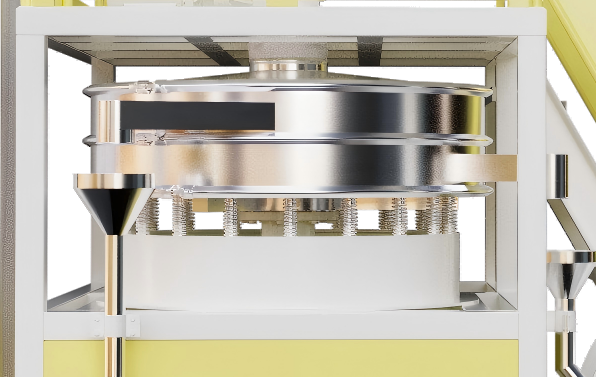
After pulverizing, PVC powder can be further screened to control the final particle size and uniformity. Oversized particles can be separated and returned to the pulverizing process, helping reduce off-specification material.
At the same time, a properly designed powder collection system helps reduce dust, improve collection efficiency, and facilitate the subsequent conveying, storage, and reuse of the finished PVC powder.
Complete PVC Recycling and Pulverizing Process
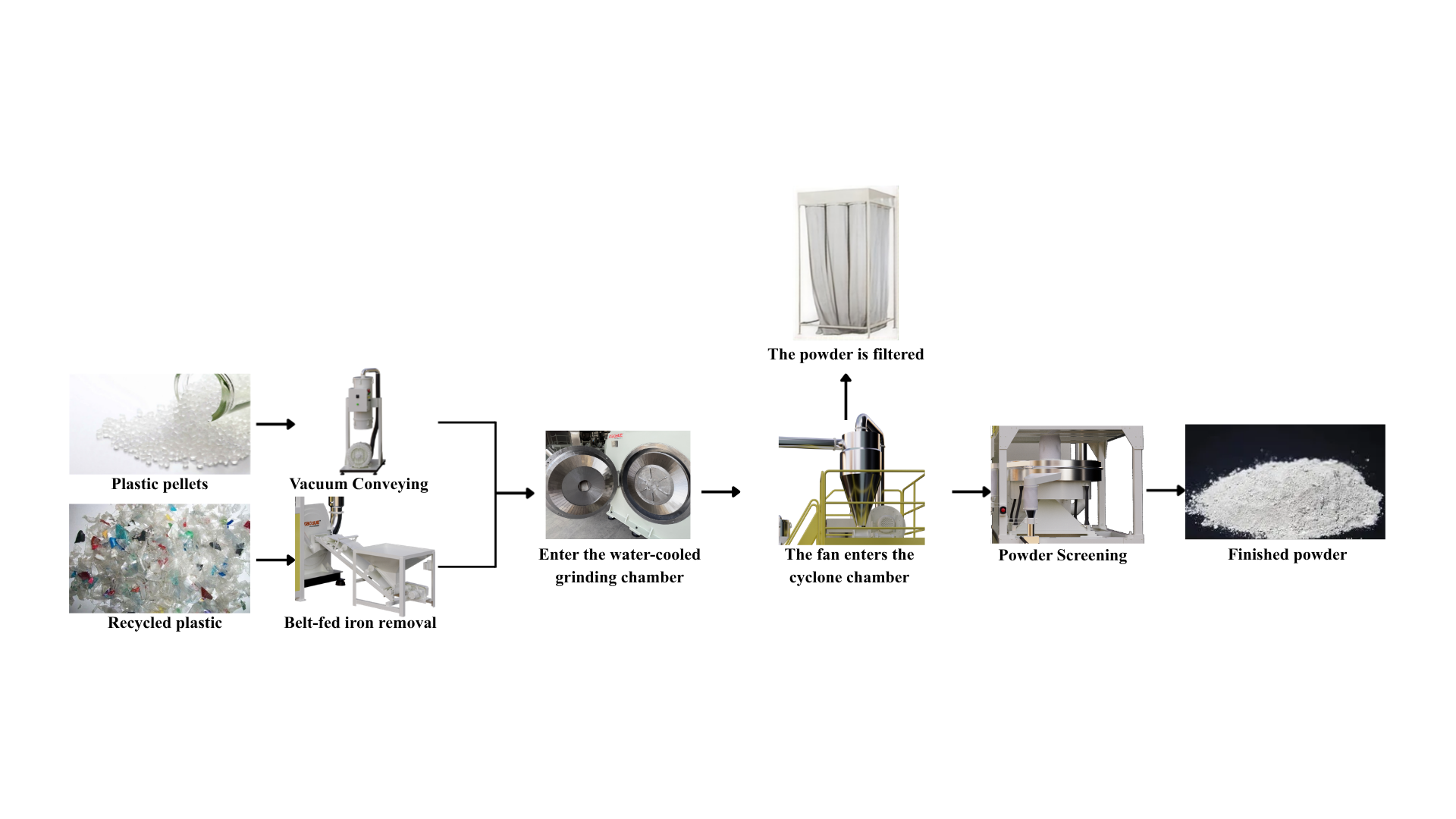
A stable PVC recycling and pulverizing process typically includes:
PVC waste sorting → Crushing → Uniform feeding → Pulverizing → Cooling → Screening → Powder collection → Reintroduction into production
Each stage can affect the final powder quality. A PVC pulverizer does not operate as an isolated machine; it is a core processing unit within the entire recycling system. Only when each process is properly matched can PVC waste be consistently transformed into recycled powder that meets production requirements.
Step 1 — Sorting and Pre-Treatment
Before pulverizing, PVC waste should be sorted and pre-treated to remove visible metal, foreign materials, and unsuitable materials, while ensuring that the material is in a suitable condition for subsequent crushing and pulverizing.
Clean and consistent feeding is the foundation for producing uniform PVC powder and maintaining stable equipment operation.
Step 2 — Crushing and Feeding
Large PVC waste materials need to be crushed first, reducing them to a suitable size for feeding into the pulverizer. The material is then continuously fed into the pulverizing chamber through stable and uniform feeding.
An appropriate crushing size and stable feeding can reduce equipment load fluctuations and help the PVC pulverizer maintain continuous and efficient operation.
Step 3 — PVC Pulverizing
The pre-treated and crushed PVC material enters the pulverizing chamber, where it is gradually refined through continuous cutting and shearing between the high-speed rotor, rotating knives, and fixed knives, producing PVC powder that meets the required specifications.
At the same time, the air and water cooling systems help control the processing temperature and reduce the effects of temperature rise during continuous operation, allowing the equipment to maintain stable pulverizing efficiency and consistent powder quality.
Step 4 — Screening and Classification
After pulverizing, the PVC powder is screened for particle size control and classification. Powder that meets the required specifications proceeds to the next stage, while oversized particles can be returned for further processing.
Proper screening helps reduce the presence of coarse particles, maintaining uniform particle size and consistent quality in the finished PVC powder.
Step 5 — Reintroducing PVC Powder into Production
After screening, the PVC powder can be stored and mixed according to the formulation and product requirements, then reintroduced into suitable production processes.
In this way, PVC waste completes a cycle from waste → powder → recycled raw material, reducing material waste while further increasing the value and utilization of recycled PVC.
Applications of Recycled PVC Powder
Recycled PVC powder can be reused in the production of PVC pipes, profiles, sheets, flooring, cables, and other products, depending on its material composition, impurity content, particle size requirements, and final product specifications.
The properties of recycled PVC can vary depending on its source, so not all recycled powder is suitable for the same production process. The key is to properly match the characteristics of the recycled material with the actual application requirements, allowing the recycled powder to deliver stable and practical reuse value.
PVC Pipes and Profiles
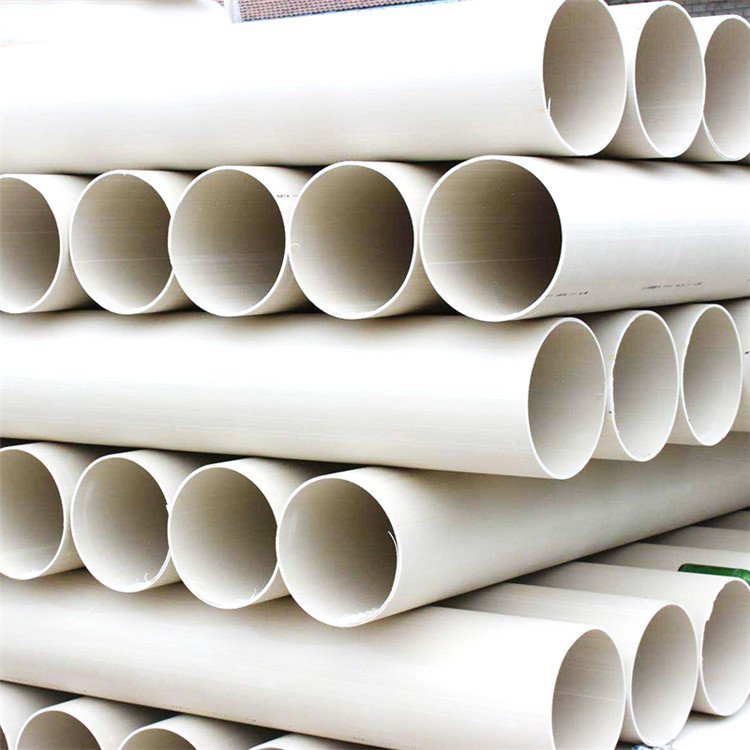
PVC pipe and profile production generates a large amount of cutting waste and rejected products. After proper processing, suitable PVC waste can be further pulverized into reusable powder.
For companies producing PVC products on a large scale, this can help reduce raw material waste and improve the overall utilization of production scrap.
PVC Sheets, Flooring, and Wall Panels
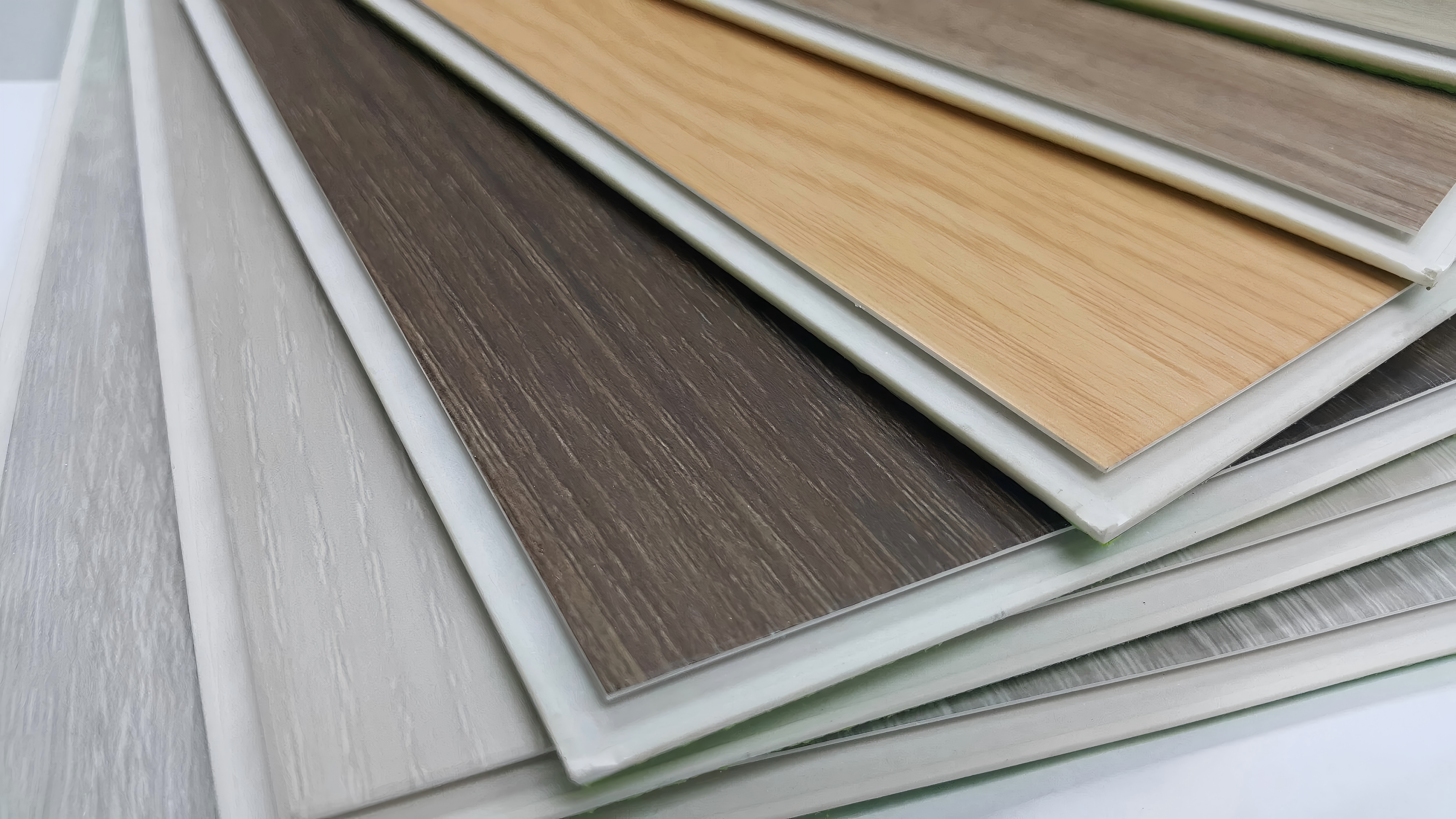
PVC sheet, flooring, and wall panel production also generates edge trim and rejected products. Through sorting, crushing, and pulverizing, suitable waste can be processed into stable recycled PVC powder and reused according to the formulation and production requirements.
Different products have different requirements for powder particle size and quality. Therefore, the appropriate powder specifications should be determined based on the downstream production process and actual application requirements, helping maximize the value of recycled PVC material.
Cables and Industrial PVC Products
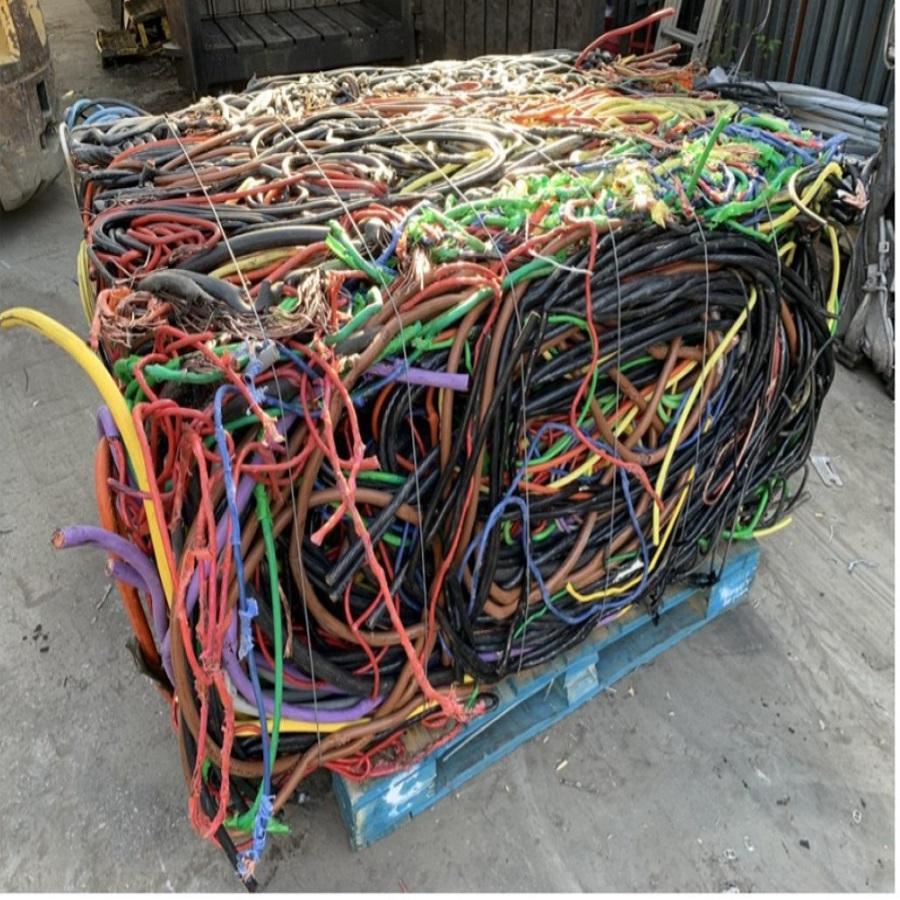
Cable insulation waste and other industrial PVC waste can also be processed into reusable PVC powder through crushing and pulverizing after proper sorting and confirmation of the material composition.
For this type of recycled material, a stable material source, low impurity content, and a clearly defined formulation are more conducive to maintaining consistent powder particle size and quality, providing stable recycled raw material for subsequent production.
Why Choose Mao Yue PVC Pulverizers?
A stable PVC recycling project is not simply about choosing a high-power pulverizer. The equipment should be properly matched to the material characteristics, target particle size, processing capacity, and temperature control requirements. Only when the equipment and process are properly matched can powder quality, production efficiency, and long-term operating stability be achieved together.
With over 30 years of experience in the R&D and manufacturing of plastic pulverizers, Mao Yue focuses on real plastic processing requirements and provides suitable pulverizing equipment and solutions for different PVC materials and production needs. This helps customers consistently transform recycled materials into reusable PVC powder.
Designing a Pulverizing Solution Based on the Material
PVC materials with different formulations, shapes, additive contents, and recycling sources may have different processing characteristics. Therefore, a pulverizing solution cannot simply be applied universally.
Mao Yue matches the equipment to the customer's actual material, target particle size, and production capacity requirements. Material testing is also used to determine the appropriate equipment and processing method, ensuring that the PVC pulverizing performance better matches the actual production requirements.
Precision Rotor and Knife System
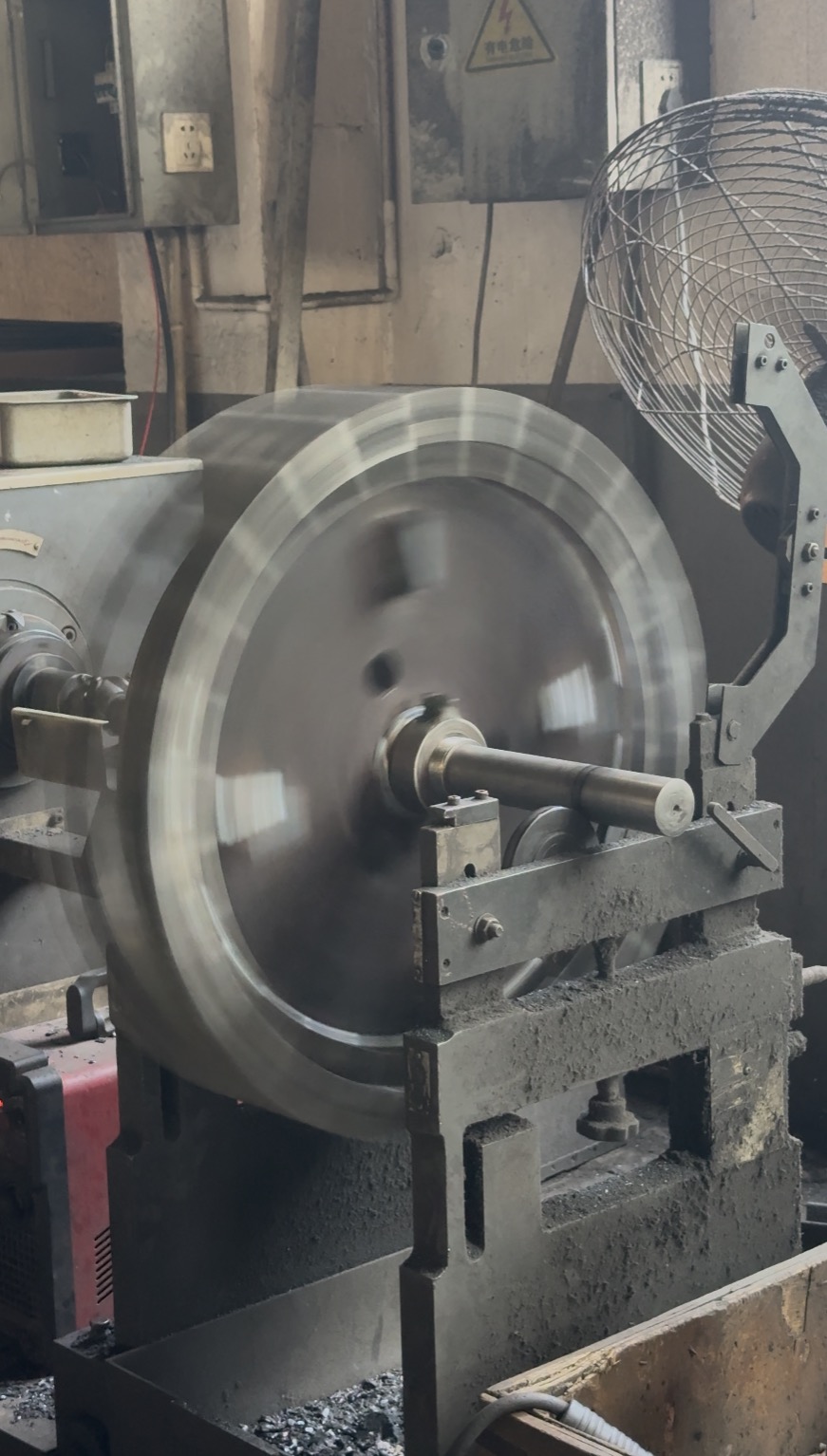
The rotor, rotating knives, and fixed knives are core components of a PVC pulverizer. Their structural design, material selection, and machining accuracy directly affect cutting efficiency, powder particle size, and equipment operating stability.
Mao Yue focuses on precision machining, dimensional control, and quality inspection of core components to ensure stable knife coordination and proper cutting clearance, helping the PVC pulverizer maintain consistent pulverizing performance during continuous production.
Stable Production and Temperature Control
High production capacity is not simply about achieving peak equipment performance for a short period. More importantly, the equipment needs to maintain stable output, proper temperature, and consistent powder quality during continuous production. If excessive temperature rise or powder fluctuations occur during long-term operation, high capacity can be difficult to translate into real production efficiency.
Therefore, Mao Yue designs pulverizing, feeding, cooling, and powder collection as an integrated system with coordinated components, helping the equipment maintain stable operation and reliable pulverizing performance during continuous production.
Turning PVC Waste Back into Production Value
PVC recycling should go beyond simply processing waste. Through proper crushing, feeding, pulverizing, cooling, screening, and collection, rejected pipes, profile edge trim, sheet and flooring waste, and other PVC scrap can be transformed into recycled PVC powder with stable particle size and suitable for reuse.
Truly efficient PVC recycling is not about simply increasing pulverizing intensity. Instead, each processing stage should be properly matched to improve material utilization while maintaining consistent powder quality.
Transforming waste back into production raw material is the true value of PVC recycling and pulverizing.
Conclusion: A Better Path from PVC Waste to Reusable Powder
Producing stable recycled PVC powder involves more than simply choosing a pulverizer. It also requires proper coordination of pre-treatment, stable feeding, precise cutting, temperature control, screening, and powder collection.
Mao Yue PVC pulverizers use a high-speed rotor with rotating and fixed knives to process recycled PVC material through continuous cutting and shearing, producing powder that meets the required specifications. Air cooling and water cooling can also be combined to help control the processing temperature.
For companies looking to reduce PVC waste and improve material utilization, properly matching the equipment and processing method can transform production waste into reusable PVC powder, allowing recycling materials to return to the production process.
From PVC waste to recycled powder, stable recycling value starts with the right material, equipment, and processing method.