

 English
 русский
 Español
 عربى
عربى 中文简体
中文简体
 中文简体
中文简体
Content
- 1 What Is a Cutting Mill and How Does It Work?
- 2 How a Cutting Mill Compares with Other Size Reduction Machines
- 3 Where Cutting Mills Fit in a Plastics Processing Line
- 4 What to Check Before Buying a Cutting Mill
- 5 When a Cutting Mill Alone Is Not Enough
- 6 Combining Cutting Mills and Pulverizers in One Production Line
- 7 Choose by Target Specification, Not by Machine Category
A rotomolder in Shandong feeds scrap PE film and rejected parts into a cutting mill every morning. Within minutes the machine reduces the material to clean chips, and the operator assumes the size reduction problem is solved. Then the chips reach the pulverizer, and the real bottleneck appears: throughput drops, powder distribution is uneven, and the cutting mill output is simply the wrong input specification for the next process stage.
That sequence repeats in hundreds of plastics plants, because a cutting mill is usually expected to do more than it can. So we state the conclusion up front: a cutting mill is the correct tool for coarse and medium reduction, producing chips and granules from bulky plastic scrap. It is not designed to make the fine, narrow-distribution powders that rotomolding, masterbatch production, PVC dry blending, and polymer compounding require. For those jobs, you need a pulverizer, either fed by a cutting mill or integrated with it in a single production line.
What Is a Cutting Mill and How Does It Work?
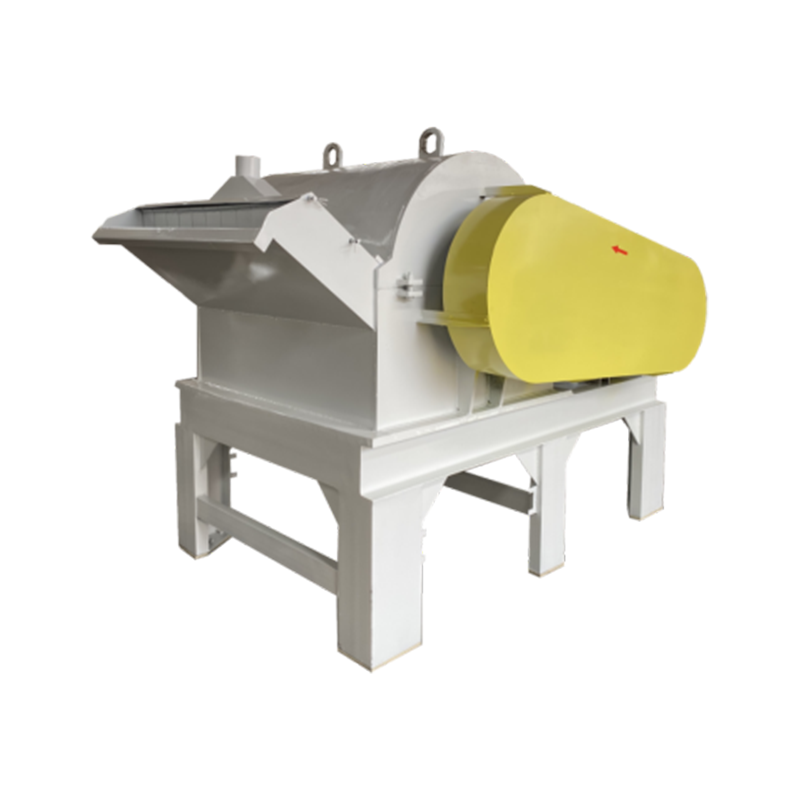
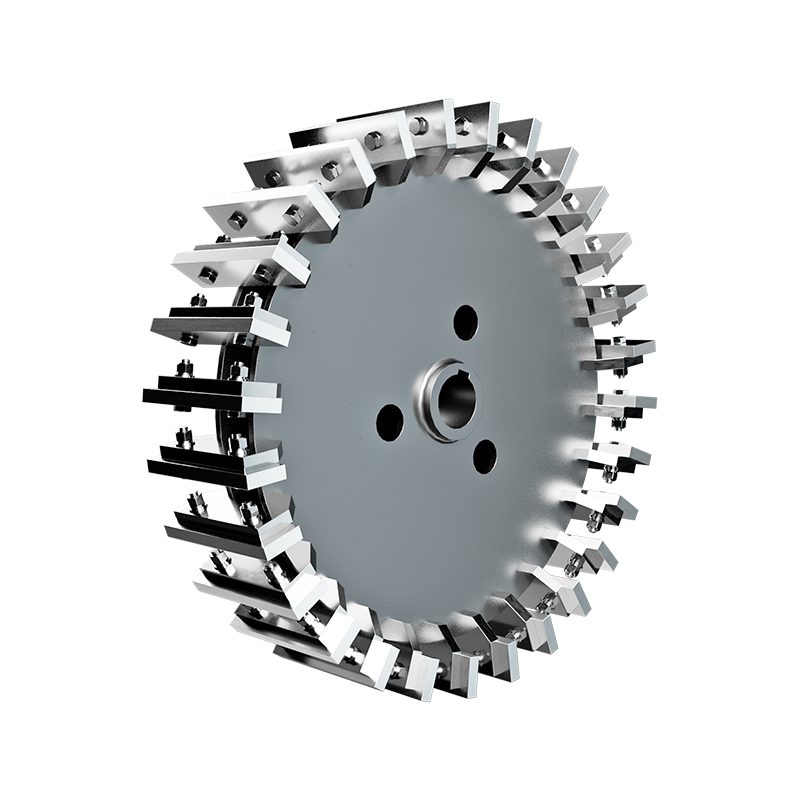
A cutting mill, also called a knife mill or granulator, reduces material by mechanical shearing rather than by impact or friction. A rotor fitted with knife blades spins quickly inside a stationary chamber. Counter-knives mounted on the housing work against the rotor blades like a pair of scissors, cutting the feed material repeatedly until the fragments are small enough to pass through a screen at the bottom.
Three variables control the output of a cutting mill: the screen hole size, the gap between the rotor knives and the counter-knives, and the condition of the knife edges. With sharp blades, a correct gap, and a 6 mm screen, most thermoplastics leave the machine as clean, fairly uniform chips. As the knives dull, the cutting action changes to a tearing action, particle edges become ragged, fines increase, and throughput falls.
A cutting mill is robust, but it must be fed within its design envelope. Overfeeding slows the rotor, raises the temperature in the cutting chamber, and clogs the screen. Good practice is to keep the feed stream at a steady rate, sized so that the rotor speed remains stable.
How a Cutting Mill Compares with Other Size Reduction Machines
Cutting mills are often confused with hammer mills and disc pulverizers because all three are loosely called grinders. They operate on different principles and produce very different particle distributions.
| Machine type | Operating principle | Typical output size | Best suited for |
|---|---|---|---|
| Cutting mill | Shearing between rotor knives and fixed counter-knives | 1–10 mm chips and granules | Scrap reduction, film, purgings, off-spec parts |
| Hammer mill | Impact by swinging hammers against a breaker plate | 100 µm–3 mm depending on screen | Brittle or fibrous materials, dry powders |
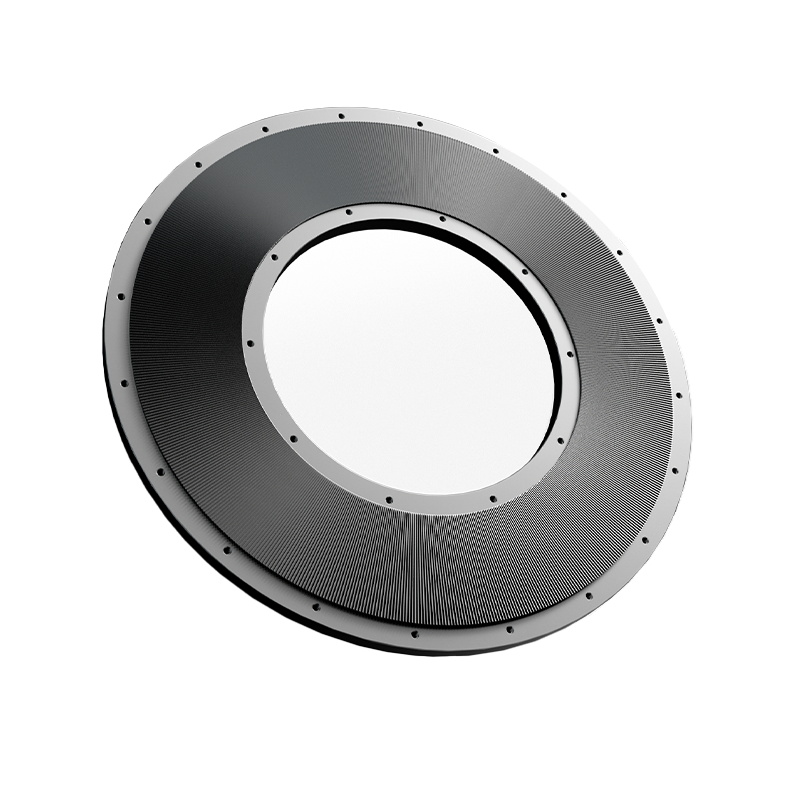
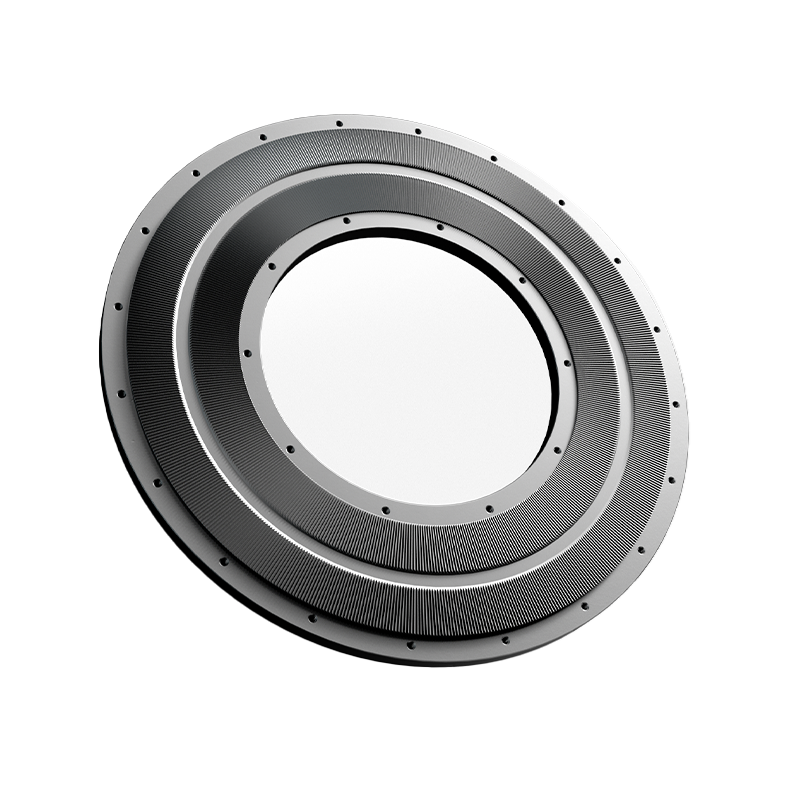
| Disc pulverizer | Friction and shear between rotating and stationary grinding discs | 20–600 µm powder | Fine plastic powder for rotomolding, masterbatch, PVC blending |
Read the right-hand column carefully. If your process requires powder in the 20–600 µm range, a cutting mill is not the machine that will deliver it. It belongs upstream, preparing the material for the stage that does.
Where Cutting Mills Fit in a Plastics Processing Line
Because its output is in the 1–10 mm range, a cutting mill is best understood as a first-stage size reduction step. In practice it is used for:
- Reducing purgings, rejected parts, and edge trim into chips that can be conveyed by air or screw feeders
- Pre-crushing film rolls and bulky scrap before washing, densification, or baling recovery
- Conditioning material before fine grinding in a pulverizer
- Preparing small batches for compounding trials or laboratory testing
The common thread is volume reduction and handling improvement, not final fineness. After a cutting mill, the chips must be suitable for the next unit operation: an extruder, a blender, a washer, or a pulverizer. The wider family of plastic milling machines has different rules for each stage, and the terminology matters when you start comparing quotations.
What to Check Before Buying a Cutting Mill
Procurement teams usually focus on motor power and purchase price. After working with hundreds of plastics plants, we put four other points higher on the checklist.
- Blade material and replacement cost. Alloy steel is the minimum for clean cutting; filled and abrasive compounds will shorten blade life. Blade changes are the largest routine maintenance expense over the life of the machine.
- Screen design and fit. A quick-release screen frame, correct perforation geometry, and a tight fit between screen and housing prevent oversize chips from slipping through.
- Access for cleaning. Machines that process PVC or thermoplastic elastomers need frequent cleaning. The time required to open the chamber, remove the screen, and clear residue is often the hidden cost difference between otherwise similar machines.
- Safety and noise. Door interlocks, a rotor lock, and a sound enclosure should be standard. Noise levels above 90 dBA are common without containment and will affect the working environment.
Blade condition deserves special attention. Polypropylene and filled compounds will not cut cleanly with worn knives; operators compensate by slowing the feed, which in turn generates more heat and more fines. Many cutting mills lose 20 to 30 percent of their rated capacity through knife wear before the decline is even noticed. Include a knife sharpening and replacement schedule in your operating plan from day one.
Energy per tonne deserves a line as well. Overspecifying the motor does not improve cutting; it only raises energy consumption and cost per tonne. Match the installed power to the material and throughput you actually run.
When a Cutting Mill Alone Is Not Enough
Cutting mills stop being useful once the process target moves below roughly one millimetre. For many plastics applications, the target is far below that.
Rotomolding, Masterbatch, and PE Powder
Rotomolding powder typically needs to be in the 200–500 µm range, or about 35–80 mesh, with a narrow particle size distribution and good flow. A cutting mill cannot produce that powder. The standard configuration is a cutting mill for the coarse stage followed by a disc pulverizer for fine grinding. If the cutting mill outputs chips of inconsistent size, the pulverizer will see temperature swings, uneven disc wear, and variable powder quality. Fitting the cutting mill with a 6–10 mm screen is a simple way to stabilize the feed.
PE is heat-sensitive, so the pulverizer must control temperature while maintaining a stable grinding gap. That combination is what separates a powder that flows consistently in the mold from one that causes wall-thickness variation.
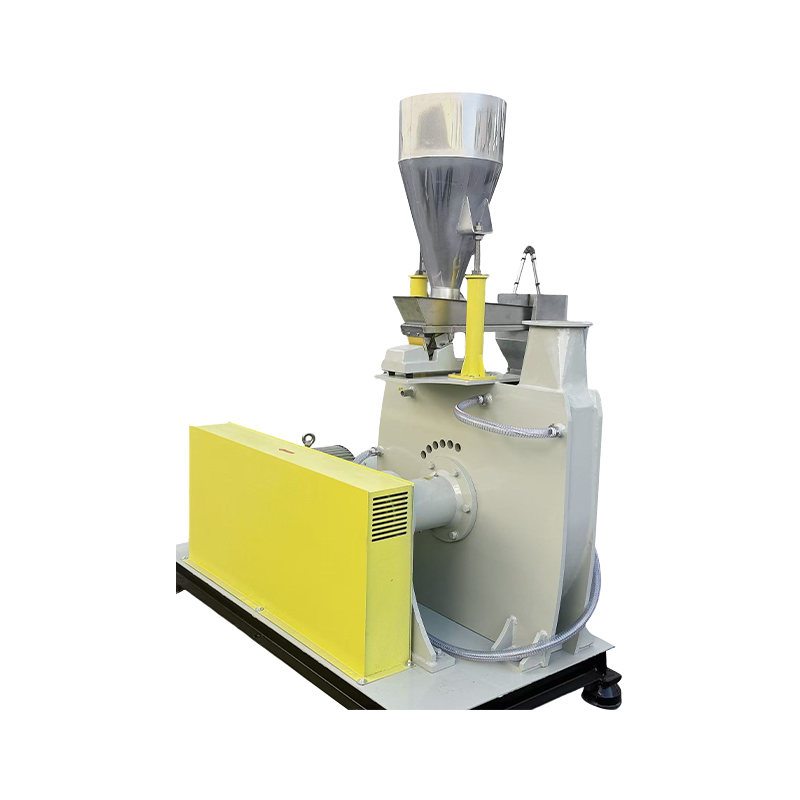 Model 500 PE Rotomolding Powder High-Output Stable PulverizerThis compact pulverizer suits small-to-medium rotomolding lines, delivering 150-450 kg/h with adjustable 20-100 mesh fineness. Its DC53 steel discs and precise blade grinding ensure uniform powder flow, addressing heat control and gap stability for quality rotomolded parts.View Product →
PVC Fine Grinding
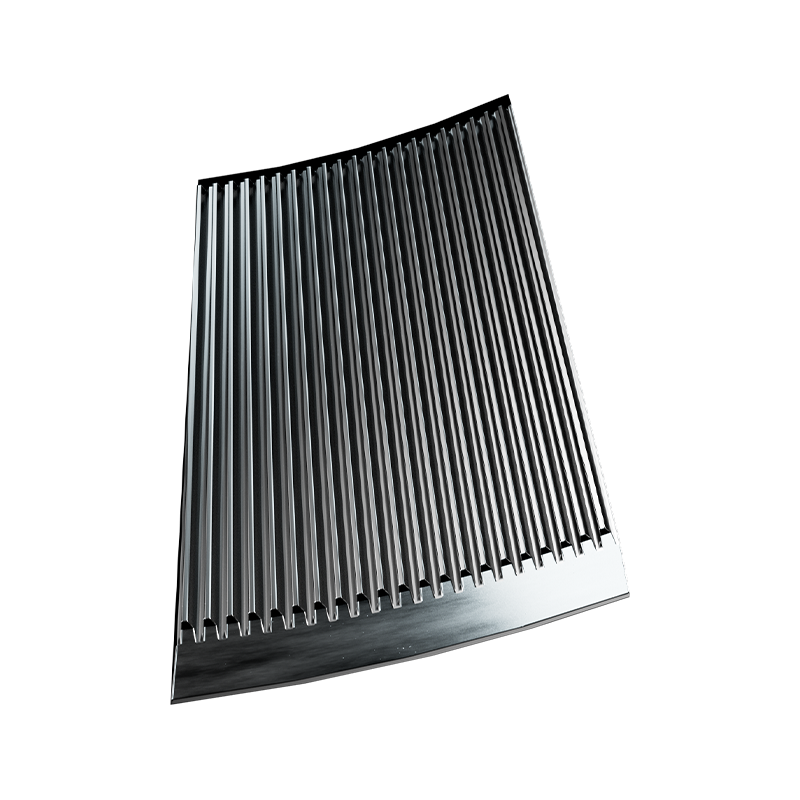
PVC brings two challenges: it degrades when overheated, and the pigments and fillers in it are abrasive. The grinding temperature must stay low, while discs, blades, and rotors must resist wear. A general-purpose cutting mill will not hold tolerances under sustained PVC duty, and its wear parts will not last. PVC-specific pulverizer models address both issues with hardened discs, wear-resistant rotors, and dedicated cooling paths.
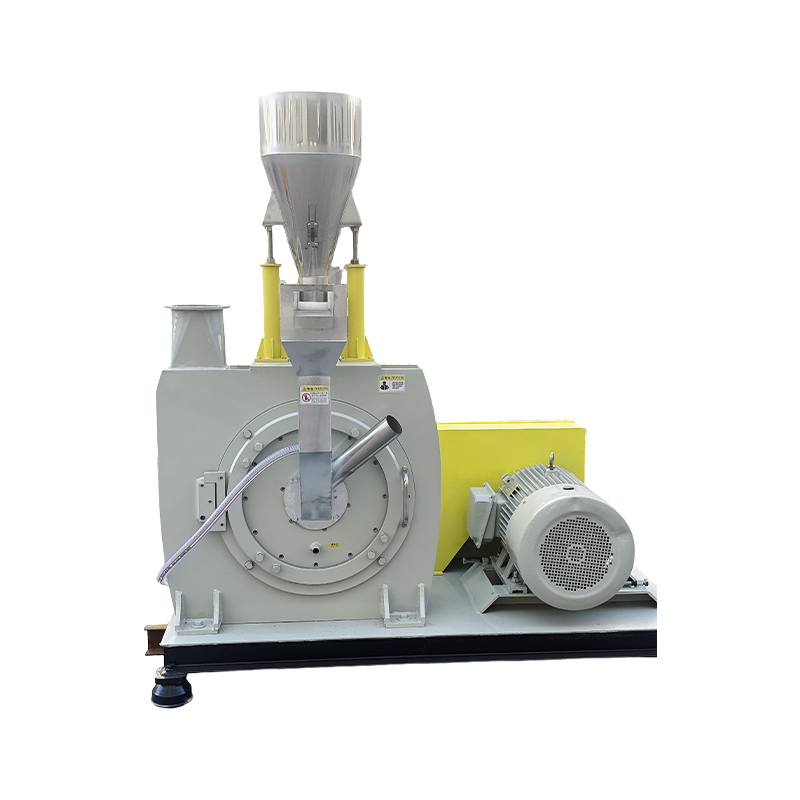
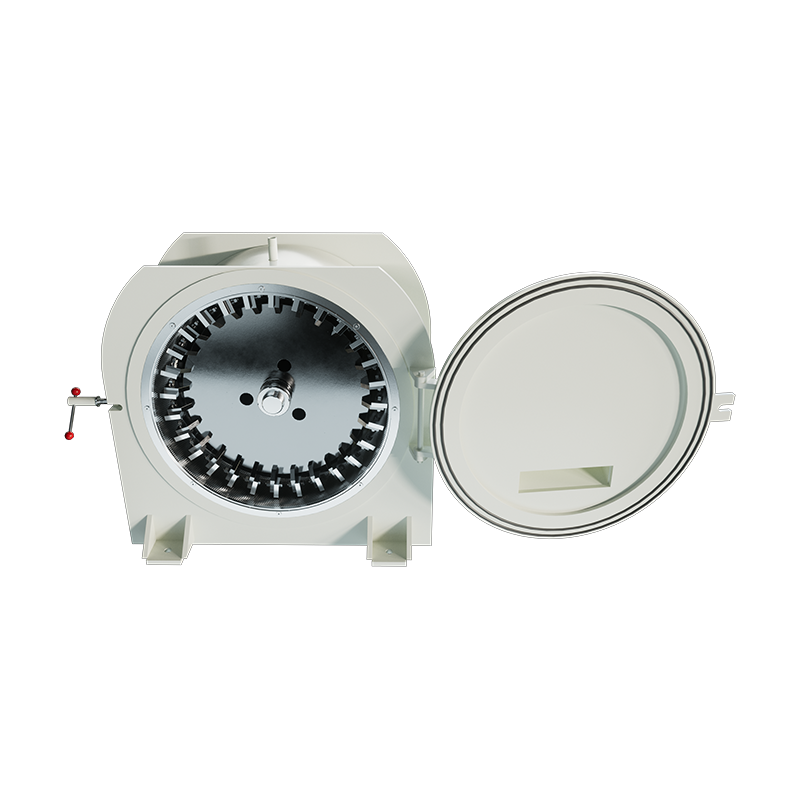 Model 500 PVC Pulverizer Grinder MachineBuilt for PVC with abrasive fillers, this entry-level model keeps grinding chamber at 45-55°C via water cooling, preventing decomposition. Hardened discs and replaceable blades handle medium filler content, offering 100-300 kg/h and 20-80 mesh output for small-batch production.View Product →
If your plant starts with a cutting mill and feeds a PVC pulverizer, make the chip size consistent. Mixing 8 mm chips with 30 mm lumps creates uneven feed density, and the pulverizer will respond with fluctuating motor load and inconsistent powder.
Combining Cutting Mills and Pulverizers in One Production Line
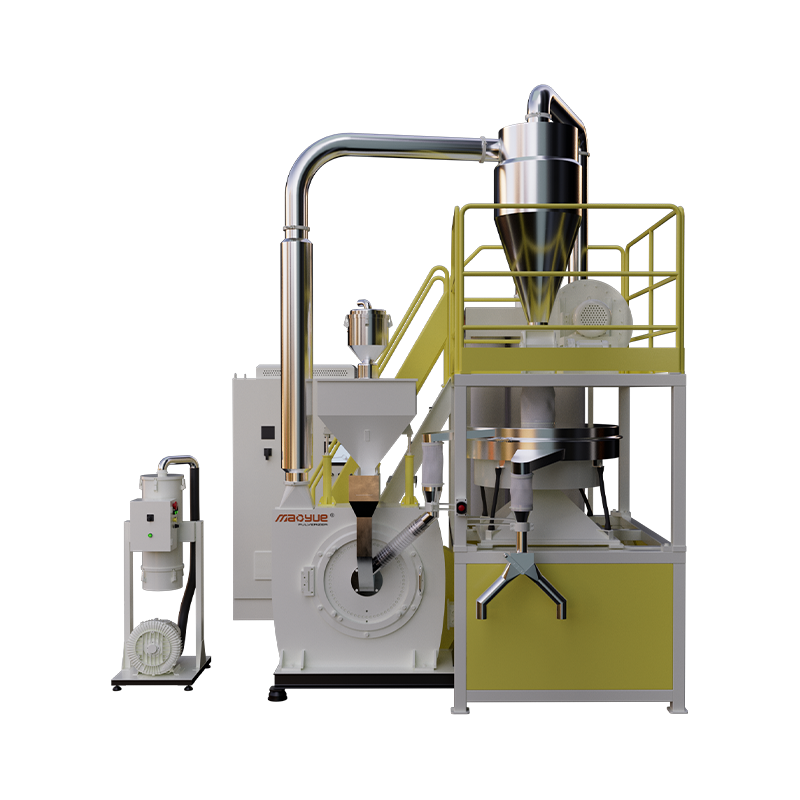
Many modern installations do not buy these machines as separate islands. They buy a blade-type crushing and pulverizing production line that takes bulky scrap at one end and discharges fine powder at the other. The cutting stage performs the coarse reduction, the pulverizing stage completes the job, and one control panel manages the whole sequence.
Integration pays off in three ways: fewer handling steps between machines, steadier feed conditions because chips arrive at the pulverizer at a regulated rate, and better dust containment because the line is designed as one sealed system. For processors scaling from single machines to production capacity, an integrated line is usually the lower-risk choice.
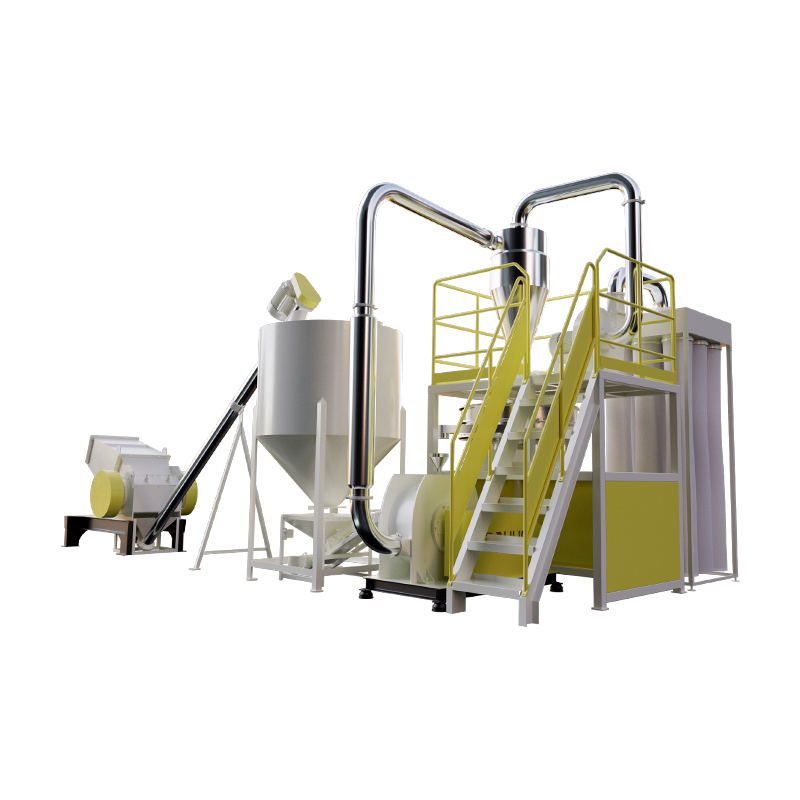 Blade-type crushing and pulverizing production lineThis integrated line combines a heavy-duty blade crusher with a precision disc mill, pneumatic conveying, and dust collection. It converts large plastic waste like pipes and profiles into uniform 20-80 mesh powder, reducing handling steps and ensuring steady feed for high-value recycling.View Product →
Choose by Target Specification, Not by Machine Category
Before calling a supplier for a quote, write down four numbers: the target particle size or mesh range, the allowable oversize fraction, the required throughput in kilograms per hour, and the exact material you will process, including contamination and moisture level. Only then can you judge whether a cutting mill is the complete answer, a pre-stage for a pulverizer, or unnecessary.
Then ask the manufacturer for a test grind using your own material. A catalog table cannot predict how a specific compound will behave. During the test, ask for the full particle size distribution, not just an average; the temperature of the material coming out; and the energy consumed per tonne. Compare suppliers on total cost per tonne, which includes purchase price, wear parts, energy, and estimated downtime. In practice, wear parts and energy dominate the lifetime cost of both cutting mills and pulverizers.
At our factory we run customer samples before purchase decisions, and our full machine range is available for comparison so you can see how each grinding stage fits together.