

 English
 русский
 Español
 عربى
 中文简体
 中文简体
Content
- 1 What Is the Difference Between Segmented and Solid Grinding Discs?
- 2 Segmented vs. Solid Grinding Discs: Key Comparison
- 3 How Do Maintenance Requirements Differ?
- 4 How Should Initial Purchase Cost and Long-Term Operating Cost Be Compared?
- 5 Which Disc Design Fits Your Machine?
- 6 How Can Grinding Disc Manufacturing Quality Be Assessed?
- 7 How Should Actual Grinding Performance Be Compared?
- 8 Why Choose Mao Yue Plastic Pulverizer Grinding Discs?
- 9 What Information Should You Provide When Discussing a Grinding Disc Solution with Mao Yue?
- 10 FAQ
- 10.1 Are Segmented Discs Always More Economical Than Solid Discs?
- 10.2 Do Solid Discs Always Increase Output?
- 10.3 Can the Two Disc Designs Be Interchanged Directly on the Same Machine?
- 10.4 Can a Single Worn Segment Be Replaced in a Segmented Disc?
- 10.5 Does Mao Yue Supply Both Segmented and Solid Grinding Discs?
- 11 Conclusion: Confirm Compatibility, Then Compare Output and Maintenance Costs
When choosing grinding discs for a plastic pulverizer, the differences between segmented and solid designs extend beyond their construction. They also affect machine compatibility, how worn parts are handled, spare parts planning, and long-term operating costs.
Segmented discs, separate the grinding elements from the supporting structure. Some designs allow individual grinding segments to be replaced. Solid discs have the grinding surface machined into a single disc body. Neither design is the choice for every application. Buyers should confirm installation compatibility, then compare on-spec powder output, energy consumption, and maintenance costs using the same material and powder requirements.
Mao Yue specializes in manufacturing plastic pulverizer grinding discs and blades. Its PE pulverizer disc range includes both segmented and solid designs, with custom sizing available. Buyers sourcing replacement discs or evaluating new equipment can discuss suitable configurations based on their material, existing machine interfaces, and target powder specifications.
This article covers the grinding discs used in disc-type plastic pulverizers, not similarly named components used in mining mills or other industries.
What Is the Difference Between Segmented and Solid Grinding Discs?
Segmented Discs: Separate Grinding Elements and Supporting Structure
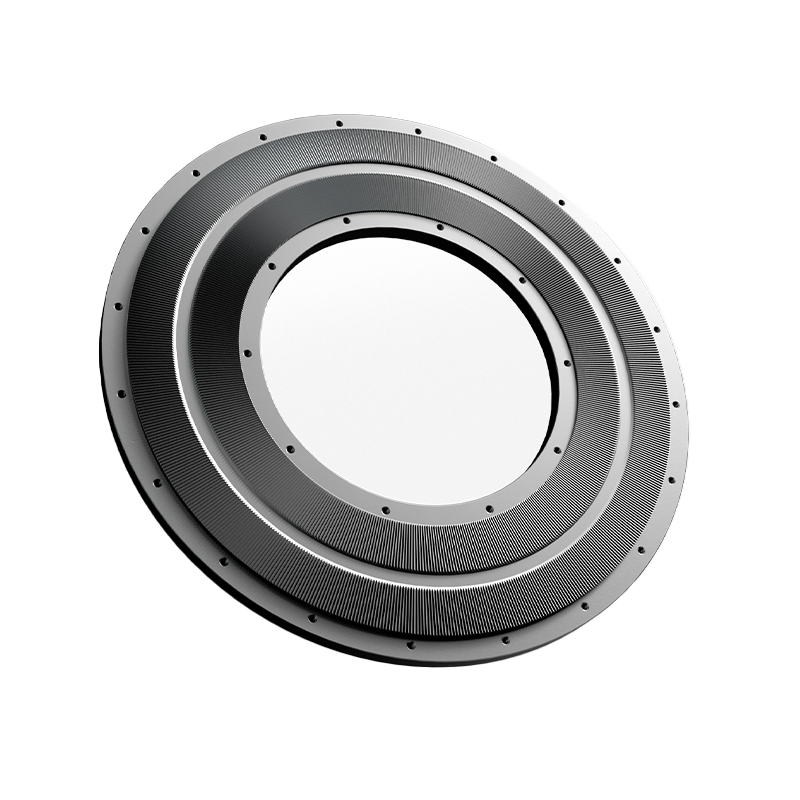
A segmented disc typically consists of a carrier disc fitted with grinding segments or toothed sections. Locating and fastening features secure these elements to form the working grinding surface.
This construction separates the supporting function from the grinding elements that contact the material. Where the design permits individual replacement, maintenance can focus on the worn elements without replacing the entire carrier disc each time.
Solid Discs: A Grinding Surface Machined into One Body
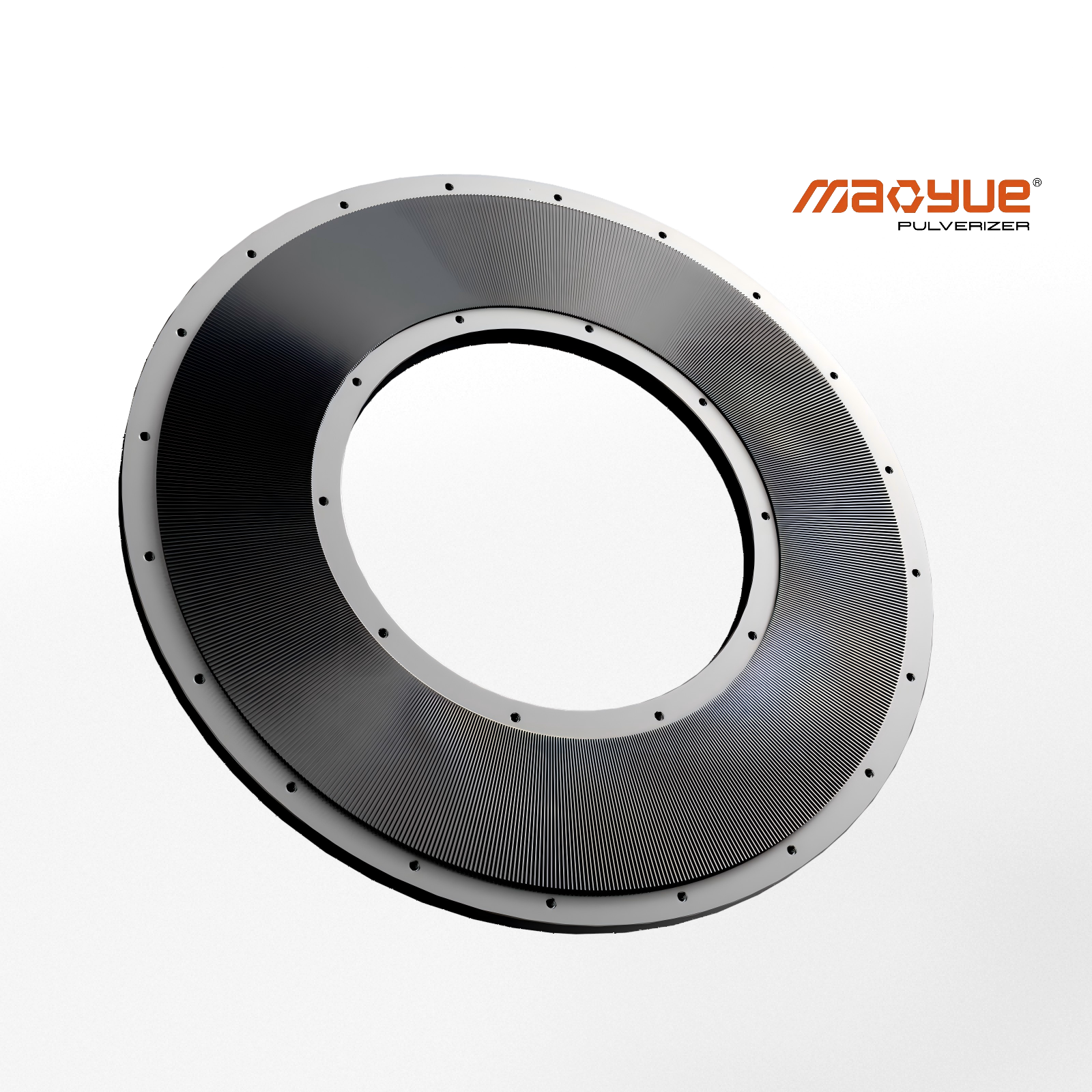
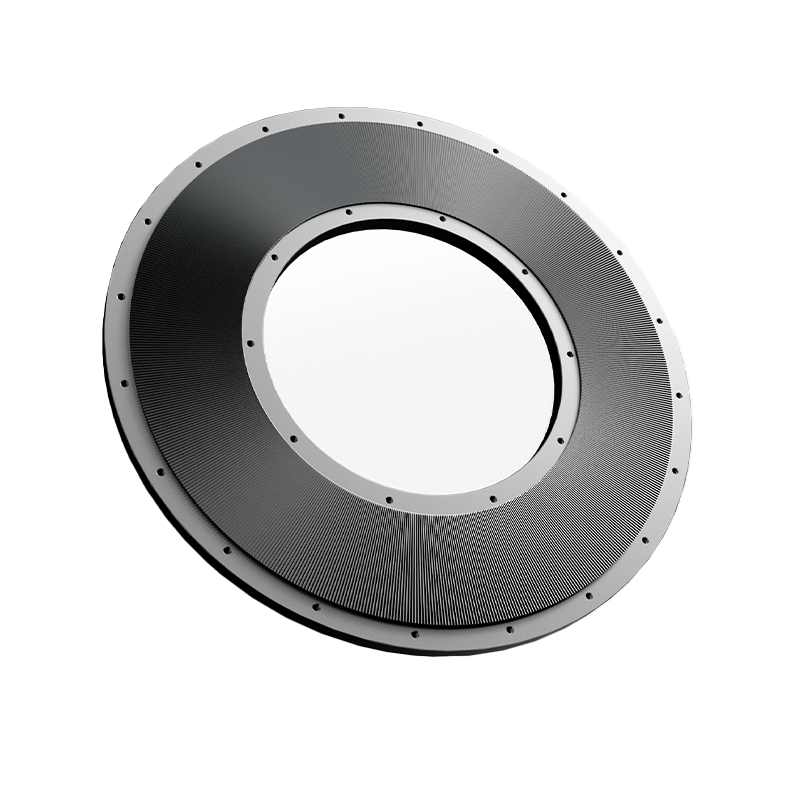
In a common solid-disc design, the grinding teeth are machined directly into a single disc body, which is then installed on the stationary or rotating side of the machine.
There are no separate grinding segments to assemble on the working surface, but installation still requires correct positioning, proper contact between mounting surfaces, and secure fastening. A solid disc is not necessarily non-removable or unsuitable for resharpening. The appropriate treatment after wear depends on the tooth profile, remaining dimensions, material condition, and permitted repair scope.
How Do Double-Row Teeth Relate to Segmented and Solid Designs?
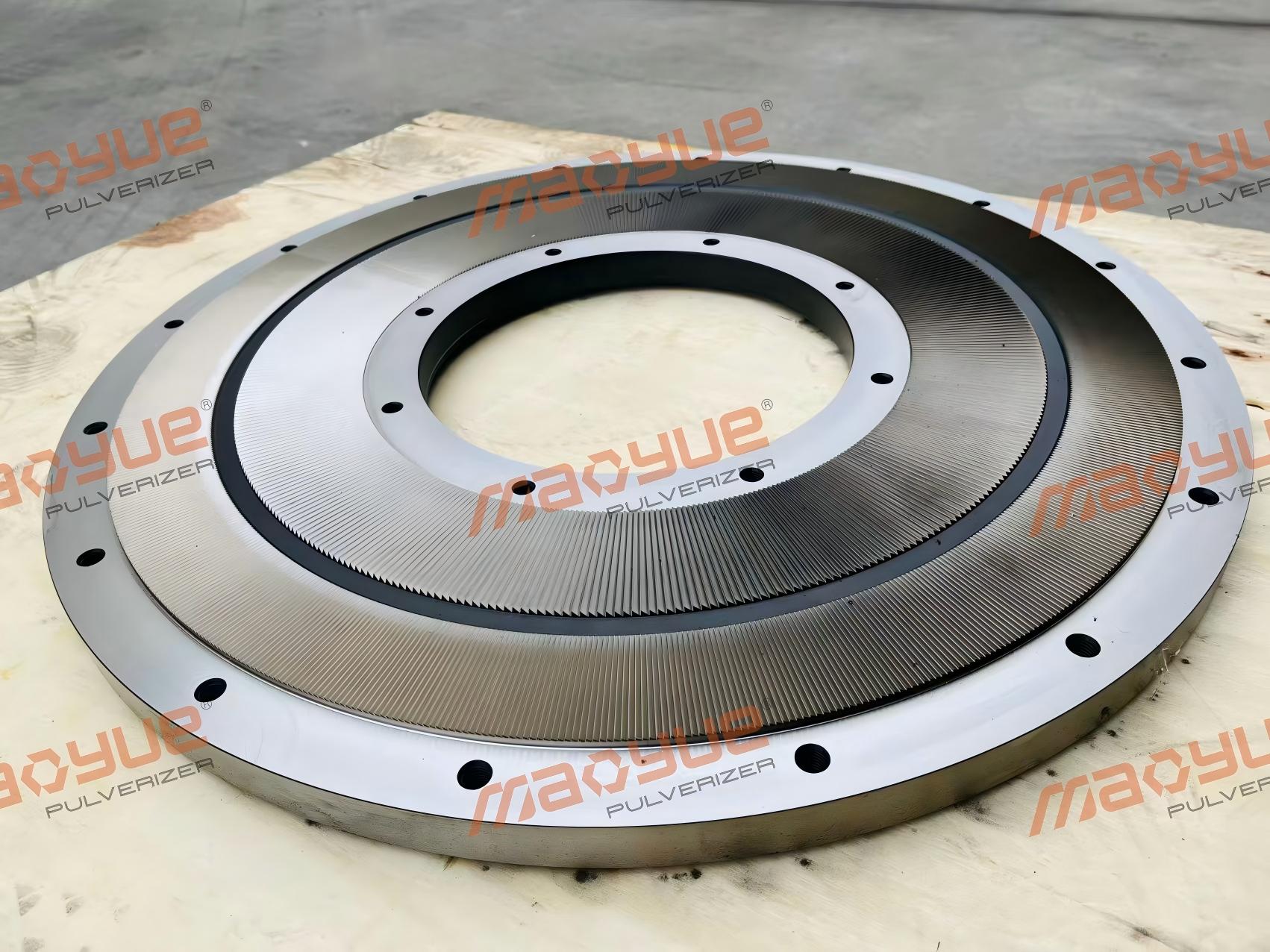
Segmented and solid describe the construction of the component, while double-row teeth describe the arrangement of the grinding teeth. These are different classifications. Double-row teeth should therefore not be used as an alternative name for either segmented or solid discs. When comparing products, use drawings, photographs, and component details to confirm exactly what construction the supplier means.
Segmented vs. Solid Grinding Discs: Key Comparison
Which is easier to maintain? A segmented design allows the carrier disc to be retained and the grinding segments replaced when conditions permit. A solid design avoids assembling and checking individual segments.
Which requires the whole disc to be replaced? When a solid disc reaches its replacement limit, the grinding disc itself is typically replaced, not the entire machine or all mounting and supporting components. Whether only the segments can be replaced in a segmented design depends on the condition of the carrier disc, locating features, and fastening points, as well as whether the design permits that replacement method. Both designs may remain usable after resharpening where conditions allow.
How Do Maintenance Requirements Differ?
For segmented discs that permit partial replacement, the wear condition of each segment and the assembly requirements determine whether individual segments or a complete set should be replaced. The replacement work must maintain a consistent grinding surface and accurate fit.
Solid discs are inspected as complete units. The extent of damage and remaining machining allowance determine the resharpening or replacement plan.
Where abnormal wear occurs, check for foreign objects, installation issues, and operating conditions at the same time. Use the findings to plan the appropriate component work and machine adjustments.
For spare parts, segmented-disc systems can stock grinding segments and fittings according to their replacement requirements. Solid-disc systems can prepare spare discs or matched assemblies to suit the machine configuration.
How Should Initial Purchase Cost and Long-Term Operating Cost Be Compared?
First, establish what the quotation includes: grinding segments, the carrier disc, a stationary disc, a rotating disc, or a complete matched assembly. Comparing a segment quotation directly with a complete-disc quotation can be misleading when the supply scopes differ.
When inspection confirms that the existing carrier disc can remain in service, a segmented-disc quotation can cover replacement segments and necessary accessories. For an initial purchase or a change in construction, the quotation also needs to include the carrier disc and any associated modifications. Solid-disc quotations should cover the required stationary disc, rotating disc, or matched assembly. Prices become comparable only after the supply scope and technical requirements are clear.
Total cost per unit of on-spec powder = Total costs included in the assessment period ÷ Mass of on-spec powder produced during that period.
A lower disc purchase price does not necessarily mean a lower long-term cost if replacements are frequent or downtime is lengthy. Likewise, the ability to replace individual segments does not automatically reduce overall maintenance costs.
When operating data is limited, compare scenarios using different service-life and maintenance-frequency assumptions. State those assumptions clearly and revise them as production records become available.
Which Disc Design Fits Your Machine?
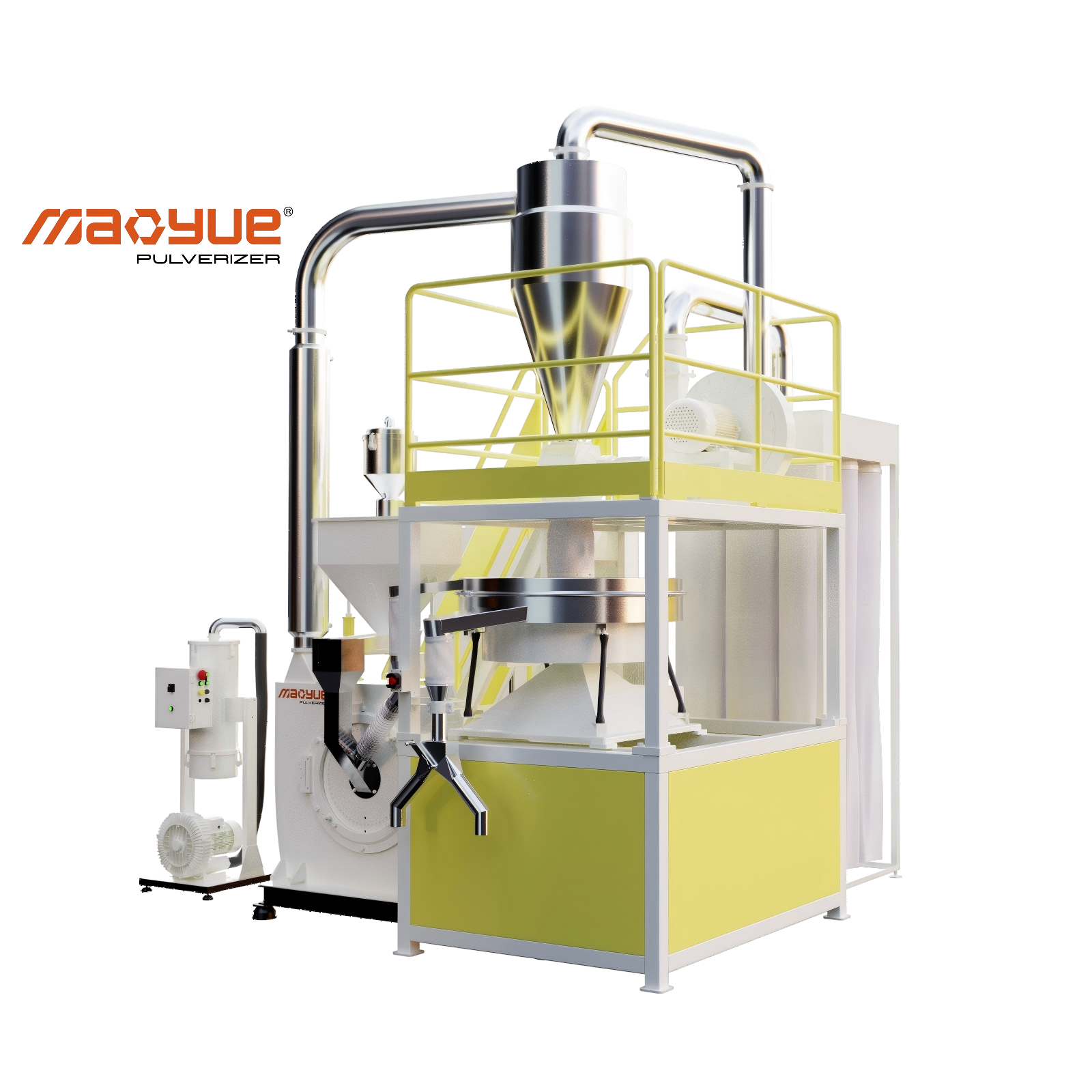
Existing Mounting Interfaces and Disc Pairing Requirements
Matching outside diameters do not mean that two discs are directly interchangeable.
Interface checks also cover the center bore, locating features, mounting hole positions, thickness, working surface position, and fastening method. On the rotating side, additional checks include weight, rotational inertia, balance requirements, and compatibility with the gap-adjustment mechanism and cooling structure.
Changing from solid to segmented discs, or vice versa, requires technical compatibility checks first. When discussing replacement discs with Mao Yue, provide front and rear photographs, dimensional drawings, and the machine model. Specify whether you need a stationary disc, a rotating disc, or a complete matched assembly so that a suitable supply proposal can be discussed.
Material Type, Formulation, and Feed Condition
Selection should start with the actual material, rather than relying only on labels such as “PE disc” or “plastic grinding disc.”
Relevant information includes resin type and grade, virgin or recycled content, fillers and additives, and feed size and form. Clean PE pellets, filled compounds, and recycled regrind from mixed sources should not be assigned the same output or wear expectations.
Where feedstock varies significantly between batches, test samples should represent the materials used in normal production. This avoids assessing capacity using only material that is easy to process.
Target Powder Specifications and Downstream Applications
The purpose of disc selection is to produce suitable powder consistently, not simply to make the material finer.
For example, PE rotomolding powder is evaluated using particle size distribution, flowability, and bulk density. Powder intended for masterbatch and polymer compounding needs to be assessed for suitability in subsequent mixing and processing.
Defining the particle size range, permitted oversize fraction, and test methods in advance helps establish acceptance requirements. When fineness is expressed in mesh, also specify the sieve standard or corresponding aperture size so that both parties use the same basis for acceptance.
How Can Grinding Disc Manufacturing Quality Be Assessed?
Material and Heat Treatment: Hardness Does Not Establish Service Life
Material grade, heat-treatment condition, and hardness are important, but none of them alone establishes service life.
Material specifications, measurement locations, critical dimensions, and defect inspection requirements are all part of the technical purchasing review. Changes in feedstock, filler content, and operating conditions can produce different wear patterns. Hardness alone is not enough to judge overall performance.
Compare material options in the context of the intended operating conditions, considering wear resistance, toughness, machining quality, and actual service records.
Tooth Profile and Assembly Accuracy: Evaluate the Installed Condition
Tooth geometry, cutting-edge condition, and machining consistency affect how the grinding components work together.
For segmented discs, inspection focuses on the height of the installed grinding surfaces, segment positioning, and the areas between adjacent segments. For solid discs, the focus is the condition of the entire machined grinding surface and its position after installation. The relationship between the mounting datum and the working surface is a common inspection point for both designs.
Documenting critical dimensional tolerances, inspection scope, and acceptance methods in the purchasing specification allows comparisons based on finished-part and assembly inspection results. The construction type alone does not establish accuracy or grinding-gap stability.
Rotating Component Balance and Pre-Restart Checks
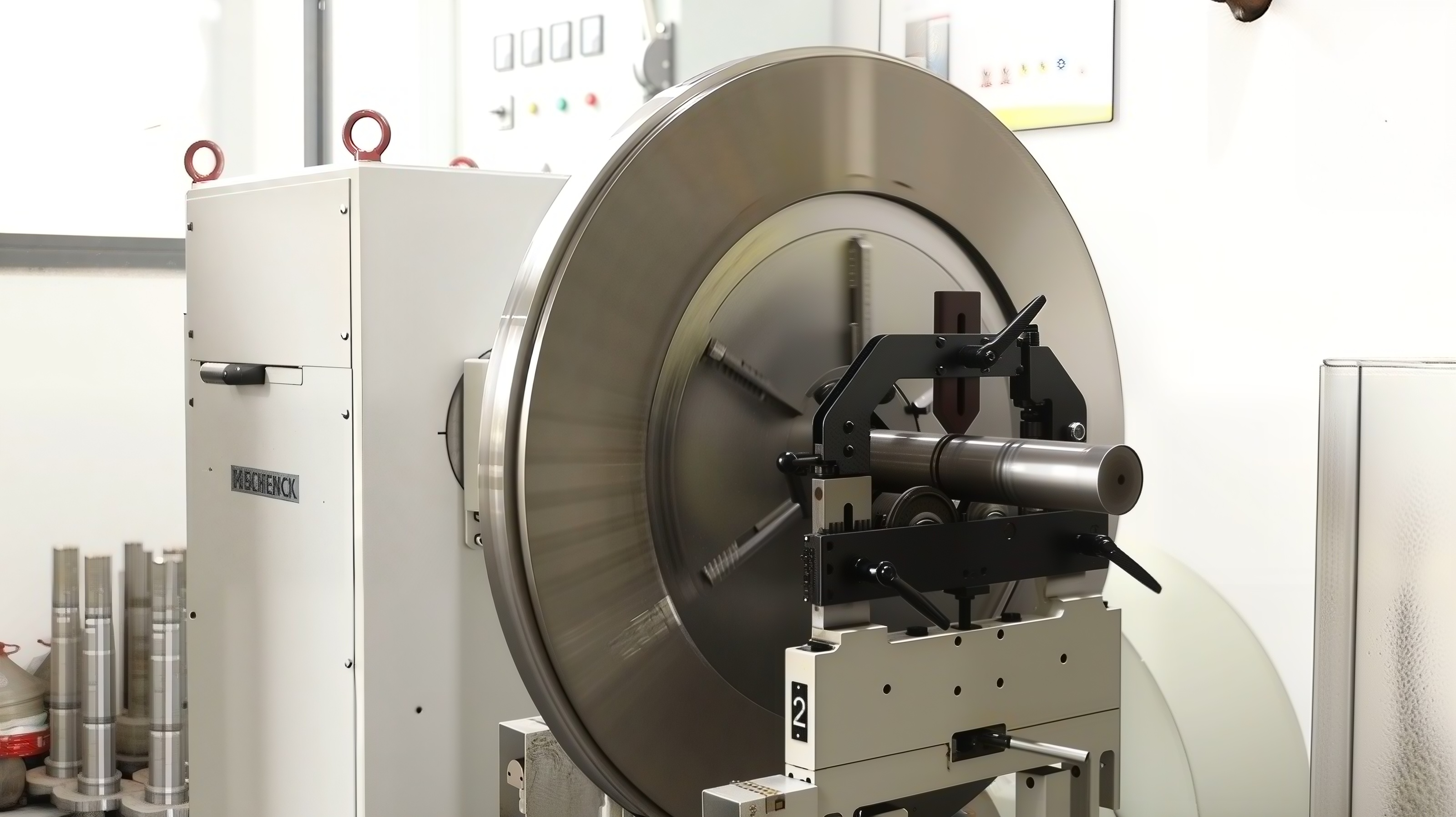
Balance inspection may apply to an individual disc or to the rotating assembly formed by the disc and other components. The machine or component manufacturer defines the relevant scope.
After replacing segments in a segmented disc, checks include positioning, assembly, and grinding clearance as well as bolt tightness. The same items require verification after replacing a solid disc. All disassembly, assembly, gap adjustment, and pre-restart checks must follow the applicable machine procedures with the equipment stopped and its energy sources isolated.
How Should Actual Grinding Performance Be Compared?
Run Trials Under Comparable Conditions
To make results comparable, test both disc designs with the same material, feed condition, target powder specifications, and test methods as far as possible. Record the speed, feeding, screening, and cooling configurations.
When comparing two separately optimized processing setups, identify the configuration differences before interpreting the results. This helps avoid attributing changes caused by speed, screens, or cooling entirely to the disc design.
Trials should include operation after the machine has warmed up, with samples taken at different times to assess continuous production performance. A short-term peak output is only a result for that stage of the trial.
Compare On-Spec Powder Output and Specific Energy Consumption Together
Use two related measures:
On-spec powder output (kg/h) = Mass of powder meeting the agreed specifications (kg) ÷ Corresponding operating time (h)
Specific energy consumption per kilogram of on-spec powder (kWh/kg) = Electricity consumed during the measurement period (kWh) ÷ Mass of on-spec powder produced during that period (kg)
Energy records should state whether they include fans, screening, conveying, and auxiliary cooling equipment so that the measurement scope is consistent. Actual production costs require electricity-consumption records; comparing main motor rated power alone is insufficient.
Record feed quantity, total discharge, and on-spec powder output separately. Also account for oversize material returned to the mill and material remaining inside the equipment, so that recirculating material is not counted twice as final output.
Mao Yue provides material and process testing services. To arrange a trial, submit a material description, target particle size, and output requirements, then discuss sample quantity, test configuration, and how results will be recorded. A direct comparison of two disc designs also requires advance confirmation that the necessary test configurations are available.
Why Choose Mao Yue Plastic Pulverizer Grinding Discs?
Mao Yue provides manufacturing, disc configuration selection, and replacement parts supply for plastic pulverizer grinding discs and related blades. Whether specifying components for new equipment or sourcing spares for an existing machine, customers can discuss their component and technical requirements in the following four areas.
In-House Grinding Disc Manufacturing
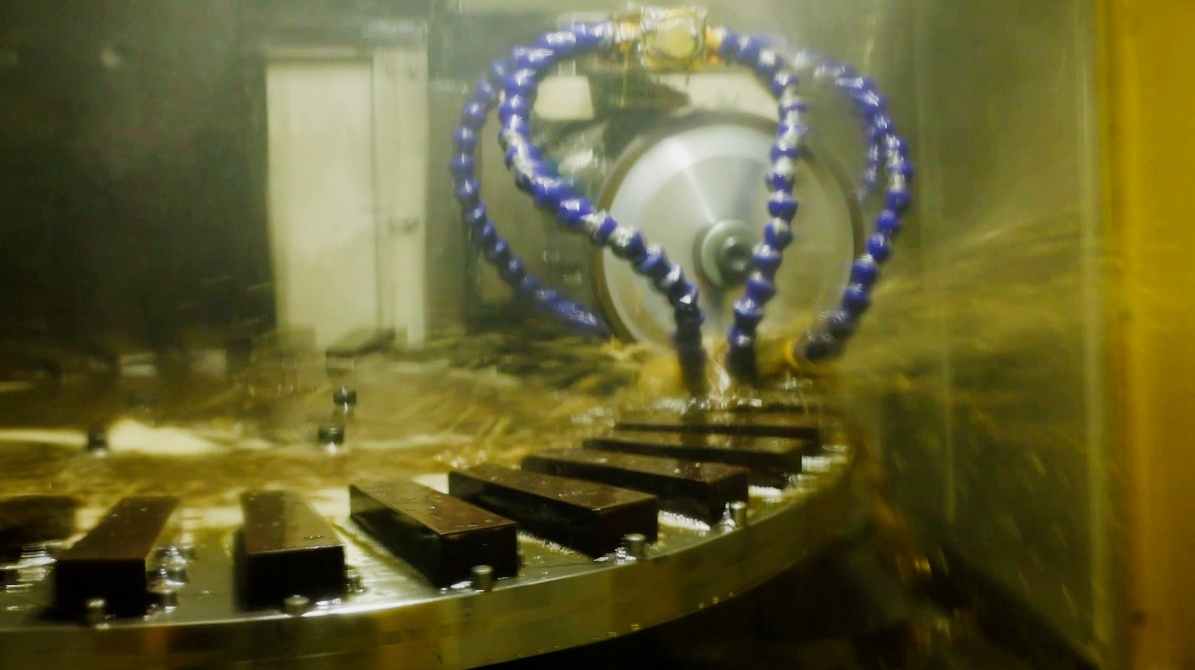
Mao Yue manufactures core grinding components, including discs, grinding segments, and blades, in-house. CNC machining, precision grinding, and critical dimensional inspections help control the consistency of tooth profiles, thicknesses, and mounting dimensions.
In-house manufacturing allows customers to discuss drawings, dimensions, and inspection requirements directly with the manufacturer, establishing a clear machining specification for custom components and subsequent replacements.
DC53 Material and Heat Treatment
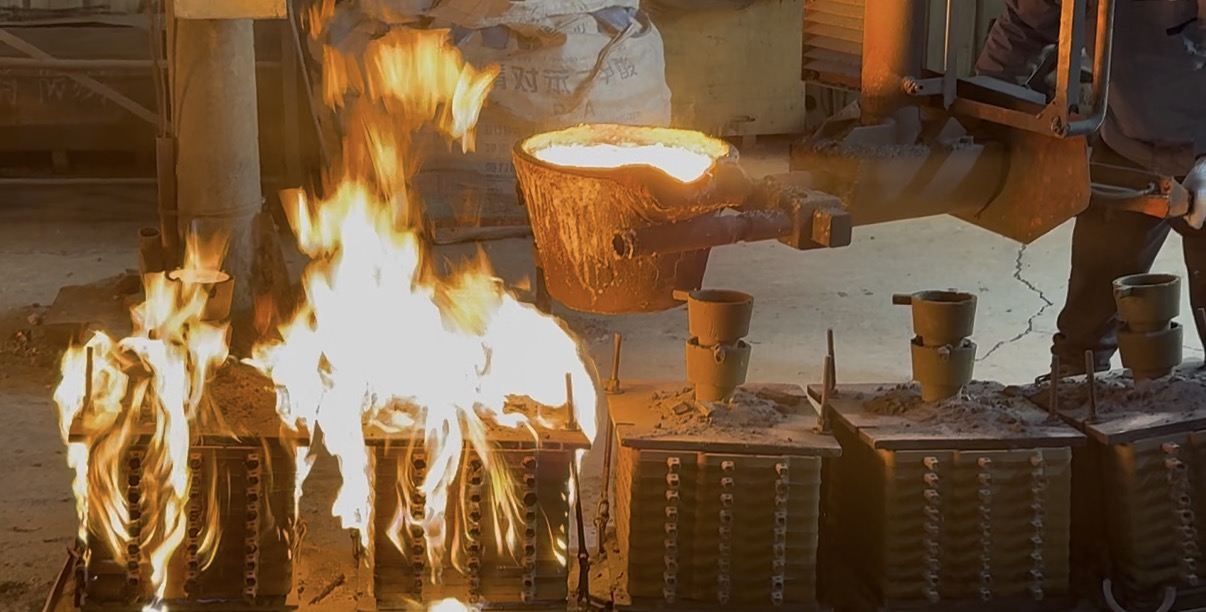
Selected Mao Yue PE grinding discs use DC53 steel, with heat treatment and hardness testing used to control the finished material condition and hardness. Some PE grinding discs have a finished hardness of HRC 60–61. The material configuration and hardness requirements are confirmed for each model.
Customers can agree on the material grade, applicable components, and hardness acceptance range when ordering, providing a consistent technical basis for the initial purchase and future replacements.
Segmented and Solid Disc Options
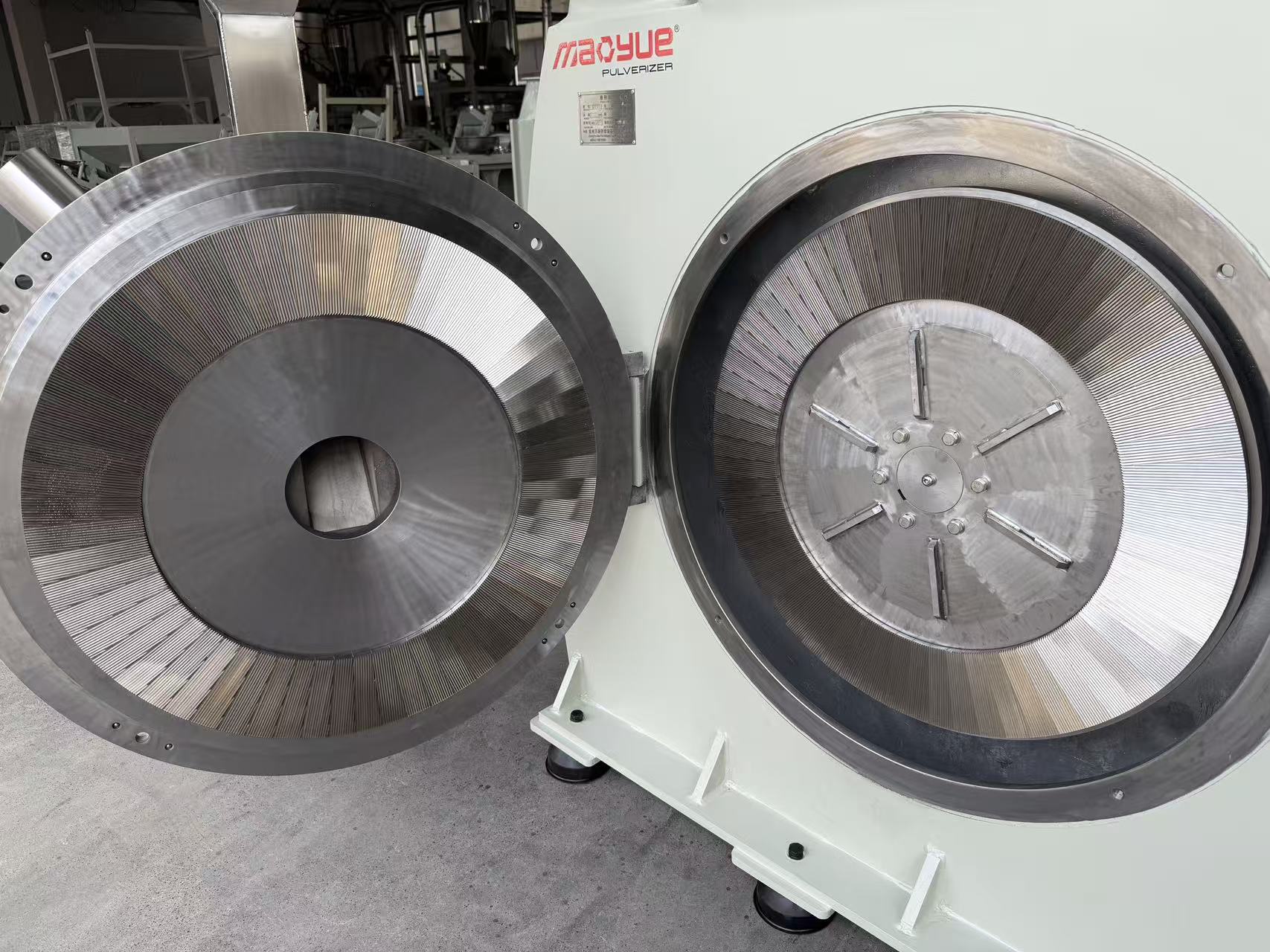
Mao Yue offers segmented and solid grinding discs, with custom sizing available. For replacement parts or new equipment, the team can help confirm disc construction, dimensions, and pairing based on the machine interfaces, feedstock, and target powder requirements.
Having both designs available allows customers to select a configuration around their equipment and maintenance needs, with compatibility confirmed before purchase.
Replacement Parts and Technical Support
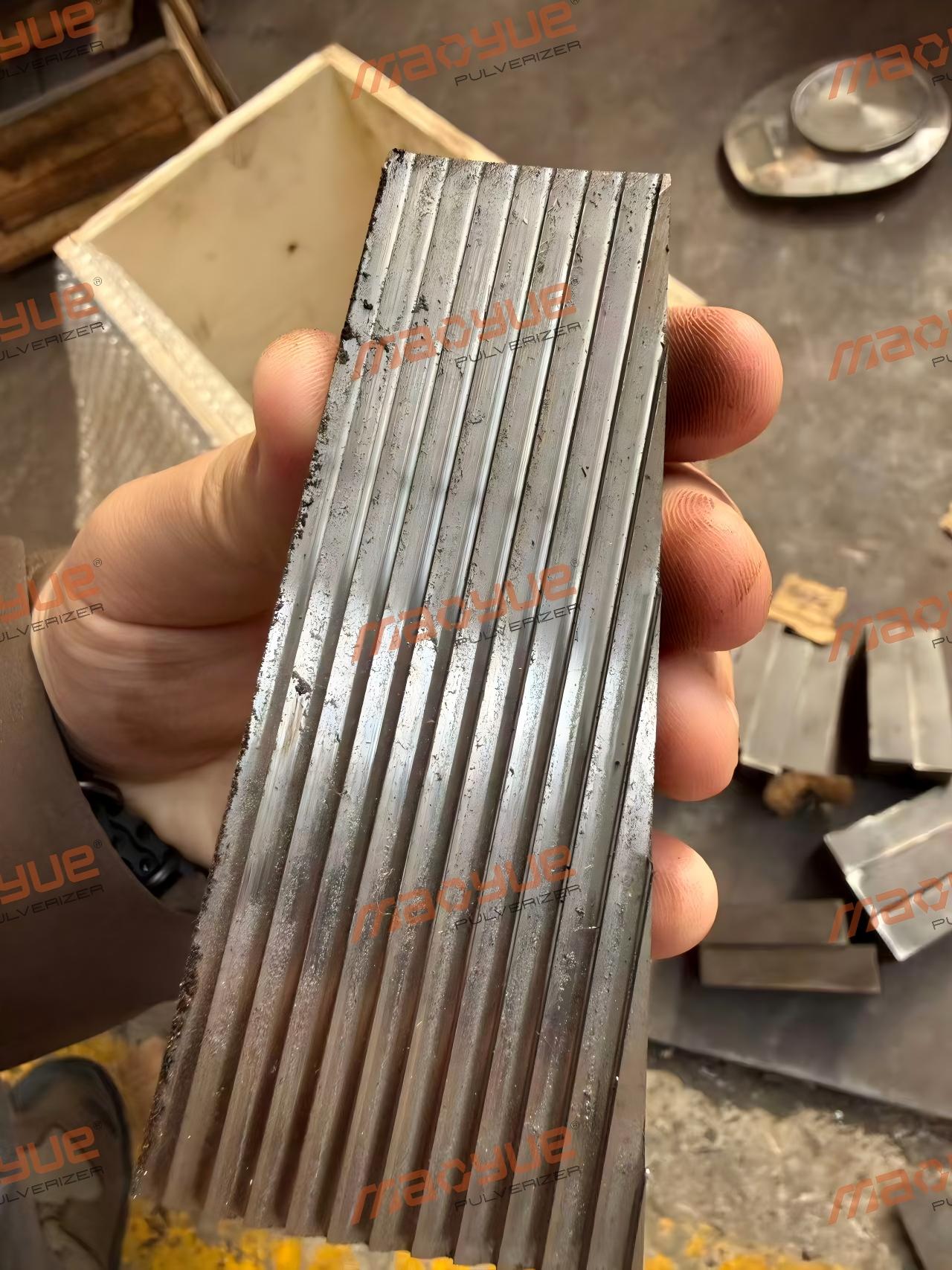
In addition to complete plastic pulverizers, Mao Yue supplies replacement discs, grinding segments, and blades. Technical reviews can be based on drawings, machine models, component dimensions, and material requirements.
Whether purchasing segments, complete discs, or matched assemblies, customers can work with Mao Yue to define the required components, fittings, and supply scope for routine replacements and spare parts planning.
What Information Should You Provide When Discussing a Grinding Disc Solution with Mao Yue?
To help check machine compatibility, define the supply scope, and prepare a quotation, provide the following information:
When complete drawings are unavailable, start with photographs of the existing discs, the machine model, and known dimensions, then discuss any additional measurements needed. Photographs support initial identification; final manufacturing and installation compatibility still rely on confirmed technical information.
FAQ
Are Segmented Discs Always More Economical Than Solid Discs?
No. Partial replacement may reduce the number of parts replaced at one time, but total cost also depends on segment prices, assembly requirements, resharpening costs, downtime, and service life. Compare costs over the same period and in relation to on-spec powder output.
Do Solid Discs Always Increase Output?
No. Output also depends on tooth profile, grinding gap, feedstock, feeding, screening, and cooling conditions. The construction type alone does not establish a capacity advantage; this needs to be confirmed through trials under comparable conditions.
Can the Two Disc Designs Be Interchanged Directly on the Same Machine?
Direct interchangeability cannot be assumed. Even with the same outside diameter, the mounting interfaces, thickness, grinding surface position, weight, and balance requirements may differ. Confirm compatibility before making the change.
Can a Single Worn Segment Be Replaced in a Segmented Disc?
Only when the design allows it and the replacement still meets grinding surface alignment, fastening, and applicable balance requirements. Some designs require replacement in sets or coordinated resharpening.
Does Mao Yue Supply Both Segmented and Solid Grinding Discs?
Yes. Mao Yue supplies segmented and solid PE plastic pulverizer grinding discs, with custom sizing available. Dimensions, material, disc pairing, and supply scope are confirmed against the machine information and application requirements.
Conclusion: Confirm Compatibility, Then Compare Output and Maintenance Costs
Choosing plastic pulverizer grinding discs comes down to three questions: Can they be installed correctly? Can they consistently produce powder that meets the required specifications? Can they continue operating at an acceptable maintenance cost?
First check the construction and mounting interfaces, then assess processing performance through comparable trials. Finally, consider resharpening, spare parts, energy consumption, and downtime costs. This provides a more reliable basis for selection than construction type, material hardness, or purchase price alone.
Sourcing replacement discs or evaluating components for new equipment? Contact Mao Yue with your machine model, photographs of the existing discs, and material requirements to discuss a compatible disc configuration and quotation.