

 English
 русский
 Español
 عربى
 中文简体
 中文简体
Content
- 1 Ambient Grinding First: The Liquid Nitrogen Line Item Most Buyers Miss
- 2 Sizing the Machine to the Material, Not Just the Tonnage
- 3 Particle-Size Distribution Is the Spec That Rarely Appears on a Quotation
- 4 Blades, Discs, and Rotors: Where the Running Cost Actually Lives
- 5 A Pre-Purchase Checklist That Prevents Expensive Revisions
- 6 What a Source Factory Changes About the Buying Experience
Picture a rotomolding shop whose parts keep failing along the weld line. The pulverizer is running at its rated tonnage, the blades were replaced last month, and the operator is feeding clean PE regrind. The problem is not throughput. It is the particle-size spread of the powder leaving the mill: coarse grains melt too slowly, fines carry pigment and stabilizer away, and the mold fills unevenly. That is the point at which plastic grinding equipment stops being a commodity purchase and becomes a process decision.
The practical conclusion comes first: size the grinding capacity around the narrowest particle-size window your downstream process will accept, and only then compare tonnage ratings. Two machines with identical output figures can behave very differently once you put them side by side on powder distribution, ambient versus cryogenic operation, and how fast their blades and discs wear. The sections below explain where those differences come from and how to price them in before you sign a purchase order.
If you want orientation on the categories first, this general guide to plastic pulverizer types and buying tips covers the main machine families before you narrow down to a single model.
Ambient Grinding First: The Liquid Nitrogen Line Item Most Buyers Miss
Room-temperature pulverizing is the default choice for PE, PVC, PA, and PP, and the reason is arithmetic rather than preference. Cryogenic grinding keeps a polymer brittle by injecting liquid nitrogen into the mill. In tough PA and PP grades, consumption can approach roughly one kilogram of nitrogen for every kilogram of polymer processed. At industrial gas prices, that cost attaches to every kilo of powder you make, year after year, without improving the part you eventually mold.
Ambient mills control heat through rotor geometry, airflow, and throughput discipline instead. The trade-off is genuine: feed too aggressively and the powder smears against the disc, discolors, or blinds the screen. The sensible rule is not "never cryogenic" but "cryogenic only when ambient grinding cannot hold the material below its softening range." Low-melting, high-elongation compounds remain the exception; commodity PE, PP, PA, and rigid PVC are not.
A practical test is a trial on your own flakes. If an ambient machine holds output at your target mesh without temperature alarms or screen blinding, the nitrogen bill never appears. Room-temperature units such as the PA/PP 500 class, which is explicitly built to run without liquid nitrogen, are worth benchmarking first because they remove the largest recurring cost from the comparison.
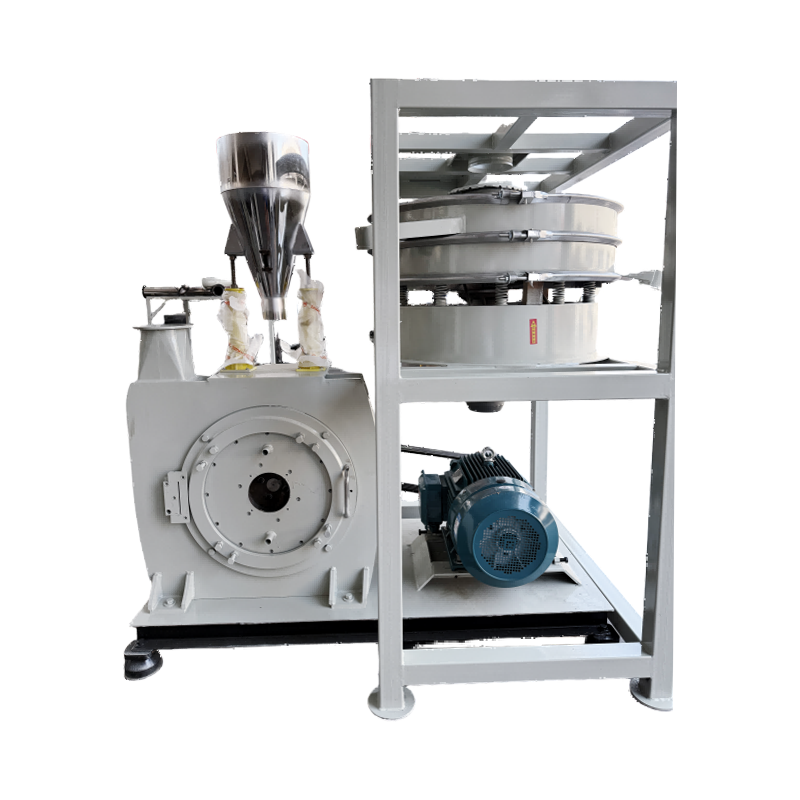 500PA/PP Ambient Temperature Grinder for PA and PP PulverizingAmbient PA/PP pulverizer designed to operate without liquid nitrogen; worth benchmarking for recycling or R&D where nitrogen cost dominates.View Product →
One caveat worth stating plainly: ambient grinding shifts cost from gas to wear parts and cooling airflow. If your material is abrasive or heavily filled, budget for more frequent blade service before you celebrate the savings.
Sizing the Machine to the Material, Not Just the Tonnage
Model numbers in this equipment class generally reflect a rotor or disc diameter class, not a guaranteed output in kilograms per hour. Output depends on feed form, bulk density, target mesh, and how much fines you are willing to tolerate. Use the table below as a screening tool, then confirm real numbers on a trial.
| Material family | Typical model range | What the size class usually buys you |
|---|---|---|
| PE for rotomolding | 500, 600, 800 | Higher output and tighter distribution; larger classes suit plants running multiple shifts and several molds at once. |
| Masterbatch and polymer compounds | 500, 600, 800 | Fine grinding of color concentrates with controlled fines, so dispersion and color strength stay repeatable. |
| PA and PP | 500, 600, 800, ambient | Room-temperature grinding without liquid nitrogen; wear-resistant and energy-saving variants appear in the 600 and 800 classes. |
| PVC | 500, 700, 800, 850, 900 | The widest spread, from coarse crushing to fine powder; 850-class machines are positioned as wear-resistant, 900-class as fine-powder units. |
For rotomolding in particular, uniformity matters more than peak output. A machine that produces a narrow band around your target mesh will fill mold details and release more consistently than a larger unit running at its limit. High-uniformity configurations, such as the 600-class rotomolding model, are usually specified where wall thickness consistency and cycle time are both under pressure.
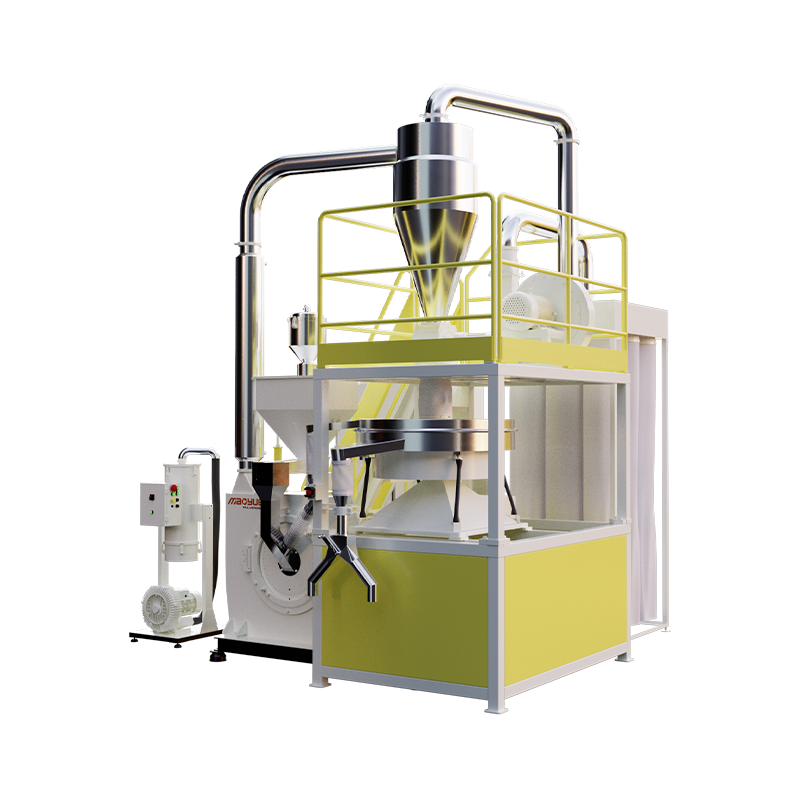 600-Type PE Rotomolding Powder Pulverizer for High UniformityPE rotomolding pulverizer for medium-to-large producers, suited to controlled powder distribution where wall thickness consistency and cycle time matter.View Product →
Particle-Size Distribution Is the Spec That Rarely Appears on a Quotation
Ask three suppliers for "35 mesh powder" and you may receive three different products. A 35 mesh screening cut is roughly 500 microns, but the useful question is what share of the batch sits above and below that line. Rotomolding generally wants the bulk of the powder between about 200 and 500 microns, with a controlled fines fraction. Too many coarse grains and the mold corners stay underfilled; too many fines and you lose additives to dust collection and risk bubbles in thick sections.
Two measurement methods are common and they do not agree perfectly. Sieve analysis is cheap, widely understood, and good for routine checks. Laser diffraction gives a fuller distribution curve and catches the sub-100 micron tail that sieves tend to under-report. Whichever you use, fix the method in the purchase specification so that "within tolerance" means the same thing to both parties six months later.
Fine-powder applications push the whole distribution downward. Masterbatch and PVC compound work, where dispersion and flow into a mixer matter, often calls for tighter top cuts and lower fines. That is a machine-design problem as much as an operating one, since the disc geometry, gap setting, and classifier behavior all shape the curve.
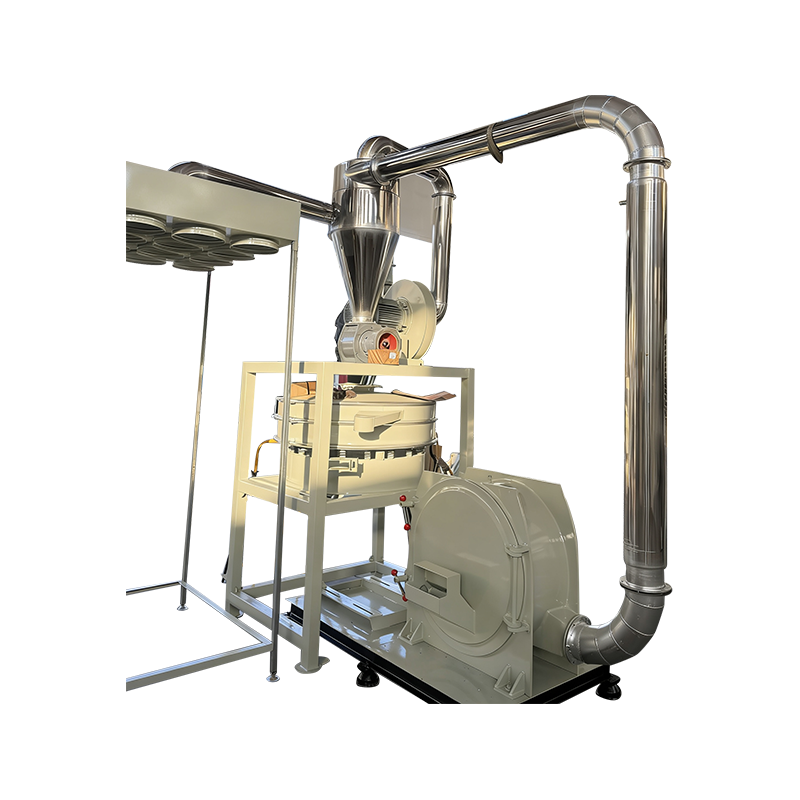 Model 900 PVC Fine Powder Pulverizer for High-Volume GrindingFine PVC pulverizer for high-abrasion or heavily filled compounds, where consistent powder distribution and long-term wear costs shape production economics.View Product →
Blades, Discs, and Rotors: Where the Running Cost Actually Lives
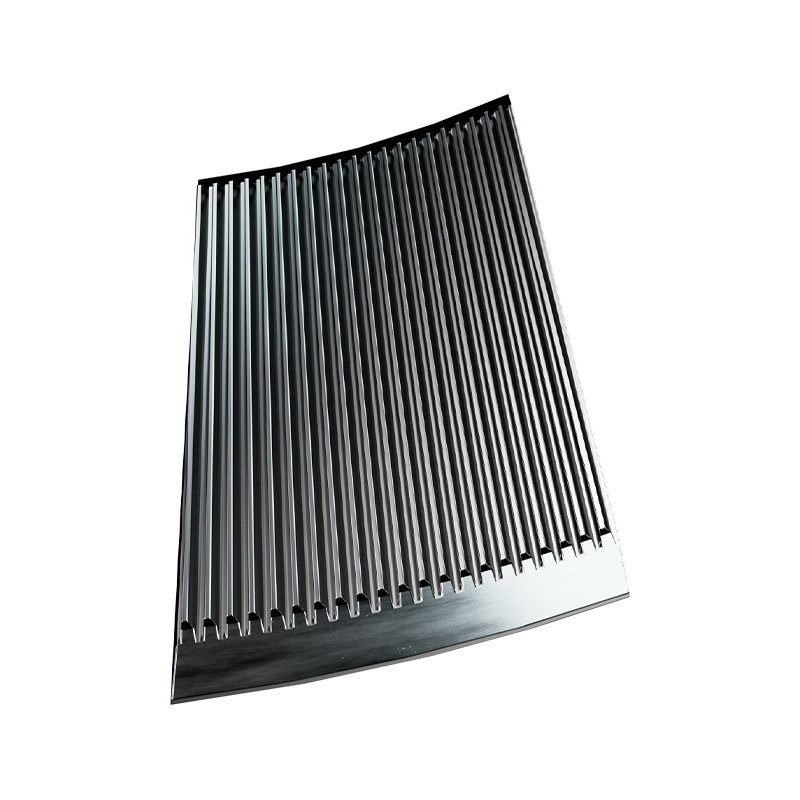
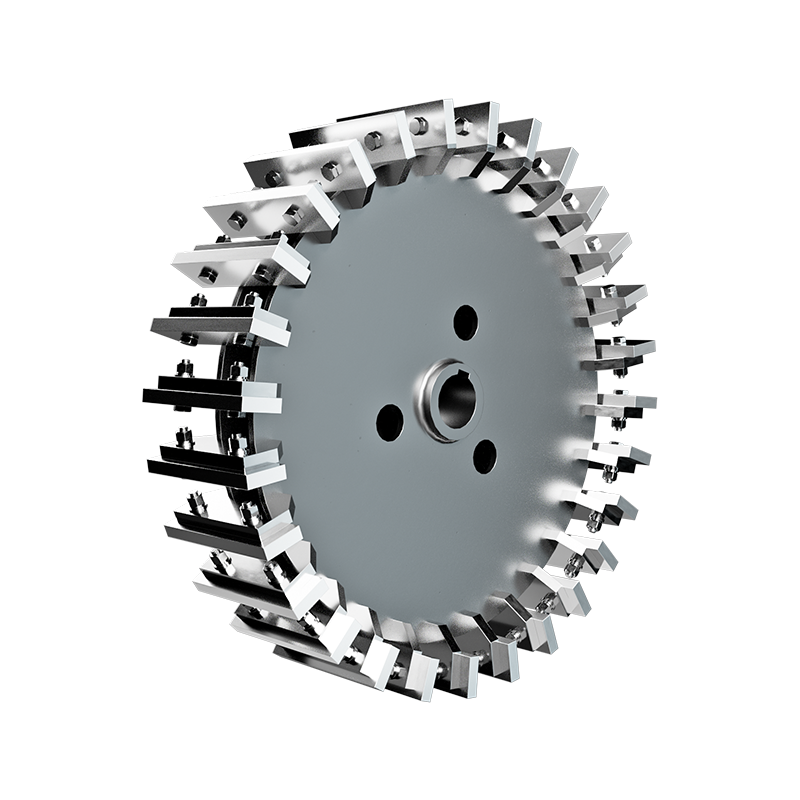
Grinding equipment is judged on the powder it makes in month one and on what it costs to keep making that powder in month twenty. Alloy steel blades, discs, and rotors are consumables, and their service life depends on material abrasiveness, filler content, gap discipline, and how carefully the rotor is balanced after each change.
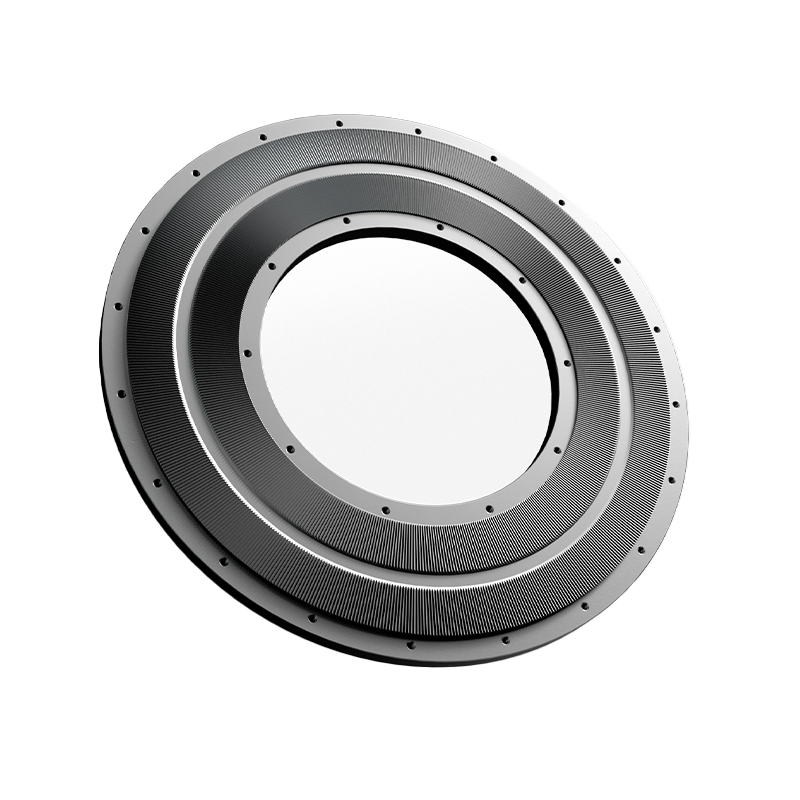
Two disc designs appear repeatedly in this category. A double-tooth disc increases shear and suits materials that need aggressive size reduction; an integrated disc trades some bite for stability and even wear. Choosing between them is a question about your feedstock and your maintenance schedule, not about which one is universally better. The same logic applies to blade steel: harder edges hold a gap longer but chip more readily against tramp metal.
Blade material grades, edge geometry, and re-sharpening intervals are covered in more depth in this pulverizer blade materials and maintenance guide, which is worth reading before you lock in a spare-part contract.
A Pre-Purchase Checklist That Prevents Expensive Revisions
Work through the following points before placing an order. Each one is cheap to clarify now and costly to correct after the machine is bolted to your floor.
- Target mesh and acceptable top cut, stated in microns, with the test method named.
- Maximum fines fraction you can tolerate without losing additives or flowability.
- Feed form and bulk density: flakes, regrind, pellets, or agglomerate behave very differently.
- Moisture content, since damp feed blinds screens and drops throughput sharply.
- Throughput measured at your target mesh, not at the machine's best-case setting.
- Powder outlet temperature, which tells you whether the mill is working the material too hard.
- Blade, disc, and rotor material grade, plus the lead time and price of replacements.
- Dust extraction and cooling airflow requirements, and how the mill is interlocked with them.
- Wear-inspection access, so a gap check takes minutes instead of a half-day teardown.
What a Source Factory Changes About the Buying Experience
Consumable supply is the quiet risk in this purchase. A machine is only as good as the availability of the disc, rotor, or blade set that keeps it in specification. Manufacturers that machine those parts in-house, rather than buying them in, tend to shorten lead times and hold tolerances more consistently across batches.
Changzhou Mao Yue Intelligent Equipment Co., Ltd. presents itself in exactly that position. The company states that it has operated for three decades as a source factory, runs six machining workshops averaging roughly 1,400 square meters each, and maintains a dedicated blade manufacturing center alongside its assembly work. Its model range spans 500 to 900 classes across PE rotomolding, masterbatch and polymer compounds, PA and PP ambient grinding, and PVC. It also reports more than 5,000 global partners and states that it manufactures to European quality standards, with staff periodically sent abroad to study machine applications. Those figures are the company's own account and are worth confirming during a factory visit or sample trial.
What is verifiable at the specification stage is more useful than any marketing claim: ask for a trial on your material, request the powder distribution report from that trial, and get the blade and disc replacement prices in writing. If those three items line up with your process window and your maintenance budget, the machine selection decision is already most of the way to being correct.