

 English
 русский
 Español
 عربى
عربى 中文简体
中文简体
 中文简体
中文简体
Content
The maintenance manager of a pipe extrusion plant still remembers the shift he lost to a single silo of recycled rigid PVC compound. The melt ran thin, then turned brittle at the calibrator, and every part made that night was scrapped. The material's certificate of analysis looked acceptable, but the particle size distribution was skewed, fines content was too high, and the lubricant package had separated in transit. The takeaway is straightforward: recycled rigid PVC compound is not one uniform product. It is a family of materials whose performance depends on feedstock selection, pulverizing consistency, and compounding discipline. With recycled content mandates now appearing in construction and packaging rules across several regions, the practical question is no longer whether to use recycled rigid PVC compound, but how to use it without sacrificing output quality. Buyers and process engineers who understand those three levers can run it profitably; those who ignore them inherit the risk.
What Recycled Rigid PVC Compound Actually Is
Recycled rigid PVC compound is a pelletized or powdered material produced by reclaiming PVC from post-industrial or post-consumer rigid products and re-compounding it with the same additive system used in virgin formulations: heat stabilizers, lubricants, impact modifiers, fillers, and pigments. The PVC itself is usually unplasticized or lightly plasticized. Rigid PVC, sometimes called uPVC, is defined in practical terms as material containing less than about 10 parts of plasticizer per hundred parts of resin. Pipes, window profiles, siding, gutters, and fittings are the dominant rigid applications, and most recycled rigid PVC compound is aimed back at those markets.
Feedstock quality is the biggest single variable. Post-industrial scrap, such as pipe trim, profile offcuts, and fittings flash, is relatively clean and usually comes from a known resin family. Post-consumer scrap, such as old window frames or drainage pipes, contains metals, rubber gaskets, wood, and other polymers. The compounder's sorting and cleaning line decides how much of that contamination survives into the finished compound.
| Feedstock stream | Typical sources | Contamination risk | Consistency | Common end uses |
|---|---|---|---|---|
| Post-industrial | Pipe trim, profile offcuts, fittings flash, factory rejects | Low to moderate; mostly same-family material | High, when separated by grade | Pipe, conduit, profiles |
| Post-consumer | Old pipes, window frames, siding, gutters | Higher: metals, rubber gaskets, wood, other polymers | Lower; depends on sorting and cleaning | Non-pressure pipe, profiles, fencing |
How Mechanical Recycling Turns Scrap into Compound
The mechanical route dominates commercial production because it is more energy-efficient than feedstock recycling and preserves the polymer chain for further processing. It follows a sequence that every buyer should be able to describe after a factory visit.
- Sorting and cleaning. Metal is removed with magnets and eddy-current separators; rubber, wood, and other plastics are pulled out manually or by density separation. The goal is a single-family PVC stream with less than 0.1 percent foreign matter.
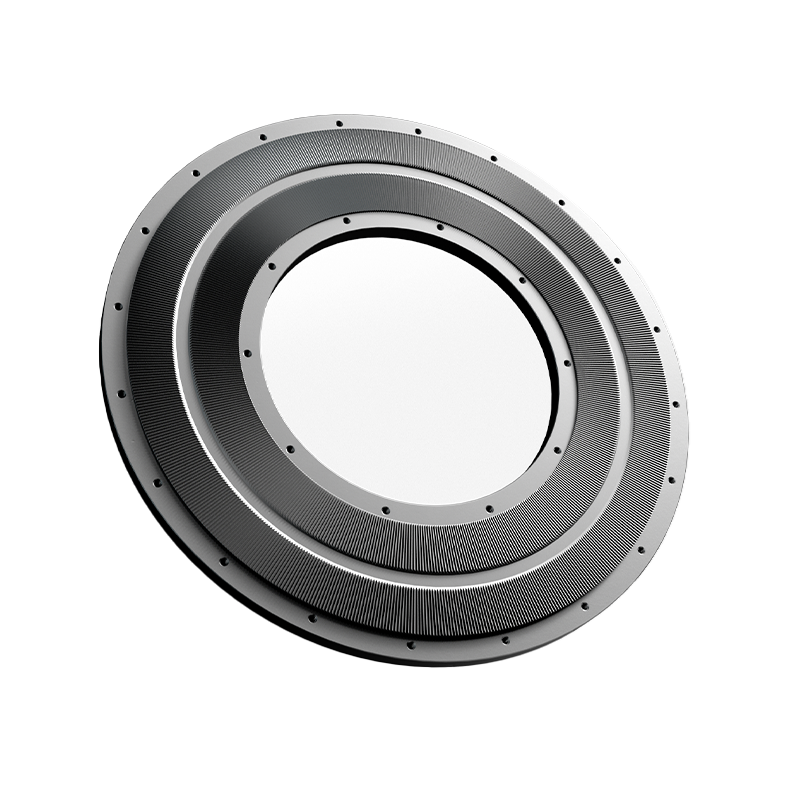
- Size reduction. The cleaned scrap is crushed into chips, then milled into powder or fine granules. This is the step that controls everything downstream. A well-tuned plastic pulverizer with properly matched rotor speed, disc geometry, and screen opening produces a narrow particle size distribution and consistent bulk density, which directly determines how uniformly the material melts in the compounding extruder.
- Compounding. The powder is metered with stabilizers, lubricants, impact modifiers, and fillers into a hot/cold mixing system or a twin-screw compounder. Melt filtration removes any remaining gels or foreign particles, and the melt is pelletized or ground back into powder.
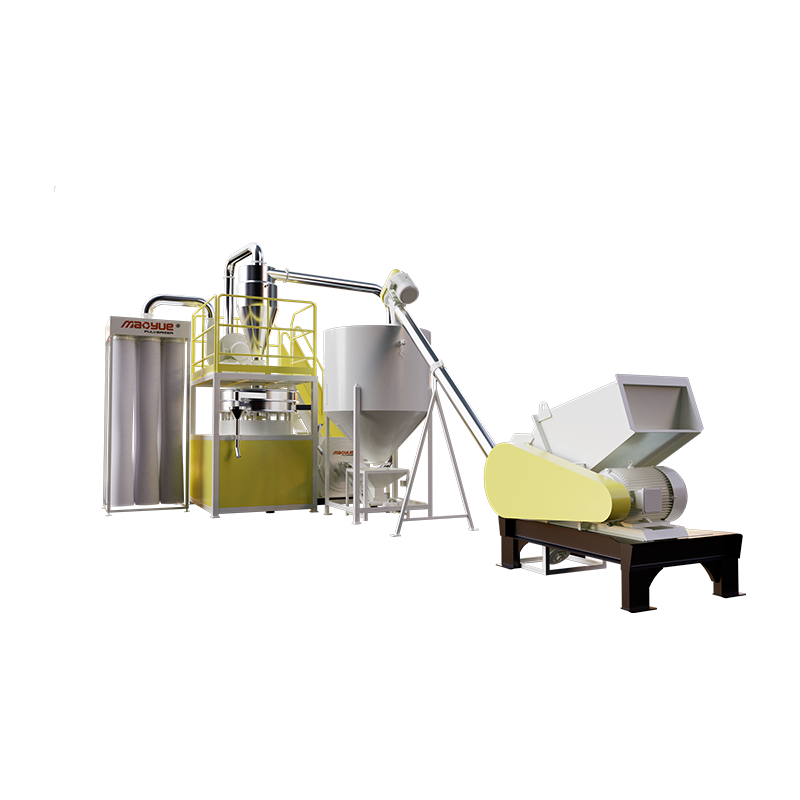
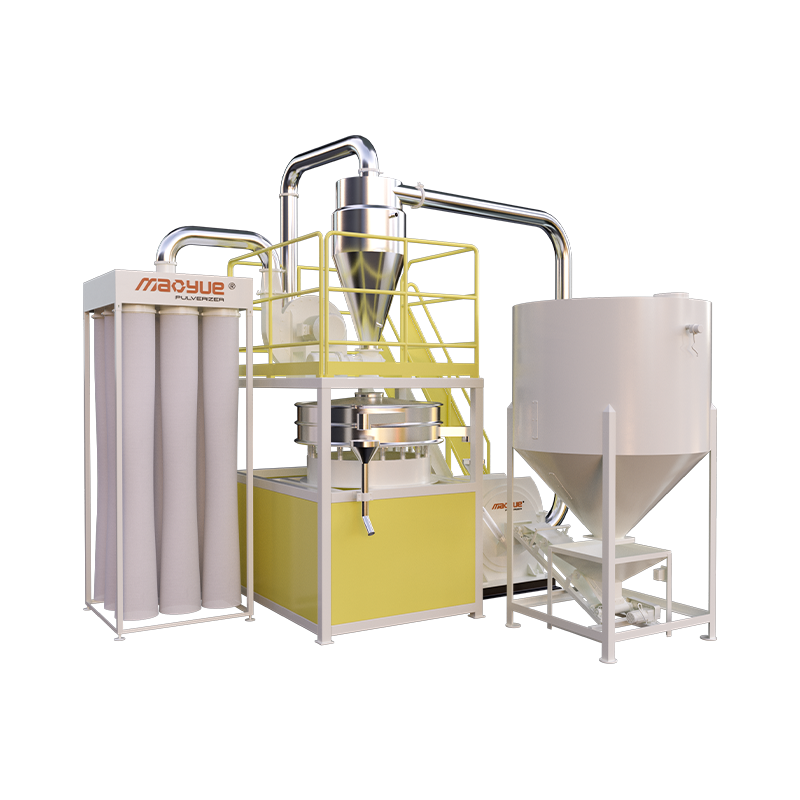
Production-scale recyclers increasingly rely on automated control loops that adjust rotor speed and feed rate to hold the target particle distribution. As PVC scrap pulverizer system manufacturers refine those systems, more plants are closing the loop between size reduction and compound quality. On the equipment side, recyclers typically start with a crusher for chips and then switch to a disc-type pulverizer for powder. In the mid-capacity segment, the 700-series high-efficiency PVC grinding mill is a practical choice because it balances throughput with energy cost.
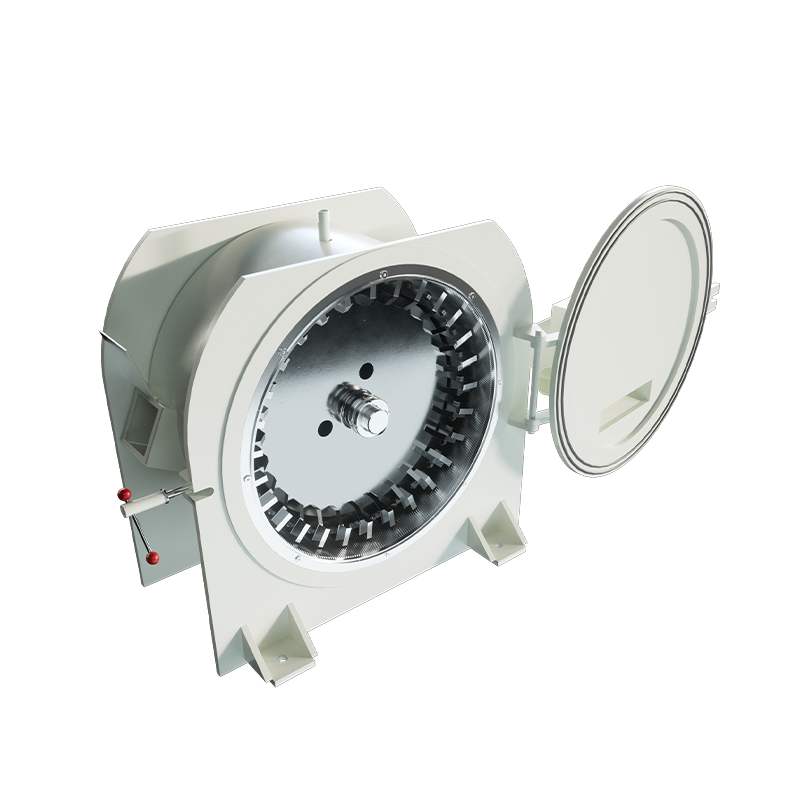 Model 700 PVC High-Efficiency Grinding Equipment Suppliers, Factory - Changzhou Changzhou Mao Yue Intelligent Equipment Co., Ltd. is Model 700 PVC High-Efficiency Grinding Equipment Suppliers and Factory in China, Cus...View Product →
Quality Parameters That Separate Good Compound from Bad
The difference between a recycled compound that runs like virgin and one that keeps producing edge tear is rarely the resin itself. It is almost always a quality parameter that was not measured at the receiving dock. The table below lists the values that matter most in real production.
| Parameter | Typical target | Why it matters |
|---|---|---|
| Mean particle size (powder) | 0.2-0.8 mm for dry blending | Affects melt uniformity and downstream speed |
| Fines content | Below 5 percent | Excess fines cause bridging, dusting, and inconsistent feeding |
| Bulk density | 0.5-0.7 g/cm3 | Determines hopper flow and extruder output |
| Thermal stability at 180 °C | No visible color shift within 30 minutes | Predicts risk of degradation and hydrogen chloride release |
| Contamination | Metal, rubber, other polymers below 0.1 percent | Prevents die build-up, pinholes, and equipment damage |
| Moisture | Below 0.2 percent | Moisture causes splay, voids, and brittleness |
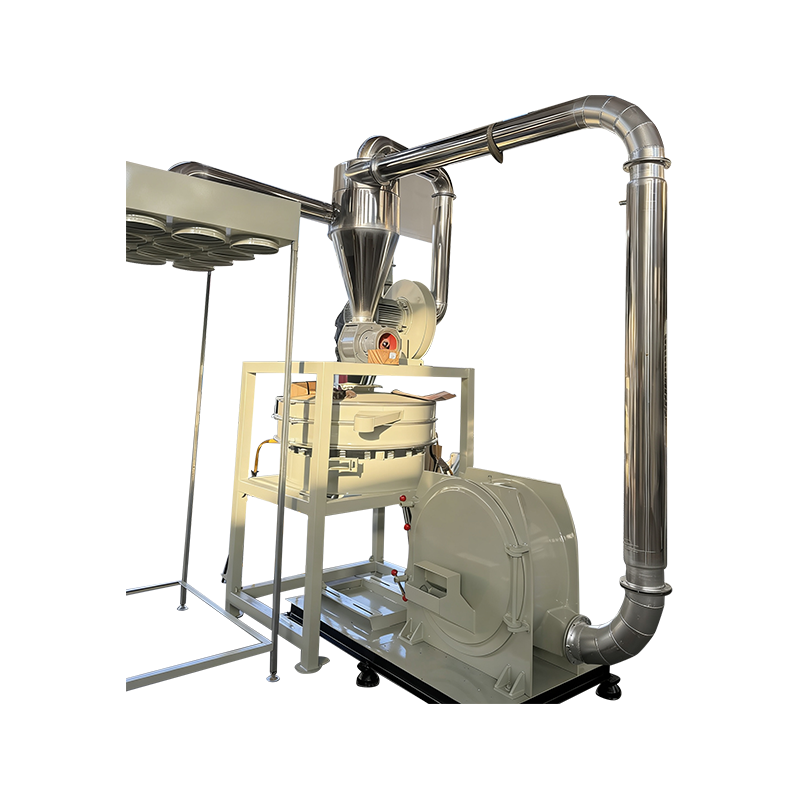
Particle size and distribution deserve the most attention. Powder that is too coarse melts slowly and creates rough extrudate surfaces. Fines below 50 microns, on the other hand, bridge in hoppers and generate dust that irritates operators and soils handling equipment. A good compounder will provide a sieve analysis, not just an average particle size. When the application needs a tight distribution for dry blending or direct extrusion, a fine powder PVC pulverizer keeps the melt consistency stable from lot to lot. The plastic pulverizer selection guide, which covers machine types, capacity sizing, and buying criteria, is worth reading before you commit to a specific mill.
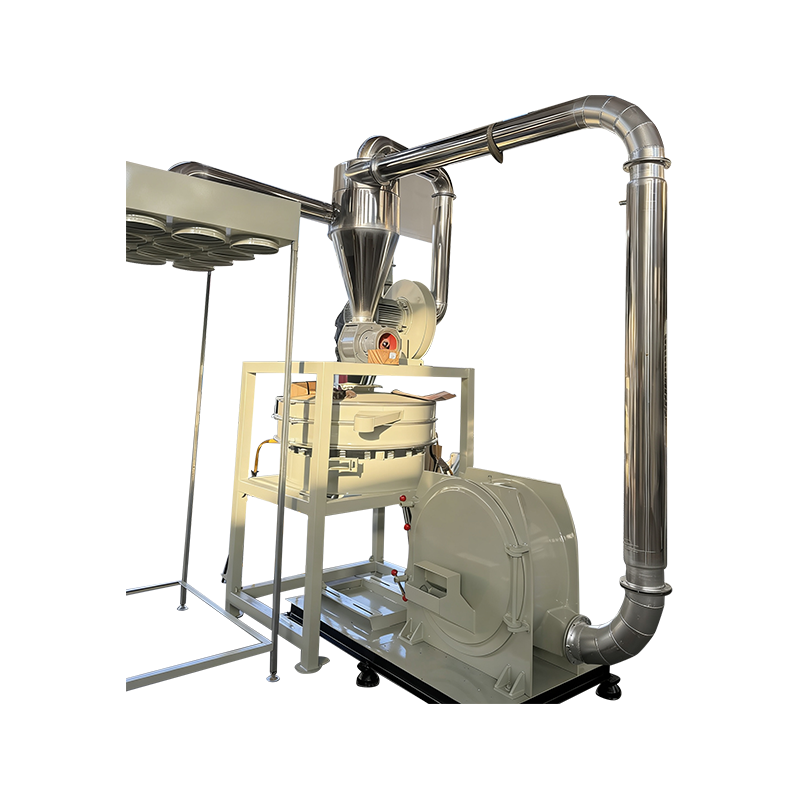 Model 900 PVC Fine Powder Pulverizer Suppliers, Factory - Changzhou Mao Yue InteChangzhou Mao Yue Intelligent Equipment Co., Ltd. is Model 900 PVC Fine Powder Pulverizer Suppliers and Factory in China, Custom Model 90...View Product →
Processing Considerations When Using Recycled Content
Recycled rigid PVC compound changes the processing window. The reclaimed polymer has been heat-exposed at least once, carries residual contaminants, and behaves differently at high shear. Three practical issues show up in nearly every plant that switches from virgin resin.
Wear on the size-reduction and conveying side
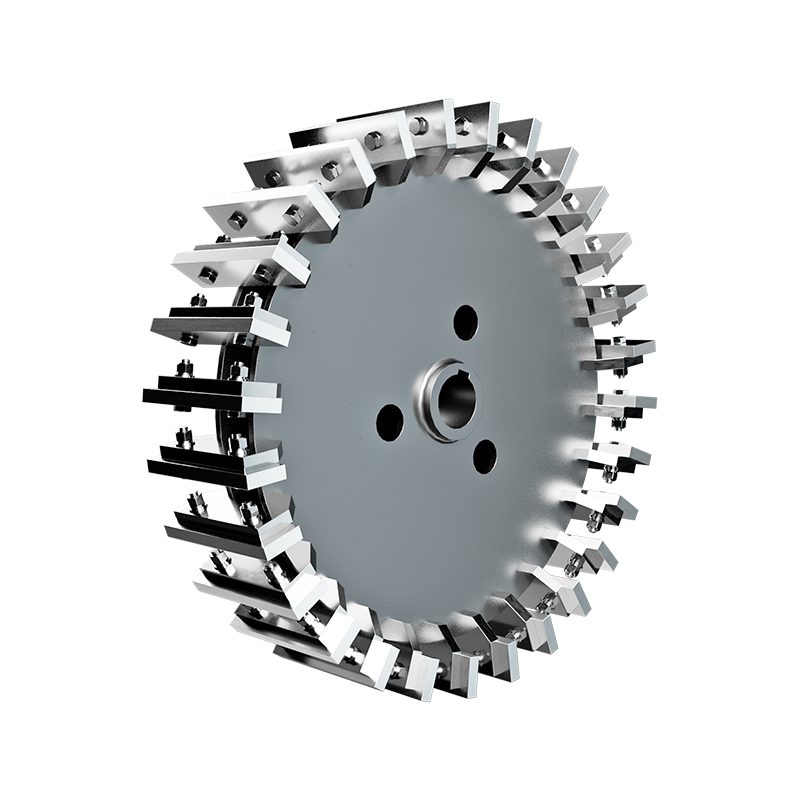
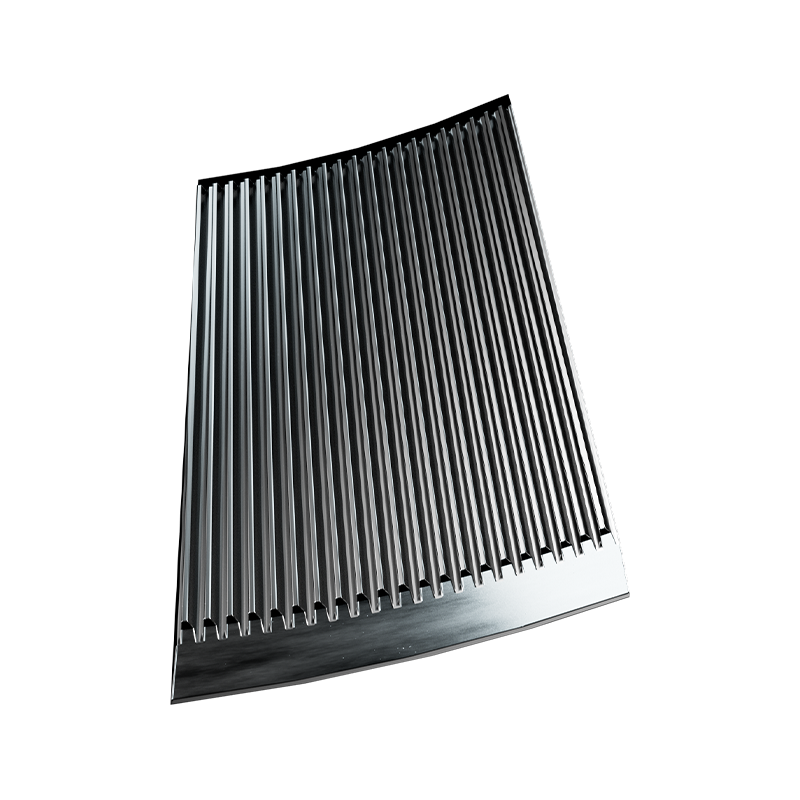
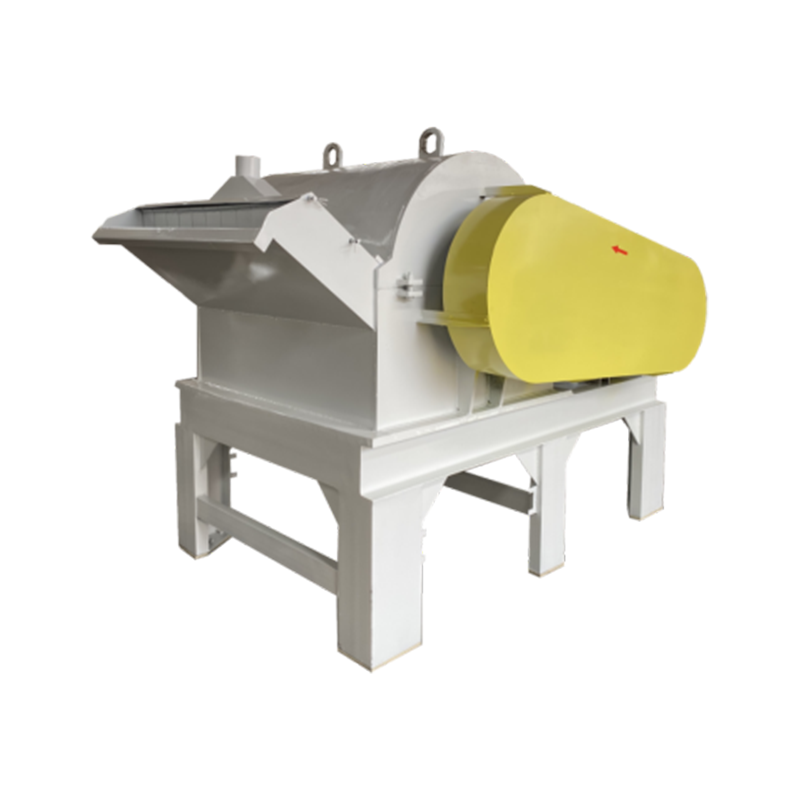
Filler from the original pipe or profile, carbon black, and trace silica make recycled compounds noticeably harder on cutting and milling equipment than virgin resin. Standard knives and discs dull faster, and blade gaps drift out of tolerance. Operators who run recycled feedstocks typically specify alloy steel blades and wear-resistant milling chambers. The 850-series wear-resistant PVC crusher is built for exactly this duty, combining tough rotor geometry with abrasion-resistant surfaces.
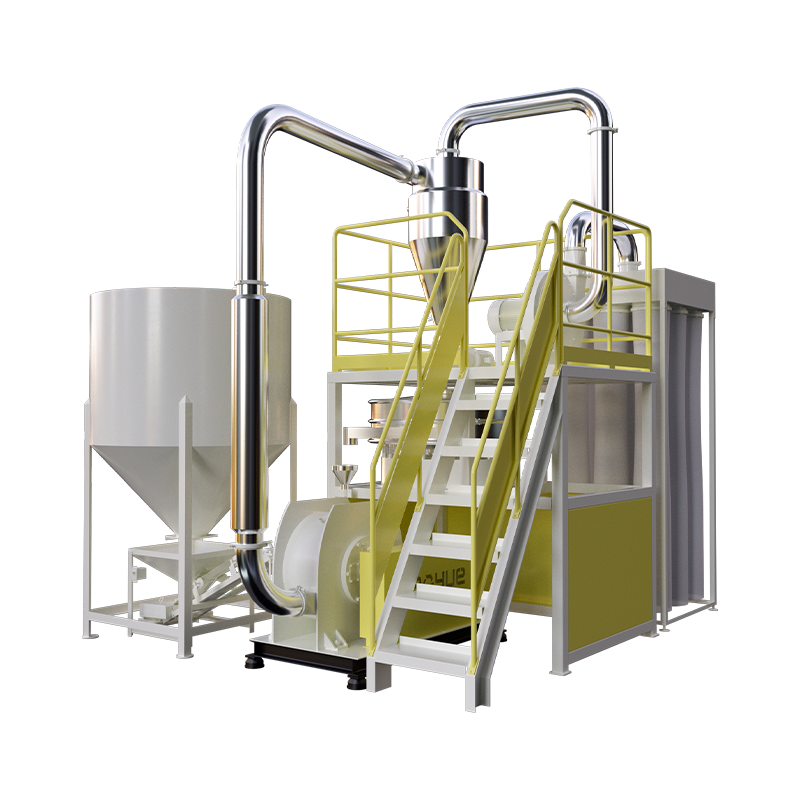 Model 850 PVC Wear-Resistant Crusher Suppliers, Factory - Changzhou Mao Yue InteChangzhou Mao Yue Intelligent Equipment Co., Ltd. is Model 850 PVC Wear-Resistant Crusher Suppliers and Factory in China, Custom Model 85...View Product →
Melt filtration is not optional
Even a clean-looking compound carries gels and high-melt-strength particles that create die build-up and surface defects. A screen pack with 120-250 micron mesh protects the die, but the pressure drop and backflush frequency need to be built into the production schedule.
Stabilizer and lubricant re-dosing
Recycled PVC retains a finite amount of its original stabilizer system, but part of it was consumed during the first life. Most commercial recycled rigid PVC compounds are re-stabilized during compounding. Buyers should ask which stabilizer package is used and request thermal stability data, because calcium-zinc systems and lead-based systems behave differently in processing and in downstream compliance.
A Sourcing Checklist That Actually Protects Your Production Line
Before you approve a new source of recycled rigid PVC compound, put five questions on the table.
- What is the exact feedstock breakdown? Ask for the share of post-industrial versus post-consumer content and the original applications. A compound made from mixed window profiles behaves differently from one made from pipe.
- Can you show particle size distribution data? A single average number hides a bimodal distribution. Require sieve analysis results from the last three production lots.
- What thermal stability test is performed? Ask for a static heat stability time at 180 °C and the color shift behavior. The result predicts real extrusion performance.
- What is the contamination guarantee? Get a written maximum for metal, other polymers, and rubber, and ask how the supplier verifies it.
- Is the formulation fixed per batch? Some compounders change the lubricant or filler dosage to protect margin. A fixed formulation with a named additive system protects your process.
Recycled rigid PVC compound is a viable, increasingly cost-competitive feedstock for pipe, profiles, and industrial parts, but it only works when the basics are right: clean feedstock, a consistent pulverizing step, and a formulation that respects the polymer's history. Ask the right questions, document the quality parameters, and keep the size-reduction equipment in good condition, and this material will perform close to its virgin counterpart.